Virginia Has No Supervision Escape Clause
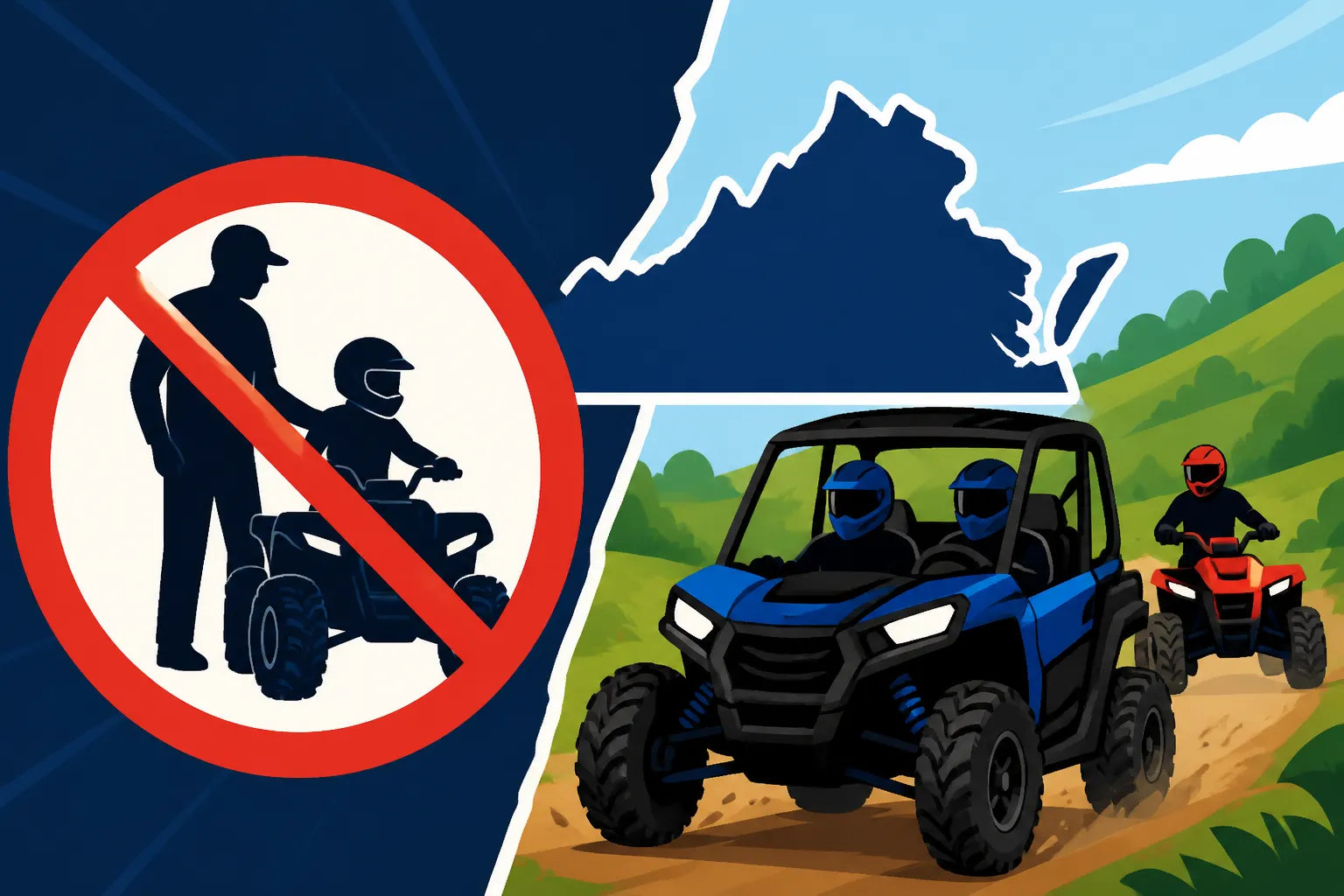
It's a common, and often frustrating, misconception that if you're an adult riding alongside a younger family member or friend on an ATV, Virginia's strict age and engine size rules somehow become more flexible. Many riders assume that active supervision creates a loophole, allowing a child to ride a machine typically reserved for older, more experienced operators. Unfortunately, this isn't the case in the Commonwealth of Virginia. The law is quite clear and unyielding, leaving no room for a "supervision escape clause" when it comes to ATV operation. This guide will delve into these specific regulations, clarify where and how they apply, and help you understand the significant implications for off-road enthusiasts across Virginia.
The Harsh Reality of Virginia's ATV Age Rules
Virginia's approach to ATV safety and rider age is rooted in specific statutes designed to protect younger riders from situations they might not be equipped to handle. Unlike some other states that might offer provisions for adult supervision to mitigate age or engine size limits, Virginia takes a more absolute stance. This often comes as a surprise, and sometimes a significant disappointment, to families eager to share the trails.
What the Law Actually States No Supervision Loophole
Virginia law, specifically Section 46.2-915.1 of the Code of Virginia, lays out the ground rules for all-terrain vehicles. When it comes to age and engine displacement, these rules are categorical. There isn't a single line in the code that suggests an adult's presence or direct supervision negates the requirements for a minor. If a child does not meet the criteria for a specific engine size, then, legally speaking, they cannot operate that machine in Virginia, regardless of who is watching them. This means that parents or guardians who allow a child to ride an age-inappropriate ATV are not only putting the child at risk but also potentially opening themselves up to legal penalties. It's a tough pill to swallow for many, but the law is written to prevent accidents first and foremost.
Age and Engine Size Limits Strict Categories
To be crystal clear, Virginia's law sets precise boundaries based on a rider's age and the engine displacement of the ATV. These are not guidelines; they are mandates. For instance, riders under the age of 12 are generally restricted to ATVs with an engine size of 70cc or less. Once a rider is 12 but not yet 16, they can operate ATVs up to 90cc. It's only once a rider reaches 16 years of age that the engine size restriction is lifted. You can see how this structure leaves no room for interpretation regarding adult supervision. A 10-year-old on a 250cc ATV, even with a parent riding right beside them, is in violation of the law. This is a critical distinction that many new riders or those moving from other states often miss. [Virginia ATV Age Requirements] further details these specific cutoffs.
Why This Matters for Families and Group Rides
The absence of a supervision escape clause has profound implications for how families and groups plan their off-road adventures in Virginia. You can't just hand down a larger ATV to a younger sibling just because an adult is present. This means families often need to invest in appropriately sized machines for each rider or ensure that younger riders only operate machines that fit within their legal limits. For group rides, especially those involving youth, it's crucial that everyone understands and adheres to these rules to avoid issues with law enforcement or, more importantly, to prevent accidents. Imagine the disappointment of being turned away from a trail system or, worse, receiving a citation because a child on your ride was operating an oversized machine. Planning ahead based on these strict guidelines is the only way to ensure a smooth and legal experience.
Where Virginia's ATV Laws Apply
It's tempting to think that strict laws about ATVs only apply to public lands or designated trail systems. However, Virginia's regulations, including those on age and supervision, have a surprisingly broad reach. Understanding where these rules are enforced is just as important as knowing what the rules actually are.
Private Property vs. Public Land Enforcement
Many ATV owners assume that once they are on private property, they can ride as they please, free from state regulations. While private land does offer more latitude than public areas, it's not a free-for-all when it comes to certain safety laws. Virginia's ATV statutes, including the age and engine size limits, apply broadly across the Commonwealth. This means that a Virginia law enforcement officer can issue a citation for a violation, even if it occurs on private land, especially if there's a complaint or an accident. However, the intensity of enforcement can vary. On designated public trails like those managed by Spearhead Trails or within National Forests, enforcement tends to be more consistent and visible, as trail rangers and forest service personnel are often present. On private land, enforcement is more likely to be complaint-driven or accident-related. Regardless of the scenario, the law doesn't differentiate between public and private land for these core safety statutes. [Virginia Rules for Riding Private Land] explains this further.
Exceptions and Designated Riding Areas Coalfield Trails
Virginia does have dedicated off-road riding areas that provide fantastic opportunities for ATV and UTV enthusiasts. These include the Spearhead Trails system in the southwestern coalfields, as well as parts of the George Washington and Jefferson National Forests. While these areas welcome riders, they operate under their own sets of rules that often incorporate the state's baseline laws. For example, the [Virginia Spearhead Trail Rules for Riders Under 18] will often reiterate the state's age and engine size restrictions, and permits are required for entry. National Forest OHV areas also have specific requirements, including valid permits and equipment checks, such as spark arrestors and noise limits. While these are fantastic places to ride legally, they are not "escape clauses" from state law. Rather, they are controlled environments where state laws are actively enforced alongside their own operational guidelines. It’s crucial to check the specific rules for any trail system you plan to visit, as they can sometimes be even more stringent than state minimums.
The Unyielding Ban on Public Roads
Perhaps the most fundamental aspect of Virginia's ATV laws is the near-absolute ban on operating ATVs on public roads and highways. This is a common point of confusion for riders, especially those who see side-by-sides (UTVs) that appear to be "street legal" in other states. Virginia is unequivocally clear: ATVs and most UTVs are not designed for public road use and are strictly prohibited from being operated on any public highway, road, or street within the Commonwealth. There are very, very limited exceptions, such as crossing a highway by the most direct route, or specific designated routes in Buchanan and Tazewell counties, but these are narrow and come with their own set of stringent conditions, like speed limits and daylight-only operation. [Virginia Bans ATVs on Public Highways] dives deep into this topic. This ban is a cornerstone of Virginia's off-road policy, and it applies regardless of age, supervision, or the type of machine you are riding. Trying to make an ATV "street legal" in Virginia is a futile endeavor, as the state does not provide a path for such conversions for ATVs or UTVs, unlike the limited path available for some dirt bikes. Many aftermarket parts from companies like SuperATV can enhance the safety and performance of your machine for off-road use, but they won't make it legal for public roads in Virginia.
Understanding the "No Supervision Escape Clause"
The concept of a "supervision escape clause" is deeply ingrained in the minds of many parents and guardians, stemming from various contexts where adult presence does indeed grant minors more leeway. However, in Virginia's ATV regulations, this particular door is firmly shut.
The Common Misconception "As Long As I'm There…"
It's a conversation many experienced riders have heard countless times: "My kid is a really good rider for their age, and I'll be right there with them, so it's fine for them to ride my bigger quad, right?" This sentiment, while coming from a place of wanting to share a passion and trust in a child's abilities, directly clashes with Virginia's legal framework. The idea that "as long as I'm there" provides legal cover is a dangerous misconception. Virginia's law doesn't consider the adult's presence as a mitigating factor for the age and engine size requirements. The law is designed to create a clear, objective standard based on developmental stages and the inherent risks of ATV operation. It removes the subjective judgment of whether a child is "good enough" for a larger machine, prioritizing a universal safety standard instead. This means that a parent or guardian who knowingly permits a minor to operate an ATV that exceeds the legal age and engine size limits can be held responsible for violations.
How Virginia's Law Differs from Some Other States
This strict stance sets Virginia apart from some neighboring states or even other jurisdictions across the country. In certain places, laws might indeed include provisions where a minor, under direct adult supervision, is allowed to operate an ATV that might otherwise be beyond their typical age-rated engine size. These states might grant a kind of "learner's permit" or a supervised exception. Virginia, however, has chosen not to implement such a clause. This legislative decision reflects a priority on preventing serious injuries by eliminating variables. By stating unequivocally that certain ages can only operate certain sized machines, the law aims to reduce the likelihood of accidents that could arise from a child's lack of strength, reach, judgment, or physical maturity to handle a larger, more powerful machine, even if an adult is nearby. For riders coming from states with more lenient supervision rules, this difference can be quite jarring and necessitates a careful review of [Virginia Rules for a Visiting West Virginia Rider] or other out-of-state considerations.
Consequences of Ignoring the Age and Engine Rules
Ignoring Virginia's ATV age and engine size rules carries several serious consequences, far beyond just potential fines. First and foremost, there's the increased risk of injury. Larger ATVs are heavier, more powerful, and can be more difficult to control, especially for a child who may not have the physical strength or coordination to react effectively in an emergency. Beyond safety, there are legal ramifications. Operating an ATV in violation of the age and engine size limits can result in a civil penalty of up to $500. This is a significant financial hit that could easily be avoided. Furthermore, in the event of an accident, if a minor was operating an ATV illegally, it could complicate insurance claims, potentially leading to denial of coverage. It could also open the supervising adult to civil liability in a personal injury lawsuit, as their permission to allow the illegal operation could be seen as negligence. The bottom line is that while the rules might seem restrictive, they are designed to protect both the rider and those responsible for them, making adherence absolutely critical.
Beyond Age: Other Mandatory Rules for Virginia Riders
While the age and supervision rules are crucial, they are part of a larger tapestry of regulations governing ATV and UTV operation in Virginia. Riders must also be aware of other mandatory safety requirements that apply across the board, regardless of age or experience. These rules are designed to enhance safety and prevent accidents in the dynamic off-road environment.
Helmet Requirements for All Riders, All Ages
One of the most vital safety rules in Virginia, and one that often surprises some riders, is the universal helmet requirement. It's not just for kids or inexperienced riders; it's for everyone. Any person operating or riding as a passenger on an ATV in Virginia is required by law to wear a helmet. This helmet must meet the standards established by the Virginia State Police, which generally means it needs to be a DOT-approved helmet. This rule applies whether you're riding on a designated trail system, on private property, or even on a farm. There is no exception for adults riding on their own land. The evidence is overwhelming: helmets save lives and prevent severe head injuries. Companies like SuperATV offer a range of safety gear, and while they don't sell helmets directly, they often promote safety and accessories that complement helmet use, such as eye protection. Ignoring this rule can lead to a citation and, more importantly, put you at significant risk in an accident. [Virginia ATV Helmet Law Explained] covers this in detail.
Passenger Restrictions and Machine Design
Virginia also has specific rules regarding passengers on ATVs. Generally, ATVs are designed for a single operator, and carrying a passenger on a single-rider ATV is illegal and highly dangerous. The stability and handling characteristics of a single-rider ATV are compromised with an extra person, increasing the risk of rollovers. The law permits carrying a passenger only if the ATV is specifically designed by the manufacturer to carry more than one person. This usually refers to multi-passenger UTVs (side-by-sides) or certain larger ATVs with designated passenger seating. Even on these machines, passengers must adhere to all safety rules, including helmet use. For UTVs, if they come equipped with seatbelts and roll cages, those must be utilized. Attempting to carry a passenger on a single-rider quad, even a small child, is a direct violation of the law and a serious safety hazard. [Virginia Passenger Rules on an ATV] offers more clarity on this often-misunderstood rule.
The Importance of Written Landowner Consent
Another critical aspect of responsible and legal ATV riding in Virginia, particularly when venturing onto non-public lands, is obtaining proper permission. Virginia law specifies that it is illegal to operate an ATV on the private property of another without the written consent of the landowner or their agent. This isn't just a matter of courtesy; it's a legal requirement designed to prevent trespassing and property disputes. Oral permission, while perhaps well-intentioned, isn't sufficient under the law. Always ensure you have a physical copy of [Written Consent From a Landowner] when riding on private property that isn't your own. This protects both you and the landowner. This rule extends beyond basic property lines to encompass timber company lands, hunting leases, and other large private tracts where riders might assume implied access. Always err on the side of caution and get that permission in writing before you unload your machine. Without it, you could face trespassing charges in addition to any ATV-specific violations.
Navigating Virginia's Legal Trail Systems
For those eager to hit the dirt, Virginia offers some incredible trail systems. These designated riding areas provide a safe and legal environment for off-road enthusiasts to enjoy their machines. However, even on these trails, riders must adhere to specific rules, many of which complement the state's broader ATV laws.
Spearhead Trails and National Forest Rules Permits, Age
Virginia is home to the renowned Spearhead Trails system, a network of multi-use trails primarily located in the southwestern part of the state. These trails offer hundreds of miles of riding opportunities, but access requires a permit. [Virginia Spearhead Trail Permits] are available in annual or multi-day formats, and riders must have them to be on the trails. Importantly, Spearhead Trails enforces the state's age and engine size restrictions without a supervision escape clause. So, if you're riding with a minor, they still must be on an age-appropriate machine. Additionally, other rules, such as helmet use, are strictly enforced. Similarly, parts of the George Washington and Jefferson National Forests also offer OHV (Off-Highway Vehicle) trails, such as Peters Mill Run. These areas also require specific [Virginia National Forest OHV Permits] and have their own set of rules, including noise limits, spark arrestor requirements, and seasonal closures. Always check the specific regulations for the trail system you plan to visit, as they might have additional safety or equipment requirements beyond state law.
Safety Gear and Machine Requirements for Trail Riding
Beyond the basic state laws, many designated trail systems in Virginia have their own specific safety gear and machine requirements to ensure a safe experience for all users. For instance, Spearhead Trails requires that all UTVs have a factory-installed roll cage and working seatbelts, and that all occupants wear them. While not every trail system explicitly states a speed limit, Spearhead Trails does impose a 25 mph speed limit across all its systems to ensure safety on shared trails. Spark arrestors are universally required on any machine operating in a National Forest to prevent wildfires. Many riders also choose to equip their machines with additional safety features from brands like SuperATV, such as upgraded harnesses, robust skid plates for challenging terrain, or enhanced lighting for better visibility. While these aren't always legally mandated, they contribute significantly to rider safety and the longevity of the machine. It's always a good practice to ensure your machine is in excellent working order with proper brakes, lights, and tires before heading out.
How These Rules Intersect with State-Wide Laws
It's essential to understand that the rules set by trail systems like Spearhead or the National Forests don't supersede Virginia's state laws; rather, they build upon them. The state's age and engine size limits, the universal helmet law, and passenger restrictions are the foundational layers that apply everywhere. Trail system rules then add another layer of specific requirements for operating within their boundaries. For example, a 10-year-old on a 250cc ATV is illegal by state law. They would also be turned away from a Spearhead Trailhead because Spearhead enforces state law. Similarly, while Virginia has no state-wide permit requirement for private land riding, you'll need a [Virginia Spearhead Permit Cost] to ride the Spearhead Trails. This layered approach means riders must be aware of both the overarching state regulations and the specific rules of the particular riding area they choose. Always plan your ride by checking both the Virginia Code and the specific trail system's guidelines to ensure a safe, legal, and enjoyable off-road adventure.
| Rider Age Category | Maximum Engine Size (ATV) | Supervision Exception | Applicable Law |
|---|---|---|---|
| Under 12 years | 70cc | No | Virginia Code |
| 12-15 years | 90cc | No | Virginia Code |
| 16 years and over | No limit | N/A | Virginia Code |
| All Riders | N/A | N/A | Helmet Required |
| All Riders | N/A | N/A | Passenger Rules |
Disclaimer
This article is for general informational purposes only and does not constitute professional advice. Laws, prices and regulations vary by location and change over time. Consult a qualified professional for guidance on your specific situation.