Virginia’s 25 mph Trail Speed Limit
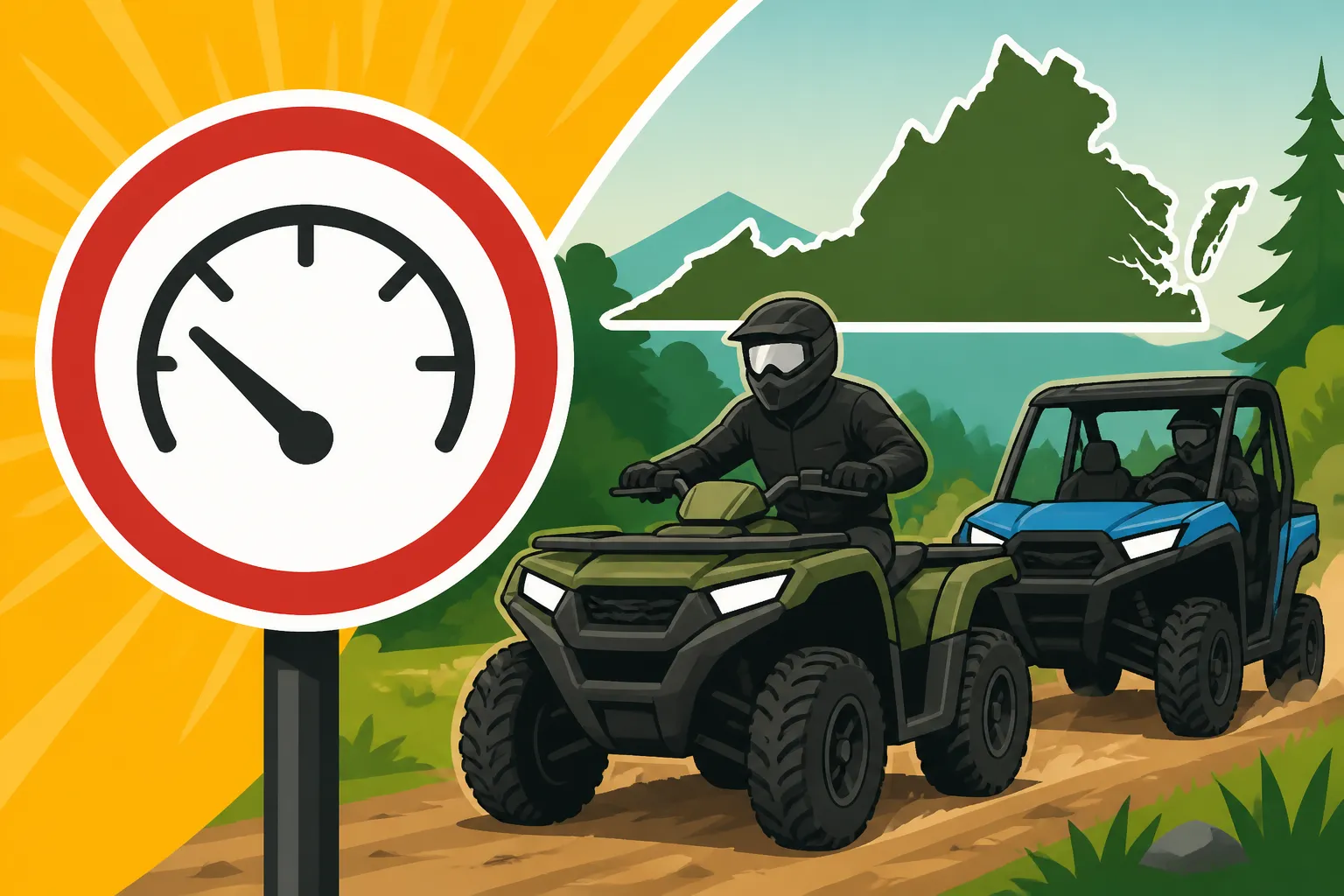
Virginia’s 25 mph trail speed limit is a ceiling, not a target. Knowing where that limit applies—and when you need to ride slower—helps prevent collisions, protect other trail users and avoid confusion between managed trails and public-road sections. Here’s how to think about speed on Spearhead trails and what to check before setting out.
Where Virginia’s 25 mph trail limit applies
The 25 mph limit is a maximum speed on the Spearhead trail network. It is not a recommendation to travel at that speed on every trail, and it should not be treated as a blanket speed rule for every place in Virginia where an ATV or UTV might be ridden. The specific system matters.
Spearhead operates managed trail systems in Southwest Virginia. If you are riding one of those systems, treat 25 mph as the highest permitted speed unless a sign or an instruction from trail staff sets a lower limit. A posted limit below 25 mph takes precedence on that section. The same is true when conditions make the posted maximum unsafe: a rider can and should slow down.
The limit applies across the network rather than only to a particular kind of machine. A smaller ATV, a side-by-side or another permitted vehicle does not get a higher speed allowance because it handles differently. Your machine’s size, brakes, tires, suspension and load may affect what is safe, but they do not turn a maximum into a target.
This is a useful distinction when planning a ride. A route may include wide sections where a machine can physically travel quickly, as well as narrow, steep or winding sections where even moderate speed is too fast. The network-wide limit does not guarantee that the trail is clear, straight or suitable for riding at 25 mph.
Spearhead’s limit also should not be confused with rules for other riding locations. A privately operated park can set its own speed rules. A national forest trail has its own operating requirements and signs. Public roads, where ATV access is allowed under specific conditions, are a separate matter again. Before heading out, identify who manages the route and read the rules for that location. The articles Virginia Spearhead Trail Permits and Virginia National Forest OHV Permits explain why a permit for one riding area does not automatically cover another.
| Where you are riding | How to treat the 25 mph limit |
|---|---|
| Spearhead trail system | Do not exceed 25 mph; obey any lower posted limit or staff instruction |
| A section signed for a lower speed | Follow the lower limit |
| A privately operated riding park | Check that park’s own rules and signs |
| A national forest trail | Follow the forest’s rules and posted requirements; do not assume the Spearhead limit governs |
| An authorized public-road section | Check the separate road-access rules and signs |
A quick planning check can prevent an avoidable mistake: confirm the trail system, the permit or access requirement, current closures and any speed notices before you unload. A rider who knows the route is on a different system should not assume that familiar Spearhead rules apply there. Likewise, a permit that allows access does not mean every trail, route or vehicle type is open.
If you are comparing permit options, Virginia Annual vs Three-Day Permits can help you understand the difference between a short visit and regular riding. Permit validity and speed are separate questions: having a valid permit does not excuse exceeding the limit or ignoring a closure.
Why the maximum is not a safe target
A posted maximum answers a narrow question: how fast you may travel at most under the rules for that trail. It does not answer how fast you should travel at a particular moment. Trail conditions, visibility, traffic, surface material and the ability to stop all affect a sensible speed.
At 25 mph, a machine covers ground quickly. On a straight, dry, open stretch, the rider may feel in control, yet a bend, rut, loose stone or stopped group can appear with little warning. On a mountain trail, sight lines often end at a curve or rise. You need enough time and distance to recognize a hazard, react and stop without putting another rider at risk.
A practical rule is to ride at a speed that lets you stop within the distance you can clearly see. If a blind turn or hill hides what is ahead, reduce speed before entering it. If dust, rain, leaf litter or glare makes the route harder to read, reduce it further. The legal maximum does not change, but the safe speed can change from one stretch to the next.
The condition of the surface matters too. Loose gravel can reduce traction, especially while turning or braking. Mud can make a machine slide or pull sideways. Wet leaves may hide rocks, ruts or changes in the trail edge. A steep downhill can require controlled, gradual braking rather than a last-second stop. In each case, a rider travelling below 25 mph may still be going too fast for the conditions.
It is also worth remembering that a UTV’s stability and stopping behavior are not identical to those of a smaller ATV. A loaded machine, an extra passenger or cargo can change handling. Tires that are suitable for one surface may perform poorly on another. Speed should reflect the machine as it is configured and loaded, not just the number on the speedometer.
Before each ride, check that the controls and basic safety equipment are in good condition. A speed limit does little for a rider who cannot brake predictably or who cannot see clearly through dust and debris. On shared trails, smooth riding and a controlled pace are more useful than trying to maintain the maximum.
When to slow down below 25 mph
There is no single speed that is safe on every trail segment. Instead, look for conditions that reduce your view, traction or room to react. When one of them appears, slow down early rather than waiting until you are already beside the hazard.
Blind corners and hills
Reduce speed before a blind curve, rise or dip. You cannot safely assume that the trail is empty just because you do not see another machine. A rider may be coming toward you, a group may be stopped around the corner, or an obstacle may block part of the route.
Keep to your side of the trail where the route allows it, and avoid cutting a corner. A shortcut across the inside of a bend can put you directly in the path of an oncoming rider. If you cannot see far enough to stop, choose a speed that gives you the stopping distance you need.
Dust, rain and loose surfaces
Dust can make it hard to see riders ahead, even when the trail is familiar. Give other machines more space and slow down until you can see the route clearly. Following too closely can leave you riding into a cloud with no good view of what is happening in front.
Rain can change traction quickly. A firm section may turn slippery, while standing water can conceal ruts or rocks. Loose gravel and leaf litter also make braking and turning less predictable. Avoid sharp steering or sudden braking when grip is limited, and adjust your speed before reaching the difficult surface.
Other riders, pedestrians and animals
A trail is a shared space. You may meet a slower machine, a group taking a break, a person walking near the route or an animal crossing. Slow early, leave room and avoid startling other users with a sudden approach. Passing should be deliberate and done only when there is enough clear space and visibility to do it safely.
Do not assume that another rider has seen you. A helmet, engine noise, vegetation or the shape of a bend can make it difficult for someone to notice an approaching machine. Be especially cautious near trailheads, junctions, staging areas and places where groups commonly stop.
Narrow, steep or damaged trail
A narrow ledge, a steep climb, a sharp turn or a trail section damaged by weather can call for a much lower speed than the posted maximum. Slow before the difficult feature, not halfway through it. On uneven ground, a deliberate pace gives you more time to choose a line and respond to changes under the tires.
Trail difficulty information can help with planning, but a rating is not a promise that a trail will be easy or in perfect condition on the day you ride. Check Virginia Trail Difficulty Ratings alongside current access and closure information. If you reach a section that exceeds your skill or your machine’s capabilities, do not let the 25 mph limit create pressure to continue. Stop in a safe place, reassess and choose a suitable route.
Children, new riders and mixed-speed groups
A group should travel at a pace the least experienced rider can manage safely. A confident adult who knows the trail may be comfortable moving faster, while a new rider may need more room and time to negotiate the same terrain. Keep the group together without crowding, and agree in advance on how to handle stops, turns and regrouping.
If you are riding with children, check the applicable age and machine rules as well as the trail system’s requirements. The limit does not mean that every rider is ready to operate at that speed. Keep children within a pace suited to their experience, equipment and ability to understand trail hazards.
How the limit fits with permits, signs and road sections
A permit is permission to access a trail system under its rules; it is not permission to ride at any speed you choose. For a Spearhead ride, plan around both the permit requirements and the operating rules. If you are unsure which permit applies, confirm it with the trail operator before travelling. Virginia Permit Checks on the Trail covers what riders should be prepared to show when permits are checked.
Pay attention to signs at trail entrances, junctions and changing conditions. A lower posted speed may apply to a particular area or temporary situation. Follow instructions from trail staff and do not treat an old memory of the route as more current than a sign at the site. Conditions and access can change, so check for notices before you leave and again when you arrive.
It is also important to keep the trail speed limit separate from road access rules. Some ATV routes may include a public-road segment that is open only under specified conditions. The fact that a trail network has a 25 mph maximum does not make every adjoining road legal for ATV use, nor does it replace road signs or the rules governing an authorized road section. The separate topic Virginia’s 25 mph Coalfield Road Limit addresses a road-related limit and should not be read as saying all Virginia roads are open to ATVs.
When a trail meets a road, do not simply carry your trail assumptions across the junction. Check whether the road segment is authorized, where the access begins and ends, and what rules apply there. If you cannot confirm that the route is open to your machine, do not ride onto it based on a trail map or another rider’s casual comment. For a broader look at the legal limits on public-road riding, see Can You Ride an ATV on the Road in Virginia?.
Different trail systems may have different operators, permits and operating rules. Spearhead and national forest riding areas, for example, are not interchangeable merely because both are in Virginia. A permit for one system should not be treated as a permit for the other. Check the relevant trail office or managing agency for its current requirements, including access, operating hours, closures and equipment rules.
A practical speed check before and during the ride
A few simple habits can make the 25 mph maximum easier to follow without turning the ride into a constant speedometer exercise.
- Identify the system. Confirm whether the route is a Spearhead trail, a forest route, a private park or an authorized road section. Use the right rules for the place you are entering.
- Check for current notices. Look for closures, changed access, lower posted limits and other instructions before you unload. A familiar trail may have changed since your last visit.
- Adjust for visibility. Ask whether you can see far enough ahead to stop. If not, slow down until you can.
- Leave room. Keep a gap that gives you time to respond if the machine ahead slows, stops or kicks up dust.
- Approach hazards slowly. Reduce speed before corners, hills, trail crossings, junctions and rough sections.
- Treat signs and staff directions as controlling. Do not use the network-wide maximum to override a lower local limit.
- Reassess when conditions change. Rain, a crowded trail, fading visibility or a mechanical concern may make yesterday’s comfortable pace unsafe today.
Speed checks are most useful when they support awareness rather than distract from the trail. Glancing at a speedometer is not a substitute for scanning ahead, choosing a safe line and watching for other users. If you find yourself repeatedly checking the display because the trail is busy or difficult, that is a good reason to slow down.
Riding in a group adds another practical consideration: the lead rider’s pace should leave room for everyone to respond. The first machine may have a clear view while those behind are dealing with dust or a tighter view around turns. Let the group stretch out enough to maintain visibility, but agree on safe places to stop and regroup. For planning expectations around shared routes and other riders, Virginia Trail Etiquette Locals Expect is a useful companion.
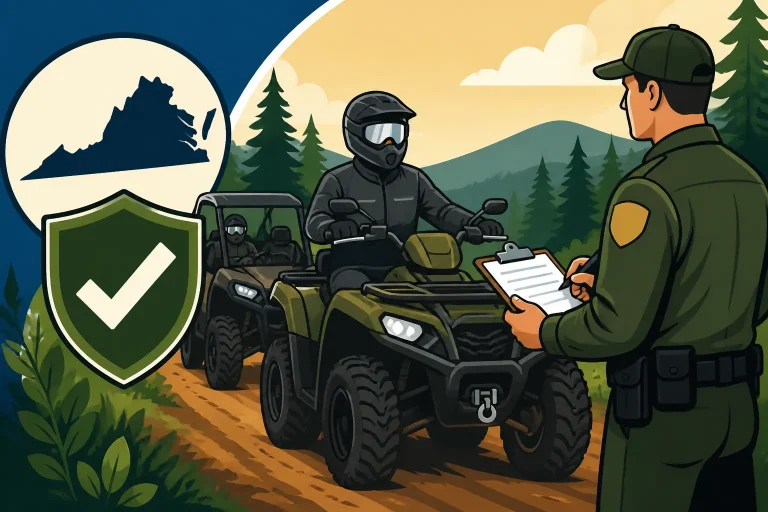
If a ranger or other trail staff member stops you, cooperate and follow instructions. Keep your permit and any required identification accessible, and avoid arguing about the speed limit while still in a hazardous spot on the trail. If you believe a sign or instruction is unclear, ask for clarification in a safe place. The article What a Trail Ranger Checks When You Are Stopped explains the kinds of checks riders may encounter.
When conditions are poor, turning around or choosing an easier route can be the safest choice. A permit, a planned destination or a long drive to the trailhead does not make a difficult section suitable for every rider. A ride is not improved by keeping a pace the terrain, visibility or group cannot support.
Frequently Asked Questions
Is 25 mph the required speed on Spearhead trails?
No. It is a maximum, not a minimum or target. Ride more slowly whenever the trail, visibility, traffic, surface or your ability to stop calls for it.
Does the 25 mph limit apply to every ATV trail in Virginia?
Do not assume that it does. The 25 mph limit applies across Spearhead systems. Other trail operators and land managers may have separate rules and signs. Confirm the requirements for the specific place you plan to ride.
Can a posted sign set a lower limit?
Yes. Follow a lower posted limit or an instruction from trail staff. The network maximum does not override a more restrictive rule for a particular section.
Does the trail limit apply on a public road near a trail?
Trail speed and road access are separate issues. A trail’s 25 mph maximum does not authorize ATV use on a public road. Confirm that the road section is open to your machine and follow the rules and signs that apply there.
Disclaimer
This article is for general informational purposes only and does not constitute professional advice. Laws, prices and regulations vary by location and change over time. Consult a qualified professional for guidance on your specific situation.