Why Breaking the ATV Law Is Not Proof of Negligence
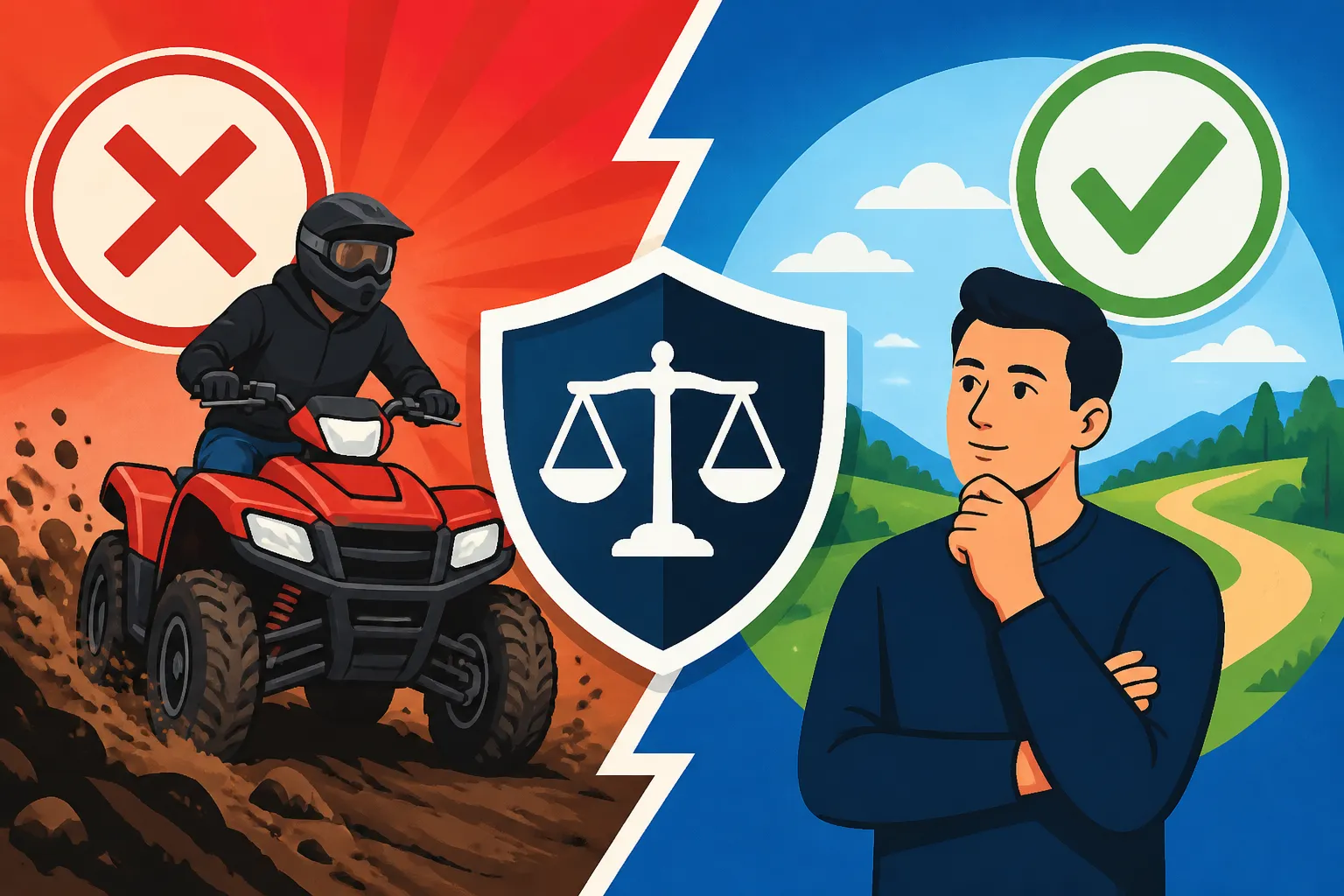
It's a common misconception among riders in Virginia that if you're involved in an ATV accident and you were breaking any ATV law, you're automatically considered "at fault" or negligent. Many folks worry that a simple mistake, like riding on a road section you shouldn't have been on, will instantly sink their chances if an accident occurs. This fear can be paralyzing and often leads to confusion about how the legal system actually works for off-road enthusiasts. This guide aims to clear up that anxiety, explaining precisely why breaking an ATV law is not, in itself, automatic proof of negligence in the Commonwealth of Virginia.
Understanding "Negligence" in Virginia's Legal Landscape
When we talk about accidents and who's responsible, the legal term "negligence" is always front and center. It's a concept that sounds complex, but at its heart, it's about whether someone acted responsibly enough to prevent harm. For ATV riders, understanding this term is crucial, because it directly impacts how an accident involving your machine might be handled in court.
The Legal Definition of Negligence
In Virginia, like most places, proving negligence requires showing four specific elements. Think of it like a checklist a court uses to determine fault:
- Duty of Care: This means someone had a legal obligation to act reasonably to avoid harming others. For instance, every ATV rider has a duty to operate their machine safely, within the bounds of the law, to prevent injuring passengers, other riders, or even pedestrians. Property owners have a duty to maintain safe premises for invited guests.
- Breach of Duty: This is where someone failed to meet that standard of care. Maybe they were riding too fast for the conditions, weren't paying attention, or ignored a stop sign on a trail. If you modified your ATV with a lift kit from a company like SuperATV, but then operated it recklessly, that could be seen as a breach of duty if it made the machine unstable and contributed to an accident.
- Causation: This is the critical link. The breach of duty must have directly caused the injury or damage. It's not enough that someone was careless; their carelessness must be the reason the harm occurred. If you slipped on a muddy trail and broke your arm, but another rider was technically speeding nearby, their speeding didn't cause your fall.
- Damages: Finally, there must be actual harm or loss suffered by the injured party – things like medical bills, lost wages, pain and suffering, or property damage.
Without all four of these elements, a claim of negligence typically won't hold up. This "causation" element is where the idea of an ATV law violation not automatically proving negligence truly comes into play.
How Virginia Law Views ATV Violations
Virginia has a clear set of laws governing ATV use, especially concerning where you can ride and the equipment you must have. For example, [Virginia Bans ATVs on Public Highways] is a well-known rule, and [Virginia Helmet Law Applies to Every Rider] means everyone, regardless of age, must wear approved head protection. Breaking these rules can absolutely lead to a citation and a civil penalty, which is often up to $500, as detailed in [Virginia's Civil Penalty for Illegal Riding].
However, these violations are generally considered civil infractions, not criminal offenses. This distinction is important. While a police officer might issue you a ticket for riding illegally on a paved road, that ticket, by itself, doesn't automatically mean you're negligent in a personal injury lawsuit. The court in a civil case will look at the specific circumstances of the accident and whether your violation directly contributed to the harm suffered. Simply put, getting a ticket doesn't automatically close the book on who's at fault in an accident claim.
The Difference Between a Violation and Negligence
This is where many riders get tripped up. They think "I got a ticket, so I'm automatically liable," but that's not always how it works in the real world of Virginia's courts. There's a vital distinction between simply breaking a rule and being legally negligent for someone else's injuries or damages.
Why a Citation Isn't Always a Guilty Verdict for Negligence
Imagine you're riding your ATV on a county road for a short stretch, which is generally prohibited unless it's a specifically designated [Virginia's Named Route in Buchanan County] or [Virginia's Named Route in Tazewell County] road. A deputy sees you and issues a citation for illegal road use. A mile down the road, totally unrelated to your road riding, another ATV swerves unexpectedly on a private trail access point and hits you.
In this hypothetical, you received a civil penalty for violating the road riding ban. However, that violation didn't cause the other rider to swerve into you on the trail. Their negligent operation of their machine did. Your citation for road use would be evidence of a violation, yes, but it wouldn't necessarily prove you were negligent for the collision itself. The burden of proof in a civil case rests on the injured party to show that your specific breach of duty (your violation) directly led to their harm. If there's no causal link, the negligence claim falls apart, even if you were technically breaking a separate rule.
When an ATV Violation Can Contribute to Negligence
Now, let's flip the scenario. You're riding your ATV on a public highway, an undeniable violation of [Virginia Bans ATVs on Public Highways]. You're also going well over the speed limit. You come around a blind curve and collide with a car pulling out of a driveway. In this situation, your violation (riding on a highway) and your excessive speed (a breach of safe operating duty) are directly linked to the accident. Your illegal presence on the highway and your unsafe speed are clear causal factors in the collision.
Here, a jury would likely view your actions as negligent, precisely because your violations directly contributed to the circumstances that led to the crash. The fact that you were on a highway where you shouldn't have been, and potentially driving unsafely, establishes both a breach of duty and a causal link to the resulting damages. It's about how the violation connects to the actual incident. If you're using performance parts from SuperATV that increase your speed and you then cause an accident while speeding, those modifications, combined with your actions, could also be considered when determining negligence.
Navigating an Accident Scenario: What Riders Need to Know
If you ever find yourself in an ATV accident, whether it's a minor fender-bender on a trail or something more serious, knowing what to do – and what not to do – can make a huge difference in how any potential negligence claims are handled. It's not just about knowing the law; it's about protecting yourself and your rights.
The Role of Evidence and Causation
The key to any negligence claim is proving that the defendant's actions caused the plaintiff's injuries. This means gathering robust evidence. If you're involved in an accident, documenting everything immediately can be invaluable.
Consider an example: you're riding a utility vehicle, perhaps one fitted with heavy-duty tires from SuperATV, on a farm field as allowed under [Virginia Farming and Household Exceptions]. Another rider on the same field suddenly turns into your path without warning, causing a collision. Even if you were technically exceeding the farm's internal speed limit – a violation of a private rule – if the other rider's sudden turn was the direct, primary cause of the collision, your speed might be deemed a secondary factor, or perhaps not causal at all to their negligence.
To prove causation, you'd want to collect:
- Photos and Videos: Capture the scene from multiple angles, damage to both machines, any skid marks, trail conditions, and relevant signage.
- Witness Statements: Get contact information and brief accounts from anyone who saw the incident.
- Police Reports: Even if it's a civil matter, a police report can provide an objective account of what was observed.
- Medical Records: Document all injuries and treatments received.
- Machine Inspection: Have a qualified mechanic inspect both ATVs to determine points of impact and potential mechanical failures.
Without a strong causal link between a specific action (or inaction) and the resulting harm, it's very difficult to prove negligence, even if a minor violation occurred.
Protecting Yourself After an ATV Accident
The immediate aftermath of an ATV accident can be chaotic, but taking specific steps can help protect you:
- Safety First: Check for injuries to yourself and others. If anyone is hurt, seek immediate medical attention. Remember that [Virginia Helmet Standards From the State Police] are designed to protect you, so always wear approved gear.
- Report the Accident: Depending on the severity and location, you might need to report the accident to local authorities or a trail system manager, like those for [Spearhead Trails in Virginia Explained]. Even if no one is seriously injured, a report can create an official record. [Virginia Accident Reporting for an ATV Crash] outlines what's required for more serious incidents.
- Document Everything: As mentioned, take photos and videos. Exchange contact and insurance information with any other parties involved. Do not admit fault or make assumptions about who is to blame at the scene. Stick to factual observations.
- Avoid Admissions of Guilt: Even casual statements like "I'm so sorry, it was my fault" can be used against you later. Express concern for the injured party, but do not take responsibility for the accident.
- Consult Legal Advice: An attorney specializing in personal injury and off-road vehicle law can help you understand your rights and options, especially if injuries are involved or a negligence claim is being pursued against you. They can help you navigate the nuances of [Virginia's Civil Penalty for Illegal Riding] versus actual negligence.
- Notify Your Insurance: Even if insurance isn't legally required for ATVs in Virginia (as per [Why Virginia Sets No Insurance Minimum for ATVs]), if you have a policy, notify your insurer promptly. They can guide you through the claims process.
Common Virginia ATV Laws and Their Impact on Negligence Claims
Virginia has specific regulations designed to promote safety and manage ATV use. While breaking any of these can lead to a penalty, it's crucial to understand how they might actually play out in a negligence claim.
Helmet Laws and Injury Claims
Virginia law is crystal clear: [Virginia Helmet Law Applies to Every Rider]. This means whether you're 8 or 80, if you're riding an ATV in Virginia, you must wear an approved helmet. If you're involved in an accident and you weren't wearing a helmet, you're in violation of the law and could face a fine.
However, for that violation to contribute to a negligence claim against you, there needs to be a direct link. If you crash and break your leg, but your head wasn't impacted, the fact that you weren't wearing a helmet, while a violation, didn't cause your broken leg. On the other hand, if you sustain a severe head injury while not wearing a helmet, the absence of the helmet (a direct violation) would be considered a causal factor in the severity of that specific injury. A defense attorney might argue that your failure to wear a helmet contributed to your own injuries, which could reduce any damages you might claim under what's known as contributory negligence.
Age and Passenger Restrictions
Virginia sets specific age limits for ATV operators based on engine size. For instance, [Virginia Riders Under 12 and 70cc] clarifies that riders under 12 are limited to machines 70cc or less. There are also strict rules about passengers, generally stating [Virginia Passenger Rules on an ATV] only on machines specifically designed for more than one rider.
Let's say a 10-year-old is riding a 90cc ATV, a clear violation of [Virginia Age Limits by Engine Size]. If that child crashes due to inexperience with the larger machine and suffers injuries, the parent who allowed this could be seen as negligent, as their breach of duty (allowing the child to operate an inappropriate machine) directly caused the injuries. Similarly, if you have a passenger on a single-rider ATV, and that passenger's weight distribution or movement causes you to lose control and crash, leading to their injury, your violation of the passenger rule would be a strong causal factor in a negligence claim.
Road Riding Bans and Trespassing
One of the most frequent violations involves riding an ATV on public roads or private property without permission. [Virginia Bans ATVs on Public Highways] is a fundamental rule, and [Virginia Written Consent on Private Land] is essential for avoiding trespass charges.
Consider this: you're riding your ATV on an unauthorized dirt road that's technically public property but not a designated trail. You strike a deer that suddenly jumps out, causing significant damage to your ATV and injuring you. While you were technically riding illegally, the deer jumping out was the direct cause of the accident. Your illegal presence on the road didn't cause the deer to appear. In this specific scenario, your violation might lead to a fine, but it wouldn't necessarily mean you were negligent for the accident itself. The deer was an unforeseen event.
However, if you're riding on an unauthorized road and collide with another vehicle that is legally supposed to be there, your illegal presence on the road would be a significant factor in determining negligence. The key is always the direct causal link between your action (or violation) and the harm that occurred. Even if your SuperATV-modified machine looks ready for anything, it doesn't grant you immunity from the specific rules of the road or trail.
Here's a quick table to help clarify the distinction:
| Violation Example | Direct Cause of Accident (Likely Negligence Link) | Not Direct Cause (Less Likely Negligence Link) |
|---|---|---|
| Riding on a Public Highway | Colliding with a car legally operating on that highway. | Hitting a tree on the side of the road due to a mechanical failure unrelated to road conditions. |
| Child Under 12 on an Oversized ATV | Child loses control due to the machine's power/weight, causing an accident and injury. | Child on oversized ATV is hit by another negligent rider whose actions were the sole cause of the collision. |
| Not Wearing a Helmet | Sustaining a severe head injury in a crash where a helmet would likely have prevented or reduced the injury. | Breaking a leg in a crash where the head was not impacted. |
| Riding on Private Land Without Permission | Causing damage to property (e.g., fence, crops) while trespassing. | Being injured by a falling tree on private land that was inherently unstable, unrelated to your trespass. |
| Passenger on a Single-Rider ATV | Passenger's movement shifts weight, causing operator to lose control and injure the passenger. | Single-rider ATV (with illegal passenger) is rear-ended by a negligent driver who fails to stop. |
| Exceeding Trail Speed Limit | Losing control on a curve due to excessive speed, crashing, and injuring oneself or others. | Slow-speed collision with an object obscured by a blind corner, where speed was not the primary factor in impact. |
This table illustrates that while a violation can lead to a citation, it only becomes a direct factor in a negligence claim if it directly causes or significantly contributes to the accident and the resulting harm.
In Virginia, merely breaking an ATV law does not automatically spell out negligence in the eyes of the law. While every rider has a duty to follow the rules, it's the causal link between a specific action – or a violation of a law – and the resulting harm that truly determines negligence in a court of law. It's a nuanced distinction, but one that every Virginia ATV and UTV enthusiast should understand. Riding responsibly and staying informed about the laws, especially regarding [Virginia ATV Road Rules Under 46.2-915.1] and [Virginia Written Consent on Private Land], is always your best defense, both on the trail and in court.
Disclaimer
This article is for general informational purposes only and does not constitute professional advice. Laws, prices and regulations vary by location and change over time. Consult a qualified professional for guidance on your specific situation.