Why Police May Ride an ATV on a Highway
It’s a scene that can really throw you for a loop if you’re a Virginia ATV or UTV owner: You’re cruising along in your truck, hauling your prized off-road machine to the trails, when suddenly you see a police officer on a quad or side-by-side, riding right there on a public highway. You know the law pretty well, and your mind immediately goes to, "Wait a minute, aren't ATVs banned from public roads in Virginia?" It’s a completely fair question, and it highlights a common misunderstanding among even experienced riders. This guide is here to clear up that confusion, explaining precisely why law enforcement vehicles are an important exception to the general rule and how they use these powerful machines to serve and protect.
The Clear Distinction: Why Law Enforcement ATVs Are Different
You’re not wrong to think that ATVs and UTVs are generally prohibited from public highways in Virginia. In fact, it’s one of the most fundamental rules every off-road enthusiast in the Commonwealth needs to know. But like many laws, there are specific, carefully carved-out exceptions, and law enforcement, along with other emergency responders, falls squarely into one of those categories. These aren’t loopholes; they’re deliberate provisions in the Virginia Code that recognize the vital role these specialized vehicles play in certain official capacities.
It can be incredibly frustrating to see this discrepancy. You might feel like there's one set of rules for them and another for you, especially when you're so diligent about following the rules to avoid hefty fines or even impoundment. Rest assured, the law is quite clear on this, and understanding the specific language helps demystify these roadside sightings.
Understanding Virginia's General ATV Road Ban
Let’s start with the baseline, because it’s crucial context. Virginia law is very explicit: ATVs and UTVs are primarily designed for off-road use. They lack many of the safety features required for on-road vehicles, like standard headlights, brake lights, turn signals, and often, the structural integrity to withstand typical road speeds and impacts. This is why [Virginia Bans ATVs on Public Highways]. The general public is prohibited from operating these machines on any public street, road, or highway. This includes everything from interstate highways to local county roads, with only a few very specific, limited exceptions for things like crossing a highway at the most direct angle or certain agricultural uses.
Breaking this rule can lead to significant consequences. An officer pulling over a civilian on a public road isn’t just being a stickler; they’re enforcing a law designed to prevent accidents and maintain public safety. The civil penalties can be steep, ranging up to $500 for a single violation, not to mention potential impoundment of your machine. It's a serious matter, which is why seeing a police ATV on the road can be so perplexing if you don't know the full story.
The Specific Law for Emergency and Law Enforcement Vehicles
Now, let's talk about the exception. Virginia Code § 46.2-915.1, which outlines the regulations for ATVs and UTVs, includes language that specifically exempts certain operators. It states that the prohibition on operating these machines on public highways does not apply to "any law-enforcement officer, firefighter, or emergency medical services personnel engaged in the performance of his official duties." This is the key phrase. It’s not a blanket pass for anyone in uniform; it’s tied directly to their official responsibilities. This same exemption often applies to [Virginia Emergency Responder Exceptions] more broadly, such as fire departments or rescue squads using their machines during emergencies.
This legal carve-out acknowledges that police officers, sheriff's deputies, and state troopers sometimes need the unique capabilities of an ATV or UTV to do their jobs effectively. Imagine a situation where a suspect flees into a densely wooded area, or a natural disaster has rendered conventional patrol vehicles useless. An ATV becomes an essential tool, allowing officers to navigate terrain that would be impassable otherwise. Without this exemption, their ability to respond to emergencies or pursue criminals in difficult environments would be severely hampered, directly impacting public safety.
What "Official Duties" Really Means
When the law talks about officers "engaged in the performance of his official duties," it means exactly that: they are actively performing tasks that are part of their job. This isn't about an officer taking their department-issued ATV for a joyride or using it for personal errands. It's about legitimate, on-duty activities where the ATV or UTV is the most appropriate or only vehicle for the task at hand.
Consider these scenarios:
- Patrolling Public Lands: Many state parks, national forests, and even some municipal properties in Virginia have extensive trail systems where conventional police cruisers simply can't go. Officers might use ATVs to patrol these areas, ensuring visitor safety, enforcing park rules, or responding to incidents like illegal camping or drug activity.
- Search and Rescue: If a hiker gets lost in a remote part of a mountain range or a child wanders off near a dense forest, an ATV is often the first vehicle deployed by search teams. Its ability to traverse rough terrain quickly is invaluable in time-sensitive situations.
- Disaster Response: Following severe weather events like floods or snowstorms, roads can become impassable for regular vehicles. Law enforcement might use ATVs to reach isolated residents, deliver supplies, assess damage, or manage traffic in affected areas.
- Special Events: At large outdoor events, festivals, or concerts, particularly those held in fields or on uneven ground, ATVs can be used for crowd control, rapid response, or transporting personnel and equipment.
- Traffic Enforcement on Permitted Trails: In areas like the coalfields where certain roads are opened to ATVs, police might use their own ATVs to patrol and enforce rules, just as they would with a patrol car on a regular highway.
In each of these cases, the ATV isn't just a convenience; it's a necessary piece of equipment that enables officers to perform critical functions that would be impossible or significantly delayed with other types of vehicles. This is a practical recognition of the capabilities these machines offer for specific public safety needs.
Beyond the Letter of the Law: Practical Reasons for Police ATV Use
While the legal exemption is the foundation, there are deep, practical reasons why police departments across Virginia invest in and utilize ATVs and UTVs. These machines fill crucial gaps in their fleet, allowing them to extend their reach and effectiveness into environments where traditional patrol cars simply cannot go. It’s not just about what the law allows; it's about what the job demands.
It can be hard to reconcile the rules you follow, like staying off public highways, with the sight of law enforcement openly using them. But it’s important to remember that their operational needs are fundamentally different from those of a recreational rider. They face unique challenges that require unique tools.
Accessing Difficult Terrain
One of the primary benefits of an ATV or UTV for law enforcement is its unparalleled ability to access difficult and diverse terrain. Think about the varied landscape of Virginia, from the dense forests of the Appalachian Mountains to the sandy shores of the Eastern Shore, or the winding riverbanks and vast agricultural fields in between. A standard police cruiser, designed for paved roads, is utterly useless in these environments.
An ATV, with its high ground clearance, knobby tires, four-wheel drive (or even six-wheel drive on some UTVs), and powerful engine, can navigate mud, rocks, steep inclines, deep sand, and dense brush. This makes them indispensable for:
- Off-road pursuits: If a suspect bails out of a vehicle and flees into a forest or across a field, an ATV allows officers to continue the pursuit without losing valuable time.
- Responding to incidents in remote locations: Accidents or medical emergencies can happen far from the nearest paved road. ATVs can quickly transport first responders and essential equipment to these areas.
- Navigating rough terrain during investigations: Crime scenes can be anywhere. An ATV allows investigators to access difficult areas without disturbing evidence or wasting time on foot.
Without these machines, many areas would simply be inaccessible to law enforcement, creating safe havens for illegal activity or leaving victims stranded without aid. They allow police to operate truly "anywhere" in their jurisdiction, not just where the asphalt ends. This also helps departments in the coalfield regions, where the terrain is notoriously rugged and off-road vehicles are a part of daily life.
Patrol and Surveillance in Off-Road Areas
Beyond emergency response, ATVs are powerful tools for routine patrol and surveillance in specific types of areas. As more public lands, parks, and dedicated trail systems open up for recreation, the need for law enforcement presence in these areas grows. An ATV enables officers to maintain visibility and enforce rules in places that are otherwise challenging to monitor.
For instance, at popular trail systems like Spearhead Trails or Peters Mill Run, officers on ATVs can:
- Ensure compliance with trail rules: Checking for valid permits, ensuring riders are following age and helmet requirements, or enforcing noise restrictions. [Virginia Helmet Law Applies to Every Rider] for civilians is enforced by officers on these trails.
- Deter illegal activity: The visible presence of law enforcement on a trail can significantly reduce incidents of reckless riding, littering, or other illicit behaviors.
- Respond to minor incidents: From a broken-down machine needing assistance to a minor altercation between riders, an ATV allows officers to reach the scene quickly and efficiently.
Furthermore, for surveillance operations, especially in rural or wilderness areas, the smaller footprint and maneuverability of an ATV or UTV can be a distinct advantage. They can often approach locations more discreetly than a full-size patrol vehicle, making them effective for monitoring potential illegal dumping sites, poaching activity, or clandestine operations in remote parts of the county.
Search and Rescue Operations
Perhaps one of the most critical roles for law enforcement ATVs is in search and rescue missions. When someone is reported missing in a wilderness area, time is of the essence. The speed and off-road capability of these machines can dramatically reduce search times, potentially saving lives.
Imagine a situation in the George Washington and Jefferson National Forests:
- Lost Hikers: A family gets lost on a remote trail. Search teams, using ATVs, can cover vast areas much faster than on foot, expanding the search perimeter and improving the chances of a quick recovery.
- Missing Persons in Rural Settings: An elderly person with dementia wanders away from their rural home. ATVs can systematically search fields, forests, and uneven terrain surrounding the property.
- Recovering Evidence or Victims: In the unfortunate event of an accident or crime in a remote area, ATVs can assist in the recovery of victims or crucial evidence from difficult-to-access sites.
Many police departments, especially those in more rural or mountainous regions of Virginia, train specialized search and rescue units that heavily rely on ATVs and UTVs. These units often carry specialized gear, first aid equipment, and even stretchers or rescue baskets specifically designed to be attached to these vehicles, further enhancing their capabilities during critical missions.
Equipment and Training: What Makes Police ATVs Capable
It's not just the legal exemption or the inherent capability of an ATV that makes police use effective; it's also the specific modifications made to these machines and the rigorous training officers undergo. A police ATV isn't just a consumer model fresh off the showroom floor; it's a purpose-built tool, often enhanced with specialized equipment that you won't find on a recreational quad.
Seeing these machines decked out in official livery can be a stark reminder of the division between civilian and official use. While you might equip your quad with SuperATV aftermarket parts for trail performance or utility, police departments are doing so for very specific operational needs.
Specialized Gear and Modifications
Police ATVs and UTVs are typically outfitted with a range of specialized gear and modifications that adapt them for law enforcement duties. These enhancements go far beyond what a typical civilian rider might add, focusing on communication, visibility, safety, and utility.
Common modifications include:
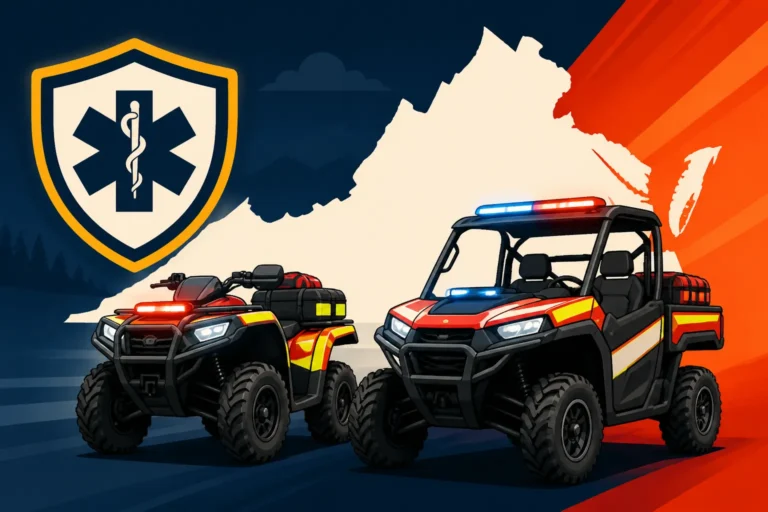
- Emergency Lighting and Sirens: Just like a patrol car, police ATVs are equipped with flashing lights (red, blue, or amber) and sirens to establish presence, clear paths, and signal emergencies, especially when they need to operate on public roads temporarily for official duties.
- Radios and Communication Systems: Robust communication systems are integrated, allowing officers to stay in constant contact with dispatch and other units, crucial in remote areas where cell service might be spotty.
- Cargo and Utility Racks: Heavy-duty racks, sometimes provided by aftermarket suppliers like SuperATV, are often added to carry essential equipment such as medical kits, search and rescue gear, evidence collection supplies, or even small tools for trail maintenance.
- Winches: A powerful winch is almost standard equipment, vital for self-recovery if the ATV gets stuck, or for assisting other vehicles or objects in difficult terrain.
- Reinforced Bumpers and Skid Plates: Given the demanding environments they operate in, police ATVs often feature enhanced protection to guard against impacts and rough terrain.
- GPS and Navigation Systems: Advanced GPS units with detailed topographical maps are essential for navigating unfamiliar wilderness areas and for tracking movements during search operations.
- Specialized Tires: While many recreational riders upgrade tires for specific terrains, law enforcement might opt for extremely durable, puncture-resistant tires that can handle a wider range of surfaces without failure.
These modifications transform a standard off-road vehicle into a reliable and effective law enforcement platform, ready to tackle any challenge the Virginia landscape can throw at it.
Officer Training for Off-Road Operations
It's not enough to simply have the right equipment; officers must also be proficient in operating these specialized vehicles safely and effectively. Police departments that utilize ATVs and UTVs invest in rigorous training programs to ensure their personnel are prepared for the unique demands of off-road operations.
This training typically covers:
- Basic and Advanced Rider Safety: Beyond the standard ATV safety courses, officers receive specialized instruction on handling heavy loads, navigating extreme terrain (steep inclines, descents, side hills), and operating in adverse weather conditions.
- Tactical Off-Road Driving: This includes techniques for pursuing suspects off-road, navigating tight spaces, performing evasive maneuvers, and operating in formations with other vehicles.
- Maintenance and Field Repairs: Officers are often taught basic field maintenance and minor repair skills to keep their machines operational in remote areas.
- Search and Rescue Protocols: Training focuses on using ATVs within established search and rescue procedures, including grid searches, victim extraction, and coordination with other emergency services.
- Legal Parameters: Reinforcement of the specific legal exemptions and limitations surrounding ATV use on public roads, ensuring officers understand when and where they can operate their machines.
This comprehensive training ensures that when an officer is seen on an ATV or UTV, whether on a trail or briefly crossing a highway for official duties, they are not only legally sanctioned but also highly skilled and prepared for the task at hand. It's a testament to their professionalism and commitment to public safety, leveraging all available tools responsibly.
Common Misconceptions and Observations
Even with the legal and practical explanations, seeing a police ATV on a highway can still spark questions or even frustration among the public. It's easy to jump to conclusions, especially when you're diligently following the rules yourself. Let's tackle some of those common misconceptions and clarify what you might observe.
It's natural to feel a bit of envy or even annoyance when you're strictly adhering to the off-road rules and then spot an official machine on a paved road. But understanding the context helps bridge that gap and provides a clearer picture of why these sightings occur.
It's Not a Free Pass for Civilians
This is perhaps the most crucial point to reiterate: the exemption for law enforcement and emergency personnel absolutely does not extend to the general public. Just because an officer can legally ride an ATV on a public highway for official duties does not mean you can. If you, as a civilian, are caught operating your ATV on a public road in Virginia, you are subject to the full force of the law, including fines and potential impoundment. [Virginia's Civil Penalty for Illegal Riding] is a real consequence for those who disregard this.
It’s tempting to think, "If they can do it, why can't I?" But the critical difference lies in the "official duties" clause. Your recreational ride, no matter how brief, does not qualify under this exemption. The Virginia General Assembly has made a clear distinction, recognizing the essential public safety role of law enforcement while maintaining the inherent dangers of recreational ATVs on public roadways for others. So, please, continue to trailer your machine to the designated off-road areas.
Spotting a Law Enforcement ATV: What to Look For
When you see an ATV or UTV on a public road, how can you tell if it’s a legitimate law enforcement or emergency vehicle, versus someone breaking the law? There are usually very clear indicators:
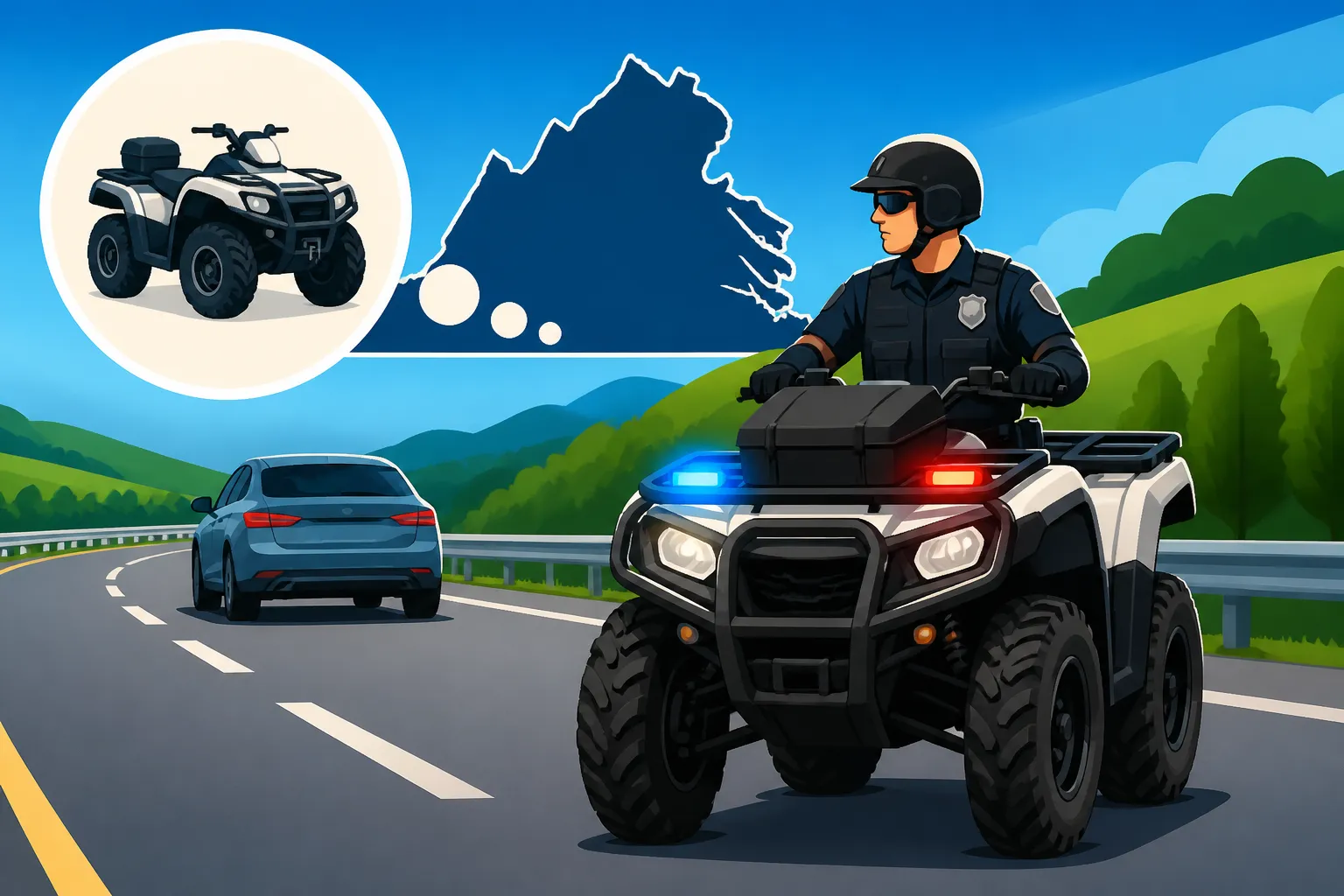
- Official Markings: The most obvious sign will be official decals, livery, or paint schemes identifying the agency (e.g., "Virginia State Police," "Sheriff's Office," "Fire-Rescue"). These aren't subtle, temporary stickers; they're integrated into the vehicle's appearance.
- Emergency Equipment: Look for emergency lights (red, blue, or amber strobes) and potentially a siren. While not always active, their presence is a strong indicator of an official vehicle.
- Uniformed Personnel: The operator will typically be in a clearly identifiable uniform, often with a badge and other duty gear, further confirming their official status.
- Specialized Gear: As discussed earlier, these machines often carry specialized equipment like heavy-duty cargo racks, winches, or communication antennas that are less common on purely recreational machines. Sometimes even a SuperATV cargo box might be integrated into their setup for durability.
- Context of Operation: Observe how the vehicle is being operated. Is it speeding through traffic with lights and sirens on (emergency response)? Is it moving deliberately from one off-road area to another? Or is it patrolling a specific area known for off-road activity? This context often provides clues to the officer's mission.
In summary, a genuine law enforcement ATV or UTV will look and act like an official vehicle, not just a souped-up recreational quad. It will be clearly identified, equipped for its specific duties, and operated by a uniformed professional. If you encounter an officer on an ATV, remember they are performing their job, and you should treat them with the same respect and cooperation you would any other law enforcement officer. They might even be conducting [Virginia Equipment Checks by Officers] on a nearby trail, using their ATV to access different sections of the system.
Civilian vs. Law Enforcement ATV Road Rules in Virginia
To make it even clearer, here's a quick comparison of how Virginia road rules generally apply to civilian ATVs versus those operated by law enforcement and emergency services. This table helps to underscore the distinct legal frameworks.
| Feature | Civilian ATV/UTV Operator in Virginia | Law Enforcement/Emergency Services ATV/UTV Operator in Virginia |
|---|---|---|
| Public Highway Use | Generally Prohibited (except for very limited crossings or farm use) | Permitted when engaged in official duties |
| Primary Purpose | Recreation, agricultural work, private property utility | Law enforcement, emergency response, search & rescue, patrol |
| Required Equipment | Basic safety gear (helmet, eye protection), spark arrester, lights (if riding after dark) | All standard vehicle emergency equipment (lights, sirens, radio), specialized gear for duty |
| Operator Status | Anyone meeting age/engine size requirements, typically for recreational purposes | Sworn officer, firefighter, or EMS personnel, in uniform and on duty |
| Violations | Subject to civil penalties up to $500, impoundment (for illegal road use) | Operating outside official duties would be a violation of policy or law, but official use is exempt |
| Title/Registration | [Virginia Titles ATVs but Never Registers Them] (Titling mandatory for new machines >50cc since 2006, optional for used) | Same titling rules apply, but operational use is distinct |
| Insurance | [Virginia Requires No ATV Insurance] by law, but recommended | Agency carries insurance coverage for official use |
This table plainly shows that while some fundamental aspects like titling and insurance (or lack thereof) are consistent, the operational rules for using these machines on public roads are dramatically different. The "official duties" clause is the linchpin that creates this divergence, allowing those dedicated to public safety to utilize these versatile machines in ways others cannot. Remember, if you're a civilian, understanding [Virginia Rules Riders Get Wrong] can save you a lot of trouble and expense, especially when it comes to riding on public roads.
Disclaimer
This article is for general informational purposes only and does not constitute professional advice. Laws, prices and regulations vary by location and change over time. Consult a qualified professional for guidance on your specific situation.