Virginia Rules for Riding in Pocahontas
Oh, the call of the mountains! There's nothing quite like gearing up your ATV or UTV for an adventure in Virginia's breathtaking Appalachian landscape. But if your sights are set on the storied trails around Pocahontas, Virginia, you might be feeling a bit of a knot in your stomach about the rules. It's a common frustration, honestly. You want to explore, but the thought of inadvertently breaking a law or getting a ticket can really take the fun out of planning. This guide is here to untangle those worries and give you a clear, realistic understanding of exactly what's permitted when you're riding your off-road machine in and around Pocahontas.
The Unique Landscape of ATV Riding in Pocahontas, Virginia
Pocahontas, Virginia, nestled in Tazewell County, holds a special place in the heart of many off-road enthusiasts. It’s not just a historic coal town; it’s a gateway to some of the most exciting and extensive trail systems in the state. However, the allure of these trails often comes with questions about how to legally get to them, or if you can ride through town itself. It's crucial to understand that while Virginia is generally very strict about ATV use on public roads, the coalfield regions, including areas around Pocahontas, have specific provisions that can be a bit of a puzzle.
Understanding the Coalfield Trails and Designated Routes
When we talk about riding in Pocahontas, we're almost always referring to the spectacular network of the Spearhead Trails system. Specifically, the Original Pocahontas trail system is a major draw, offering miles upon miles of incredible off-road adventure. These aren't just random dirt paths; they are officially designated, maintained, and permitted trails designed for ATVs, UTVs, and dirt bikes.
The key thing to remember is that these trail systems are carved out specifically for off-road recreation. You pay a permit fee, and in return, you get access to a fantastic, well-mapped network. The [Original Pocahontas' 94 Miles in Virginia] is a testament to the dedication to providing legal riding opportunities. Riders come from all over, knowing they can enjoy the thrill of the ride without worrying about trespassing or illegal activity as long as they stay within the marked boundaries. It’s truly a special setup, one that many other parts of Virginia just don't have. These trails are what make Pocahontas a legitimate destination for off-roaders.
Why Pocahontas Isn't Like Other Virginia Towns for ATV Riders
You might hear whispers that "you can ride ATVs on the roads in coal country." And while there's a kernel of truth to that, it's not a free-for-all, and it definitely doesn't apply to every town in Virginia. The difference lies in specific state legislation, Virginia Code § 46.2-915.1, which carved out very narrow exceptions for Buchanan and Tazewell counties, where Pocahontas is located.
This law acknowledges the historical and recreational significance of off-road riding in these coalfield communities. It's a pragmatic approach to connect riders from local accommodations or trailheads to the vast trail systems. So, unlike most of Virginia, where taking your quad onto a public street is a definite no-go, these counties have a limited ability to open certain roads. This is why you might see or hear about ATVs on specific roads in the area, but it's important not to generalize this to the entire state or even every road within these counties. Understanding these specific, carefully defined exceptions is paramount to staying on the right side of the law. You'll want to pay close attention to signs and local ordinances, as they can vary even within the same county. [Virginia's Named Route in Buchanan County] and [Virginia's Named Route in Tazewell County] refer to these very specific legal allowances.
Navigating Virginia's Strict Road Rules in and Around Pocahontas
Even with the special considerations for coalfield communities, Virginia's general stance on ATVs on public roads is overwhelmingly restrictive. It's like trying to fit a square peg in a round hole – ATVs simply aren't designed or legally equipped for highway travel. So, while Pocahontas offers unique opportunities, it's vital to grasp both the overarching prohibitions and the very specific, limited exceptions that apply.
The General Ban on ATVs on Public Highways
Let's start with the fundamental truth: in Virginia, ATVs, UTVs, and dirt bikes are generally prohibited from operating on public highways, roads, or streets. This isn't just a suggestion; it's law. A "public highway" is broadly defined and includes just about any road maintained by the state or a locality that's open to the public for vehicle travel. This means your local asphalt street, that gravel road leading to a fishing spot, or even the shoulder of a state route – all are generally off-limits for your off-road machine.
The intent behind this ban is primarily safety. ATVs lack many of the safety features of street-legal vehicles, like turn signals, rearview mirrors, and often, adequate lighting for road use. They're also designed for off-road traction, not pavement, which can affect handling. So, even if a road seems deserted, the law is clear: [Virginia Bans ATVs on Public Highways]. This is the default rule you should always assume unless you are absolutely certain a specific, signed exception applies. Failing to adhere to this can lead to significant penalties, which we'll discuss a bit later.
Exceptions for Coalfield Communities: What They Really Mean
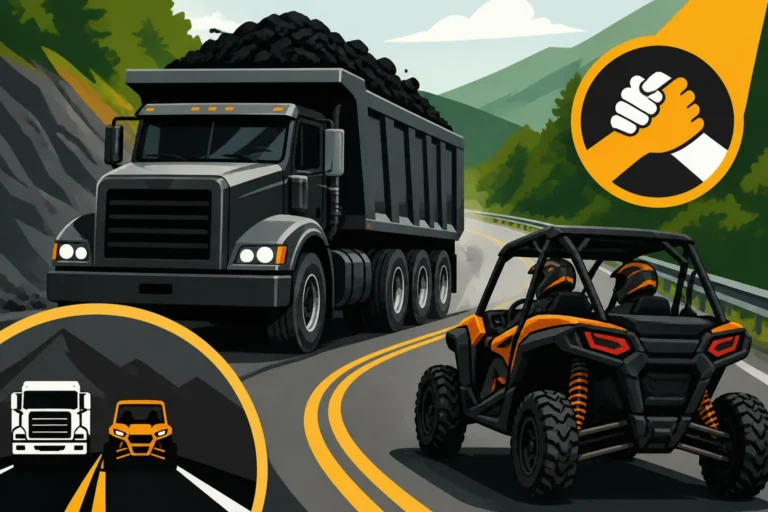
Now, here's where Pocahontas and parts of Tazewell and Buchanan counties get their unique status. Virginia Code § 46.2-915.1 does provide very specific and limited exceptions that allow ATVs and UTVs to operate on certain sections of public highways within these two counties. But, and this is a big "but," these aren't open invitations to cruise through town.
These exceptions are narrowly tailored to allow riders to connect designated trail sections or to access services like fuel, food, or lodging from a trail system. The conditions are stringent:
- Speed Limit: You absolutely cannot exceed 25 mph. This isn't a suggestion; it's a hard limit. [Virginia's 25 mph Coalfield Road Limit].
- Daylight Hours: Riding on these public roads is only permitted from sunrise to sunset. No night riding on the road. [Virginia Daylight Hours on a Road Trail].
- One-Mile Limit: The travel distance on these public roads is typically restricted to one mile or less to connect two otherwise legal riding areas. [Virginia's 1-Mile Road Limit]. This means you can't just drive for miles on the pavement; it's for short, direct transfers.
- Designated Routes: Crucially, these aren't just any roads. The local board of supervisors must have explicitly opened these specific routes to ATV traffic via an ordinance, and they must be clearly marked with appropriate signage. If you don't see signs indicating ATV use is permitted, assume it's not.
For example, you might find a short section connecting the [Riding the Trail Between Pocahontas and Boissevain] or the Pocahontas trail system to a gas station or restaurant in town. These routes are meant for utility, not joyriding on the pavement. Always look for signage, respect the speed limit, and remember you're only on the road to get from one trail segment to another or to access essential services. This isn't a "street-legal" status; it's a highly conditional allowance.
| Rule Category | General Virginia Public Roads | Designated Coalfield Connections (Pocahontas/Buchanan/Tazewell) |
|---|---|---|
| ATV/UTV Use | Generally Prohibited | Limited exceptions by local ordinance and signage |
| Speed Limit | N/A (Prohibited) | Max 25 mph on designated sections |
| Operating Hours | N/A (Prohibited) | Sunrise to Sunset only |
| Travel Distance | N/A (Prohibited) | Typically 1 mile or less to connect trails/services |
| Required Signage | No ATV signs means no entry | Must be clearly marked by local authority |
| Purpose | Not for road travel | Connecting designated trails or accessing essential services |
Essential Gear, Permits, and Etiquette for Riding in Pocahontas
Once you understand where you can ride in and around Pocahontas, the next step is ensuring you're properly equipped and ready to ride responsibly. This isn't just about avoiding trouble; it's about maximizing your enjoyment and ensuring everyone's safety on the trails. The coalfields are beautiful but can also be rugged, demanding respect from both rider and machine.
Permit Requirements for Spearhead Trails
If you're heading to Pocahontas to ride the Spearhead Trails, a permit is absolutely non-negotiable. Think of it like a lift ticket for a ski resort – you can't hit the slopes without it. Spearhead Trails operates on a permit system, offering both annual and multi-day options.
You'll need to purchase either a [Virginia's Annual Spearhead Trail Permit] or a [Virginia's Three-Day Spearhead Permit]. These permits are typically digital, arriving via email, and you'll need to be able to show proof of purchase along with a valid photo ID if a trail ranger stops you. Don't forget, if you're a resident of certain coalfield counties, you might even qualify for a discounted rate, cutting down the [Virginia Spearhead Permit Cost]. And for the younger riders in your group, there are specific youth permits required, too. Make sure every rider in your party has their own valid permit before you even unload your machines at the trailhead. Trail rangers are out there verifying permits, and you don't want your adventure cut short before it even begins.
Safety Gear and Machine Requirements
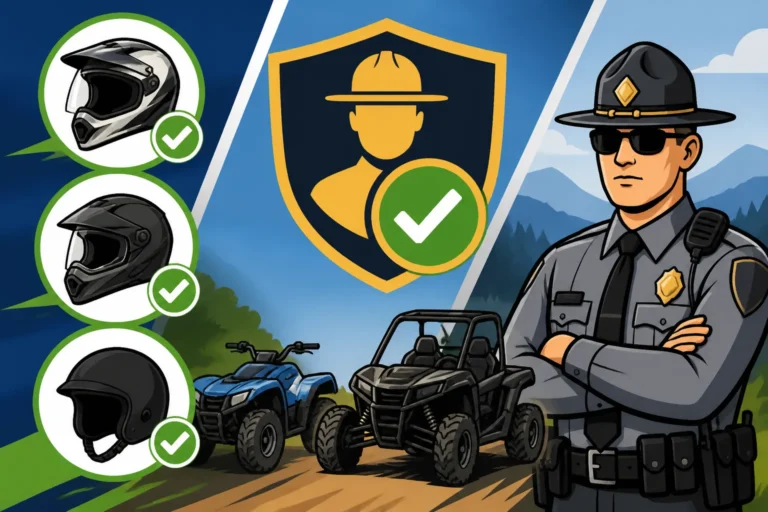
Virginia has some very clear rules regarding safety gear, regardless of whether you're on a designated trail or a legal road crossing. First and foremost, the helmet law is universal. Every single rider, no matter their age or where they are riding an ATV, must wear a helmet that meets Virginia State Police standards. This applies to adults, children, and even if you're just puttering around on your own land. [Virginia Helmet Law Applies to Every Rider]. Seriously, don't skip this. Eye protection is also highly recommended and often required at riding parks, even if the state law doesn't explicitly mandate it everywhere. Flying debris, dust, and branches are no joke.
Beyond personal gear, your machine needs to be in good working order. Functional brakes, a proper muffler to keep noise levels down, and working headlights and taillights are crucial, especially if you're on those limited road sections during daylight hours. [Virginia Lighting Rules on a Machine] are important for visibility. Most designated trail systems, including Spearhead, also require a spark arrester on your exhaust to prevent wildfires, a critical concern in forested areas. While Spearhead Trails are generally accommodating to various machine widths, it’s always wise to check specific trail system rules if you have an exceptionally wide side-by-side, though typically, they're designed with UTVs in mind. Consider outfitting your machine with essential accessories from brands like SuperATV, such as a sturdy winch for self-recovery on tough climbs, durable skid plates to protect your undercarriage from Appalachian rocks, or extra lighting for those dim trail sections. These additions not only enhance safety but can dramatically improve your riding experience.
Respecting the Land and Local Community
Riding in Pocahontas and the surrounding coalfields is a privilege, and it comes with a responsibility to be a good steward of the land and a respectful visitor to the community. The trails traverse a mix of public and private property, and staying on marked trails is not just a rule; it's a way to ensure these trails remain open for future generations. [Virginia Written Consent on Private Land] is always required if you venture off designated trails onto private property. You can't just assume a path is open.
Noise can be a concern, especially when trails run near residential areas. Be mindful of your throttle hand and avoid excessive revving. Practice "Leave No Trace" principles: pack out everything you pack in, and perhaps even a little more. [Leaving a Coalfield Trailhead Tidy] is part of being a responsible rider. Locals appreciate riders who respect their home and environment. Remember that the ability to ride in these areas is often due to collaboration between local governments, landowners, and trail organizations. A few irresponsible riders can jeopardize access for everyone, so let's all do our part to keep these incredible areas open and beautiful.
What to Do if You Encounter Law Enforcement in Pocahontas
It's a moment no one wants: seeing those flashing lights or a uniformed officer on the trail or a connecting road. But if it happens while you're riding your ATV or UTV in the Pocahontas area, knowing how to react can make a significant difference. Staying calm, respectful, and cooperative is always the best approach.
Understanding Officer Expectations
If a law enforcement officer, whether it's a Virginia State Trooper, a sheriff's deputy, or a Spearhead Trails ranger, approaches you, the most important thing is to remain calm and follow their instructions. They might be checking for permits, ensuring compliance with safety regulations, or responding to a complaint. Be prepared to provide your identification, your Spearhead Trails permit (if on a trail), and proof of ownership for your ATV or UTV.
Officers are simply doing their job, enforcing the state laws and local ordinances we've discussed. They expect professionalism and cooperation. Don't argue, don't make excuses, and certainly don't try to flee. A simple, "Yes, sir/ma'am," and presenting your documents goes a long way. They're looking for responsible riders, and your behavior can either confirm that or raise red flags. [What an Officer Can Ask For at a Trailhead] typically includes your ID, permit, and sometimes proof of ownership for your machine. Having these readily accessible, perhaps in a waterproof pouch on your machine or in your riding gear, can make the stop quick and painless.
Penalties for Non-Compliance
Virginia takes illegal ATV operation seriously, and the penalties can be substantial. If you're caught riding on a public highway where it's prohibited, or violating other specific conditions like the speed limit on a permitted road section, you could face a civil penalty. This isn't a criminal charge, but it can still hit your wallet hard.
The state law outlines a potential civil penalty of up to $500 for violations of ATV operation rules. [Virginia's Civil Penalty for Illegal Riding]. This fine can quickly put a damper on your riding trip. Furthermore, local authorities, particularly in cities and towns, have the power to impound your ATV if it's being operated illegally, especially on sidewalks or other unauthorized public property. [Virginia Penalties for Illegal Riding]. Getting an impounded machine back can be a complicated, time-consuming, and expensive process, involving impound fees, storage charges, and any associated fines. It's a risk simply not worth taking. Adhering to the rules, carrying your necessary documents, and riding responsibly is by far the cheapest and most enjoyable way to experience the fantastic riding opportunities around Pocahontas.
Disclaimer
This article is for general informational purposes only and does not constitute professional advice. Laws, prices and regulations vary by location and change over time. Consult a qualified professional for guidance on your specific situation.