Virginia Rules for Riding a Rail Bed
Riding an ATV or UTV in Virginia can be an exhilarating experience, offering a chance to explore the state's diverse landscapes. However, many riders, especially those new to the sport or visiting from out of state, often wonder about the rules for riding on specific types of terrain, like rail beds. It's a question that comes up a lot, and unfortunately, the answer isn't always what people hope to hear. This guide aims to clear up the confusion, explain the legalities, and highlight the very real dangers associated with operating your off-road machine on rail beds in the Commonwealth.
Understanding Virginia's ATV and UTV Definitions
Before diving into the specifics of rail beds, it’s essential to understand how Virginia law categorizes the machines we love to ride. This foundation helps explain why certain rules apply to ATVs and UTVs. Virginia's legal framework is quite clear on what these vehicles are, and crucially, where they are allowed to operate.
What Qualifies as an ATV or UTV in Virginia?
In Virginia, an all-terrain vehicle (ATV) is generally defined as a motor vehicle designed for off-road use, having three or more wheels, an engine 50 cubic centimeters (cc) or greater, a seat designed to be straddled by the operator, and handlebars for steering. Utility vehicles (UTVs), often called side-by-sides, are also considered off-road vehicles but typically feature a steering wheel, side-by-side seating, and a roll bar or cage. The core characteristic for both is that they are primarily built for navigating unpaved, natural terrain, not public roadways.
This distinction is vital because the rules and regulations governing ATVs and UTVs are specifically tied to their design and intended use. They are considered off-highway vehicles, which immediately places them in a different category than cars, trucks, or even motorcycles when it comes to road use. Understanding [Virginia ATV and Utility Vehicle Definitions] is your first step to being a responsible rider, ensuring you know exactly what kind of machine you’re operating under the eyes of the law.
How Virginia Defines Public Highways and Property
Virginia law is also very specific about what constitutes a "public highway" and "public property." A public highway generally refers to any way or place of any nature open to the use of the public for purposes of vehicular travel in the Commonwealth, including the streets and roads we all drive our cars on daily. This also extends to shoulders, medians, and rights-of-way associated with these roads. When it comes to other public properties, like parks, school grounds, or government-owned land, these too have their own specific regulations about ATV and UTV access.
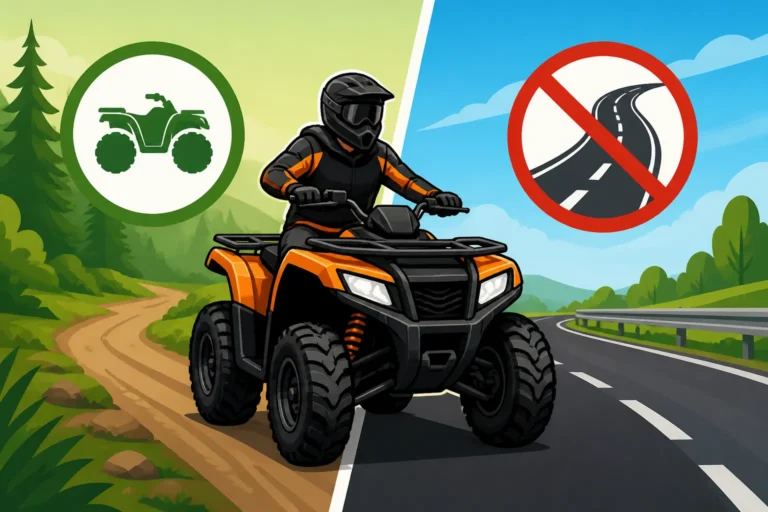
This legal definition is crucial because [Virginia Bans ATVs on Public Highways]. This blanket prohibition is one of the most important rules for any ATV or UTV owner in Virginia to grasp. It means that, with very limited exceptions (which we'll touch on later for specific designated routes), you cannot legally operate your off-road machine on any paved or unpaved road maintained by the state or local municipalities. This strict interpretation often surprises new riders who might be accustomed to more lenient rules in other states or who simply haven't looked into the specific laws here.
The Legal Status of Rail Beds in Virginia
Now, let's get to the heart of the matter: rail beds. It's tempting to see an unused stretch of old railroad track, or even a gravel path next to an active line, as an open invitation for some off-road adventure. However, this perception is fraught with legal pitfalls and significant dangers that every rider needs to understand.
Why Rail Beds Are Generally Off-Limits
In Virginia, nearly all rail beds, whether active or seemingly abandoned, are private property. They belong to railroad companies, or in some cases, private landowners who have acquired the land. This ownership means that operating an ATV or UTV on these properties without explicit, written permission from the owner constitutes trespassing. It's not a gray area; it's a clear violation of property rights.
Even if a rail line appears to be completely defunct and overgrown, it often still falls under private ownership. Railroad companies maintain ownership of these corridors for various reasons, including future expansion, maintenance access, or even as utility easements. The state does not typically oversee these lands as public access points for off-road vehicles. This legal reality is a tough pill for many riders who view these linear paths as ideal riding trails, but the consequences of ignoring this fact can be severe. It's the same principle as riding across someone's farm field without asking; it's simply not allowed.
The Concept of Trespassing on Railroad Property
Trespassing on railroad property isn't just a minor infraction; it can carry serious penalties. In Virginia, the law clearly prohibits unauthorized entry onto railroad rights-of-way. This isn't just about active tracks; it encompasses the entire corridor that the railroad company owns and maintains. The potential for heavy fines, legal action, and even vehicle impoundment is very real if you're caught. This is especially true for property owned by major railroad operators, who often have their own law enforcement divisions that patrol these areas and work closely with local authorities.
Beyond the legal aspect, there's a profound safety concern. Active rail lines are incredibly dangerous. Trains are faster, quieter, and cannot stop quickly. Even seemingly abandoned lines can still be used for maintenance equipment or could be reactivated. There are also hidden hazards like uneven ballast, deteriorated ties, sharp metal, and unpredictable terrain that can lead to accidents, property damage, or serious injury. For more on this, consider the broader context of [Virginia Trespass Law for Riders]. It’s a serious issue, and the best advice is always to stay off any property that isn't clearly designated for public off-road use.
Exceptions and Designated Trail Systems
While the general rule is a resounding "no" for rail beds, there are nuances and specific situations where portions of old rail infrastructure have been repurposed for public recreation. It's crucial to understand the difference between illegally riding on private railroad property and legally enjoying a designated trail that happens to utilize a former rail bed.
The Limited Case of Shared-Use Trails
In some very specific instances, former rail lines have been converted into multi-use trails, often referred to as rail-trails. These are typically managed by state or local park systems, or sometimes by non-profit organizations, and are explicitly opened for public recreation. However, it's vital to note that most of these rail-trails are designed for hiking, biking, or horseback riding, and ATV or UTV use is almost universally prohibited on them. You might encounter a few rare exceptions, but they are few and far between, and permission for ATVs would be clearly marked and publicized by the managing authority.
Always assume that a rail-trail is not open to motorized vehicles unless you see explicit signage stating otherwise, or have confirmed it with the managing body. A common mistake riders make is assuming that "multi-use" implies ATV use, which is often not the case for these types of converted paths. It's always about checking the specific rules for that particular trail system. When in doubt, it’s best to err on the side of caution and find trails specifically designed for your machine.
Designated Off-Road Trails That Might Cross or Utilize Old Rail Beds
Virginia does have incredible designated off-road trail systems that are legal and safe for ATVs and UTVs. These are the places you should be riding! While these systems primarily consist of purpose-built trails through mountains and forests, it's conceivable that some might, in specific, authorized sections, utilize or cross an old, decommissioned rail bed that has been legally acquired and integrated into the trail network. For instance, the Spearhead Trails system, which is a fantastic resource, is managed by a regional authority and offers hundreds of miles of diverse trails.
However, even on these designated trail systems, you are only allowed on the marked trails. You cannot simply veer off onto any adjacent, unofficial rail bed you see. Always stick to the marked routes, respect the signage, and adhere to all posted rules. Organizations like Spearhead Trails have gone through extensive legal processes to secure land-use agreements, convert old logging roads or mining paths, and ensure rider safety. If you're heading to the coalfields, [Virginia Spearhead Trails in Virginia Explained] is a must-read for understanding where and how to ride legally.
It’s crucial to understand that even when riding on an approved trail, your machine needs to be well-maintained and protected. For example, navigating some of the challenging terrains on these trails might require robust underbody protection. Brands like SuperATV offer heavy-duty skid plates, A-arm guards, and other durable accessories that can help safeguard your investment from rocks, roots, and unexpected obstacles, ensuring your machine can handle the rigors of legal off-road adventure.
Here’s a quick overview of legal vs. typically illegal riding areas:
| Riding Area Type | Legal for ATVs/UTVs in Virginia (Generally) | Requires Explicit Permission / Specific Designation | Illegal/Highly Dangerous (Generally) |
|---|---|---|---|
| Active Rail Beds | No | No | Yes |
| Abandoned Rail Beds | No | Yes (if converted to a designated OHV trail) | Yes (otherwise, it's private property) |
| Public Highways | No | Limited exceptions (e.g., specific county routes) | Yes |
| Private Land | No | Yes (written consent from landowner) | Yes |
| Designated OHV Parks/Trails | Yes | No (if it's a public access point) | No |
| Forest Service Roads | No | Yes (specific designated routes/permits) | Yes |
Consequences of Illegal Rail Bed Riding
The allure of an open, unpatrolled path can be strong, but the risks and consequences of riding an ATV or UTV on unauthorized rail beds in Virginia far outweigh any perceived thrill. These consequences aren't just legal; they extend to personal safety and the reputation of the entire off-roading community.
Penalties for Trespassing
As mentioned, operating your ATV or UTV on railroad property without permission is trespassing. In Virginia, trespassing can result in significant fines. A basic trespassing charge can be a Class 1 misdemeanor, leading to fines and potential jail time. For instance, [Virginia Penalties for Illegal Riding] can reach up to $500 for general ATV violations, and trespassing on railroad property can carry its own, often more severe, set of penalties due to the inherent dangers involved and the security concerns of the railway companies.
Beyond the fines, your machine could be impounded. Local law enforcement, or even railroad police, have the authority to seize vehicles used in illegal activities. Getting your ATV or UTV back from impound can be an expensive, time-consuming, and frustrating process, often involving towing fees, storage fees, and administrative charges that quickly add up. This isn't just a minor inconvenience; it can be a major financial burden, especially when combined with legal costs. Understanding [Virginia City Impoundment Powers] can give you an idea of how seriously these situations are taken by authorities.
The Dangers Beyond Legal Repercussions
While the legal and financial penalties are certainly a deterrent, the physical dangers of riding on rail beds cannot be overstated. Active rail lines pose an immediate and catastrophic risk from moving trains. Trains are extremely heavy and cannot swerve or stop quickly. Even if you hear a horn, it can be too late. The vibrations and noise of an approaching train can be easily masked by engine noise or helmet use, making detection difficult.
On abandoned or disused rail beds, the dangers are different but still very real. The terrain is often unstable, with loose ballast, exposed ties, and crumbling bridges. Railroad property can contain hazardous materials, sharp metal debris, and deep culverts or washouts that are not visible until it’s too late. A high-speed impact with such an obstacle can lead to severe injuries, including broken bones, head trauma, or worse. Your ATV or UTV could also suffer significant damage, rendering it unrideable and requiring costly repairs.
Protecting yourself and your machine is paramount when engaging in legal off-road riding. Wearing appropriate safety gear, like a DOT-approved helmet (which is required for every rider in Virginia, regardless of age or property type, as detailed in [Virginia Helmet Law Applies to Every Rider]), sturdy boots, gloves, and eye protection, is non-negotiable. Furthermore, having quality aftermarket accessories can contribute to your safety. For example, a heavy-duty bumper or a robust winch system, available from companies like SuperATV, can provide crucial protection for your machine and aid in recovery during a tough, but legal, trail ride. These are investments in safe, responsible riding, a stark contrast to the risks taken on illegal rail beds.
Ultimately, riding on rail beds in Virginia is a gamble with incredibly high stakes, both legally and personally. There are many fantastic, legal places to ride your ATV or UTV in Virginia, offering thousands of miles of adventure without the fear of trespassing or serious injury. Focus your energy and your riding passion on these designated areas, obtain [Virginia Written Consent on Private Land] if you plan to ride on private property, and always prioritize safety and legality.
Disclaimer
This article is for general informational purposes only and does not constitute professional advice. Laws, prices and regulations vary by location and change over time. Consult a qualified professional for guidance on your specific situation.