Seven Conditions in One Subsection
The allure of an ATV or UTV in Virginia is undeniable, offering unmatched freedom for recreation and invaluable utility for work. Yet, the question of where you can legally ride these machines, particularly on or near public roads, can be a major source of confusion and even anxiety for owners. It's incredibly frustrating to invest in a machine you love, only to feel restricted by complex regulations that aren't always clear. This guide is here to untangle those complexities, specifically diving deep into the "seven conditions" outlined in Virginia law that define the precise circumstances under which your off-road vehicle can legally operate on public highways, helping you navigate the landscape with clarity and confidence.
Understanding Virginia's General Ban on ATVs on Public Highways
Virginia's legal framework for All-Terrain Vehicles (ATVs) and Utility Vehicles (UTVs) is built on a fundamental premise: these machines are designed for off-road use. This isn't just a casual observation; it's the bedrock of the state's motor vehicle code, which generally prohibits their operation on public highways. For many riders, this overarching ban can feel like a significant hurdle, especially if a public road is the only short link between two private properties or trail sections. However, grasping this general prohibition is the essential first step before exploring the very specific exceptions that Virginia law meticulously outlines. Without this baseline understanding, any allowances might seem contradictory or easily misunderstood, leading to potential legal troubles.
The Core Prohibition: Why ATVs Aren't Road Vehicles
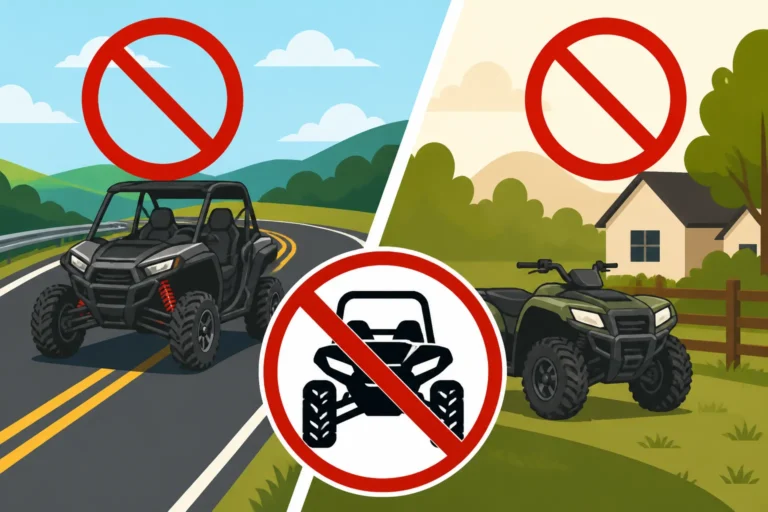
When you look at an ATV or UTV, it's clear they're engineered differently than a car, truck, or even a street-legal motorcycle. They typically lack turn signals, rearview mirrors are often optional or non-existent, and their aggressive tires are built for traction on dirt, mud, and rocks, not for the smooth, high-speed demands of asphalt. The Virginia Department of Motor Vehicles (DMV) defines an ATV as "any all-terrain vehicle, designed for off-road use" and a utility vehicle as a "self-propelled vehicle, designed for off-road use." This legal classification immediately distinguishes them from traditional motor vehicles intended for public roads. This fundamental difference in design intent is what drives the state's primary restriction.
The rationale behind this core prohibition extends far beyond mere design specifications; it's rooted in safety. Public highways are engineered for vehicles capable of consistent speeds, specific braking distances, and predictable handling characteristics within traffic. An ATV, with its often narrower track width, higher center of gravity, and suspension built for rugged terrain, can become dangerously unstable on paved surfaces, particularly at speeds commonly found on public roads. The risk of rollover is considerably higher, and the open design leaves riders acutely vulnerable in any collision with a larger vehicle. Virginia's laws are designed to mitigate these inherent risks, safeguarding both ATV riders and other motorists by generally restricting these machines to environments where their design is appropriate and risks are minimized. This firm stance means that, barring a very explicit and limited exception, your off-road machine is expected to stay off the pavement.
Defining "Public Highway" and Its Implications
So, what exactly does Virginia consider a "public highway"? The state's legal definition is quite broad, encompassing "any road, street, or way maintained by the Commonwealth or any political subdivision thereof, and open to the public for vehicular travel." This comprehensive definition doesn't just apply to bustling interstates or major state routes; it includes a vast network of roads, from quiet county lanes and rural gravel roads to certain municipal streets. If a road is maintained by a governmental entity and accessible to the general public for vehicles, it falls under this definition. This means even that seemingly deserted dirt track leading into the woods might be classified as a public highway if the county maintains it, making ATV use there subject to the same prohibitions as a major thoroughfare.
The far-reaching implications of this broad definition are significant for ATV and UTV owners. Many riders, especially those new to Virginia or accustomed to different state laws, might mistakenly assume that less-trafficked, unpaved, or rural roads are exempt from the general ban. This assumption is a common pitfall that can lead to unexpected encounters with law enforcement and costly citations. Before you ever contemplate putting your machine on any road, regardless of how minor or private-looking it appears, it is absolutely essential to verify its legal status and confirm that a specific, clearly defined exception applies. Without this diligence, you could inadvertently be operating your ATV illegally, simply by misinterpreting what constitutes a "public highway" in Virginia.
The Purpose Behind the Ban: Safety and Infrastructure
The general prohibition on ATVs and UTVs on public highways in Virginia is a multifaceted measure serving several critical objectives, with paramount importance placed on safety and the integrity of public infrastructure. As previously highlighted, the safety risks are undeniable. Accidents involving ATVs and standard passenger vehicles often result in severe injuries or fatalities for the ATV rider due to the lack of occupant protection. Furthermore, ATVs can introduce unique hazards into the flow of traffic. Their smaller profile can make them difficult for other motorists to see, especially in challenging lighting conditions or adverse weather. Their distinct acceleration, braking, and handling characteristics can lead to unpredictable movements that catch other drivers off guard, increasing the likelihood of collisions.
Beyond immediate safety concerns, the ban also protects Virginia's road infrastructure. While ATVs might not exert the same weight as commercial trucks, their aggressive off-road tires and handling characteristics can still contribute to wear and tear, particularly on unpaved or less-maintained public roads. More fundamentally, unrestricted ATV access would necessitate a significant overhaul of road design standards, traffic management strategies, and emergency response protocols, none of which are currently structured to safely integrate these machines into the regular flow of traffic. Therefore, the ban acts as a preventative measure, ensuring that established safety standards for all road users are maintained and that the existing public highway system can function efficiently and safely without undue strain or unforeseen hazards introduced by off-road vehicles. It is a pragmatic decision aimed at fostering a safer environment for everyone who uses Virginia's roads.
The Seven Conditions: When Exceptions Apply (Virginia Code § 46.2-915.1)
While Virginia's default position is to keep ATVs and UTVs off public highways, the law isn't entirely without nuance. Virginia Code § 46.2-915.1 specifically carves out a limited set of exceptions, often referred to as the "seven conditions," under which these off-road machines can legally operate on public roads. These aren't blanket permissions or casual waivers; they are highly specific allowances, each with strict limitations and purposes. Misinterpreting these conditions is a common reason for riders getting into trouble, highlighting why a thorough understanding of each point is absolutely crucial. For any ATV or UTV owner in Virginia hoping to legally operate their machine on or near a public road, memorizing and strictly adhering to these conditions is essential for staying compliant with the law and avoiding penalties. These specific rules are often the subject of [Virginia Title Questions the DMV Hears] from confused owners.
Crossing Public Highways: The Most Direct Route
One of the most frequently utilized and practically necessary exceptions permits an ATV or UTV to cross a public highway. Imagine you own a large property—perhaps a farm, timberland, or an extensive hunting lease—that is divided by a public road. Without this provision, moving your machine from one side of your land to the other would be legally impossible. The critical phrase here is "by the most direct route." This means your crossing must be swift and straight, minimizing the time spent on the public road. You should approach the highway, cross directly to the opposite side, and immediately exit onto private property. This is emphatically not an invitation to ride down the road for any distance, even a short one, or to take a scenic detour.
During such a crossing, you are still bound by all applicable traffic laws. This includes obeying stop signs, yielding to existing traffic, and ensuring the crossing is made safely and without impeding the flow of vehicles. While most ATVs lack conventional turn signals, clear visual checks and cautious operation are expected. An officer observing you traveling along the shoulder of a public road for more than a minimal distance before or after a crossing would likely consider it a violation, irrespective of your ultimate intention to return to private land. The intent of this exception is purely to facilitate necessary access between contiguous land parcels, emphasizing brevity and safety above all else.
Farm and Household Operations: Practical Exemptions
Another vital set of exceptions addresses the practical utility of ATVs and UTVs in rural and residential contexts. The law permits these machines to be operated on public highways when used for "farming or agricultural purposes" or for "household or personal errands related to the operation or maintenance of the owner's or operator's property." This is a significant allowance for individuals managing land, enabling them to move equipment, feed, supplies, or tools short distances down a public road between fields, barns, or different sections of their property. It also covers tasks like hauling materials for landscaping, firewood, or other maintenance activities directly associated with your home or land, even if it briefly involves traversing a public thoroughfare. This exception is especially useful for [Virginia Machines Used Only on a Farm].
However, the scope of "household or personal errands" is not unlimited. It is generally understood to involve limited distances and must be directly and genuinely tied to the needs of the property. For instance, you could likely use your UTV to move a heavy bag of topsoil from your mailbox to a garden across the road. However, riding your ATV five miles into town for general shopping, even if you own a farm, would typically not fall under this exemption. The operation must be a bona fide and direct extension of managing your property, not merely a matter of convenience. As with all exceptions, safety and responsible operation are expected, meaning riders should remain highly visible, operate at appropriate speeds, and be mindful of other road users, given the often slower pace of these utility-focused movements.
Emergency and Law Enforcement Use: Essential Services
The Virginia Code also provides common-sense allowances for specific, critical roles: emergency responders and law enforcement. Fire departments, volunteer rescue squads, search and rescue teams, and police agencies frequently rely on the agility and off-road capabilities of ATVs and UTVs to access remote or difficult-to-reach areas, navigate challenging terrains during emergencies, or assist in disaster relief efforts where conventional vehicles are unsuitable. For example, a rescue squad might use a four-wheel drive UTV to reach an injured individual deep within a state forest, or a police department might deploy ATVs to patrol large, unpaved parklands or manage crowds at sprawling outdoor events. In these scenarios, the unique attributes of ATVs and UTVs are not just advantageous but often indispensable for public safety and order.
Under these circumstances, these machines are explicitly permitted on public highways when necessary to respond to an emergency or to perform official duties. This exception acknowledges that the vital public service provided by these agencies outweighs the general prohibition on highway use for off-road vehicles. It's crucial to understand, however, that this exception applies exclusively to authorized personnel acting within their official capacities. It does not extend to private citizens attempting to respond to their own emergencies or assist in a public emergency without official direction and authorization. This legal provision ensures that the professionals dedicated to protecting our communities have unrestricted access to all necessary tools for effective and timely response. [Virginia Rescue Squad Title Exemptions] are a related part of this framework.
Designated Coalfield Routes: Limited Road Access
Perhaps the most geographically specific and often misunderstood exception pertains to certain designated routes within Virginia's coalfield counties. This unique provision, enacted to accommodate the specific terrain, historical industry, and prevalent off-road vehicle culture of the region, allows the boards of supervisors in [Two Counties Named in the Code], specifically Buchanan and Tazewell counties, to designate certain public roads or sections thereof for ATV and UTV use. This is a rare instance of intentional, localized road access for these machines, designed to serve both recreational and practical needs in these unique communities. It is often the source of much inquiry for riders planning trips to the region.
However, it is vital to emphasize that even within these designated areas, access is highly regulated and far from unrestricted. Strict rules govern aspects like speed limits (typically 25 mph), permissible hours of operation (daylight only), and the types of roads that can be designated. These routes are generally selected to connect segments of larger off-road trail systems, like Spearhead Trails, or to provide access to essential services and amenities in nearby trail towns. It is incumbent upon riders in these areas to consult current local county ordinances, official maps, and clear signage. Riding off these explicitly marked and designated routes onto any other public road, even within Buchanan or Tazewell counties, constitutes a violation, underscoring the precise and limited nature of this unique allowance.
Diving Deeper into Coalfield Road Access and Its Specifics
The provisions for ATV and UTV access on public roads in Virginia's coalfields represent a fascinating and highly localized carve-out in state law. They reflect a legislative recognition of the unique economic and recreational dynamics of this specific region. However, this isn't a free pass for unrestricted road riding. For riders to legally take advantage of these allowances, a deep dive into the very specific details, geographical limitations, and operational constraints is absolutely necessary. Operating an off-road vehicle on these routes requires precision, as straying from the rules can quickly turn a legal journey into a costly citation. This specialized access is a key part of the [Virginia Road Access in the Coalfields] discussion.
Which Counties and Routes Are Covered?
The Virginia Code is explicitly clear: only Buchanan and Tazewell counties possess the statutory authority to designate public highways for ATV and UTV use under these special provisions. This is a critical distinction, meaning that similar exceptions do not automatically extend to other counties in Virginia, even those with comparable mountainous terrain or a strong off-road culture. If you are operating an ATV or UTV on a public road in any other county, these specific coalfield access rules simply do not apply, and you would be in violation of the general ban unless another of the seven conditions is met. This geographical limitation is often a source of confusion for riders from outside the immediate coalfield region.
Within Buchanan and Tazewell counties, the local boards of supervisors must pass specific ordinances to identify and designate particular highways or portions of highways for ATV and UTV use. These are not random roads; they are typically chosen strategically to connect sections of expansive off-road trail systems, such as the Spearhead Trails, or to provide riders with necessary access to gas stations, dining, and lodging in supportive trail towns. You might find portions of [Virginia's Named Route in Buchanan County] or [Virginia's Named Route in Tazewell County] included. These designated routes are always clearly identified by official signage, which often details the rules of use. It is imperative that riders consult up-to-date official maps, local county ordinances, or clear roadside signage to ensure they are on a legally permitted route. Any deviation onto an undesignated public road, even within these counties, is an illegal act.
Time and Speed Limits on Designated Routes
Even on the specially designated coalfield roads, the privilege of operating ATVs and UTVs comes with stringent time and speed limitations. To prioritize safety, Virginia law mandates that these machines may only be operated on designated public highways during daylight hours. This means operation is strictly prohibited from sunset to sunrise. The rationale for this restriction is straightforward: ATVs and UTVs typically have less comprehensive lighting systems compared to street-legal vehicles, making them considerably harder to see in low-light conditions. Riding after dark significantly escalates the risk of collision with other motorists, who may not anticipate or readily spot an off-road vehicle on the highway.
In addition to time restrictions, a strict speed limit of 25 mph is imposed on all ATVs and UTVs operating on these designated coalfield routes. This maximum speed is deliberately set much lower than typical highway speed limits, even on roads that might have higher posted limits for conventional vehicles. The purpose of this reduced speed is to mitigate the inherent risks associated with operating off-road vehicles on paved or gravel public surfaces. A slower speed allows riders more reaction time for unexpected hazards and significantly reduces the potential severity of any accidents. It's a clear legislative signal that even when allowed on the road, these machines are still considered off-road vehicles and require extreme caution. Adhering to [Virginia's 25 mph Coalfield Road Limit] is a non-negotiable legal requirement.
Signs, Clubs, and the Role of Local Authorities
The successful implementation and ongoing management of these designated coalfield routes are a testament to the collaborative efforts between local government and the ATV riding community. The process begins with the boards of supervisors in Buchanan or Tazewell County, who must pass formal ordinances to designate specific highways. This involves careful deliberation regarding public safety, potential impacts on traffic flow, and the overall benefit to the community. Once a route is officially designated, the law requires clear, conspicuous signage to be erected along these roads. These signs are crucial, serving to inform both ATV riders about permissible use and other motorists to expect off-road vehicles. They typically communicate the specific rules, such as the 25 mph speed limit and daylight-only operation, and precisely delineate the section of road where ATV use is permitted.
Notably, the law often allows for these essential signs to be funded by local ATV clubs or associations, highlighting the partnership model in these regions. This collaborative approach between local governance and organizations like those supporting the Spearhead Trails ensures that the designated routes are well-marked and that the riding community is actively engaged in promoting safe and legal operation. While clubs may contribute to the infrastructure and promotion, ultimate authority for designation, enforcement, and public safety rests with local law enforcement. Riders must always remember that even with the best signage and community support, personal responsibility for strictly adhering to the law is paramount. When you see those "ATV Route" signs, they represent the hard work and cooperation of many dedicated individuals and groups.
What Happens When You Break the Rules: Penalties and Enforcement
Riding an ATV or UTV on a public highway in Virginia without scrupulously adhering to one of the strict legal exceptions is not a minor infraction. The Commonwealth has established clear and often severe penalties designed to strongly deter illegal road use. Many riders, either through ignorance or misunderstanding, might assume that a casual ride on an undesignated road will result in nothing more than a warning. However, the reality can be far harsher, involving substantial financial penalties and potentially even the impoundment of your machine. Understanding these consequences is just as critical as knowing the rules themselves, as it vividly illustrates the significant risks associated with casual or uninformed road riding.
Civil Penalties: Fines and Legal Ramifications
For most violations concerning the illegal operation of ATVs or UTVs on public highways in Virginia, the penalties are classified as civil, not criminal. This distinction means that you generally won't face criminal charges or jail time for such an offense. However, this does not imply a lack of severity. The Virginia Code explicitly states that any person violating these provisions is subject to a civil penalty of "not more than $500." This is a significant sum that can swiftly impact your budget and diminish the enjoyment of your machine. This substantial fine serves as a powerful deterrent, underscoring the state's firm commitment to keeping ATVs off public roads unless explicitly permitted by law.
Beyond the initial fine, there can be additional legal ramifications. While a civil penalty doesn't lead to a criminal record, the incident itself will be documented, and repeat offenses could attract increased scrutiny from law enforcement. You might also be responsible for court costs and administrative fees in addition to the penalty, further escalating the financial burden. For some, the cost and effort of contesting a citation, even if they believe they have a valid defense, might outweigh simply paying the penalty. This highlights that simply knowing about the existence of exceptions isn't enough; precise adherence to the law is absolutely necessary to avoid these potentially costly and frustrating experiences. The [Virginia Penalties for Illegal Riding] are designed to be a clear deterrent.
Impoundment and Its Consequences
One of the most immediate, impactful, and financially burdensome consequences of illegally operating an ATV or UTV on a public highway in Virginia is the potential for impoundment. Local jurisdictions, including cities and counties, frequently have ordinances in place that grant law enforcement the authority to seize and impound machines found in violation of road use laws. Imagine you've just taken your side-by-side a "quick shortcut" down a city street, thinking it's harmless, only to be stopped by an officer who informs you that your vehicle is being towed away. This can be a deeply shocking and profoundly frustrating experience for any owner, as it directly removes your ability to use your machine. [Cities Can Impound an ATV Ridden on a Sidewalk] is a stark reminder of local authority in this matter.
Retrieving an impounded machine can be a complex, time-consuming, and surprisingly expensive process. You will almost certainly be responsible for towing fees, daily storage fees that quickly accumulate, and various administrative charges, all of which can easily add up to hundreds, if not thousands, of dollars. These costs are completely separate from and in addition to any civil penalties you may incur. Furthermore, the process of recovering your ATV typically requires presenting proof of ownership, valid identification, and payment of all outstanding fees, which can involve significant bureaucratic hurdles. The threat of impoundment serves as a particularly powerful deterrent, directly impacting your ownership experience and delivering a substantial financial blow. It reinforces why understanding [Virginia City Impoundment Powers] is absolutely critical, especially when considering riding anywhere near developed or urbanized areas.
Avoiding Common Missteps and Misunderstandings
Many ATV and UTV riders unfortunately fall victim to common misunderstandings that lead directly to citations and impoundments. A prevalent misstep is the assumption that any unpaved, private-looking, or lightly trafficked road is automatically exempt from the "public highway" definition. As previously discussed, Virginia's definition is broad; unless you are absolutely certain it is truly private property for which you have explicit permission, it is safest to assume it is a public thoroughfare. Another frequent error is broadly interpreting the "farm or household operations" exception as a carte blanche for any errand. Remember, this exception is strictly limited to tasks directly related to the operation or maintenance of your property, not for general convenience or personal errands unrelated to your land.
Lastly, relying on outdated information, social media rumors, or casual hearsay regarding coalfield access routes can be a perilous and expensive mistake. The designated routes in Buchanan and Tazewell counties are meticulously specific and require diligent verification. Always consult current official county maps and look for clear, official roadside signage. If you are ever in doubt, the safest course of action is always to trailer your machine to a legally approved riding area or trail system rather than risking a significant fine, impoundment, or even an accident. Equipping your machine with enhanced safety features, even if not strictly mandated for every legal exception, can also greatly improve your visibility and safety when making legal road crossings or using designated routes. For example, SuperATV offers a range of durable mirrors and enhanced lighting options that, while they don't make your ATV street legal, can significantly increase your awareness and visibility to other traffic during any permitted road use. Proactive caution, informed decision-making, and respecting the letter of the law are your best defenses against legal troubles in Virginia.
Equipment and Safety Requirements for Legal Riding
Even in those limited scenarios where operating an ATV or UTV on a Virginia public highway is legally permitted under one of the specific exceptions, the state imposes crucial equipment and safety mandates that operators must strictly adhere to. These are non-negotiable rules, established to protect both the rider and other individuals, and to minimize risks during any authorized road operation. It's not just about avoiding penalties; it's about safeguarding your well-being and contributing to the overall safety of the environment you are operating in. Compliance with these vital safety regulations is an integral component of responsible ATV and UTV ownership in Virginia, particularly whenever your machine ventures anywhere near public thoroughfares.
Helmet and Eye Protection Mandates
Virginia law is absolutely unambiguous regarding helmets: every single person operating or riding as a passenger on an ATV or UTV must wear an approved helmet. This mandate is universal; it applies to all ages, all types of terrain, and crucially, during those brief moments you might be legally crossing a public highway or utilizing a designated coalfield route. The law stipulates that the helmet must meet standards established by the Virginia State Police. This invariably means it must be DOT-approved, signifying that it complies with federal safety requirements. A casual bicycle helmet, a sports helmet, or a construction hard hat simply will not satisfy this legal requirement. This statewide helmet law is a fundamental safety measure, directly addressing the critically high risk of head injuries prevalent in ATV accidents. More details can be found in [Virginia ATV Helmet Law Explained].
In addition to a helmet, appropriate eye protection is also mandatory for all riders and passengers. This can take the form of safety glasses, protective goggles, or a helmet equipped with an integrated face shield. The primary purpose of eye protection is to shield your eyes from an array of hazards common during ATV operation, including flying debris, dust, insects, and other environmental elements. Even a momentary impairment of vision can lead to a serious accident, especially when operating near other vehicles or on varied terrain. Therefore, safeguarding your eyes is equally as vital as protecting your head. These stringent rules emphatically underscore Virginia's unwavering commitment to rider safety, irrespective of the specific circumstances of operation, and should always be prioritized by responsible riders.
Age and Supervision Rules for Riders
Virginia law also enforces specific age restrictions tied to engine size for ATV operation, which remain in effect regardless of whether you are on private land or legally traversing a public highway. For example, children under 12 years of age are generally prohibited from operating ATVs with an engine size exceeding 70cc. Riders between 12 and 16 years of age face restrictions on machines with engine displacements greater than 90cc. It is only individuals 16 years and older who are legally permitted to operate ATVs with engine sizes above 90cc without these specific limitations. These regulations are meticulously designed to ensure that riders possess the requisite physical maturity, strength, coordination, and cognitive judgment to safely control a powerful and potentially dangerous machine. A full breakdown is available in [Virginia Age Limits by Engine Size].
Crucially, Virginia law does not include a "supervised exception" that allows riders under 16 to circumvent these engine size restrictions simply by being accompanied by an adult. Unlike some other states, Virginia's code is quite firm on these limits. If, for instance, a 10-year-old is observed operating a 250cc ATV, even with a parent riding right beside them, it constitutes a legal violation. These age and engine size restrictions are in place because larger, more powerful machines demand a higher level of skill, experience, and mature judgment that younger riders typically have not yet developed. When operating an ATV, particularly anywhere near or on public roads, ensuring that all riders strictly meet these age and machine requirements is absolutely essential for both legal compliance and paramount safety.
Manufacturer Passenger Design Rules
Finally, when it comes to the crucial matter of carrying passengers on an ATV or UTV, Virginia law directly defers to the manufacturer's original design intent. This is a critical distinction and a frequent point of misunderstanding among riders. Many single-rider ATVs, despite perhaps having a small space behind the driver, are fundamentally not engineered to safely accommodate a passenger. Attempting to carry a passenger on a machine designed for a single operator can severely compromise the ATV's stability, negatively affect its handling characteristics, and significantly increase the risk of an accident, particularly on varied terrain or during a necessary road crossing. The law specifically states that an ATV may carry a passenger only if it is "designed by the manufacturer to carry more than one person."
Utility Vehicles (UTVs), conversely, are frequently designed with multiple seats, roll cages, and seatbelts, inherently making them much safer and legally capable of carrying passengers. However, even with UTVs, it is imperative to strictly adhere to the manufacturer's stated passenger capacity and ensure that all occupants are properly seated and utilizing any available seatbelts. Overloading a machine beyond its design limits or allowing passengers to ride in areas not specifically designated for seating is not only illegal but also exceedingly dangerous. Always consult your specific machine's owner's manual for its official design and capacity specifications before attempting to carry any additional person. Whether you are transporting tools for farm work or simply moving across property, ensuring passenger safety according to the machine's intended design is a paramount legal and ethical responsibility. Further information can be found in [Virginia Passenger Rules on an ATV].
| Condition Category | Specific Allowance | Key Restrictions/Notes |
|---|---|---|
| Crossing Highways | Crossing a public highway | Must be by the most direct route (straight across). Not for riding along the highway. Must yield to all traffic and obey all traffic laws. |
| Farm/Household Use | For farming or agricultural purposes, or household/personal errands directly related to the operation or maintenance of the owner's property. | Limited distances. Must be a genuine, direct extension of property management, not general errands. |
| Emergency Services | For authorized law enforcement, fire, emergency medical, or search and rescue personnel during official duties. | Applies only to official personnel acting in an official capacity during an emergency or duty. Does not extend to private citizens. |
| Designated Coalfield | On specific public highways or sections thereof officially designated by local ordinances in Buchanan and Tazewell counties. | Only applicable in Buchanan and Tazewell counties. Routes must be explicitly designated and clearly signed. Not for general road use in other counties. |
| Coalfield Time Limit | On designated coalfield routes, operation is restricted to daylight hours only. | Strictly prohibited from sunset to sunrise. Reduced visibility for ATVs/UTVs makes night riding dangerous on public roads. |
| Coalfield Speed Limit | On designated coalfield routes, operation must not exceed 25 mph. | A firm 25 mph maximum speed limit applies, even if the road's posted speed for cars is higher. Ensures safer operation of off-road vehicles on paved surfaces. |
| Written Consent | (Implicit within other exceptions, or for crossing private land to access permitted areas) Operation on private land with the written consent of the landowner. | Crucial for ensuring legal access across private property that might intersect with or be adjacent to public roads. Not an exception for direct highway use, but allows legal transit to designated areas. [Virginia Written Consent on Private Land] is essential. |
Disclaimer
This article is for general informational purposes only and does not constitute professional advice. Laws, prices and regulations vary by location and change over time. Consult a qualified professional for guidance on your specific situation.