Virginia Written Consent on Private Land
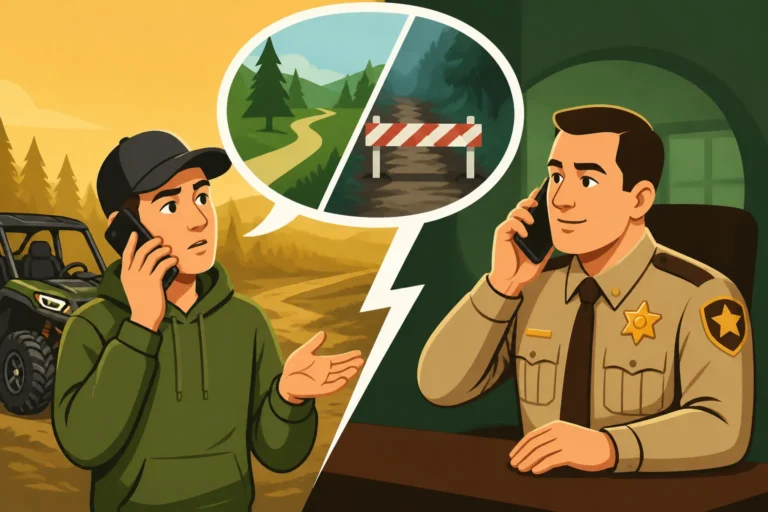
It's a beautiful day, the engine's humming, and you're itching to hit the trails on your ATV or UTV. But before you even think about putting tires to dirt on someone else's property in Virginia, there's a crucial piece of paperwork you absolutely need: written consent. Riding on private land without explicit, documented permission can quickly turn a fun outing into a legal nightmare, costing you time, money, and potentially your machine. This guide is here to walk you through exactly why written consent is non-negotiable in the Commonwealth, what it needs to say, and how to protect yourself and your passion for off-roading.
The Core Rule: Why Written Consent Matters in Virginia
Let's be real, many of us grew up in places where a casual nod or a quick "yeah, go ahead" from a neighbor was enough to hop on your quad and ride their back fields. Those days, if they ever truly existed without risk, are long gone, especially in a state like Virginia with clear trespass laws. The legal landscape around private property is serious business, and for ATV and UTV riders, understanding this isn't just a suggestion—it's a shield against major headaches.
Understanding Virginia's Trespass Laws for Off-Roaders
Virginia law takes private property rights very seriously. When you operate an ATV or UTV on land that isn't yours, you are, by default, trespassing unless you have express permission. This isn't just about fences and "No Trespassing" signs; it extends to any private property. The law doesn't care if you thought you had permission, or if the gate was open, or if you've ridden there a hundred times before. If the landowner can't definitively confirm that you were given permission, you're in violation. Imagine a scenario where you're out riding a familiar path that cuts through a neighbor's woods, a path you've used for years with what you believed was an unspoken agreement. Suddenly, there's a new landowner, or the old one has a change of heart, or perhaps an incident occurs, and without written proof, your long-standing "understanding" means absolutely nothing in the eyes of the law. You could be facing significant fines and legal trouble, even if your intentions were completely innocent. [Virginia Trespass Law for Riders] spells out just how serious these infractions can be.
Beyond a Verbal "Yes": The Legal Imperative for Written Permission
So, why isn't a handshake or a verbal agreement enough? Because human memory fades, relationships sour, and people move. What happens if the landowner who gave you verbal permission sells the property? Or what if they simply forget they gave you the go-ahead, or misremember the scope of what they allowed? A verbal agreement is notoriously difficult to prove in court, and in situations involving property damage, personal injury, or even just an officer responding to a complaint, the burden of proof often falls on you, the rider. Without something in writing, it becomes a "he said, she said" situation, and the scales of justice often tip in favor of the property owner. A piece of paper, signed and dated, eliminates all ambiguity. It acts as an irrefutable record of consent, protecting both you and the landowner by clearly defining the terms of access. It’s not about mistrust; it’s about clarity and legal protection for everyone involved. Think of it as your insurance policy for fun.
What Your Written Consent Note Should Include
Now that we've established why you need written consent, let's talk about what that consent actually looks like. This isn't just a scribble on a napkin; a well-drafted permission note is your most important piece of trail gear. It needs to be thorough, clear, and leave no room for misinterpretation.
Essential Information for Any Permission Document
At a minimum, your written consent document should contain several key pieces of information. First and foremost, it must clearly identify the parties involved: the full legal name and contact information of the landowner granting permission, and your full legal name and contact information as the person receiving it. Second, the property description is paramount. This should include the physical address of the property, tax parcel numbers if available, and a clear description of the specific areas where riding is permitted. For example, "the south 40 acres of my property at 123 Main Street, Parcel ID 123-456." Vague terms like "my back woods" are an open invitation for future disputes.
Third, the scope of permission needs to be defined. What type of machine are you allowed to ride (ATV, UTV, dirt bike)? Is it only for a specific purpose, like hunting or hauling wood, or general recreational riding? Are there any specific routes or trails you must stick to? Fourth, the duration of the consent is critical. Is it for a single day, a weekend, a month, or an entire year? A specific start and end date makes it crystal clear. Lastly, both parties should sign and date the document. A notary's seal, while not strictly required by law for simple permission, adds an extra layer of authenticity and can be highly recommended for long-term or complex agreements. Consider carrying this document in a waterproof bag, perhaps with your registration information. [What a Landowner's Written Permission Note Should Say] provides more detailed guidance on crafting this important document.
Tailoring Consent for Specific Riding Scenarios
Not all private land riding is the same, and your consent form should reflect that. If you're riding on farmland, for instance, the landowner might want to specify that you only use designated access roads or stay clear of planted fields. The note could explicitly state that you're permitted to operate a utility vehicle from a company like SuperATV to assist with farm tasks, such as hauling feed or fence materials, but strictly within the boundaries of the property and only on non-cultivated areas.
For timber company land, which often involves very specific rules, the permission might detail logging roads that are off-limits, or certain times of year when riding is prohibited due to active operations or hunting seasons. The consent might also include a clause about closing gates or respecting designated wildlife areas. If you're crossing a small portion of a neighbor's property just to access your own larger parcel, the document should clearly define the narrow access corridor and explicitly state that no recreational riding is allowed on their land beyond that specific crossing. Tailoring these details shows respect for the landowner's property and reduces misunderstandings. It also demonstrates your professionalism as a rider.
Scenarios Where Written Consent Is Absolutely Crucial
While written consent is always best practice, there are certain situations where it transitions from a "good idea" to an "absolute necessity." These often involve properties with complex ownership, active commercial operations, or where your riding might impact others significantly.
Riding on Timber Company or Large Private Holdings
Timber companies and large private landholders are notoriously strict about unauthorized access, and for good reason. Their properties are often active work sites with heavy machinery, felled trees, and fluctuating hazards. They also have significant liability concerns if someone gets hurt on their land. What might look like an open logging road to you is a private industrial thoroughfare to them. Relying on an assumption of permission, or an old verbal agreement, is a recipe for disaster. [Locked Gates on a Timber Company Road] are a clear sign, but even if a gate is open, it doesn't mean you're welcome.
These entities usually have formal processes for granting access, and they almost always require comprehensive written agreements, sometimes even with liability waivers. They might permit a specific SuperATV modified UTV for trail maintenance or surveying, but not general recreational riding. If you're caught on their land without proper documentation, the consequences can be severe, including significant fines and the impoundment of your machine. Before even considering entering such a property, research their access policies, and be prepared to go through formal channels to secure a written permit that outlines every condition of your presence. This often involves specific dates, times, and designated routes.
Crossing Neighboring Property to Access Your Own
This is a common scenario in rural Virginia, where property lines can be irregular, and the most direct route to your hunting lease or back acreage might involve traversing a corner of a neighbor's land. While your neighbor might be a friend and wave you through, this is precisely the kind of situation where a verbal agreement can backfire. Let's say you're bringing in a new utility vehicle, perhaps a spacious side-by-side with some SuperATV cargo solutions, and you need to cross your neighbor's field for five minutes. If an incident occurs—you accidentally damage a fence, or they later claim you disturbed their livestock—without written consent, you're on shaky ground.
A written agreement, even for a brief crossing, can define the exact path you're allowed to take, the frequency of passage, and any responsibilities for maintaining the access route. It can also stipulate that you are only using the crossing for access, not for recreational riding on their property. This protects both parties by preventing misunderstandings about the extent of permission and clarifying responsibilities if something goes wrong. It's a small step that can save a great deal of heartache and preserve good neighborly relations, especially when dealing with property that you might rely on for regular access.
The Risks of Riding Without Proper Permission
The thrill of a spontaneous ride is understandable, but the potential downsides of riding without written consent in Virginia are simply not worth the risk. The consequences can extend far beyond a verbal reprimand and can have lasting impacts on your finances, your freedom, and your ability to enjoy off-roading in the future.
Potential Civil Penalties and Impoundment
Virginia law provides clear penalties for trespassing. If you're caught riding your ATV or UTV on private land without proper permission, you can face significant civil penalties. We're not talking about a slap on the wrist here; these fines can add up quickly. Beyond monetary penalties, law enforcement has the authority to impound your machine. Imagine the sinking feeling as your prized ATV, perhaps customized with a full SuperATV lift kit and tires, is loaded onto a tow truck. Getting it back isn't cheap or easy. You'll be responsible for towing fees, storage fees, and any administrative costs associated with the impoundment, which can quickly climb into hundreds, if not thousands, of dollars.
Furthermore, a civil judgment against you for trespassing can stay on your record, potentially affecting future opportunities or even insurance rates. It’s a very real scenario that plays out in various parts of Virginia, from the farmlands of the Shenandoah Valley to the mountain properties in Southwest Virginia. [Virginia Penalties for Illegal Riding] details these consequences, making it clear that ignorance of the law is no excuse and that property rights are rigorously enforced.
Damage to Landowner Relationships and Future Access
Beyond the legal and financial ramifications, riding without consent—or worse, after a verbal permission has been revoked or misunderstood—can irreparably damage your relationship with the landowner. Most landowners are reasonable people, and many are happy to grant access under the right conditions. However, a single incident of unauthorized riding or a misunderstanding can erode trust instantly. Once that trust is broken, it's incredibly difficult to rebuild.
This damage doesn't just affect your ability to ride on that specific parcel of land; it can spread. Rural communities often have strong networks, and a reputation for disrespecting property rights can quickly precede you. What started as an isolated incident could lead to multiple landowners refusing you access, effectively shutting down your local riding options. In some cases, it might even lead to increased vigilance and enforcement against all off-road riders in an area, making it harder for everyone to find legal places to ride. Respecting private property and always securing written consent is a small act that contributes to a positive image for the entire off-roading community in Virginia. It's about being a good neighbor and a responsible enthusiast.
Tips for Securing and Managing Written Consent
Getting written consent doesn't have to be an intimidating process. Approaching landowners with respect and professionalism, and then properly managing your consent documents, can make all the difference in ensuring continuous, legal access to private riding areas.
Approaching Landowners for Permission
The key to successfully securing written permission lies in your approach. Don't just show up unannounced on their doorstep with a form in hand. Start by making a polite, initial inquiry. This might be a phone call, a letter, or a brief, respectful in-person visit at a convenient time for them. Explain who you are, what kind of machine you ride (e.g., a utility vehicle, a sport quad, or a side-by-side with SuperATV upgrades for tough terrain), and precisely what you're asking permission for. Be specific about the type of riding you intend to do, the number of people, and the proposed duration.
Offer to walk the property with them to discuss routes, potential concerns, and to demonstrate your commitment to respecting their land. Address their concerns proactively: emphasize that you will close gates, avoid sensitive areas, pack out all trash, and operate your machine responsibly. Offer to provide them with a copy of your liability insurance (even though [Virginia Requires No ATV Insurance] by law, showing you have it is a huge trust-builder). Have a clear, simple written consent form ready to present once they've agreed. Make it easy for them to say "yes" by being organized, respectful, and understanding of their concerns about their property.
Keeping Your Consent Documents Accessible on the Trail
Securing written consent is only half the battle; the other half is making sure you have it with you when you ride. This documentation is your proof of legal access, and you need to be able to present it if asked by a landowner, a game warden, or a law enforcement officer. Don't leave it at home in a drawer or tucked away in your truck.
A durable, waterproof pouch or a Ziploc bag is perfect for keeping your original signed document protected. Many riders keep a physical copy, along with their ID and any other essential papers, securely stored on their machine or in their riding gear. It's also a smart idea to take a clear photo of the signed document with your smartphone as a backup. While a digital image might not always be sufficient on its own, it can serve as proof in a pinch if your physical copy is lost or damaged. Ensure your phone is charged! Having immediate access to this proof can prevent misunderstandings from escalating and can save you from potential fines or impoundment. This simple habit demonstrates your responsibility and provides peace of mind every time you head out for a ride.
Virginia Written Consent Checklist
Here's a handy checklist for what a robust written consent form should include, followed by what could happen if you don't have it.
| Element of Written Consent | Why It's Important | Risk Without It |
|---|---|---|
| Landowner's Full Name & Contact | Clearly identifies who is granting permission. | Ambiguity; harder to prove permission was given. |
| Rider's Full Name & Contact | Clearly identifies who is receiving permission. | Impersonation; confusion over who is authorized. |
| Property Address/Description | Specifies the exact land where riding is permitted. | Accidental trespassing on unintended parcels. |
| Specific Riding Area/Routes | Defines boundaries and paths to be used. | Riding into restricted areas, crop fields, or sensitive habitats. |
| Type of Machine(s) Permitted | Clarifies if ATVs, UTVs, dirt bikes are allowed. | Using a machine not intended by the landowner; noise complaints. |
| Purpose of Access | Recreational, hunting, farming, etc. | Misunderstanding of intent; accusations of misuse. |
| Duration of Consent | Start and end dates, or specific days/times. | Riding after permission has expired; perceived overstaying of welcome. |
| Conditions/Rules | Gates closed, speed limits, no littering, liability waiver. | Damage to property; bad reputation; injury liability. |
| Signatures & Dates | Legal acknowledgment by both parties. | Unprovable agreement; "he said, she said" disputes. |
| Notarization (Recommended) | Adds an extra layer of legal authenticity. | Easier for parties to deny or dispute the agreement later. |
Disclaimer
This article is for general informational purposes only and does not constitute professional advice. Laws, prices and regulations vary by location and change over time. Consult a qualified professional for guidance on your specific situation.