Virginia Private Park Helmet Rules
A private riding park can have stricter helmet rules than you expect, and Virginia’s statewide requirements may also apply. The tricky part is that parks do not all set the same equipment standards, especially for side-by-sides and passengers. Here’s how to sort out which rules apply, choose a helmet that meets them, and avoid being turned away at the gate.
Virginia law and a private park’s rules are separate
Start with two questions: what does Virginia require for your machine and riding situation, and what does the park require as a condition of entry? Meeting one set of rules does not necessarily mean you meet the other.
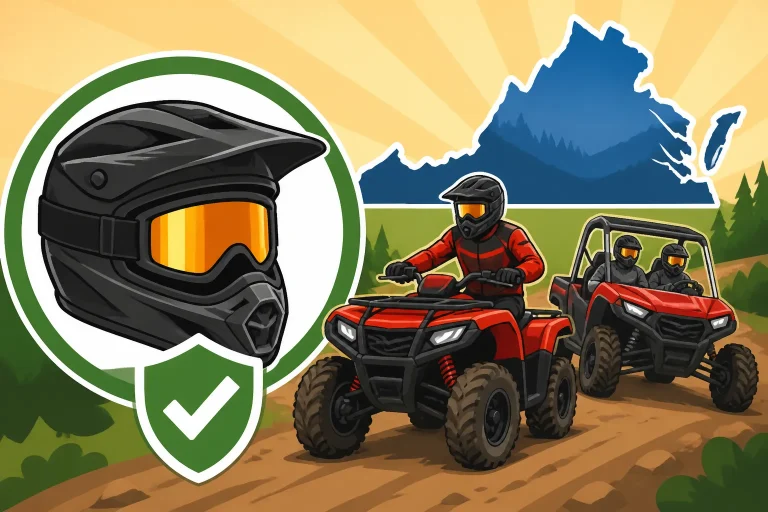
Virginia’s ATV helmet requirement is not just a rule for children. The state requirement covers riders operating ATVs and passengers riding on them, so do not assume that adults can leave their helmets behind or that private property automatically makes a helmet optional. For the legal details and the standards that matter, see Virginia Helmet Law Applies to Every Rider and Virginia Helmet Standards From the State Police.
A private park can set its own admission and safety conditions too. It may require helmets for every rider, including occupants of a side-by-side, or specify additional protective equipment. Those conditions can apply even where the state rule for a particular type of machine or rider is different. A park can also enforce its rules through its waiver, posted signs, rental agreement, or staff at the entrance.
The result is that the strictest applicable rule is the one to plan around. For example, if state law requires a helmet but a park’s website describes helmets as recommended, the park’s wording does not cancel the state requirement. If state law does not clearly settle a question about your particular UTV, but the park says everyone in the vehicle must wear a helmet, you still need to follow the park’s admission rule to ride there.
This distinction matters because “private park” describes who operates the property; it does not mean the park has no safety rules or that state law disappears. Nor does a waiver necessarily exempt a rider from legal requirements. A waiver addresses the park’s terms and the risks of participation; it is not a substitute for checking the law.
Before you travel, identify the machine correctly. An ATV and a side-by-side or utility vehicle may be treated differently under particular rules. If you ride a UTV, do not assume that a requirement written for an ATV automatically answers every question about the driver and passengers. The park may use “ATV,” “OHV,” or “UTV” broadly in its own policy, while state law can use more specific definitions. Virginia ATV and Utility Vehicle Definitions can help clarify why the machine’s category matters.
What a private park may ask riders to wear
Park policies vary, so check the rules for the specific property rather than relying on what another park allowed. Helmet requirements can differ by machine type, age, seating position, and activity. A park may also require eye protection, closed-toe footwear, long pants, gloves, or other gear.
| Situation | What to check before leaving |
|---|---|
| Riding an ATV | Whether the park requires a helmet for every rider and what standards it accepts |
| Carrying a passenger on an ATV | Whether the passenger seat is designed for another rider and whether the passenger must wear a helmet |
| Driving or riding in a side-by-side | Whether helmets are required for the driver and every passenger, even when the vehicle has a roll cage and seatbelts |
| Renting a machine | Whether the park supplies helmets, what sizes are available, and whether personal helmets are allowed |
| Riding with children | Age limits, minimum equipment rules, adult supervision requirements, and passenger restrictions |
| Riding in dusty or wooded conditions | Whether the park requires goggles or another form of eye protection |
| Attending an organized ride | Whether event rules add equipment requirements beyond the park’s usual policy |
A helmet and eye protection are separate items. A helmet may have a visor, but that does not always satisfy a park’s requirement for goggles or other eye protection. Dust, branches, grit, and mud can make eye protection useful even when the rules do not specify it. For trail-specific requirements, see Virginia Helmet and Eye Protection Rules on Trail.
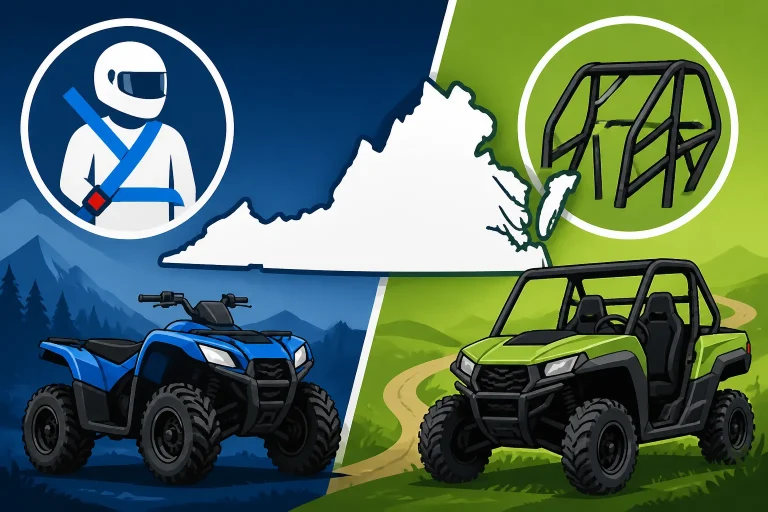
Side-by-side rules deserve particular attention. Some parks require a helmet for every occupant, while others may describe equipment requirements differently for an enclosed or rollover-protected vehicle. A factory roll cage and seatbelts do not automatically mean the park will waive its helmet policy. Check the wording for both the driver and passengers, and ask if it is unclear. For other driver-related rules, see Virginia Rules for a Side-by-Side Driver.
Children may face additional restrictions beyond wearing a helmet. The park could set a minimum age for riding, require an adult to accompany a minor, or limit which machines a young rider may use. These are not interchangeable rules: a child who has the right helmet may still be too young for a particular activity or machine. Check Virginia Private Park Age Minimums and Virginia Trail Rules for Riders Under 18 before planning a family visit.
Do not assume that a helmet available for rent will fit every person in your group. If a park provides helmets, ask about sizes and condition, and whether you can bring your own. If a rider needs a particular size or fit, bringing a suitable helmet is often the more dependable plan, provided the park accepts it.
Choosing a helmet that meets the rules
A helmet should satisfy both the applicable legal standard and the park’s policy. A helmet that looks sturdy or is marketed for off-road use may not meet the standard required for riding. Check the product’s certification label and the park’s stated requirements before buying or bringing it.
The shell, liner, retention system, and fit all matter. A loose helmet can shift during a ride; one that is too tight can become uncomfortable enough that the rider loosens or removes it. The helmet should sit level, cover the intended area, and remain secure when fastened. Use the manufacturer’s fitting instructions and sizing chart, and replace a helmet that has been involved in a significant impact or has damage that affects its structure.
If you are shopping online, including on Amazon, read the specifications carefully rather than relying on the listing title or photos. Confirm the helmet’s stated safety certification, intended use, size, and return conditions. A seller’s phrase such as “DOT style” is not the same as a clear statement that the helmet is certified to the required standard. When in doubt, ask the park what it accepts and check the applicable state guidance.
A full-face helmet may offer more coverage than an open-face design, but fit and acceptance matter more than appearance. Some parks may specify a particular type or reject equipment that does not meet their standards. Do not buy a helmet based only on a general recommendation if the park has a written rule that names a required standard or design.
Keep eye protection compatible with the helmet. Goggles should fit securely and should not interfere with the helmet’s position or retention system. If the park requires goggles, sunglasses may not qualify. Likewise, a face shield may not meet a policy that specifically calls for goggles. Ask the park if its wording leaves room for interpretation.
For a group, check each rider’s equipment individually. A helmet that fits an adult may not fit a child, and a shared rental helmet may not be available in every size. Make sure each person knows how to fasten the chin strap and keep it secured. If the park’s staff checks equipment at the gate, being able to show that a helmet meets the stated rule can save time.
Check the rules before you load the trailer
Use the park’s current written rules as your starting point. A social media post, an old ride report, or a friend’s recollection may describe a policy that has since changed. Look for an official rules page, rider handbook, rental information, waiver, or posted equipment list. If the wording is unclear, contact the park directly and ask about your machine and every person who will ride in it.
A useful check takes only a few minutes:
- Identify whether each machine is an ATV, UTV, or another type of off-highway vehicle.
- Read the park’s helmet and eye-protection rules for that machine.
- Check whether the rules apply to drivers, passengers, and minors.
- Confirm which helmet standards or designs the park accepts.
- Ask whether the park supplies helmets and whether riders can bring their own.
- Check the relevant Virginia requirement separately, particularly if the machine is a side-by-side or the rider is a passenger.
- Pack the gear for the strictest applicable rule, not just the minimum you think might be accepted.
Review the park’s other conditions while you are there. A waiver, admission permit, age rule, seatbelt requirement, or limit on passengers can affect whether your group may ride. Virginia Private Park Waivers and Rules is a useful companion when you are checking what the property requires beyond helmets.
If staff tells you that a helmet is unacceptable, do not argue that another park allowed it. Ask which requirement it fails and whether the park has an acceptable alternative available. If there is no safe, compliant option, the practical answer may be to sit out that ride rather than remove equipment or try to interpret a rule at the trailhead.
Policies can also differ between a private park and a public trail system. Do not carry assumptions from one place to another. When planning a visit to a different riding area, check its permit and equipment requirements separately, and keep the rule details with your travel plans. A quick call before departure is easier than discovering at the entrance that a passenger helmet, child’s size, or UTV policy was overlooked.
Disclaimer
This article is for general informational purposes only and does not constitute professional advice. Laws, prices and regulations vary by location and change over time. Consult a qualified professional for guidance on your specific situation.