Virginia Private Park Age Minimums
A child who meets one riding park’s age minimum may be turned away at another, or allowed only on a smaller machine or with an adult nearby. Virginia does not have one age rule for every private riding park. The operator’s policies, the machine, and applicable state requirements all matter, so confirm the details before you travel.
Why Virginia private parks set their own age minimums
A private park may decide which riders it will admit and what conditions apply to children. Its minimum age can differ from another park’s because the operator considers its trails, terrain, machines, staffing, and risk policies. A simple loop for small youth quads and a steep, rocky trail system may call for very different rules.
The word “minimum age” can also refer to more than one thing. A park might set separate requirements for:
- Entering the property
- Operating an ATV or UTV
- Riding as a passenger
- Using a particular trail or machine class
- Riding without an adult
- Participating in a guided ride, event, or rental
A child may be old enough to come along but not old enough to drive. A park might admit a young passenger only in a machine designed for passengers, while requiring older riders to operate their own vehicles. Another park may set one age limit for the entire property, regardless of whether the child plans to ride.
That is why a general statement such as “kids are welcome” does not settle the question. It may mean children can visit the campground or watch from a safe area, not that they can operate a machine. Ask what the age rule applies to and whether it changes by activity.
Private policies do not erase state law. Park rules can be stricter than legal requirements, but permission from an operator is not a substitute for complying with applicable Virginia rules. If a child’s age, engine size, or type of machine could affect whether operation is allowed, review Virginia Rules for a Rider Under 18 and ask the park how it applies its policy. Do not assume that a private trail is exempt from every statewide requirement.
A park may also have a different standard for a guided outing than for riding independently. A guide might accept younger participants on a controlled route, while the same park’s general trail access has a higher minimum age. Treat an exception as specific to the activity described, not as blanket permission for all trails.
What the age rule may depend on
Age is only one part of a park’s decision. Operators may consider the rider’s ability to control the machine, the machine’s size and power, the type of trail, and whether an adult is accompanying the child. They may also distinguish an ATV from a UTV, since a side-by-side has a different seating arrangement and may require a passenger to use a seatbelt and remain inside the vehicle.
| What may affect access | What to ask the park |
|---|---|
| Rider’s age | Is there a minimum age to enter, ride, or drive? |
| Machine type | Are ATV and UTV age rules different? |
| Engine size or class | Does the rule depend on engine size, power, or vehicle class? |
| Passenger status | Can a younger child ride as a passenger, and in what type of machine? |
| Adult supervision | Must a parent or guardian ride along, remain on site, or supervise from a particular area? |
| Trail difficulty | Are children restricted to easier routes or certain areas? |
| Rental or guided activity | Does the age minimum change for rentals, lessons, or guided rides? |
| Documents and waivers | Must a parent sign paperwork or show identification? |
ATV and UTV rules may not match
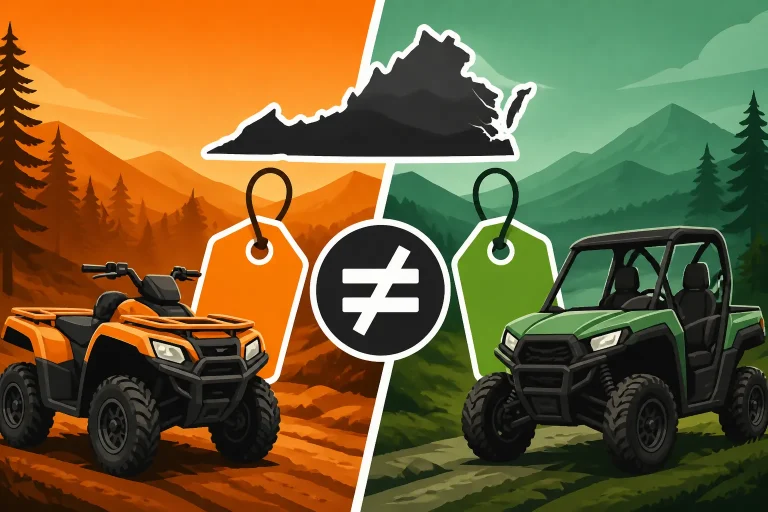
Do not assume that a park’s age minimum for an ATV also applies to a UTV. Some operators may allow a child to ride as a passenger in a properly equipped UTV while setting a different minimum age for driving one. Others may set limits based on the vehicle’s seating, restraints, trail conditions, or the child’s ability to reach and use the controls.
If you are bringing a family UTV, ask whether children may ride in it and whether every passenger must have a designated seat and restraint. Never treat an open cargo area, a lap on an adult’s seat, or an improvised seating arrangement as an acceptable passenger space. The operator’s written rules and the vehicle’s design should guide the decision.
For an ATV, ask whether the park’s minimum applies to every machine or changes with engine size. A youth model may be permitted where an adult-sized machine is not, but that is a park-specific allowance and does not automatically resolve any separate legal requirement.
Supervision can mean different things
“Adult supervision required” is not precise enough to plan around. One park may expect a parent or guardian to be present on the property. Another may require the adult to ride with the child, stay within sight, or have a separate permit. A park could also require the adult to be responsible for the child’s machine and behavior.
Ask whether the accompanying adult must be a parent or legal guardian, or whether another adult can qualify. If grandparents or relatives are bringing a child, confirm this before the trip rather than relying on a verbal assumption at the gate. The park may require the responsible adult to sign a waiver or provide contact information.
Supervision also does not necessarily mean that a child can ride a machine that is too large or difficult for them to control. A parent’s presence should not be treated as permission to ignore an age, engine-size, or vehicle restriction.
How to confirm the rules before you go
Park websites and social media pages can be useful, but rules may be spread across a waiver, rental page, trail map, or event notice. If the wording is unclear, contact the operator directly and describe the exact situation: the child’s age, whether they will drive or ride as a passenger, the machine type, and whether you are bringing your own vehicle or renting.
Use this checklist when you call or send a message:
- Ask for the minimum age for each activity. Separate admission, riding, driving, passenger access, rentals, and guided rides.
- Describe the machine. Give its type and, if relevant, engine size, seating capacity, and whether it is a youth model.
- Explain who will accompany the child. Ask whether the adult must ride, stay nearby, or meet another condition.
- Check trail-specific limits. Confirm whether a child can use every open trail or only routes marked for certain riders or machines.
- Ask what paperwork is required. Check who must sign the waiver and whether the child or adult needs identification or proof of age.
- Confirm protective equipment. Ask what helmets and other gear are required, including whether the park has specific standards.
- Get the answer in writing. Save the reply or a screenshot of the current rules, especially if you are traveling a long distance.
Written confirmation is especially helpful when a park has different policies for day riding, overnight stays, rentals, and special events. A rule posted for one activity may not apply to another. If you are attending with a group, share the answer with the other adults so nobody arrives expecting an exception that was not approved.
Waivers deserve a close read. A waiver can describe who is permitted to ride, who accepts responsibility for a minor, and what risks the participant acknowledges. It does not necessarily explain every operational detail, so ask questions rather than trying to infer the age policy from legal wording alone. For more on the paperwork and operator policies, see Virginia Private Park Waivers and Rules.
Planning a safe visit with young riders
Choosing a park for a child is not only about finding the lowest age minimum. A child who is technically eligible may still be uncomfortable with the terrain, traffic, noise, or pace of a group. A good fit includes a suitable machine, a route within the rider’s abilities, clear supervision, and rules that every adult understands.
Match the machine and route to the rider
Before setting out, consider whether the child can reach the controls, steer, brake, and stop reliably on the machine they will use. A machine that is too heavy or powerful may be difficult to manage even on a beginner route. Ask the park whether it offers youth routes or a supervised introductory area, but make your own judgment about the rider’s comfort and control.
Trail labels are not a guarantee that a route will feel easy to every child. Surface conditions, steep grades, loose rock, mud, narrow sections, and other riders can make a route harder than expected. Ask what “beginner” means at that particular park and whether staff can recommend a route based on the child’s age and experience.
If the child has never ridden before, do not assume that an open trail is the right place to learn. Ask whether the park has a practice area or a structured introduction, and whether the child must meet a separate age or equipment requirement to use it.
Check helmets and protective equipment
Confirm the park’s helmet and eye-protection policy before loading the machines. Parks may have equipment requirements beyond what a family expects, and an item described online as an ATV helmet may not necessarily meet the operator’s standard. Review Virginia Private Park Helmet Rules and ask the operator if anything remains unclear.
Fit matters as much as having the right type of gear. A helmet should be appropriate for the rider and fit securely; an adult helmet that moves around on a child’s head is not a safe substitute. If buying gear through Amazon or another retailer, check the product details and confirm that the helmet meets the park’s stated requirements before relying on it.
Also ask whether the park requires protective clothing, gloves, boots, or eye protection. Do not assume a child can ride because the machine is available or the park has allowed a family to enter. Eligibility, equipment, and safe use are separate questions.
Plan for the whole visit
If the park includes camping or other overnight facilities, check those rules separately. A child’s permission to ride does not automatically establish who may camp, where a family can stay, or what supervision is required after riding hours. [Virginia Private Park Camping Rules] can help you identify the separate questions to ask.
For a larger family outing, find out whether the operator sets limits on group size or requires riders to stay together. Mixed-age groups can have different access needs, and a route suitable for experienced adults may not be appropriate for younger participants. See Virginia Group Size on a Trail System if you are organizing a group and need to plan around trail access.
Finally, keep the park’s contact information and the written age confirmation available on the day of the visit. If the person answering the phone gave you a specific exception, be ready to explain it at check-in. If staff say the child cannot ride under the current conditions, do not pressure them to bend the rule. A different route, passenger arrangement, or future visit may be the safer option.
A little checking beforehand can prevent a long drive ending at the gate. The key is to confirm the age rule for the specific rider and activity, then verify the machine, supervision, equipment, and trail conditions as separate parts of the plan.
Disclaimer
This article is for general informational purposes only and does not constitute professional advice. Laws, prices and regulations vary by location and change over time. Consult a qualified professional for guidance on your specific situation.