Spearhead Requires a Factory Cage and Working Seatbelts
Spearhead’s factory-cage and seatbelt rule can determine whether a side-by-side is allowed on the trail at all. A valid permit does not make an ineligible machine acceptable, and a quick repair at the trailhead may not solve the problem. Here’s how to understand the requirement, check your machine before hauling it, and avoid a wasted trip.
What the factory-cage and seatbelt rule means
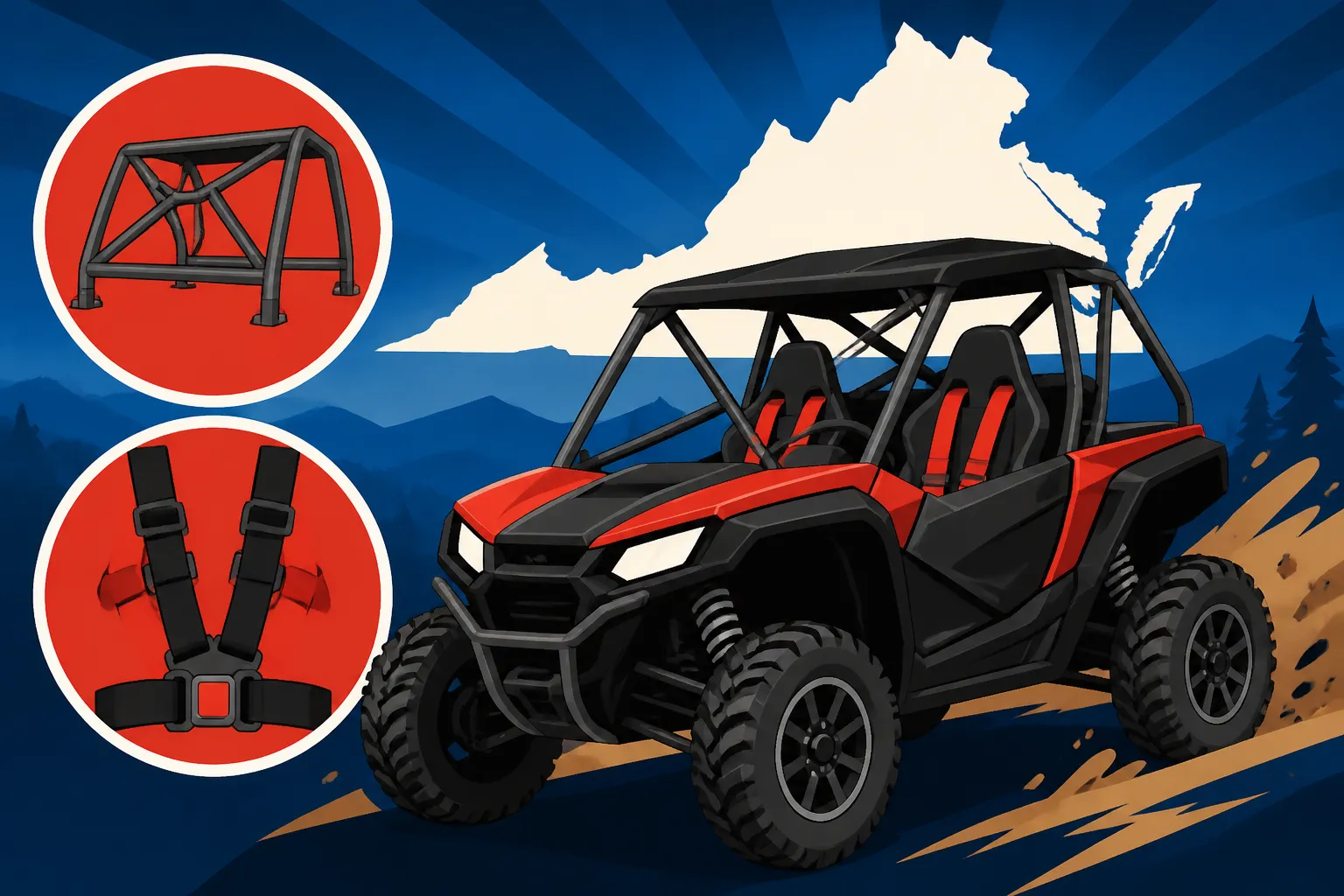
Spearhead requires side-by-sides to have a factory-installed cage and working seatbelts. In practical terms, the machine needs the original manufacturer’s rollover-protection structure and functional restraints for its seating positions. It is not enough that a vehicle looks like a UTV or has a cage and belts added later.
The rule is about the machine’s safety equipment, not just its paperwork. A permit, proof of ownership, or registration from another state does not replace the required equipment. A machine that does not meet the equipment rule may be turned away even if its owner has arranged the trip, paid for access, or ridden the system before.
The word “factory” matters. An aftermarket cage, custom-built frame, or homemade vehicle may not be accepted as a substitute for the original manufacturer-installed structure. Likewise, a belt that is present but cannot latch, tighten, or release properly is not a working seatbelt. If your machine has been altered, repaired, or rebuilt, do not assume that a visual resemblance to a stock UTV is enough.
This requirement belongs to Spearhead’s trail-access rules. It should not be confused with whether a machine is titled, registered, or street legal. Virginia’s rules for riding on public roads are a separate issue, and a trail permit applies only to the access it covers. For background on trail access, see Virginia Spearhead Trail Permits and Virginia Trails That Allow Side-by-Sides.
A useful way to think about it is:
- The cage and belts are an equipment condition. They must be present and work as intended.
- A permit is an access credential. It does not waive safety or machine-eligibility rules.
- A trail system can have stricter conditions than general state law. Meeting a broad legal requirement does not automatically mean a machine qualifies for Spearhead.
If you ride an ordinary ATV without a roll cage and seatbelts, this particular UTV equipment requirement is not a reason to add those parts to it. The issue is whether a machine that is being used as a side-by-side meets the system’s conditions for that type of vehicle. When classification is unclear, describe the machine accurately to the trail office or operator before making the drive.
Which machines the requirement affects
The clearest case is a conventional side-by-side with a factory cab or open-cab design, a manufacturer-installed cage, and seatbelts. Even then, the owner should check the actual condition of the equipment. A factory-built UTV does not remain compliant automatically if its belts are damaged, its cage has been altered, or key parts are missing.
The harder cases tend to involve machines that have been modified or built from components. A custom frame might look sturdy, and an aftermarket cage might be well made, but neither fact establishes that it meets a rule requiring a factory cage. Spearhead’s position on self-constructed machines is covered in Why Spearhead Turns Away Self-Built Machines. The safest approach is to get a clear answer about the specific make, model, and modifications before travelling.
| Machine or condition | What to consider before riding |
|---|---|
| Factory-built side-by-side with original cage and working belts | Check that the cage is intact and that each belt functions correctly. |
| Factory-built side-by-side with a damaged or removed belt | Treat it as not ready until the restraint is properly repaired and working. |
| Side-by-side with an aftermarket or custom cage | Do not assume it satisfies a factory-cage requirement; confirm eligibility first. |
| Self-built or heavily rebuilt machine | Ask the trail operator before hauling it. A permit alone does not establish eligibility. |
| Ordinary ATV without a cage or belts | Do not confuse ATV requirements with side-by-side equipment rules. Confirm the machine category if it is an unusual design. |
| Side-by-side with more seats than usable belts | Do not carry more people than there are proper, working seating positions and restraints. |
A manufacturer’s original equipment may have been replaced during a repair, and the replacement could be correct. But the fact that a part is sold as a replacement does not, by itself, prove that the whole vehicle qualifies under Spearhead’s rule. Keep the machine’s make and model information handy and ask about the particular part or modification if there is any doubt.
Seat count matters in a practical way. A bench or rear seat does not mean every passenger position is safe or permitted. Each person needs a proper seat and a usable restraint designed for that position. A belt that is missing from one seat, trapped behind a panel, or incompatible with the seat arrangement can make that position unusable. Do not improvise by sharing a belt or fastening a passenger into a restraint that was not designed for them.
If you are deciding between machines for a trip, do not rely only on the seller’s description, a listing, or the name printed on the bodywork. Confirm how the machine is built and whether it has the required factory equipment. This is especially important when buying a used or modified UTV for trail riding. Related eligibility considerations are discussed in Virginia Rules for a Side-by-Side Driver.
How to inspect the cage and seatbelts before you leave
A careful inspection can catch obvious problems before the machine is loaded. It cannot guarantee that a trail operator will accept every modified vehicle, but it helps you avoid arriving with a belt that will not latch or a cage with visible damage.
Use this check before each trip, and repeat it if the machine has been stored, worked on, rolled, or transported in a way that could have damaged its safety equipment.
- Confirm the machine’s identity. Note the make, model, and model year from the manufacturer’s information. If the vehicle has been substantially changed, write down what was modified and when. This makes it easier to get a useful answer when contacting the operator.
- Look over the cage. Check for missing sections, cracks, bends, heavy corrosion, loose mounts, damaged welds, or signs that the structure has been cut or altered. Do not treat a cage as acceptable just because it appears strong. If it has been damaged or modified, have the machine assessed by a qualified repair professional and ask Spearhead whether the setup is eligible.
- Check the attachment points. Look for loose or missing fasteners, movement where the cage meets the frame, and damage around mounting areas. Avoid riding if the structure or its mounts seem compromised.
- Test every belt. Pull each belt out through its normal range, inspect the webbing for fraying, cuts, burns, severe fading, or contamination, and verify that the buckle latches and releases. The belt should retract or adjust as designed and should not be twisted, knotted, or held together with an improvised repair.
- Match belts to seats. Confirm that each intended passenger position has its own usable restraint and that the belt can be worn properly from that seat. Do not count a belt that is inaccessible, damaged, or positioned so it cannot restrain the occupant as intended.
- Check seat and belt condition together. A torn or loose seat, damaged belt guide, or altered mounting point may affect how the restraint works. If the belt no longer sits correctly across the occupant, get the setup inspected.
- Secure loose items. Tools, cargo, or removable equipment should not interfere with belts, buckles, or the driver’s controls. Keep belts accessible rather than buried under gear.
- Resolve uncertainty before loading. Send a concise description of the machine and the relevant modifications to the trail operator. Ask directly whether it meets the factory-cage and working-seatbelt requirement.
A quick driveway test should include every belt, not just the driver’s. A passenger belt that has not been used for months may be stuck, tangled, or damaged even if it looks fine from outside. Test it with the seat in its normal position, and make sure the buckle is easy to access once a rider is seated.
If a belt needs replacement, use a part that is correct for the machine and intended seating position. Safety restraints are not a good place to choose a component solely because it is inexpensive or appears similar. Listings on Amazon may help you see what is available, but verify compatibility carefully and consider getting safety-critical parts through the manufacturer or a qualified dealer. Do not cut, splice, knot, or otherwise improvise a repair to a belt.
The same caution applies to the cage. Do not weld, cut, or alter a rollover structure as a quick trail-preparation project. A repair or modification can affect both the structure’s performance and the machine’s eligibility. If a cage has been damaged, have it evaluated by someone qualified to work on that make and model, then confirm acceptance with the trail operator.
For wider background on equipment checks and trail rules, see Virginia Permit Checks on the Trail and What a Trail Ranger Checks When You Are Stopped. These topics are separate from the cage rule, but they reinforce the value of checking the machine before setting out.
Modified, damaged, or unusual machines
Modifications can create uncertainty even when they were made for reasonable reasons. Owners may replace seats, install accessories, remove doors, add a roof, change the cage, or rebuild a machine after damage. The key question is not simply whether the change seems safe to the owner; it is whether the machine still meets the trail system’s stated requirements.
A factory cage with an accessory attached is not necessarily the same as a replaced or altered cage. Similarly, installing a seatbelt from another vehicle does not automatically make the restraint appropriate for the UTV. A mismatch can affect fit, attachment, or proper use. If a repair involved the cage, belt mounts, seats, or restraint system, disclose that when you ask about eligibility.
For a damaged machine, postpone the trip until the relevant issue has been addressed. A belt that will not latch is not made usable by holding it in place, and a cage with a cracked mount is not made sound by tightening a nearby bolt. These are structural and restraint components, not cosmetic items. If the vehicle has been in a rollover or collision, have the cage and belt system inspected even if there is no obvious damage.
A machine can also be difficult to classify from photographs or informal descriptions. Terms such as UTV, side-by-side, utility vehicle, and off-highway vehicle are sometimes used loosely. Tell the operator what the machine is, how many seats it has, and whether its cage and belts are original or modified. If it is homemade, rebuilt, or converted, say so directly rather than asking only whether the model name is allowed.
A practical inquiry can be brief:
- What is the make, model, and model year?
- Is the cage the original manufacturer-installed structure?
- Have the cage, seats, belt mounts, or belts been changed?
- How many seating positions and working belts does it have?
- Is there any damage or repair that could affect the cage or restraints?
If the answer is unclear, ask for clarification before travelling. Do not rely on an old social media post, a seller’s assurance, or another rider’s experience with a different machine. Rules and enforcement can depend on the facts of the vehicle, and a machine that looks similar may have a different configuration.
A title or bill of sale can help establish ownership, but it does not certify a cage or belt system. Likewise, a trail permit does not act as a safety inspection. Keep the two issues separate: prepare the documents needed for access, and independently confirm that the machine meets the equipment condition.
Planning a Spearhead trip without a trailhead surprise
Build the equipment check into your trip planning rather than treating it as a last-minute concern. Before you pay for access or load the UTV, review the current system requirements and ask about any feature that could affect eligibility. Start with Virginia Spearhead Trail Permits, but remember that permit information and vehicle-equipment conditions answer different questions.
A useful pre-trip sequence is:
- Identify the exact machine. Record its make, model, model year, seating capacity, and any significant modifications.
- Check the current access and equipment rules. Confirm the applicable rules with the trail operator, especially if the machine is custom-built or has a changed cage or restraint system.
- Inspect the cage and each belt. Do not rely on a general “looks good” check. Test the buckles, inspect the webbing, and examine visible cage mounts.
- Make repairs before loading. Use appropriate parts and qualified service for damage to restraints or rollover structures.
- Carry the information that may help answer questions. Keep machine identification and permit details accessible. A photo of a part number or repair record may help explain a replacement, but it does not replace the required equipment.
- Recheck before unloading and riding. Transport can shift cargo or damage equipment. Make sure nothing is blocking a belt or interfering with controls.
Rules can differ among riding areas, so do not assume a vehicle accepted elsewhere will be accepted at Spearhead. A private park, a forest route, and a permitted trail system can each set their own access conditions. The general topic of Virginia Private Park Waivers and Rules is a reminder that one riding venue’s rules do not automatically transfer to another.
If you arrive and discover that a belt is broken or the cage has a problem, do not ride that machine and do not try to solve the issue with a temporary workaround. Contact the operator about your options. A permit may not be refundable or transferable under the applicable terms, so check those conditions before purchase rather than assuming that a mechanical problem will change them.
Keep the distinction between a safety rule and a trail-use permission clear. Spearhead’s factory-cage and working-seatbelt requirement is not a suggestion to improve comfort. It is an access condition for eligible side-by-sides. Confirming the machine before departure is the simplest way to protect riders, avoid a denied entry, and keep the trip focused on the trail.
Frequently Asked Questions
Does every ATV need a factory cage and seatbelts?
The requirement discussed here concerns side-by-sides. Do not apply it automatically to an ordinary ATV, which has a different design. If your machine is an unusual hybrid or has been converted, ask the operator how it is classified.
Will an aftermarket cage meet the requirement?
Do not assume so. A rule that calls for a factory cage may not accept an aftermarket or custom structure as a substitute. Confirm eligibility with Spearhead before hauling the machine.
Is a seatbelt acceptable if it buckles but is frayed?
No. A belt should be in sound condition and work as intended, including latching, adjusting, and releasing properly. Replace damaged restraints with parts suited to the vehicle and seating position.
Does a valid permit guarantee my UTV can enter?
No. A permit does not override equipment requirements. Check both the permit conditions and the machine’s eligibility before travelling.
Can I carry more passengers than there are working belts?
Do not carry more riders than there are proper seating positions with usable restraints. Never share a belt or improvise a restraint for an extra passenger.
Disclaimer
This article is for general informational purposes only and does not constitute professional advice. Laws, prices and regulations vary by location and change over time. Consult a qualified professional for guidance on your specific situation.