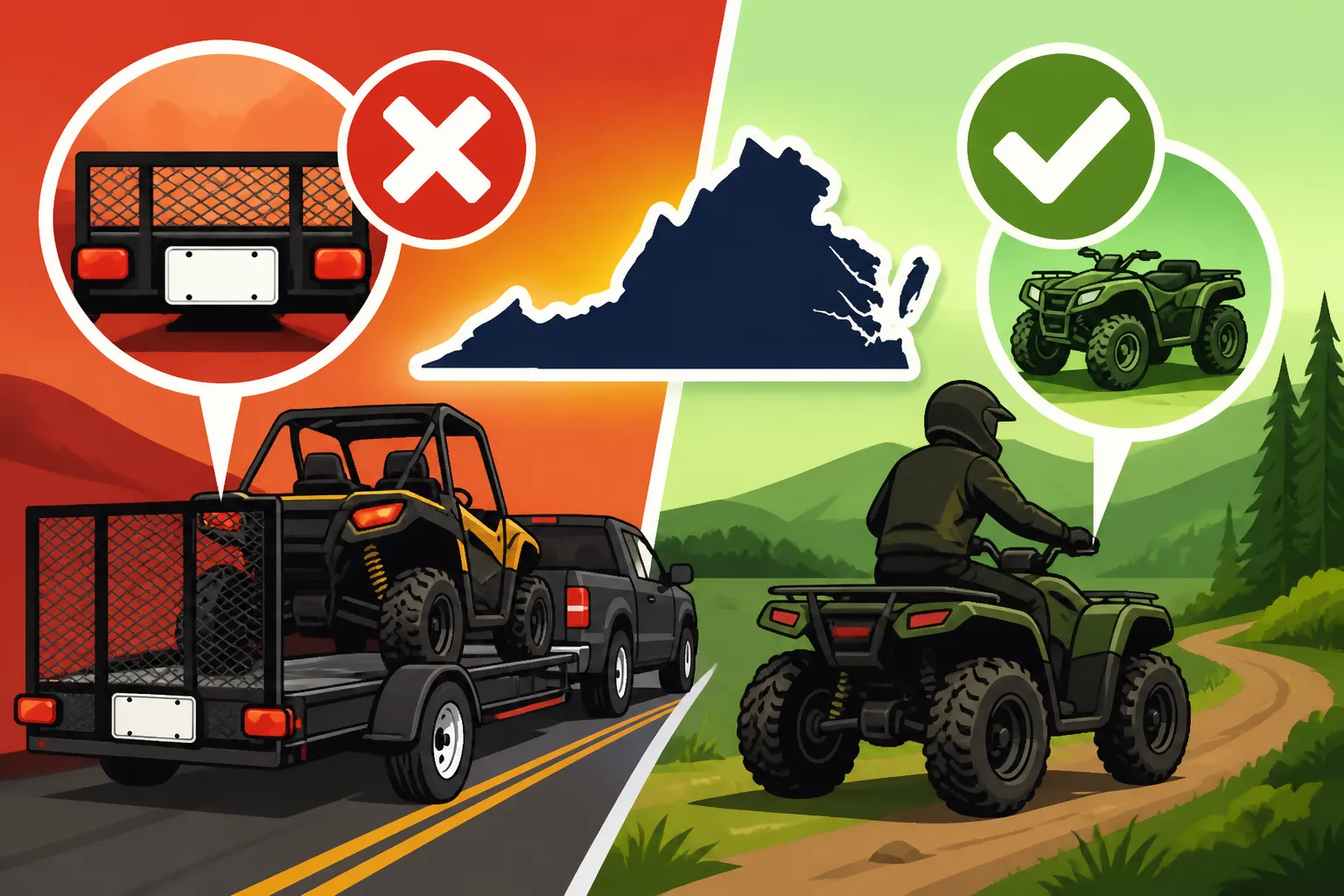
Your Trailer Needs a Plate but Your Quad Does Not
It can be incredibly confusing to navigate the rules for off-road vehicles in Virginia, especially when you see your buddy's trailer sporting a shiny new license plate while your brand-new quad rolls around without one. Many folks find themselves scratching their heads, wondering why the small trailer they use to haul their ATV to the trails needs to jump through all the registration hoops, complete with a plate and annual fees, but the powerful machine it carries remains plate-free. This guide will clear up that common misconception, explaining the distinct differences between how Virginia treats trailers designed for public roads and off-road machines like ATVs and UTVs, and what paperwork you actually need for each.
Understanding Virginia's Distinct Approach to ATVs and UTVs
Let's cut right to the chase: in Virginia, your ATV or UTV, when used solely for off-road purposes, is generally treated very differently from a traditional "motor vehicle" that's meant for public roads. This distinction is the root of the confusion many riders experience.
No Plates, No Registration for Off-Road Machines
One of the biggest differences is that ATVs and UTVs are not required to be registered with the Department of Motor Vehicles (DMV) in the same way cars, trucks, or even motorcycles are. This means you won't get a license plate, there are no annual renewal fees for registration, and you won't have to worry about yearly inspections that street-legal vehicles require. The state simply doesn't categorize these machines as vehicles intended for highway use in the traditional sense, which is why [Virginia Titles ATVs but Never Registers Them]. This is fantastic news for riders who just want to hit the trails without the added bureaucratic burden of road registration. You buy your machine, you title it (if required or desired), and you're good to go for off-road adventures, provided you follow the riding laws.
However, this lack of registration doesn't mean a free-for-all. Virginia has very specific laws about where you can ride an ATV or UTV, generally restricting them to private property with consent or designated off-road trail systems. Using them on public roads or highways is largely prohibited, with very narrow exceptions. This distinction helps the state regulate their use and maintain safety without burdening off-road enthusiasts with unnecessary road-vehicle requirements.
The Importance of Titling, Even Without Registration
While your off-road machine won't get a license plate, that doesn't mean it operates completely off the books. Many ATVs and UTVs do need to be titled in Virginia, and for others, it's highly recommended. Titling is different from registration; it's essentially the legal document that proves you are the rightful owner of the machine. Think of it as the birth certificate for your quad.
A title serves several critical purposes. First, it establishes legal ownership, which is incredibly important if your machine is ever stolen, involved in an accident, or if you need to sell it later. Without a clear chain of title, proving ownership can become a nightmare, potentially leading to disputes and legal headaches. Second, many financial institutions will require a clear title if you're taking out a loan to purchase your ATV or UTV, as they need to record their lien on the vehicle. Third, for insurance purposes, having a title can often simplify the process of getting a policy and making a claim, though [Virginia Requires No ATV Insurance]. Even if not legally mandated for registration, a title is a fundamental document for any significant asset like an ATV.
So, while you're skipping the annual plate renewal, don't confuse that with skipping the ownership documentation. The title is your proof of purchase and a vital record for your machine's history.
Why Your Trailer Needs a Plate in Virginia
Now, let's turn our attention to the trusty trailer. The very thing that transports your plate-less ATV to the trails has its own set of rules, and these rules are firmly rooted in the fact that trailers, by their very design, are intended for use on public roads.
Trailers as Roadway Vehicles
Unlike ATVs and UTVs, which are primarily designed for off-highway use, trailers are built to be towed behind a motor vehicle on public streets and highways. Whether it's a small utility trailer, a boat trailer, or a dedicated ATV hauler, its primary function involves interaction with the public road system. Because of this, Virginia's laws classify trailers as "vehicles" that are subject to registration and titling requirements, much like a car or truck.
This classification means that trailers contribute to road wear and tear, and their safe operation on highways is paramount. Requiring registration and a license plate allows the DMV to track these vehicles, ensure they meet certain safety standards (though trailers don't always require the same level of inspection as passenger cars), and generate revenue that helps maintain the public infrastructure they use. It also helps law enforcement identify vehicles on the road, which is crucial in cases of accidents or theft. The distinction isn't arbitrary; it's based on the intended and primary use of the equipment.
Virginia's Trailer Registration Requirements
When you purchase a trailer, new or used, that will be used on Virginia's public roads, you'll need to go through a titling and registration process at the DMV. This typically involves submitting an application for title and registration, providing proof of ownership (like a manufacturer's certificate of origin for new trailers or a previous title for used ones), and paying the necessary fees.
You'll also need to pay Virginia sales tax on the purchase of the trailer, just as you would for any other vehicle. This is often calculated at the time of titling and registration. [Virginia Sales Tax at Titling] covers the details of these taxes. After all the paperwork is processed and fees are paid, you'll be issued a permanent title for your trailer and a license plate that must be displayed prominently. This plate is your official permission to operate the trailer on public roads. Remember, a trailer is a separate entity from the machine it carries, and its legal requirements reflect its role as a road-going vehicle.
When Titling an ATV or UTV is Required (or Recommended) in Virginia
Even though ATVs and UTVs don't need registration in Virginia, titling is a different story. There are specific scenarios where it's mandatory, and many more where it's just plain smart.
New Machines and the 2006 Cutoff
Here's a crucial piece of information for anyone buying a new off-road machine in Virginia: if your ATV or UTV has an engine size over 50cc and was purchased new on or after July 1, 2006, it must be titled with the Virginia DMV. This isn't optional; it's a legal requirement. This rule was put in place to help create a paper trail for new off-road vehicles, making it easier to track ownership and address issues like theft.
When you buy a new machine from a dealer, they typically handle the initial titling paperwork for you, submitting the Manufacturer's Statement of Origin (MSO) along with your application and fees to the DMV. This ensures that the first title is issued in your name, establishing the legal foundation of your ownership from day one. Failing to title a new machine when required could lead to complications down the road, especially if you ever try to sell it or need to prove ownership for insurance claims. Understand this date, as [Virginia's July 2006 Titling Cutoff] marks a significant change in how these machines are handled.
Optional Titling for Used Machines
For used ATVs and UTVs, the rules relax a bit. If you're buying a used machine that was already titled in Virginia, the seller will simply sign over the existing title to you. You'll then take that titled document to the DMV to have it transferred into your name. However, if the used machine was never titled in Virginia (perhaps it's older than the 2006 cutoff, or came from a state with different rules), then titling it is generally optional. [Virginia Titles Are Optional on Used Machines] for older or previously untitled machines.
Even though it's optional, getting a title for a used machine is almost always a good idea. Without it, your only proof of ownership might be a bill of sale, which can be less robust than a state-issued title, especially if questions arise about the machine's history or previous owners. For a private sale, a clear and comprehensive bill of sale is essential. Resources like LawDepot can provide templates to ensure all the necessary details are covered in your bill of sale, protecting both buyer and seller. A title provides a clearer, more universally recognized legal document of ownership, giving you peace of mind and simplifying future transactions.
Titling for Financing and Insurance
Even if Virginia law says titling is optional for your particular ATV or UTV, you might find that other entities in your life demand it. This is especially true if you plan to finance your purchase or insure your machine.
Lenders, whether a bank, credit union, or the dealership's financing arm, will almost certainly require your ATV or UTV to be titled in your name, with their lien recorded on that title. This protects their investment; if you default on the loan, the title proves their legal claim to the machine. Without a title, most lenders won't even consider offering a loan for an off-road vehicle. This is why [Why a Lender Wants a Virginia ATV Titled] is a common reason for titling an otherwise optional machine.
Similarly, while insurance for ATVs and UTVs isn't mandated by state law, many riders choose to get it for protection against theft, damage, or liability. Insurance companies often prefer, or even require, a state-issued title as definitive proof of ownership before they'll issue a comprehensive policy or process a claim. A clear title helps them verify that you have an insurable interest in the machine, streamlining the entire process should you ever need to file a claim.
The Titling Process for ATVs and UTVs
So, you've decided to title your ATV or UTV in Virginia (or you're legally required to!). The process at the DMV isn't overly complicated, but it does require specific documents and attention to detail.
Required Documents for Titling
When you head to your local Virginia DMV Customer Service Center, you'll need to come prepared with the right paperwork. Here's a general rundown of what you'll need:
- Application for Title and Registration (Form VSA 17A): This is the primary form you'll fill out, though many people just provide the information verbally to a clerk who then fills in the form.
- Proof of Ownership:
- For New Machines: You'll need the Manufacturer's Statement of Origin (MSO), sometimes called a Manufacturer's Certificate of Origin (MCO). This is the original document issued by the factory.
- For Used Machines with an Existing Title: The previous owner's signed-over title. Make sure their signature is present in the correct place, often on the back.
- For Used Machines Without a Title (where titling is optional): A detailed bill of sale and possibly a notarized affidavit if there are questions about prior ownership or the bill of sale isn't sufficient.
- Proof of Identity: A valid driver's license or state-issued ID.
- Proof of Virginia Residency: Your driver's license often covers this, but sometimes additional proof like a utility bill might be requested if your address isn't current. Check out [Virginia Title and Proof of Address] for more details.
- Payment for Fees and Taxes: Be ready to pay the title fee and any applicable sales tax.
Getting all your ducks in a row before you visit the DMV will save you a lot of time and frustration. For a complete list, consult [What to Bring to the DMV to Title a Quad].
Dealing with Missing Paperwork
Life happens, and sometimes titles get lost, damaged, or a previous owner simply never bothered to get one. If you're trying to title a used ATV or UTV and don't have a clear title or MSO, you're not entirely out of luck, but it will require a bit more effort.
The Virginia DMV often allows for a notarized Affidavit in Lieu of Title, such as the [Virginia Form VSA 12M Affidavit], to establish ownership when the original title is missing. This form typically requires you to swear under oath that you are the rightful owner, detailing how you acquired the machine. You'll need to have this document properly notarized. For situations requiring legal forms like this or a robust bill of sale, services like LawDepot can be helpful for finding and customizing state-specific document templates. They can guide you in creating the necessary paperwork to help prove your ownership claim.
If you're dealing with a truly old machine with no paper trail at all, the process can become more complex, sometimes involving bonded titles or a court order, but these are rarer scenarios for ATVs. The key is to be honest and provide as much documentation as possible to the DMV about the machine's history and your acquisition of it.
The Costs Involved
Titling an ATV or UTV in Virginia isn't free, but the costs are generally straightforward.
- Title Fee: There is a specific fee for titling an ATV or UTV. Currently, [Virginia ATV Title Cost] is a flat rate. This is a one-time fee when you title the machine (or transfer the title into your name).
- Sales Tax: You will also be responsible for paying Virginia sales tax on the purchase price of the ATV or UTV. This tax is typically collected by the DMV when you title the machine. The rate can vary slightly by region, but it's applied to the sale price. If the machine was a gift or the sale price seems unusually low, the DMV might refer to a standardized valuation guide to determine the taxable amount, but generally, it's based on your bill of sale.
These are the primary costs associated with titling. Unlike a registered road vehicle, you won't have recurring annual registration fees or property taxes collected by the state DMV (though your local county or city may assess personal property tax on your ATV, separate from the DMV).
ATV/UTV (Off-Road) vs. Trailer Titling & Registration in Virginia
Here's a quick comparison to help solidify the differences we've discussed:
| Feature | ATV/UTV (Off-Road Use) in Virginia | Trailer (for Road Use) in Virginia |
|---|---|---|
| License Plate | NO | YES |
| DMV Registration | NO (Not considered a "motor vehicle" for road registration) | YES (Required for use on public roads) |
| Annual Fees | NO (No annual registration renewal fees) | YES (Annual registration renewal fees) |
| Titling Requirement | YES for new machines >50cc bought after 7/1/2006; Optional otherwise. | YES (Required for all trailers used on public roads) |
| Proof of Ownership | Title, MSO, Bill of Sale, or VSA 12M Affidavit | Title, MSO, or Bill of Sale |
| Sales Tax | Yes, collected at titling if required/chosen | Yes, collected at titling |
| Road Use Legality | Generally NO (Except limited exceptions in specific counties) | YES (When properly registered and plated) |
| Primary Intended Use | Off-highway trails, private land, farms | Towing behind a motor vehicle on public roads and highways |
This article is for general informational purposes only and does not constitute professional advice. Laws, prices and regulations vary by location and change over time. Consult a qualified professional for guidance on your specific situation.