Why Riding Parks Ban Alcohol on the Trail
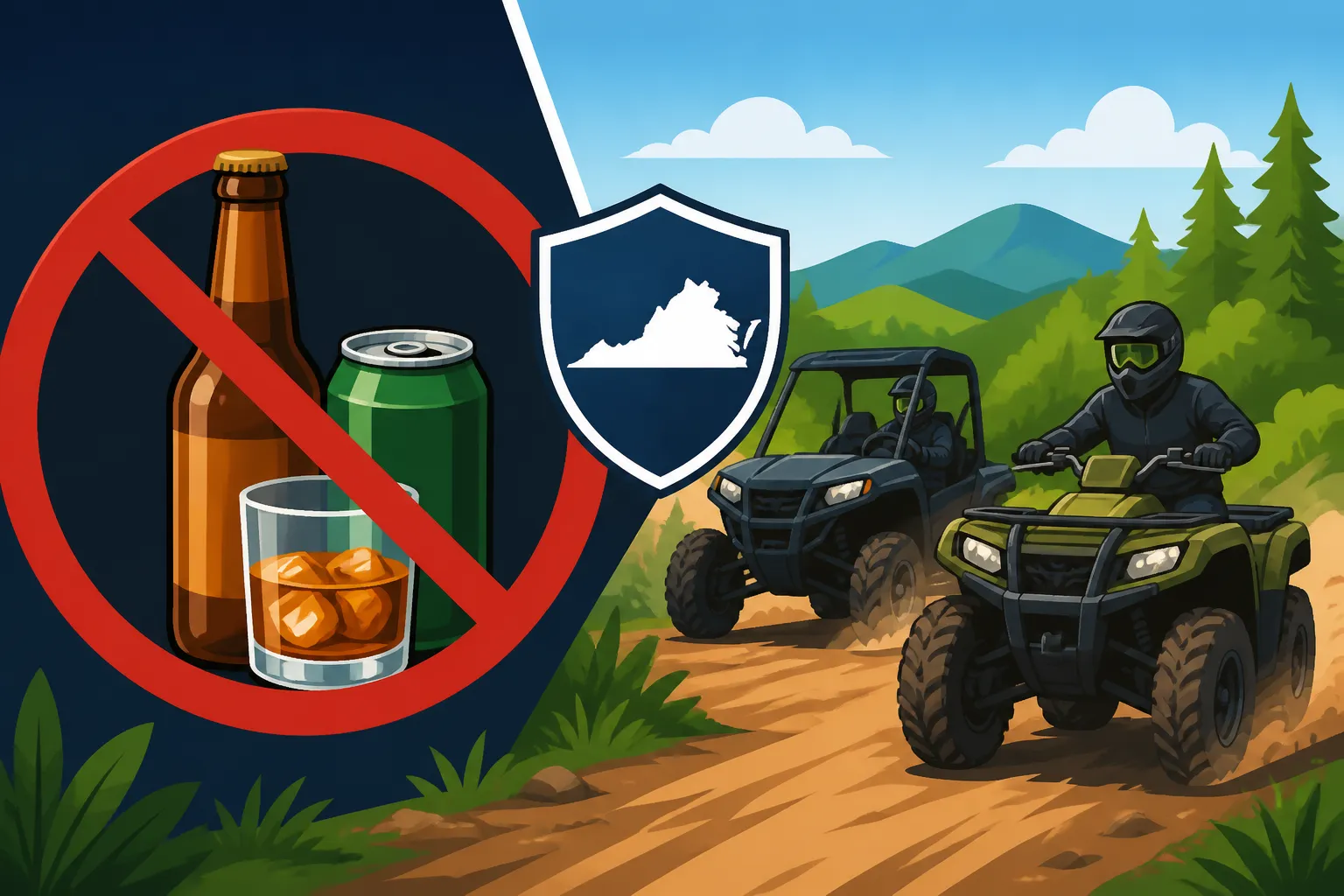
Virginia riders may encounter alcohol rules that differ from one riding area to another. At South Pedlar, the Forest Service prohibits alcoholic beverages on the trails and at the trailheads. The rule is site-specific, so it helps to understand where it applies, why a riding area may adopt it, and what to check before you unload.
What the alcohol rule says, and where it applies
The Forest Service says alcoholic beverages are not permitted on the trails or at the trailheads of the South Pedlar ATV Trail System. That is the clearest answer for riders planning to use South Pedlar: leave alcohol out of the trail and trailhead areas.
South Pedlar is a Forest Service trail system, not a rule that automatically governs every place where people ride in Virginia. A private riding park, another public riding area, or private land may have its own policies. Don’t assume that one place’s rule applies everywhere, and don’t assume a place allows alcohol just because its policy is different from South Pedlar’s. Check directly with the operator or land manager before your trip. [Virginia Private Park Alcohol Rules]
It also helps to read the wording carefully. The South Pedlar rule covers the trails and trailheads. Riders shouldn’t treat the trailhead as a separate social area where the prohibition does not matter. If you’re unsure whether a particular part of a recreation area counts as a trailhead, ask the Forest Service or the local district before bringing alcohol there.
The rule is not the same thing as a permit requirement. At South Pedlar, the Forest Service requires each ATV operator to carry a permit, while the alcohol restriction governs what may be brought onto the trails and trailheads. Getting a permit does not create an exception to the alcohol rule. Virginia National Forest OHV Permits
| Question | South Pedlar rule or practical takeaway |
|---|---|
| Is alcohol allowed on the trails? | No. The Forest Service prohibits alcoholic beverages on the trails. |
| Is alcohol allowed at the trailheads? | No. The Forest Service also prohibits alcoholic beverages at the trailheads. |
| Does this automatically set the rule at every Virginia riding area? | No. Check the policy for the specific park or land manager. |
| Does a riding permit override the rule? | No. A permit does not cancel the separate alcohol restriction. |
| What if the boundary of the trailhead is unclear? | Ask the Forest Service or the local district rather than guessing. |
This distinction matters because “riding park” can refer to very different places: a private facility, a public trail network, or land managed under a separate set of rules. A posted policy at one site does not establish the policy at another. Virginia Permit Questions Riders Ask
Why a riding area may prohibit alcohol
The Forest Service states the South Pedlar prohibition, but the rule itself does not give a specific explanation for why it was adopted. It would be misleading to present a particular reason as the agency’s official rationale without that explanation. Still, the practical safety concerns behind a no-alcohol rule on a motorized trail are easy to understand.
ATV trails can demand steady attention. Riders may need to manage changing surfaces, ruts, slopes, blind turns, other trail users, and unexpected stops. Alcohol can affect judgment, attention, coordination, and reaction time. Even a rider who feels capable of continuing may be less able to notice a hazard or respond smoothly when conditions change.
The risk is not limited to the person who has been drinking. A mistake on a narrow or uneven trail can affect other riders nearby. Groups also need to make clear decisions about when to stop, how to handle a mechanical problem, and whether someone should continue riding. Avoiding alcohol in the riding area helps keep those decisions focused.
Trailheads matter too. They are where riders unload, prepare machines, meet companions, and enter or leave the trail network. Treating a trailhead as part of the no-alcohol area removes the need to guess whether it is acceptable to drink before starting a ride or while taking a break there. At South Pedlar, the Forest Service’s rule expressly includes trailheads, so riders should plan around that boundary rather than trying to find an informal exception.
There is also a simple group-planning benefit: everyone knows the expectation before the ride begins. A clear rule can prevent disagreements about whether someone may drink while others prepare to ride, or whether a person who has been drinking can safely continue with the group. The safest plan is to keep alcohol out of the riding area and make the visit about riding.
These are practical safety reasons, not a claim that the Forest Service lists them as its stated reasons. If you want the official explanation for a site policy, contact the land manager. For general trip planning, it’s also worth reviewing Virginia Trail Etiquette Locals Expect and the rules that apply to the specific riding area you’re visiting.
How to plan a South Pedlar ride around the restriction
A little preparation makes it easier to follow the rule without disrupting the day. Start by confirming that South Pedlar is the destination you intend to visit and checking the Forest Service’s current information before leaving. Rules, access, and permit arrangements can vary between riding areas, so don’t rely on someone else’s recollection of a different trail system.
Then build the no-alcohol policy into the plan for the whole visit. Don’t pack alcoholic beverages for use at the trailhead or on the trails. If your group plans to meet before unloading, choose a location outside the restricted area and confirm that the place you choose permits alcohol. The South Pedlar rule should not be treated as permission to drink elsewhere and then operate an ATV; keeping the riding portion of the day alcohol-free is the responsible choice.
Make sure the group understands the difference between alcohol restrictions and permit rules. The Forest Service requires each operator on South Pedlar to have a permit. The Forest Service lists a daily permit for $5, a three-day consecutive permit for $12, and an annual permit for $30, as of November 2026. Permits are not transferable, and the user’s name and dates of use must be written on the permit for it to be valid. Check current details before you go, including where to buy the permit, because South Pedlar permits are not sold on site. Virginia Forest Permit Cost
If your group is considering another destination instead, check that site’s rules directly rather than assuming it has the same policy or permit process. The Forest Service explains that motorized use is limited to areas, roads, and trails designated as open to off-highway vehicles. A place that permits riding is not necessarily open to every type of vehicle, and its trail conditions or operating rules may differ. Virginia Forest Equipment Requirements
A useful pre-trip check can be straightforward:
- Confirm the exact riding area and who manages it.
- Read that area’s alcohol policy, including any rules for trailheads or staging areas.
- Check permit requirements and purchase arrangements before travel.
- Tell everyone in the group what is and is not allowed.
- Keep alcohol out of the riding area and arrange any later gathering somewhere the property owner or operator allows it.
The point of this checklist is not to add complications. It prevents a common planning mistake: assuming that a familiar rule from one park carries over to a different one. If a detail is not clear online or in posted information, contact the site before loading the machines. For conditions and access checks before a longer drive, see Virginia Trail Conditions Before You Haul.
What to do when rules are unclear
If a sign, website, or handout seems to say something different from what a staff member tells you, pause and ask the land manager to clarify the rule. Be specific: ask whether it applies to the trails, trailheads, parking or staging areas, and any nearby facilities. Don’t rely on a guess about where the restricted area begins.
For South Pedlar, the Forest Service’s stated prohibition covers the trails and trailheads. If you’re unsure about an adjoining spot, ask the Forest Service rather than assuming that the restriction ends at a convenient boundary. Likewise, if you’re visiting a private riding park, its operator is the right place to confirm that park’s policy. [Virginia Private Park Alcohol Rules]
Keep any answer in context. A statement about one facility or riding area does not necessarily set the rule for nearby land. The same goes for permits: a permit for one trail system should not be assumed to cover another. Check the rules for each destination on your itinerary, especially if your trip includes more than one riding area.
A clear policy is easiest to follow when the group agrees on it before the ride. If someone in the group wants to bring alcohol, settle the question before arrival and choose a lawful, permitted place for that activity away from the riding area. At South Pedlar, the practical answer is simple: no alcoholic beverages on the trails or at the trailheads.
Sources
- Virginia Department of Motor Vehicles — Off-Road Vehicles | Virginia Department of Motor Vehicles (checked November 3, 2026)
- USDA Forest Service — George Washington and Jefferson National Forests | Recreation OHV Trail Permits | Forest Service (checked November 3, 2026)
- Forest Service — George Washington and Jefferson National Forests | Peters Mill Run/Taskers Gap Trail System | Forest Service (checked November 3, 2026)
- Virginia Department of Motor Vehicles — Get a Homemade Trailer VIN Plate | Virginia Department of Motor Vehicles (checked November 3, 2026)
- Forest Service — George Washington and Jefferson National Forests | South Pedlar ATV Trail System | Forest Service (checked November 3, 2026)
- USDA Forest Service, Glenwood & Pedlar Ranger Districts — South%20Pedlar%20ATV%20Permit%20Order%20Form.pdf (checked November 3, 2026)
- Forest Service — George Washington and Jefferson National Forests | Back Creek Gorge (Forest Trail #516) | Forest Service (checked November 3, 2026)
Disclaimer
This article is for general informational purposes only and does not constitute professional advice. Laws, prices and regulations vary by location and change over time. Consult a qualified professional for guidance on your specific situation.