Why a Side-by-Side Can Never Be Made Street Legal
It's a common dream for many side-by-side enthusiasts in Virginia: the freedom to cruise from their driveway straight to the local store, or link up distant trails by taking a paved road. Yet, for countless owners of these powerful utility vehicles, that dream often crashes into a confusing wall of state regulations. This guide is here to untangle the legal knots and explain, in comprehensive detail, the specific reasons why, under current Virginia law, your side-by-side cannot be made street legal for general highway use, helping you navigate the frustrating realities of off-road vehicle ownership.
Understanding Virginia's Vehicle Classifications and What They Mean for Your Side-by-Side
Before we dive into the "why not," it's crucial to understand how Virginia's Department of Motor Vehicles (DMV) and state law classify different types of vehicles. This foundation is key to grasping why side-by-sides are treated differently than, say, a family sedan or even a street-legal motorcycle. It all comes down to their fundamental design and intended purpose.
The Definition of an All-Terrain Vehicle (ATV) in Virginia Law
In Virginia, your side-by-side, regardless of its seating capacity or steering wheel, falls squarely under the broader umbrella of an "all-terrain vehicle" or ATV as defined in the Code of Virginia, specifically § 46.2-915.1. While the mental image of an ATV often conjures up a single-rider quad with handlebars, the legal definition is much wider. It encompasses any motor vehicle that is "designed for off-road use only, has three or more wheels, is forty-eight inches or less in width, has a dry weight of 900 pounds or less, and uses a handlebar for steering." Now, many side-by-sides exceed 48 inches in width and 900 pounds, and they certainly use a steering wheel, not handlebars. This is where the law includes them by specific reference, often stating "an all-terrain vehicle and any other off-road vehicle." [Virginia ATV and Utility Vehicle Definitions]
The critical phrase here is "designed for off-road use only." This isn't just a suggestion; it's a foundational aspect of its classification. Manufacturers build these machines to excel in rugged terrain, mud, and climbing, not to safely operate on asphalt alongside cars and trucks traveling at highway speeds. Every design choice, from the suspension travel to the tire tread and the lack of traditional road-safety features, reflects this off-road intent. The moment a vehicle is categorized primarily for off-road use, it inherently carries restrictions on public road access.
Why a "Motor Vehicle" Status Is Crucial for Street Legality
For a vehicle to be legally driven on public highways in Virginia, it must meet the definition of a "motor vehicle" under § 46.2-100 of the Code, which generally means it's designed for highway use. More importantly, it must adhere to a vast array of federal and state safety standards. Think about it: every car, truck, and motorcycle you see on the road has turn signals, headlights, taillights, brake lights, mirrors, a horn, and usually a windshield and seatbelts. These aren't just accessories; they are legally mandated components that ensure the vehicle can safely communicate its intentions, provide visibility, and offer some level of occupant protection in traffic.
Side-by-sides, by contrast, are largely exempt from many of these stringent Federal Motor Vehicle Safety Standards (FMVSS) because they are not intended for highway use. They might have headlights and taillights, but these are often designed for visibility in off-road environments, not for specific photometric requirements on a highway. They lack the crumple zones, advanced airbag systems, and reinforced chassis that passenger cars have, which are vital for crash protection at road speeds. This fundamental difference in manufacturing and safety certification is the bedrock of why they can't simply be "upgraded" to street legal status. [Why a Utility Vehicle Is Not a Motor Vehicle]
The Specific Legal Barriers That Block Side-by-Side Street Conversion
The dream of making a side-by-side street legal isn't just hindered by general definitions; it's actively blocked by explicit legal provisions and the absence of a conversion pathway. Virginia law is quite clear on what off-road vehicles can and cannot do on public roads, and there's no grey area that allows for side-by-side modifications for highway use.
Federal Motor Vehicle Safety Standards and Manufacturer Intent
This is perhaps the biggest, yet often least understood, hurdle. When a manufacturer produces a side-by-side, they are not building it to comply with FMVSS for passenger vehicles. These standards dictate everything from headlight intensity and aim, to brake system performance, tire types, emissions, crash test ratings, and even seatbelt anchor points. Side-by-sides are built to a different set of standards entirely, those for off-highway vehicles, which focus on different performance metrics like terrain capability and rollover protection in an off-road setting.
Even if you outfit your side-by-side with aftermarket turn signals, a horn, a windshield, and DOT-approved tires, you haven't magically made it compliant. The underlying vehicle structure, its braking distances at 55 mph, its emissions profile, and its crashworthiness have not been certified to federal highway standards. Without this fundamental certification from the manufacturer or a recognized vehicle modifier, no state DMV can legally register it for highway use. It's not about adding a few parts; it's about the entire engineering and regulatory compliance of the vehicle from the ground up. The sheer cost and complexity of bringing an off-road vehicle up to these standards are prohibitive, which is why you don't see companies offering street-legal side-by-side conversion kits that truly meet federal requirements.
Virginia Code's Explicit Prohibition on Public Highways
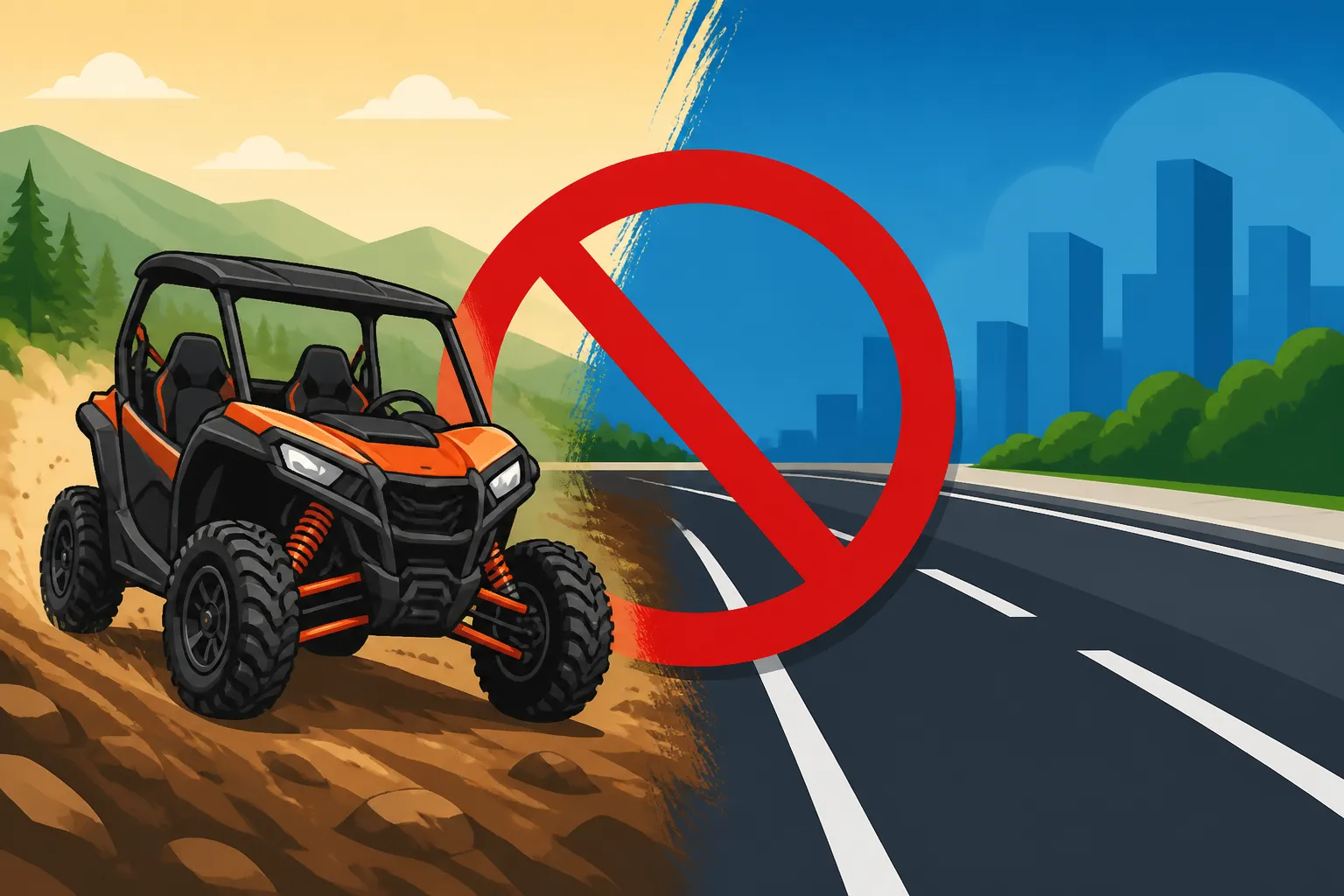
Beyond federal standards, Virginia state law directly prohibits side-by-sides from public roads. Code § 46.2-915.1 states unequivocally: "No all-terrain vehicle shall be operated on any public highway or other public property." This is the core of the matter. The legislature has made a policy decision that these vehicles are not suited for highway travel.
While there are some very narrow exceptions to this rule, it's vital to understand that these exceptions do not grant street-legal status for general use. These include:
- Crossing a Highway: You can cross a public highway by the most direct route, but only if you yield to all traffic and ensure the crossing is done safely. This is a fleeting maneuver, not an opportunity for extended road travel. [Virginia Crossings by the Most Direct Route]
- Farming or Hunting: Farmers can use ATVs on public highways for specific agricultural purposes, and hunters might use them on certain roads for access, but these are highly conditional and not for recreational road riding. [Virginia Farming and Household Exceptions]
- Emergency Services: Law enforcement, fire, and rescue personnel can operate ATVs on public roads when performing their official duties.
- Designated Coalfield Roads: In Buchanan and Tazewell counties, local boards of supervisors have the authority to designate specific county roads as open to ATVs for limited travel, usually linking trail systems. Even on these designated routes, there are strict rules, including a 25 mph speed limit and daylight-only operation. [Virginia's 25 mph Coalfield Road Limit] [Virginia Named Routes Open to ATVs]
Crucially, these exceptions are exactly that: exceptions to a general ban. They do not confer street legality on the side-by-side itself. It remains an off-road vehicle that is, for very limited purposes, allowed to briefly interact with public roads under highly controlled conditions. For general recreational use, the ban remains in full effect. [Virginia Bans ATVs on Public Highways]
Titling vs. Registration and the Missing Path for Side-by-Sides
Another point of confusion stems from titling. Yes, Virginia does require titles for new ATVs (and therefore side-by-sides) purchased after July 1, 2006, if they are over 50cc. [Virginia Titles ATVs but Never Registers Them] Many owners assume that if their machine has a title, it's halfway to being street legal. However, a title in Virginia merely proves ownership; it does not grant registration for highway use.
When you title an ATV or side-by-side, you are establishing a legal paper trail for ownership, which is crucial for buying, selling, or recovering a stolen machine. However, the Virginia DMV does not issue license plates for ATVs. [Virginia Issues No Plates for ATVs] Without plates and the corresponding annual registration fee, a vehicle cannot be legally operated on public highways. This is a critical distinction: [Virginia Titles ATVs but Does Not Register Them]. There is simply no existing category or pathway within the Virginia DMV system for registering a side-by-side as a street-legal vehicle, unlike the process that exists for converting a dirt bike into a street-legal motorcycle. This means that [Virginia Has No Street-Legal UTV Path] is a hard and fast rule for now.
Common Misconceptions and Risky Alternatives
Given the clear legal restrictions, it's no surprise that frustrated side-by-side owners sometimes explore alternatives or fall prey to misinformation. Understanding why these common workarounds are problematic is just as important as understanding the direct legal prohibitions.
Why Out-of-State Plate Schemes Are Risky
One popular, though legally dubious, strategy involves attempting to register a side-by-side in another state known for more lenient off-road vehicle laws, such as Montana. The idea is that if the vehicle is "registered" out-of-state with a license plate, it will then be legal to drive on Virginia roads. This is a highly risky maneuver with significant potential downsides for Virginia residents.
Virginia law generally dictates that if a vehicle is primarily garaged, stored, or operated within the Commonwealth by a Virginia resident, it must comply with Virginia's titling, registration, and operating laws. Simply registering it with a shell company or through an out-of-state agent does not override Virginia's jurisdiction. Law enforcement in Virginia is increasingly aware of these schemes. If you are stopped while operating a side-by-side on a Virginia public highway with an out-of-state plate, you could face hefty fines for illegal operation of an unregistered vehicle, impoundment of your machine, and potential insurance complications. Your insurance company might deny a claim if the vehicle was being operated illegally. It's a costly gamble that seldom pays off in the long run. Using services like LawDepot to create a legal bill of sale for an out-of-state purchase won't magically grant street legality in Virginia; the vehicle still needs to comply with local operating laws where it's primarily used. [Why Out-of-State Plate Schemes Are Risky]
The Difference Between Dirt Bike Conversions and Side-by-Sides
It's easy to see a friend's dirt bike with a license plate and wonder why your side-by-side can't follow the same path. The key difference lies in the base vehicle's classification and its ability to meet motorcycle standards, not car or ATV standards. In Virginia, a dirt bike (which is legally a type of off-road motorcycle) can be converted to a street-legal motorcycle through a specific process. This involves ensuring the bike meets certain equipment requirements (DOT tires, mirrors, horn, turn signals, proper lighting, etc.) and undergoing an inspection, typically culminating in the completion of Virginia Form VSA 130 and a special titling process handled centrally by the DMV in Richmond. [Virginia Dirt Bike Conversion Rules]
The crucial distinction is that a dirt bike, even in its off-road form, is structurally a motorcycle and can reasonably be modified to meet federal and state motorcycle safety standards. A side-by-side, by design, is fundamentally different. It's a multi-wheeled vehicle with a cage, seating, and often much greater width and weight than a motorcycle. It cannot be made to meet motorcycle standards, nor can it realistically be converted to meet passenger car standards without a complete re-engineering and re-certification process that is simply not practical or legally recognized for individual owners. This is why [The Street-Legal Path Open to Dirt Bikes Alone] does not extend to side-by-sides.
Practical Implications and What to Do Instead
Given the strict legal landscape, what's a side-by-side owner to do? The most important step is to embrace the reality of your machine's design and legal classification: it's an off-road vehicle. This means planning your rides accordingly.
- Trail Systems: Focus on Virginia's fantastic designated off-road trail systems, such as the Spearhead Trails in Southwest Virginia or the Peters Mill Run/Taskers Gap system in the George Washington National Forest. These are built for the very machines you own and offer miles of legal, exciting riding.
- Private Land: Always secure written permission from landowners before riding on private property. This protects you from trespassing charges and clarifies your usage rights. Using a service like LawDepot to draft a simple landowner permission agreement or a liability waiver for guests riding on your own property can offer peace of mind and legal clarity.
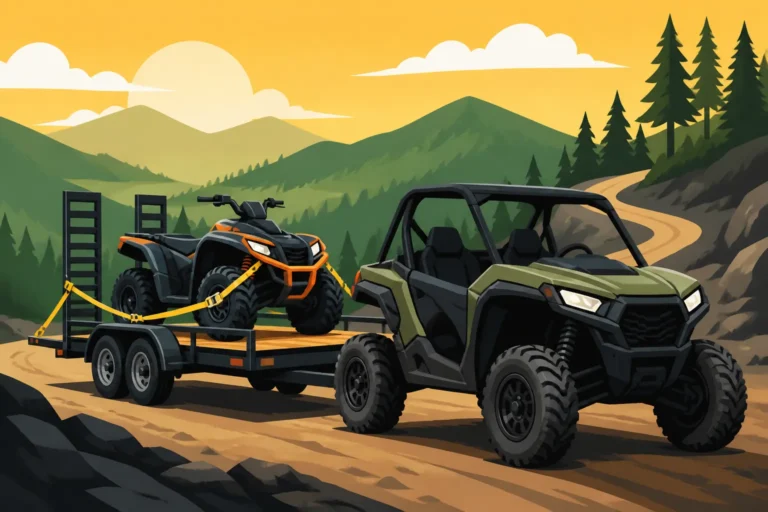
- Safe Transport: When moving your side-by-side between your home and a legal riding area, use a trailer. This is the only legal and safe way to transport your off-road machine on public highways. Your trailer needs a plate, but your quad does not.
- Stay Informed: Keep an eye on legislative changes. While current laws are restrictive, advocacy groups continue to work towards expanding off-road access and potentially exploring limited street-legal options in the future, though significant hurdles remain.
Ultimately, understanding and respecting Virginia's laws for side-by-sides prevents fines, impoundment, and potential legal liability in the event of an accident. While the desire for street legality is understandable, the current legal framework is clear: side-by-sides are off-road vehicles for off-road adventures.
Here's a quick look at how various vehicle types fare with street legality in Virginia:
| Vehicle Type | Primary Classification (VA) | Intended Use | Street Legal Status (VA) | Requires Plate? | Conversion Pathway? |
|---|---|---|---|---|---|
| Passenger Car | Motor Vehicle | Highway | Yes | Yes | N/A |
| Motorcycle | Motorcycle | Highway | Yes | Yes | N/A |
| Dirt Bike | Off-Road Motorcycle | Off-road | No (initially) | No (initially) | Yes (via VSA 130) |
| ATV (Quad) | All-Terrain Vehicle | Off-road | No | No | No |
| Side-by-Side | All-Terrain Vehicle | Off-road | No | No | No |
| Moped | Moped | Limited Highway | Yes (limited) | Yes | N/A |
Disclaimer
This article is for general informational purposes only and does not constitute professional advice. Laws, prices and regulations vary by location and change over time. Consult a qualified professional for guidance on your specific situation.