Volunteer Rescue Squads Pay No ATV Title Fee
When your volunteer rescue squad needs to use an all-terrain vehicle (ATV) or utility terrain vehicle (UTV) to reach someone in need out in the rugged backcountry of Virginia, the last thing you want to worry about is an unnecessary fee. Equipping these vital organizations is already a significant financial challenge, and every dollar saved is a dollar that can go towards life-saving gear, fuel, or training. This comprehensive guide will walk you through the specifics of the Virginia Department of Motor Vehicles (DMV) exemption that allows qualified volunteer rescue squads to title their ATVs and UTVs without paying the standard titling fee, offering a small but meaningful financial relief.
Understanding the Virginia ATV Titling Landscape: The General Rule and a Crucial Exception
For most folks in Virginia, getting an ATV or UTV titled at the DMV involves a specific process and associated costs. However, the Commonwealth recognizes the invaluable service provided by volunteer rescue squads and has made special provisions to ease some of their administrative and financial burdens. This exemption highlights Virginia's support for the organizations that often operate in challenging, off-road environments to save lives.
The Standard Titling Process for the Average Rider
For the typical Virginia resident buying an ATV or UTV, especially a new one or a used one they choose to title, the process is fairly straightforward. Generally, if you've purchased a machine over 50cc new since July 1, 2006, you're required to get a title. Even for older or used machines, many choose to title their ATV to establish clear proof of ownership, which can be essential for insurance purposes, resale, or in case of theft. [How to Title an ATV in Virginia] usually means submitting specific forms, providing proof of ownership like a manufacturer's statement of origin (MSO) for a new machine, and paying a fee.
The standard cost for titling an ATV in Virginia is a modest sum, but it's still a cost that adds up, particularly for organizations managing multiple machines or operating on a tight budget. [Virginia Title Fee of $15] is applied per machine, and while not exorbitant for an individual, a fleet of several ATVs and UTVs for a busy rescue squad can quickly turn these small fees into a noticeable line item in their budget. Additionally, understanding the nuances of whether [Virginia Titles Required on Machines Over 50cc] and the significance of [Virginia's July 2006 Titling Cutoff] are important for any owner.
Why Volunteer Rescue Squads Are Treated Differently
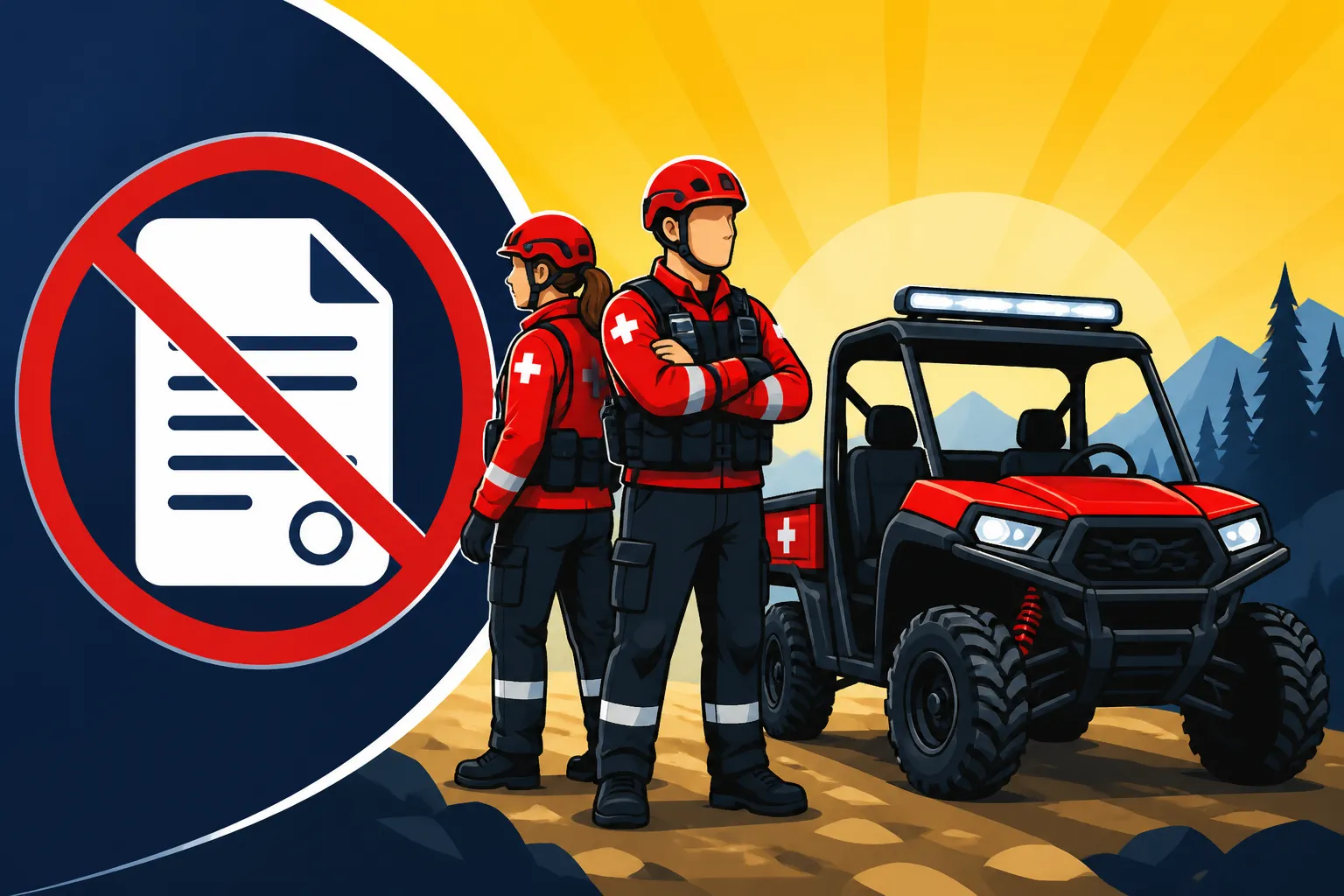
The rationale behind exempting volunteer rescue squads from the ATV titling fee is rooted in their public service mission. These organizations are not-for-profit entities dedicated to emergency response, often venturing into areas inaccessible by conventional vehicles. They utilize ATVs and UTVs for various critical tasks, including search and rescue operations in wilderness areas, medical emergencies on remote trails, and support during natural disasters. The state acknowledges that imposing a fee on these essential tools would directly impact their ability to serve the community.
By waiving this fee, Virginia aims to remove a small financial obstacle, allowing rescue squads to allocate those funds to more direct operational needs. It's a recognition that their vehicles are not for personal recreation but are indispensable equipment for fulfilling a crucial community function. This small exemption reflects a broader commitment to supporting the infrastructure of emergency services that underpin public safety across the Commonwealth, from the mountains to the coast.
Who Qualifies for the Exemption: Defining "Volunteer Rescue Squad"
Understanding exactly which organizations are eligible for this ATV titling fee exemption is crucial. The term "volunteer rescue squad" isn't a loose designation; it refers to specific types of entities that meet certain criteria under Virginia law. Simply being a group of volunteers helping out isn't enough; formal recognition and operational structure are key.
What Constitutes an Eligible Organization in Virginia
For a volunteer rescue squad to qualify for the ATV titling fee exemption, it generally must be recognized by the Commonwealth of Virginia as a legitimate, non-profit emergency service provider. This typically means the organization is chartered by the state, registered as a non-profit corporation, and operates under the authority or in coordination with local government emergency management systems. These squads are usually staffed by certified emergency medical technicians (EMTs) and rescue personnel who undergo rigorous training to respond to a wide range of emergencies.
Proof of this official status is paramount when applying for the exemption at the DMV. This might include a copy of the organization's charter, its non-profit designation letter from the Internal Revenue Service (IRS), or an official letter from a local government body (such as a county board of supervisors or city council) acknowledging the squad's role as a primary emergency responder. These documents demonstrate that the ATV or UTV is being titled by an organization genuinely dedicated to public safety and not by an individual or commercial entity merely using a similar name.
Common Pitfalls and Misunderstandings
Sometimes, groups that perform valuable community services might mistakenly believe they qualify for the exemption. For instance, a casual group of friends who regularly assist in local search efforts or a private club that maintains trails might volunteer their time and resources, but they would not typically meet the criteria of an officially recognized "volunteer rescue squad." The distinction lies in the formal structure, official recognition, and primary mission as an emergency service provider.
Another common misunderstanding can arise if a vehicle is owned by an individual member of the squad, even if it's primarily used for rescue operations. For the exemption to apply, the ATV or UTV must be titled in the name of the qualified volunteer rescue squad itself, not in the name of an individual, even if that individual is a key member or officer. This ensures that the vehicle is formally recognized as an asset of the public service organization, not private property. Without this direct organizational ownership, the standard titling fees would still apply, underscoring the importance of clear legal and ownership structures for these valuable assets.
The Financial Impact of ATV Titling and Why Exemptions Matter
For any non-profit organization, especially one relying on donations and grants, every saved dollar is significant. While the individual ATV title fee in Virginia might seem small, the cumulative effect for a rescue squad can be substantial, and the exemption provides tangible benefits beyond just the monetary saving.
How Small Savings Add Up for Non-Profits
Imagine a volunteer rescue squad that needs to title five ATVs and three UTVs to adequately cover its service area, which includes rugged terrain, remote trails, and large tracts of wilderness. Each of these machines would typically incur the [Virginia Title Fee of $15]. For a fleet of eight vehicles, that's $120. While $120 might not sound like a fortune, consider that this amount could instead purchase several critical first-aid kits, a couple of heavy-duty winch cables, or enough fuel for several rescue missions.
In the world of non-profits, particularly those providing emergency services, every penny counts. These organizations often operate on shoestring budgets, with funds being meticulously allocated to ensure essential equipment is maintained, personnel are trained, and services can be dispatched quickly. The titling fee exemption means direct cost avoidance, freeing up capital that can be reinvested into life-saving resources. This allows squads to stretch their limited budgets further, ultimately enhancing their capacity to serve the community more effectively and respond to emergencies without undue financial strain.
Reducing Administrative Burden and Streamlining Operations
The benefit of the exemption isn't purely financial; it also simplifies the administrative process. While the fee itself is removed, the requirement to formally title the vehicle still stands, meaning the squad still needs to submit the correct paperwork and establish ownership. However, by eliminating the payment step, it removes an extra layer of processing, reconciliation, and budgeting that cash-strapped, volunteer-run organizations often struggle with.
Think about the time a volunteer treasurer or administrator spends processing invoices, tracking payments, and ensuring compliance. Removing a fee, even a small one, reduces the number of financial transactions and associated record-keeping tasks. This administrative relief allows volunteers to focus their valuable time on more pressing matters, such as fundraising, training new recruits, or maintaining operational readiness. Simplification, even of a small aspect like this, can contribute to a more efficient and less stressful operational environment for busy rescue squads, making it easier for them to manage their fleet. The process still requires careful attention to detail, such as accurately completing forms like [Virginia Form VSA 17A Explained], but without the financial transaction aspect, it becomes a smoother endeavor.
Navigating the Exemption Process at the Virginia DMV
Claiming the titling fee exemption for your volunteer rescue squad's ATV or UTV requires careful attention to detail and the submission of specific documentation. It's not an automatic process, but rather one that needs to be proactively managed by the squad's authorized representatives.
Required Documentation and Proof of Status
When an authorized representative from a volunteer rescue squad visits a Virginia DMV customer service center to title an ATV or UTV, they will need to present a package of documents. This package is crucial for proving both ownership of the vehicle and the squad's eligibility for the fee exemption.
Typically, the required documentation includes:
- Proof of Ownership: For a new ATV/UTV, this will be the Manufacturer's Statement of Origin (MSO). For a used machine, it would be the properly assigned Virginia title from the previous owner, or an out-of-state title. Make sure all names are spelled correctly and signatures are present.
- Application for Title: This is generally Form VSA 17A, the "Application for Certificate of Title and Registration." While rescue squads don't register their ATVs in the traditional sense, this form initiates the titling process.
- Proof of Eligibility for Exemption: This is where the "volunteer rescue squad" status comes into play. You'll need official documentation proving your organization is a recognized volunteer rescue squad. This could be:
- A letter on official letterhead from the local government (e.g., County Administrator, City Manager, or Department of Emergency Services) confirming the squad's official role and recognition.
- A copy of the squad's official charter or articles of incorporation that establish its non-profit status and purpose in Virginia.
- A copy of the IRS 501(c)(3) determination letter, confirming federal non-profit status.
- It's always a good idea to bring more documentation than you think you need, as DMV clerks may have varying levels of familiarity with specific exemptions.
- Identification of the Authorized Representative: The individual completing the transaction must present valid government-issued photo identification. They should also bring a letter of authorization from the rescue squad, on official letterhead, stating they are authorized to conduct DMV business on behalf of the organization.
Ensuring all paperwork is complete and accurate before visiting the DMV will save time and prevent frustrating delays. Many organizations find it helpful to have official templates for various legal and administrative documents; while the DMV has its own specific forms, resources like LawDepot can provide useful structures for internal authorizations or official letters.
Step-by-Step Application for an Exempt Title
Once you have gathered all the necessary documents, the application process for an exempt title generally follows these steps:
- Prepare the Vehicle Ownership Documents: Ensure the MSO or previous title is correctly filled out and signed. For new machines, this includes making sure the dealer's information and [The Motorcycle Dealer License Number on Your MSO] are present. For used machines, verify the seller has properly signed over the title.
- Complete the Titling Application (Form VSA 17A): Fill out the [Virginia Form VSA 17A Explained] completely, clearly identifying the owner as the volunteer rescue squad. While the form asks for registration information, remember that [Virginia Titles ATVs but Never Registers Them], so you're only focused on the title section.
- Assemble Proof of Exemption: Collect your official letters, charters, and IRS documents. Make sure they clearly state the organization's name as it appears on the title application.
- Authorize a Representative: Draft and sign a letter on squad letterhead authorizing the specific individual to handle the titling transaction. This protects the organization and clarifies authority.
- Visit a Virginia DMV Customer Service Center: Present all your compiled documents to a DMV clerk. Clearly state that you are a volunteer rescue squad applying for an ATV/UTV title under the fee exemption. The clerk will review the documentation to verify eligibility.
- Review and Receive Title: If everything is in order, the clerk will process the application. You will receive a title certificate, either on the spot or mailed to the squad's official address, which will clearly show the squad as the legal owner. This title confirms proper ownership without the typical fee being applied. Remember to keep a copy of all submitted documents for the squad's records.
Beyond the Title Fee: Other Costs and Considerations for Rescue Squads
While the titling fee exemption is a welcome relief, it's important for volunteer rescue squads to remember that an ATV or UTV fleet involves numerous other costs and considerations. A comprehensive financial plan for these vehicles extends far beyond the initial titling process.
Sales Tax Exemptions (or Lack Thereof) for Rescue Squads
A common question that arises is whether volunteer rescue squads are also exempt from sales tax when purchasing ATVs or UTVs. Unfortunately, the ATV titling fee exemption does not automatically extend to sales tax. In Virginia, sales and use tax generally applies to the retail purchase of tangible personal property, including ATVs and UTVs. While some non-profit organizations may qualify for specific sales tax exemptions on certain purchases, these are typically contingent on specific criteria and often require a separate application or certification process with the Virginia Department of Taxation, not the DMV.
Therefore, rescue squads should budget for [Virginia Sales Tax at Titling] when acquiring new or used machines, unless they have specifically confirmed a sales tax exemption with the tax department and have the proper documentation to present at the time of purchase (usually through the dealer or directly to the state). It's crucial not to assume that the titling fee exemption means all other fees or taxes are waived. This requires a separate inquiry and understanding of [Virginia Agricultural Tax Exemptions] or other general non-profit sales tax laws if applicable to their specific operational context.
Ongoing Costs: Insurance, Maintenance, and Training
Even with a free title, the operational costs of an ATV or UTV fleet can be significant. Volunteer rescue squads must meticulously plan for these ongoing expenses to ensure their machines are always ready for deployment.
- Insurance: While [Virginia Requires No ATV Insurance] for private recreational use, any responsible organization, especially one involved in high-stakes rescue operations, would be wise to carry comprehensive insurance coverage. This protects against liability in case of an accident, damage to the vehicle, or even theft. The cost of such policies can vary based on the number of vehicles, their value, and the scope of coverage. [What an Insurer Asks for on an Untitled Virginia Quad] might be different, but for titled vehicles, the process is usually clearer.
- Maintenance: ATVs and UTVs used in rescue operations endure harsh conditions and require regular, thorough maintenance. This includes routine oil changes, tire replacements, brake inspections, and occasional major repairs. Neglecting maintenance can lead to breakdowns during critical missions or pose safety risks. Budgeting for parts, specialized tools, and potentially professional service is essential.
- Fuel: These vehicles consume fuel, especially during extensive training exercises or prolonged search operations. The cost of fuel can fluctuate, so a flexible budget is needed.
- Training: Proper training for operators is paramount. Rescue ATV/UTV operators need specialized skills to navigate challenging terrain safely, operate rescue equipment, and work effectively in a team. Training courses, certifications, and ongoing refreshers incur costs but are indispensable for safety and effectiveness.
These factors underscore that while the titling fee exemption is a helpful gesture, it's just one small piece of the financial puzzle for volunteer rescue squads operating their off-road fleets. Comprehensive planning is critical for their long-term sustainability and operational readiness.
Maintaining Compliance and Best Practices for Squads
Successfully navigating the initial titling process is just the beginning. For volunteer rescue squads, maintaining compliance with Virginia's ATV laws and adopting best practices for vehicle management are crucial for continued operational effectiveness and legal protection.
Record Keeping for Audit and Future Transactions
Meticulous record-keeping is not just a good idea for any organization; it's a necessity for volunteer rescue squads, especially concerning their vehicle fleet. When the DMV grants a titling fee exemption, there's an implicit expectation that the organization remains compliant and that its assets are properly managed. Should there ever be an audit, a review by local authorities, or even just internal questions about vehicle usage, having a robust paper trail is invaluable.
For each titled ATV or UTV, the squad should maintain a dedicated file containing:
- A copy of the vehicle's title certificate.
- The original MSO or previous owner's title.
- All documentation submitted to the DMV for the exemption (e.g., official letters, non-profit status).
- Records of all maintenance performed, including dates, costs, and who performed the work.
- Insurance policy documents and claim history.
- Any incident reports involving the vehicle.
- Training records for all operators.
These records protect the squad's non-profit status, demonstrate responsible management of public assets (or assets acquired through donations), and streamline future transactions such as selling a machine, processing insurance claims, or proving ownership in case of theft. Organizations may find templates for inventory management and other record-keeping documents through general legal form providers like LawDepot to ensure consistency and thoroughness.
Training and Safety Standards for Rescue Operations
While Virginia's ATV titling exemption focuses on the administrative aspect, it implicitly highlights the critical role these machines play in potentially hazardous situations. Therefore, adhering to the highest training and safety standards for all ATV/UTV operators within the rescue squad is not just good practice, but a moral imperative.
Unlike recreational riders, rescue squad members operate their machines under duress, often in adverse weather, difficult terrain, and with the added pressure of an emergency. This demands specialized training far beyond what a typical rider might receive. Key areas include:
- Advanced Off-Road Driving Techniques: Navigating steep inclines, descents, side hills, water crossings, and obstacles while carrying equipment or patients.
- Vehicle-Specific Operations: Understanding the unique capabilities and limitations of each ATV or UTV in the fleet, including winch operation, towing, and specialized attachments.
- Team Communication and Coordination: Effective use of radios and hand signals, especially when operating multiple vehicles in a convoy or during search patterns.
- Patient Packaging and Transport: Safely securing injured individuals onto specialized rescue stretchers or litters designed for ATV/UTV transport.
- Emergency Procedures: What to do in case of a mechanical breakdown, rollover, or operator injury in a remote location.
- Virginia-Specific Regulations: While operating under emergency exemptions, operators should still be familiar with general rules like [Virginia ATV Road Rules Under 46.2-915.1] and [Virginia Helmet Law Applies to Every Rider].
Investing in regular, high-quality training ensures that squad members are not only proficient but also safe, minimizing the risk of accidents that could compromise a rescue mission or injure personnel. This commitment to ongoing training, coupled with diligent record-keeping, ensures that the valuable ATVs and UTVs are always used effectively and responsibly in the service of the Virginia community.
| Item/Category | Standard Individual ATV Titling | Volunteer Rescue Squad ATV Titling | Notes |
|---|---|---|---|
| Title Fee | $15 per machine | $0 (Exempt) | Direct cost saving for qualified squads. |
| Sales Tax | Applicable (e.g., 5.3% of sale price) | Typically Applicable | Exemption for title fee does not usually include sales tax. Squads should confirm any separate sales tax exemptions with the Virginia Department of Taxation. |
| DMV Form | VSA 17A | VSA 17A | Same form used, but specific sections for "owner" and "exemptions" must be carefully completed. |
| Proof of Ownership | MSO or Previous Title | MSO or Previous Title | Must be in the name of the rescue squad, not an individual. |
| Exemption Proof | Not Applicable | Required (e.g., official letter, IRS 501(c)(3)) | Critical for proving eligibility at the DMV. Ensure documents are current and clearly identify the squad. |
| Registration | Not Required (for ATVs) | Not Required (for ATVs) | [Virginia Titles ATVs but Never Registers Them] applies to both individuals and rescue squads; no annual plate or decal is issued. |
| Insurance | Optional | Highly Recommended | While not legally required for ATVs, liability and comprehensive coverage are essential for organizations performing rescue missions. |
| Annual Fees | None | None | There are no yearly renewal fees for ATV titles in Virginia, meaning the fee is a one-time cost (or saving for squads) at the time of titling. Why a Virginia ATV Has No Yearly DMV Fee explains this. |
Disclaimer
This article is for general informational purposes only and does not constitute professional advice. Laws, prices and regulations vary by location and change over time. Consult a qualified professional for guidance on your specific situation.