Questions Worth Asking Before You Sign a Buyer’s Order
Oh, the thrill of finally deciding on that new ATV or UTV! You've spent countless hours browsing online, maybe even visited a few dealerships, and now you're close to pulling the trigger. It's an exciting time, a real milestone for any outdoor enthusiast in our beautiful state of Virginia. But before you let that excitement completely take over and sign on the dotted line, pump the brakes for just a moment. Many folks get caught up in the shiny new machine and overlook the nitty-gritty details on the buyer's order, only to face unexpected costs or headaches down the road. This guide is here to make sure you ask all the right questions, so you can ride away with peace of mind and avoid any nasty surprises.
Deciphering the Fine Print: Understanding Your Buyer's Order
Buying an ATV or UTV isn't quite like buying a gallon of milk; there's usually a lot more to the price than just the sticker on the machine itself. Dealerships have various ways of structuring their pricing, and it's easy to get confused or miss hidden fees if you're not prepared. Your buyer's order, or purchase agreement, is the official document that spells out what you're paying for. But it's often dense, full of jargon, and can be a source of frustration for many buyers. Taking the time to understand each line item before you sign is crucial.
What's the Real "Out-the-Door" Price?
You walk into a showroom, you see a price advertised, maybe even a sale price, and you think you've got a good handle on what you're going to pay. But then the salesperson brings out the buyer's order, and suddenly that number seems to grow. This is where the concept of an "out-the-door" price becomes your best friend. An advertised price usually only covers the cost of the machine itself, often excluding a host of other charges.
For example, many dealerships add a dealer processing fee, sometimes called a documentation fee or "doc fee." This fee is supposed to cover the cost of preparing paperwork, but it's largely a profit center for the dealer. While these fees are permitted in Virginia, dealers are required to prominently display a sign stating their processing fee amount. Always ask for this figure upfront. [Virginia Dealer Processing Fee Disclosure] You might also encounter freight or destination charges, which cover the cost of shipping the machine from the factory to the dealership. Then there are setup or assembly fees, for getting the machine ready for you to ride. These aren't always included in the advertised price, and they can add a significant amount to your total. Don't be shy about asking for a line-by-line breakdown of every single charge that isn't the base price of the ATV or UTV. Get a clear, all-inclusive "out-the-door" figure that includes everything you'll pay before you even think about signing. This is the only way to compare prices accurately between different dealerships. [Negotiating an Out-the-Door Price at a Virginia Dealer]
Sales Tax and Titling Fees: What Virginia Charges You
Beyond the dealer's charges, you'll also be on the hook for state-mandated fees. In Virginia, ATVs and UTVs are subject to sales tax. This is often a point of confusion for buyers because motor vehicles like cars and trucks have a specific "vehicle sales and use tax" rate. However, ATVs and UTVs are not considered motor vehicles under many aspects of Virginia law, so they fall under the general retail sales tax rate. [Virginia ATV Sales Tax Rate]
The retail sales tax rate in Virginia is generally 5.3%, but there are regions that add a local option tax, bringing the total to 6%. For instance, in the Northern Virginia region, the rate is higher, and in parts of Hampton Roads and Central Virginia, you might also see that 6% rate. And if you're buying near Williamsburg, James City, or York counties, there's even an additional 1% tax, making it 7% in those areas. [Virginia's 5.3 and 6 Percent Rates] It's essential to confirm the exact sales tax rate that will apply to your purchase based on where the transaction takes place or, more accurately, where you will garage the machine. On top of sales tax, there's also a straightforward state fee for titling your new machine. Virginia charges a modest fee for an ATV or UTV title. [Virginia Title Fee of $15] This title fee is usually added to your total at the point of purchase. Make sure you see these government fees clearly listed on your buyer's order, separate from any dealer-specific charges. They are a non-negotiable part of the cost of ownership in Virginia. [Virginia Title Costs at Purchase]
Understanding Manufacturer Rebates and Dealer Incentives
Many manufacturers offer rebates or incentives to sweeten the deal, especially during certain seasons or to move older inventory. These can be a fantastic way to save money, but it's important to understand how they're applied. Always ask if the rebate comes off the price before sales tax is calculated, or if it's a separate reimbursement after the fact. This can make a difference in your total sales tax bill. [Do Rebates Come Off Before Virginia Sales Tax?]
Furthermore, differentiate between a manufacturer's rebate, which comes from the brand itself, and a dealer incentive, which might be a discount the dealership is offering from its own margin. Sometimes dealers will bundle accessories or service plans as an incentive. Be clear about what exactly you're getting, its cash value, and any conditions attached. Don't assume all "deals" are created equal. If you're buying in the off-season, like during the winter months, you might find more aggressive promotions. [Virginia Dealer Promotions in Winter] A well-informed question about incentives can save you a good chunk of change.
The Paperwork Trail: Ensuring a Smooth Ownership Transfer
Once you've nailed down the true cost, the next big hurdle is the paperwork. This is where many buyers, especially those new to ATVs or UTVs, can get tripped up. The process for these machines in Virginia differs significantly from that of a car, and understanding the specifics will save you a lot of grief. The right documents ensure that you legally own your machine and can eventually sell it without issues. LawDepot can be a helpful resource for understanding legal forms and ensuring you have all the necessary documentation for your purchase, especially if you're dealing with a private sale or specific contractual needs.
Master the Manufacturer's Statement of Origin (MSO) for New Machines
When you buy a brand-new ATV or UTV, the most critical piece of paper you'll receive from the dealer is the Manufacturer's Statement of Origin, or MSO. This document is essentially the birth certificate for your machine. It proves that the vehicle is new and has never been titled before, and it's absolutely essential for you to get a Virginia title in your name. [Virginia Requires an MSO for a New Machine]
Your MSO should clearly list the manufacturer, model, year, and crucially, the Vehicle Identification Number (VIN) of your specific machine. It will also typically include the selling dealer's information, including their dealer license number. [Virginia Dealer License Numbers on an MSO] When you receive your MSO, carefully compare all the information on it with your buyer's order and the machine itself. Make sure the VIN matches exactly. Any discrepancies can cause major delays and frustration when you go to title the machine at the DMV. This document is the primary piece of paperwork the Virginia DMV will require when you're titling a new quad for the first time. [The MSO You Need to Title a New Quad] Without a correctly filled out MSO, you won't be able to establish legal ownership and get a Virginia title. [Virginia Title Requirements for a New Machine]
What About Titles for Used Machines?
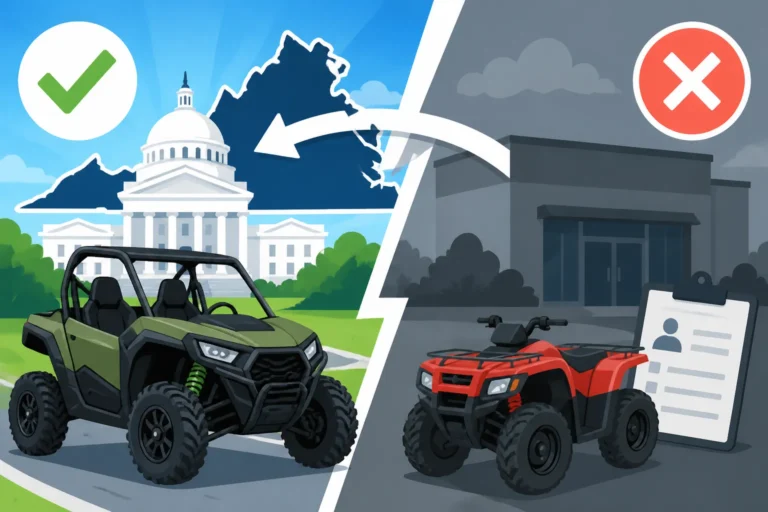
Here's where Virginia law really stands out: for used ATVs and UTVs, obtaining a title is actually optional in many cases. Yes, you read that right. Unlike cars, where a title is always required, if you buy a used ATV or UTV from a private seller, you generally don't have to title it in Virginia unless there's a lien involved. [Virginia Titles Are Optional on Used Machines]
However, just because it's optional doesn't mean it's a bad idea. In fact, most savvy buyers and sellers will still go through the titling process for a used machine. Why? Because a title is the strongest proof of ownership you can have. If you ever need to prove ownership for insurance purposes, in case of theft, or when you decide to sell the machine down the road, a Virginia title makes everything much smoother. [Why Titling a Used Quad Is Optional in Virginia] If the previous owner did have a title, make sure they sign it over to you correctly. If there was no title, or if it's lost, you'll need a properly executed bill of sale from LawDepot or a similar resource to document the transaction and prove you bought it. Always ask the seller if there are any existing liens on the machine; a title will show this, and you definitely don't want to buy a machine with someone else's debt attached to it. [Virginia Title and Lien Records] Titling an old quad, even if it's optional, can simply be a way to create a clear, government-backed paper trail that establishes your ownership. [Titling an Old Quad to Prove You Own It]
Financing and Insurance Considerations
If you're financing your ATV or UTV, whether new or used, the lender will almost certainly require you to title the machine in Virginia, even if state law otherwise makes it optional for used quads. Why? Because the title is how they record their lien. If you don't title it, they can't secure their interest, and they won't give you the loan. [Why a Lender Makes You Title a Used Quad]
When discussing financing with the dealership or your credit union, ask for a clear breakdown of the loan terms: interest rate, monthly payment, and total amount financed. Don't be afraid to ask about pre-payment penalties or other fees. While ATV insurance isn't legally required in Virginia, it's a really smart move. [Virginia Requires No ATV Insurance] Most lenders will require comprehensive and collision coverage as part of your loan agreement to protect their investment. Even if you pay cash, consider at least liability and theft coverage. Imagine your brand-new machine getting stolen from your garage; that's a heartache you want to avoid! [Virginia ATV Insurance Is Optional] Your buyer's order or financing documents should reflect any insurance requirements from your lender. And before you sign any loan documents, be sure you understand exactly what your responsibilities are. [Virginia Financing an Off-Road Machine in Virginia]
| Category | Key Questions to Ask | Why It Matters |
|---|---|---|
| Out-the-Door Price | What is the absolute final price, including all fees, taxes, and charges? | Avoids hidden costs and ensures you know your total investment. |
| Can I get a line-item breakdown of every single charge? | Transparency helps you understand what you're paying for beyond the base machine. | |
| What is the dealer processing (doc) fee? | These fees vary and are often negotiable, or at least fixed and disclosed. | |
| Sales Tax & Titling | What is the exact Virginia sales tax rate for my purchase location? | Rates vary by region, affecting your total tax bill. |
| Is the $15 Virginia title fee included? | This is a mandatory government fee you need to budget for. | |
| Rebates/Incentives | Are rebates applied before or after sales tax calculation? | Can affect your overall sales tax amount. |
| What are the conditions for this rebate/incentive? | Ensures you qualify and understand how to receive it. | |
| Paperwork (New) | Will I receive the Manufacturer's Statement of Origin (MSO)? | Absolutely essential for titling a new machine in Virginia. |
| Does the VIN on the MSO match the machine and buyer's order? | Prevents titling delays due to mismatched information. | |
| Paperwork (Used) | Does the machine come with a Virginia title signed over? | Best proof of ownership for a used machine. |
| If no title, what documentation (e.g., bill of sale) will I receive? | Important for proving ownership and mitigating risk in a private sale. | |
| Are there any liens on the used machine? | Protects you from inheriting debt on the machine. | |
| Financing | What is the Annual Percentage Rate (APR) and term of the loan? | Key figures for understanding your total cost of borrowing. |
| Will the lender require me to title the machine? | Lenders almost always require a title to secure their interest. | |
| Insurance | Are there any insurance requirements from the lender? | Most lenders require specific coverage types (e.g., comprehensive, collision). |
| What are the recommended insurance options, even if not required? | Protects your investment against theft, damage, or liability. | |
| After-Sale | What is the factory warranty coverage, and for how long? | Important for repairs and understanding what's covered for initial ownership. |
| Do you offer extended warranties, and what do they cover/cost? | Decide if the added protection is worth the cost for your specific needs. | |
| What are the ongoing maintenance recommendations and costs? | Helps you budget for the long-term ownership of your machine. | |
| What accessories are included, and what are installation costs? | Avoids surprises on additional charges for installed upgrades. |
Long-Term Ownership: Beyond the Initial Purchase
Signing the buyer's order is just the beginning of your journey with your new ATV or UTV. Smart buyers think beyond the initial transaction and consider the full ownership experience. Understanding what comes next, from warranties to required permits, will help you budget effectively and ensure you get the most enjoyment out of your machine.
Warranties and Service Agreements
A new ATV or UTV typically comes with a factory warranty from the manufacturer. This is your safety net against defects in materials or workmanship for a certain period. Always ask the dealer about the specifics of this warranty: How long does it last (e.g., 6 months, 1 year)? What components are covered, and what are explicitly excluded? Are there any conditions that could void the warranty, like using aftermarket parts or performing your own maintenance? You want to know exactly what kind of protection you have.
Beyond the factory warranty, dealerships often offer extended warranty plans or service agreements. These are designed to cover repairs after the factory warranty expires. It's worth asking what these plans actually cover, for how long, and what the total cost is. Sometimes, the peace of mind is worth the investment, especially on a complex machine, but other times, the cost might outweigh the benefit. Compare the coverage to potential [Virginia Extended Warranty Costs]. Also, inquire about the dealership's service department: what are their typical service intervals for your specific model? What are their labor rates, and do they stock common parts? Understanding the cost of [Virginia Maintenance Costs Per Year] for your new machine will help you budget for ongoing care.
Accessories, Permits, and Riding Gear
Many riders customize their ATVs and UTVs with accessories like winches, light bars, upgraded tires, or storage boxes. If you're having the dealer install any of these, make sure the costs for both the parts and the labor are clearly itemized on your buyer's order or a separate agreement. Don't assume installation is free!
When it comes to riding, safety is paramount. In Virginia, helmets are not just a good idea; they're the law for ATV riders. [Virginia Helmet Law Applies to Every Rider] While the dealer won't typically include a helmet with your machine, it's a critical item to budget for. Don't skimp on safety gear! [Budgeting a Helmet for Every Rider in Virginia]
Finally, consider where you plan to ride. If you're heading to popular trail systems like Spearhead Trails in Southwest Virginia or the National Forests, you'll need a permit. [Virginia Spearhead Trail Permits] Spearhead Trails, for example, offers annual and multi-day permits. For National Forest trails like Peters Mill Run, you'll need a different permit. [Virginia National Forest OHV Permits] Ask the dealer if they sell permits or if they can direct you to local vendors. These permits are an ongoing cost of enjoying Virginia's amazing off-road areas, and it's good to factor them into your overall budget. LawDepot can assist in providing templates for written landowner consent if you plan to ride on private property, ensuring you have proper documentation beyond public trail permits.
Disclaimer
This article is for general informational purposes only and does not constitute professional advice. Laws, prices and regulations vary by location and change over time. Consult a qualified professional for guidance on your specific situation.