Virginia Title Compared to North Carolina
It’s a tale as old as time for off-road enthusiasts who live near state lines: the rules and regulations for your beloved ATV or UTV can shift dramatically just by crossing the border. If you've been scratching your head trying to figure out the difference between titling an ATV in Virginia versus North Carolina, you're not alone. Riders often find themselves caught between two distinct systems, especially when buying or selling across state lines. This guide aims to clear up that confusion, diving deep into the nuances of each state's approach to ATV and UTV titling, so you can navigate the paperwork with confidence.
Why Virginia and North Carolina Take Different Paths on ATV Titling
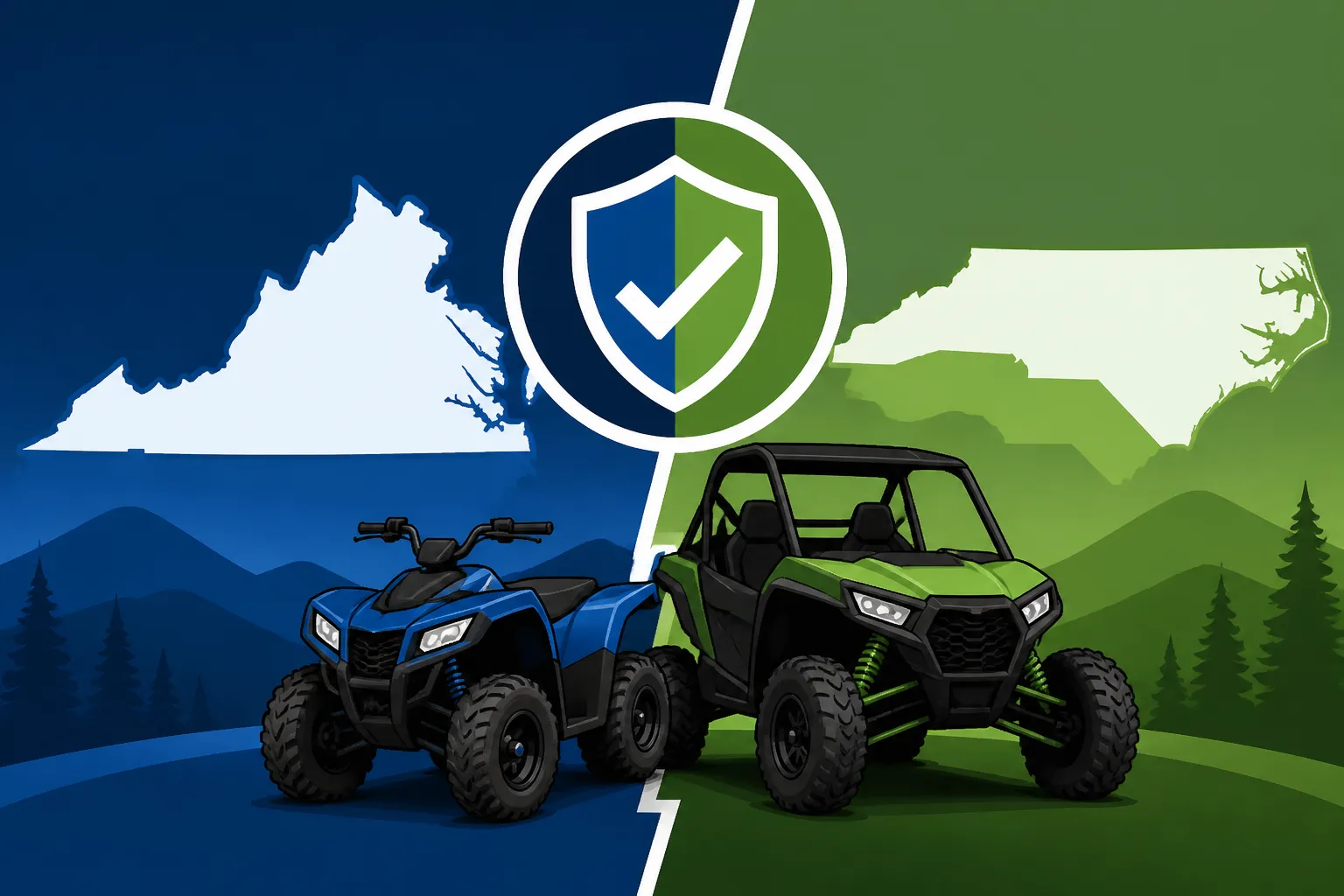
The biggest source of frustration for riders comparing Virginia and North Carolina isn't just different forms; it's a completely different philosophy on how off-road machines are handled by the state. Virginia, while titling ATVs, treats them quite differently than street-legal vehicles. North Carolina, on the other hand, embraces a more comprehensive approach that includes both titling and, in some cases, registration for off-highway vehicles. Understanding this fundamental divergence is key to making sense of the specific requirements.
Virginia's More Flexible Approach to Off-Road Titles
In the Commonwealth of Virginia, the Department of Motor Vehicles (DMV) titles ATVs, but it's not the same as titling a car or even a motorcycle for the road. For starters, Virginia does not register ATVs for highway use, nor does it issue license plates or annual decals. This means you'll never see a Virginia ATV with a license plate on it, even if it has a title. [Virginia Titles ATVs but Does Not Register Them]
The core of Virginia's system revolves around the initial sale date and engine size. If you bought a new ATV with an engine size over 50cc on or after July 1, 2006, Virginia law requires that machine to be titled. This ensures a paper trail for new machines entering the state. However, here's where the flexibility comes in: for used ATVs, titling is entirely optional. That's right, if you buy a used ATV in Virginia, you are not legally obligated to get a title for it, though many owners choose to do so to establish clear ownership and protect their investment. This optional nature can be a real head-scratcher for those used to universal titling requirements. For machines bought new before the July 2006 cutoff, or those under 50cc, titling is typically not required at all. [Virginia Titles Required on Machines Over 50cc]
This optional titling for used machines means that many ATVs in Virginia change hands without ever having a formal title transfer through the DMV. While this can simplify private sales for some, it also means buyers need to be extra diligent about establishing a solid chain of ownership. You might encounter a situation where a seller only has a bill of sale, and you'll need to know how to proceed if you want a title. [Virginia Titles Are Optional on Used Machines]
North Carolina's Universal Titling and Registration Requirements
Crossing the border into North Carolina, you'll find a much more encompassing system for off-highway vehicles (OHVs), which include ATVs and UTVs. The North Carolina Division of Motor Vehicles (NCDMV) requires all ATVs and UTVs to be titled, regardless of when they were purchased or if they are new or used, with very few exceptions for dealer inventory or competition-only machines. This means if you own an ATV or UTV in North Carolina, it's expected to have a title.
Beyond just titling, North Carolina also has a registration component for OHVs, particularly those used on designated public trails or lands. This registration often comes with an annual fee and helps fund the maintenance and development of off-road riding opportunities within the state. Unlike Virginia, where registration is a non-factor, North Carolina actively manages its OHV population through both titling and registration. [Virginia Moped Titling Compared to ATVs]
This distinction is crucial. If you're planning to ride your ATV on trails in North Carolina, not only do you need a title, but you might also need current registration. This robust system aims to create a clearer inventory of OHVs within the state and ensures that those who use public lands are contributing to their upkeep. It means more paperwork upfront, but potentially more organized riding opportunities down the line. For those accustomed to Virginia's hands-off approach to used ATV titles, North Carolina's system can feel a bit more bureaucratic, but it's designed to provide greater clarity and accountability for OHV owners.
Navigating the Titling Paperwork in Each State
Once you understand the underlying philosophy, the actual paperwork requirements start to make more sense. Both states have specific forms and documentation they require, but the triggers for needing those documents, and what they ultimately get you, are quite different.
What You Need to Title an ATV or UTV in Virginia
For a brand-new ATV (over 50cc, purchased after July 1, 2006), the process in Virginia is fairly straightforward. You'll need the Manufacturer's Statement of Origin (MSO), which is essentially the birth certificate of your machine, provided by the dealer. Along with the MSO, you'll complete a Virginia Application for Certificate of Title and Registration (Form VSA 17A). This form covers all the necessary details about you and your ATV. [Virginia Form VSA 17A Explained] You'll also need to pay the applicable sales tax and the Virginia title fee, which is a fixed amount.
Now, for used ATVs in Virginia, it gets a bit more nuanced because titling is optional. If you choose to title a used machine, and the previous owner had a title, they'll simply sign the existing title over to you. You then take that, along with your VSA 17A, to the DMV. However, a common scenario in Virginia is buying a used ATV that has never been titled or whose title has been lost. In these cases, you might need to use a Virginia Affidavit in Lieu of Title (Form VSA 12M). This notarized affidavit, signed by both the buyer and seller, essentially serves as proof of ownership in the absence of a formal title. It helps you create a paper trail, which is incredibly important for establishing ownership, especially if you ever need to prove it for insurance purposes or resale. [Virginia Form VSA 12M Affidavit] When drafting a bill of sale to accompany an affidavit, especially for complex transactions, tools like LawDepot can be invaluable for ensuring all legal bases are covered.
Regardless of whether it's new or used, when you head to the Virginia DMV to title your ATV, you'll need to bring valid photo identification and proof of address. The DMV clerk will process your application, and within a few weeks, you'll receive your official Virginia ATV title in the mail. Remember, this title simply proves ownership; it does not authorize any road use or come with a license plate. [What to Bring to the DMV to Title a Quad]
The Essential Documents for North Carolina OHV Titling
In North Carolina, since titling is generally mandatory for all OHVs, the process starts with a presumption that every machine needs a clear title. For a new ATV or UTV, similar to Virginia, you'll present the Manufacturer's Statement of Origin (MSO) to the NCDMV. You’ll also fill out a specific North Carolina title application form, which gathers information about the vehicle and the owner.
For used ATVs or UTVs in North Carolina, the seller is expected to provide you with a properly assigned North Carolina title. If the machine was previously titled in another state, you would present that out-of-state title to the NCDMV for conversion to a North Carolina title. The process for transferring an existing title typically involves the seller signing off on the current title, and the buyer then applying for a new title in their name. If a title is lost, the seller would usually need to apply for a duplicate title first before the sale can proceed. This is a stark difference from Virginia's VSA 12M affidavit route for untitled used machines.
North Carolina also has specific requirements for sales tax on OHVs, which will be collected at the time of titling unless an exemption applies. You'll need valid identification and proof of residency. Once processed, the NCDMV will issue you a North Carolina Certificate of Title. If you also need to register the OHV for trail use, that will be a separate, but often concurrent, process with its own forms and fees. This comprehensive system ensures that the NCDMV maintains a complete record of OHV ownership and usage within the state.
Cross-Border Transactions: Buying and Selling Between the Carolinas and the Old Dominion
The differences in titling laws between Virginia and North Carolina become most apparent, and sometimes most challenging, when you're dealing with transactions that cross state lines. What might be perfectly acceptable in one state could cause significant headaches in the other.
How Virginia's Rules Impact North Carolina Buyers and Sellers
Imagine you're a North Carolina resident looking to buy an ATV from a private seller in Virginia. Because Virginia's titling for used ATVs is optional, you might encounter a seller who genuinely doesn't have a title for their machine, having bought it used themselves. This can be a red flag for a North Carolina buyer, as the NCDMV generally expects a title for all OHVs. If you purchase an untitled ATV from Virginia, you will need to apply for a title in North Carolina. This often involves presenting a robust bill of sale (which should clearly state the sale price, machine's VIN, and seller's information), potentially along with other supporting documents or affidavits to prove ownership to the NCDMV.
This situation puts the burden on the North Carolina buyer to ensure they have enough documentation to satisfy their state's requirements. A detailed bill of sale is paramount here. Services like LawDepot can provide templates that help ensure all necessary information is captured, potentially saving you a trip or two to the NCDMV. The NCDMV may also have specific procedures for titling an out-of-state vehicle that has never been titled, which could involve additional verification steps. [Virginia Titles for an Inherited Machine]
Conversely, if a Virginia resident buys a titled ATV from North Carolina, it's usually a smoother process. The North Carolina seller will sign over their state's title, and the Virginia buyer can then present that title to the Virginia DMV to obtain a Virginia title. This demonstrates how a clear title from a stricter state often translates well to a state with more flexible titling.
What Virginia Residents Encounter with North Carolina Machines
For Virginia residents looking to purchase an ATV from North Carolina, the process tends to be more straightforward due to North Carolina's universal titling. When you buy an ATV or UTV from a North Carolina seller, you should expect to receive a clear, properly assigned North Carolina title. This document serves as undeniable proof of ownership.
When you bring that titled machine back to Virginia, you'll simply present the North Carolina title to the Virginia DMV, along with your Virginia Application for Certificate of Title (Form VSA 17A), your identification, and proof of address. The Virginia DMV will process it, collecting Virginia sales tax and the Virginia title fee, and issue you a new Virginia title. Since the North Carolina title is a strong document, the transfer process is generally quite smooth. The key is ensuring the North Carolina title is legitimate and properly signed by the seller. [Virginia Titles for a Machine Bought Out of State]
The main consideration for a Virginia buyer in this scenario might be sales tax. Virginia collects sales tax when you title the machine in the Commonwealth, even if you already paid tax in North Carolina. However, Virginia often offers a tax credit for sales tax already paid in another state, preventing you from being taxed twice on the same purchase. You'll need to provide proof of sales tax paid to North Carolina if you wish to claim this credit. [Virginia Tax on an Out-of-State Purchase]
Crafting a Solid Paper Trail for Out-of-State Purchases
Given the significant differences, creating an ironclad paper trail is crucial when buying or selling an ATV or UTV across the Virginia-North Carolina border. For buyers, always insist on the most complete documentation possible. If a Virginia seller has a title, get it. If not, ensure your bill of sale is incredibly detailed and includes:
- Full names and addresses of both buyer and seller.
- The Vehicle Identification Number (VIN) of the ATV/UTV.
- Make, model, and year of the machine.
- The exact purchase price.
- A clear statement that the seller has the right to sell the machine and that it is free of any liens.
- Signatures of both buyer and seller, and ideally, have it notarized.
For sellers, especially those in Virginia selling to North Carolina residents, be prepared for potential questions about the lack of a title for a used machine. Having a comprehensive bill of sale, perhaps generated using a professional template from a service like LawDepot, can reassure buyers and provide them with the documentation they will need for their state's titling process. It’s always better to over-document than to leave any ambiguity when dealing with varying state laws. Building a robust paper trail protects both parties and ensures a smooth transfer of ownership, regardless of which state's DMV you're dealing with. [Building a Paper Trail When You Buy a Used Quad]
| Feature | Virginia ATV/UTV Titling | North Carolina ATV/UTV Titling |
|---|---|---|
| Titling Requirement | Mandatory for new machines >50cc bought after July 2006. Optional for used machines. Not required for <50cc. | Mandatory for virtually all ATVs and UTVs (OHVs), new or used. |
| Registration/Plates | No registration, no license plates, no annual decals. | Titling is separate from registration; registration is required for use on designated OHV trails/lands, with annual fees. |
| Primary Forms (New) | Manufacturer's Statement of Origin (MSO), Form VSA 17A (Application for Certificate of Title and Registration). | Manufacturer's Statement of Origin (MSO), NCDMV Title Application Form. |
| Primary Forms (Used/No Title) | If no title, Form VSA 12M (Affidavit in Lieu of Title) – notarized bill of sale is crucial. | Generally requires an existing NC title. Out-of-state title conversions have specific procedures. Lost titles require duplicate application. |
| Sales Tax Collection | Collected at DMV when titling. | Collected at NCDMV when titling. |
| Impact on Out-of-State Buy | Buying an NC-titled machine is straightforward. Buying an untitled VA machine for NC can be complex for the NC buyer. | Buying a VA-titled machine is straightforward. Buying an untitled VA machine may require extra proof of ownership for NC titling. |
| Road Use | Generally prohibited on public roads (with very limited, specific exceptions in certain counties/circumstances). | Generally prohibited on public roads (with specific, limited exceptions for crossing, farming, or emergency services). |
Disclaimer
This article is for general informational purposes only and does not constitute professional advice. Laws, prices and regulations vary by location and change over time. Consult a qualified professional for guidance on your specific situation.