Virginia’s Annual Spearhead Trail Permit
A Spearhead annual permit can make sense if you expect to ride Virginia’s coalfield trails more than once, but it is easy to confuse trail access with permission to ride anywhere in the state. This guide explains what the permit generally covers, how to plan your purchase, what to check for riders and machines in your group, and where separate rules still apply.
What the annual Spearhead permit is for
Spearhead Trails is a regional trail network in southwest Virginia, not a statewide ATV pass. An annual permit is for access to eligible Spearhead trail systems under the network’s current rules. It does not grant general permission to ride on public roads, public land, private property, or every other off-highway trail in Virginia.
That distinction matters when you are planning a trip. A rider may need a Spearhead permit for a designated trail system and still need a different permit, permission, or set of documents somewhere else. A Spearhead permit also does not make an ATV or UTV street legal.
The network includes multiple systems, and access can vary with trail rules, closures, machine type, and operating conditions. Before hauling to a trailhead, check that your intended system is open and that your machine fits its requirements. A permit does not override a temporary closure or a restriction posted for a particular trail.
If you are deciding whether to buy an annual pass or a shorter visit option, start by estimating how often you will actually ride. A one-time visit may not justify an annual permit. Frequent trips, or a longer riding season with several visits, may make the annual option more convenient. Compare the current options and terms before paying; see Virginia Annual vs Three-Day Permits and Virginia Spearhead Permit Cost.
| Your situation | What to consider |
|---|---|
| One planned visit | Compare the annual option with the current short-term option and make sure the dates fit your trip. |
| Several visits during the year | An annual permit may be easier than arranging a new permit for each trip, depending on current terms. |
| Riding with family or friends | Check whether every operator needs a permit in their own name, and confirm the rules for minors and passengers. |
| Riding different networks | Treat each trail system separately. A Spearhead permit does not automatically cover another network. |
| Unsure whether the trail is open | Check current system notices before you leave; having a permit does not guarantee trail access on a particular day. |
A useful way to think about the permit is as a trail-access credential connected to a named rider. It is not a registration card, a vehicle title, a road-use permit, or proof that your machine meets every trail’s equipment requirements. Keep those questions separate when you plan.
For broader trip planning, Virginia Spearhead Trails Explained gives an overview of the network, while Virginia Trail Closures and Seasons can help you account for access changes. If you are considering a different kind of riding area, remember that Virginia National Forest OHV Permits are a separate topic and a separate access requirement.
How to choose the annual option and buy it carefully
Before purchasing, check the current permit page or contact the trail office for the latest annual permit terms, eligibility requirements, and total cost. Costs and purchasing conditions can change. Do not rely on an old screenshot, an old social media post, or a friend’s permit receipt as a substitute for checking the current offer.
The most important point is to enter the rider’s information accurately. If the permit is issued in a person’s name and checked against identification, a typo or a permit bought under the wrong person’s account can create a frustrating problem at the trail. Make sure the name is consistent with the identification the rider expects to carry. Read Virginia Permit Verification Steps before completing the transaction if you want to know what information may be checked.
A careful purchase process looks like this:
- Choose the system and dates you want to ride. Confirm the trail network is the one covered by the permit you are considering. Do not assume that a permit sold for one regional network is valid at another.
- Review the current permit choices. Compare the annual option with shorter-term options, including how the validity period is calculated. If the purchase screen or permit terms are unclear, ask the trail office before paying.
- Check eligibility for any reduced or special category. If you think you qualify for a resident discount or a youth permit, verify the requirements before selecting an option. See [Virginia County Discount Eligibility] and Virginia Youth Permit Rules.
- Enter the rider’s details exactly. Use the name and other information requested in the current purchase process. Save the confirmation and any receipt.
- Read the final terms before submitting payment. Confirm the start date, end date, refund policy, and how the permit will be verified.
- Make the permit available for the ride. Save the confirmation in a place you can reach without relying on a strong cell signal, and carry the identification the trail operator asks riders to show.
Do not assume that the permit starts on the date you first ride. Some permits are valid for a period measured from the purchase date, so buying well ahead of a trip can use up part of that period. Check the actual start and expiration dates on the current permit confirmation. For more detail, see [Virginia Permit Start Date].
Likewise, do not assume an unused permit can be returned or transferred. The current terms should say whether a purchase is final, whether a permit can be changed, and what happens if a trip is canceled. If those terms are important to your decision, clarify them before paying rather than trying to resolve the issue at the trailhead.
Discounts and youth permits
The availability of a discount does not mean every rider in a group qualifies. If a resident discount is offered, check which counties are eligible and what proof is accepted. Do not select a reduced rate based only on where you are visiting from, where you bought the machine, or where you keep your trailer. The eligibility rules are the important part.
Youth permits also have their own conditions. Check the current age categories, who must complete any waiver or purchase step, and whether an accompanying adult must have a separate permit. A parent or guardian should not assume that buying one adult permit covers a child who will operate a machine. The current rules may treat the adult and youth as separate permit holders. Virginia Rules for a Rider Under 18 covers related age and supervision questions.
If the online purchase process asks for identity or guardian information, complete it carefully. Keep the confirmation available for the adult who will accompany the young rider, and make sure that the names and identification details align with the current instructions. For a child’s first visit, call ahead if any part of the requirements is unclear; sorting it out before the drive is far easier than trying to resolve it at the entrance.
What the permit does and does not cover
The annual permit is about access to the applicable Spearhead trail system. It does not replace the rules that apply to the rider, the machine, or the particular trail. A permit should be only one item on your pre-ride checklist.
It is useful to separate the requirements into four categories:
- Trail access: Does the permit cover the system you plan to ride, and is the system open?
- Rider eligibility: Is the rider old enough for the machine under the applicable rules, and are any supervision requirements met?
- Machine suitability: Does the ATV or UTV meet the system’s restrictions on size, seating, protective equipment, or construction?
- Safe operation: Is the machine in sound working condition, and does the rider have the gear and information needed for the route?
For example, a permit does not guarantee that a wide side-by-side is allowed on every trail. Some systems or routes can have width limits or other vehicle restrictions. Confirm the rules for your exact machine rather than relying on a general statement that the network welcomes UTVs. The article Virginia Trails That Allow Side-by-Sides can help you narrow down what to check.
Nor does the permit mean that public roads are open to ATVs. A public-road crossing or designated road section has its own legal conditions, and those rules are not expanded by buying a trail pass. For the difference between designated trail access and road use, see Can You Ride an ATV on the Road in Virginia?.
A permit also does not automatically cover another network. Riders sometimes plan a multi-day trip that crosses regional boundaries or includes a visit to a neighboring trail system. Treat each network as a separate destination. If your itinerary includes Hatfield-McCoy trails, for instance, check that system’s own permit and operating rules; Hatfield-McCoy and Spearhead Still Sell Separate Permits explains why one pass should not be assumed to cover both.
The same principle applies to national forest routes, private parks, and land managed by a different organization. A permit bought for Spearhead access should not be presented as permission to ride elsewhere. Before adding another trailhead to your route, identify its operator and look up its access rules.
Rider and machine rules still matter
The trail operator’s rules may cover helmets, eye protection, hours, speed, passengers, seatbelts, roll cages, and machine design. Requirements can differ by vehicle type and by trail system. Read the current rules for the system you intend to visit, especially if you are bringing a UTV, a youth machine, a modified ATV, or a machine with an unusual seating arrangement.
A passenger is not necessarily covered by the driver’s permit. Check whether passengers need their own permit, whether the machine is designed for carrying them, and whether any age or restraint rules apply. A passenger seat added after manufacture does not automatically make a machine suitable for carrying another person under the trail rules.
For UTVs, inspect the safety equipment before you leave. If the system requires a factory-installed protective structure or functioning seatbelts, a home-built modification may not satisfy the requirement. Read the current equipment provisions instead of guessing from how similar a machine looks. Spearhead Requires a Factory Cage and Working Seatbelts and Seatbelts Matching the Seats address these points.
A machine also needs to be in safe operating condition. Check the brakes, throttle, tires, steering, lights where required, and any trail-specific equipment rules. A permit will not make an unsafe machine acceptable, and a trail ranger may ask questions beyond whether you have paid for access.
Preparing to show and use your permit
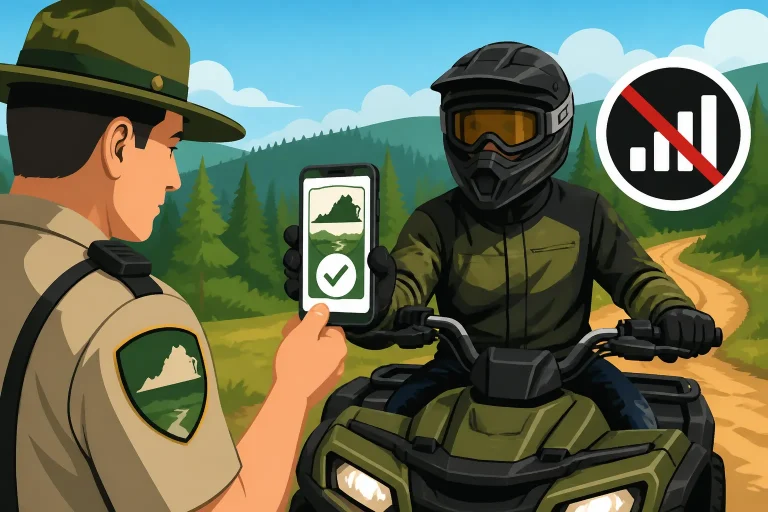
Plan for permit verification before you reach the gate or meet a ranger. If permits are digital, keep the confirmation accessible offline. A phone screen is convenient, but reception can be unreliable in mountainous terrain. Do not wait until you arrive in a dead zone to sign in, search your email, or reset a password.
A practical setup is to save the permit confirmation to your phone, keep a screenshot if the operator’s terms allow it, and carry the photo identification that matches the permit. If you are responsible for several riders, make sure each person knows how their own permit will be shown. An adult’s phone with all the group’s confirmations can be a useful backup, but it is not a substitute for following the operator’s verification process.
The core idea is simple: the trail staff need to be able to connect the permit to the rider. See Virginia Permit Checks on the Trail and Why Your Photo ID Must Match the Permit Name for the verification details riders should consider.
Use this checklist the evening before your trip:
- Confirm the permit is valid for the day you intend to ride.
- Check the spelling of the permit holder’s name.
- Save the confirmation where it can be opened without a data connection.
- Bring the identification required by the current rules.
- Make sure every operator, including eligible youth riders, has the required permit.
- Confirm that the trail system is open and that your planned routes allow your machine.
- Read any notices about closures, weather, or changed access conditions.
- Keep a backup copy of important trip information separate from your phone.
If you want a simple physical backup, print the confirmation or write down the permit reference information if the operator’s current instructions allow it. Paper can be useful when a phone battery dies, but it does not replace any identification or digital verification requirement. The operator’s current method of checking permits is the one to follow.
A weather-resistant phone pouch can protect a device from rain and mud. If you shop for one through Amazon, check that it fits your phone with its case and that you can still use the screen through the material. Test it at home before trusting it on a ride. A small battery bank can also be useful, but keep it secured so it cannot bounce around or become a hazard.
Another practical option is to keep a compact printed map in your tow vehicle or riding kit. If you order a map sleeve or a waterproof document pouch through Amazon, make sure it is large enough for folded trail information and can be opened without scattering papers in the wind. Do not rely on a retail listing for current trail conditions; use the operator’s latest information.
A third useful item may be a simple lanyard or protective sleeve for the identification you need to carry. If you buy one through Amazon, choose something that stays secure during movement and does not interfere with riding gear. Keep identification protected, but do not put it somewhere so inaccessible that you cannot produce it when asked.
These are small conveniences, not permit requirements. They are worth considering only if they solve a real problem for your group. The essential preparation is to have a valid permit, meet the current rules, and be able to show the documentation the operator requests.
Common mistakes that can derail a riding day
Assuming the annual permit covers all of Virginia
It does not. A Spearhead permit is not a statewide pass. A trail system operated by a different organization may require its own permit, and a private riding park may set additional rules. Confirm the operator for every place on your itinerary.
Buying the permit under the wrong name
A permit that cannot be matched to the rider’s identification can cause avoidable trouble. Enter the information carefully and check the confirmation before leaving home. If a name needs correction, contact the permit provider rather than hoping a ranger will accept an explanation at the trail.
Purchasing too early without checking the start date
If validity begins at purchase, buying months ahead can shorten the period available for riding. Confirm the start and end dates during checkout. If you are not ready to use the permit, compare the current options and timing before completing the transaction.
Treating a discount as automatic
Discount eligibility may depend on specific residency and verification rules. Check the current criteria and be prepared to show the required proof. Do not assume that a visitor discount, county discount, or youth category applies without confirming the details.
Assuming a child is covered by an adult’s pass
A young rider may need an individual permit or a particular guardian process. Check age rules, waiver instructions, and accompaniment requirements before purchase. The permit is only one part of a minor’s eligibility to ride.
Confusing a permit with vehicle paperwork
A trail pass does not serve as a title or registration, and a title does not serve as a trail pass. Keep the documents separate in your planning. If you are also sorting out ownership records, Virginia Proof of Ownership on the Trail is a useful related topic.
Showing up without checking closures
An annual permit does not promise that every route will be open on the day of your visit. Weather, maintenance, and other operating conditions can change access. Check official notices before loading the machine and again before committing to a long drive.
Assuming a UTV is allowed everywhere
Trail access can depend on vehicle width, configuration, and route designation. Check the exact machine’s dimensions and the route restrictions. A system may allow a class of vehicles while still limiting particular trails or sections.
Relying on cell service at the trailhead
Do not assume you will have a signal when you need to show a digital pass. Save the confirmation in advance and bring the required identification. If the operator’s process depends on an online lookup, follow its current instructions and ask about practical backups before traveling.
A sensible pre-trip plan
A good permit plan begins with the trail, not the checkout screen. Choose the Spearhead system you want to ride, confirm its operating status, then check the rules for the machine and riders in your group. Only after those details line up should you choose the permit that matches your visit.
For a solo adult rider, the checklist may be short: confirm the system, choose a valid permit, save the confirmation, carry matching ID, and check the machine rules. For a family or group, build in more time. You may need to verify a separate permit for each operator, complete guardian steps for minors, confirm passenger rules, and make sure every machine fits the intended routes.
If the group has multiple vehicle types, do not plan around the least restricted machine. A route suitable for a narrow ATV may not be suitable for a full-size UTV. Discuss the route in advance, and if there is uncertainty, ask the trail office about the particular model or measurements rather than describing it vaguely as “a side-by-side.”
Make one person responsible for checking final details, but have every rider understand the rules that apply to them. The person who bought the permits may not be the person showing them at a checkpoint. Each rider should know where their confirmation is, what identification they need, and what to do if their phone battery fails.
Before departure, check the operator’s official information for:
- Current annual and short-term permit choices
- Validity dates and whether the permit is transferable
- Current purchase and refund terms
- Any resident or youth eligibility requirements
- How permit verification works
- Trail and system closures
- Vehicle width and equipment restrictions
- Hours, speed, passenger, and safety requirements
- Separate permits needed for any other network on your itinerary
If the permit question is still unclear, ask a specific question. For example: “Does this annual permit cover this trail system on my planned dates?” or “Does each youth operator need a separate permit, and what identification should the accompanying adult bring?” Clear questions are more likely to get a useful answer than asking generally whether your group is “all set.”
The annual option is most useful when it matches how you actually ride. If you will make several trips to eligible Spearhead trails, it can reduce the hassle of arranging access each time. If you have one short visit planned, a shorter option may fit better. Either way, verify the current terms, keep the permit tied to the correct rider, and treat each trail network’s rules as its own.
Disclaimer
This article is for general informational purposes only and does not constitute professional advice. Laws, prices and regulations vary by location and change over time. Consult a qualified professional for guidance on your specific situation.