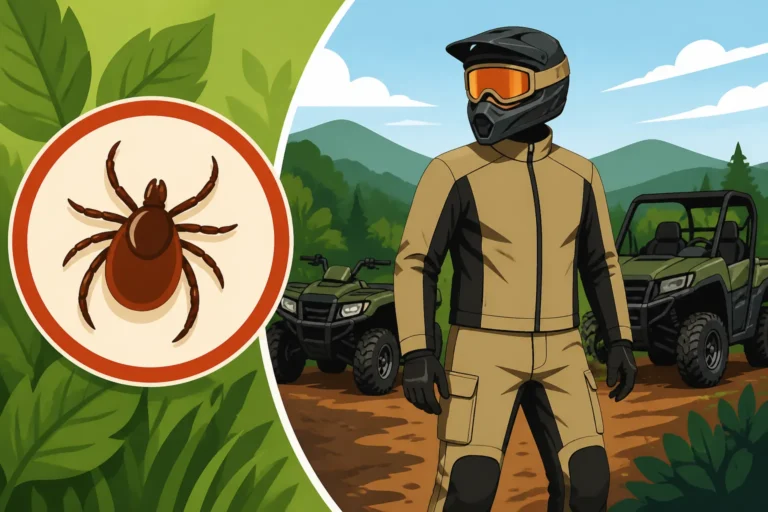
Bug Spray in an Appalachian June
June rides in Virginia can mean biting insects around creek crossings, shaded trail edges, and damp leaves—right when you’re already juggling helmets, goggles, and gear. The right bug spray routine helps protect your skin without making your hands slippery or getting product on controls. Here’s how to choose a repellent, apply it safely, and keep it useful through a long Appalachian ride.
Why bugs are part of a Virginia June ride
Where insects tend to find you
Mosquitoes, ticks, and other biting insects are more likely to bother you around damp ground, creek bottoms, tall grass, and brushy trail margins. A sunny ridge may feel easy and open, while the shaded section just beyond it can be humid and full of vegetation brushing against your boots and lower legs. You may not notice a tick until you stop for lunch or get home and change.
ATV and UTV riders also spend time in places hikers may pass through quickly: loading machines, waiting at a trailhead, walking around a stuck rig, or taking a break beside a narrow trail. Those pauses matter. Bugs can find exposed skin while you’re standing still, and ticks may attach after clothing brushes against vegetation.
Conditions vary by location and day. A recent spell of rain, still air, dense undergrowth, and the amount of time you spend off the machine can all affect how much insect exposure you get. Before hauling out, check the route and local conditions rather than assuming every ride will feel the same. Virginia Trail Conditions Before You Haul and Virginia Riding in Summer offer useful planning context.
A little preparation beats constant reapplication
It’s frustrating to reach the first scenic stop and realize you packed the spray under a cooler, spare helmet, and recovery gear. Put repellent somewhere accessible before you leave home: a small exterior pocket in your day bag or a secure storage compartment works better than a loose can rattling around with tools.
Think about the whole outing, not only the time spent moving. You might need protection while unloading at the trailhead, walking through brush to check a route, or helping another rider. For longer outings, plan a place to reapply that is away from food, fuel, and machine surfaces. A quick route review in onX Offroad can help you note likely stops and trailhead locations, but it cannot tell you precisely where insects will be active.
Choosing and applying bug spray
Pick a repellent by the label, not the front-of-bottle promise
Repellents use different active ingredients, and their directions can vary. Read the product label to see which insects it covers, how to apply it, how often it may be reapplied, and whether it is intended for skin, clothing, or both. A product meant for fabric is not automatically appropriate for bare skin.
DEET and picaridin are common active ingredients in skin repellents. The right choice depends on the label directions and the people using it, including any age-related instructions. If you have sensitive skin or a history of reacting to repellents, check the label carefully and consider asking a pharmacist or clinician about a suitable option.
For clothing and gear, permethrin products are intended for fabric treatment, not direct application to skin. Follow the product’s instructions, including drying requirements, and do not treat clothing while wearing it. If you ride with a dog, keep treated items away from the animal until they are fully dry and follow all label precautions.
| Where you want protection | What to check | Practical reminder |
|---|---|---|
| Exposed skin | Whether the label permits skin application and which insects it repels | Avoid eyes, mouth, cuts, and irritated skin |
| Clothing | Whether the product is designed for fabric | Follow application and drying directions |
| Children’s skin | Age limits and adult-application instructions | An adult should apply it as directed on the label |
| Hands | Whether the label permits application there | Keep repellent off palms and fingers that may touch food or controls |
Apply it without coating your riding equipment
Apply repellent before you put on gloves, and keep it off your palms so you can maintain a secure grip. Avoid spraying near your eyes, face, or mouth; when the label allows it, apply to your hands first and carefully spread it over exposed areas, then wash your hands. Keep it away from cuts, irritated skin, and any area covered by tight or already-treated clothing unless the label specifically directs otherwise.
Do not spray around an idling machine, hot exhaust, open flame, or fuel. Aerosol products and some other sprays can create hazards around heat or ignition sources. Step away from the ATV or UTV, use the product in a suitable open area, and let it dry as directed before handling controls or equipment.
Take care with plastics, goggles, seat material, grips, and painted surfaces. Repellent residue can be unpleasant or damaging to some finishes. Apply it to skin or clothing as the label instructs rather than spraying it over your machine, and wipe accidental spills from equipment promptly using a method suitable for that surface.
Build insect protection into your riding gear
Cover the places ticks and mosquitoes can reach
Lightweight long sleeves and long pants reduce exposed skin without requiring heavy clothing on a warm ride. Close gaps at cuffs as comfortably as you can, tuck pants into socks or boots where practical, and consider a head covering when you stop in brushy areas. Clothing does not replace repellent, but it reduces the amount of skin that needs coverage.
Choose gear that you can tolerate for the whole outing. If a heavy layer makes you overheat, it may end up stuffed in a bag after the first stop. Breathable clothing is more realistic for a warm Appalachian day, especially when the route includes climbs, slow technical sections, or a long wait while someone sorts out a machine problem. For changing mountain conditions, see Packing for Mountain Weather and Rain Gear in the Appalachians.
Ticks can cling to clothing and move to exposed skin later. Make a habit of checking pant legs, socks, and cuffs after walking through tall grass or brushing past plants. When you reach home, change clothes and check your body, including less obvious areas such as behind the knees, around the waist, and along the hairline. A mirror or a second person can help with spots that are hard to see.
Keep spray and other essentials easy to use
Pack repellent so it is protected from leaks and stays out of direct contact with food, drinking water, and clean clothing. If you bring a spray can, secure it rather than letting it bounce around in a cargo box. Keep it away from hot machine parts and follow its storage instructions.
Your riding plan can affect how much gear you need. If you are doing a short loop with few stops, you may need less than a group spending the day on a remote trail system. Use onX Offroad to review your planned route and mark places where your group expects to regroup or take breaks. That is a planning aid, not an insect forecast; pack for the possibility that shade, brush, or a change in weather will make a stop uncomfortable.
It also helps to coordinate with your group. If one rider has a known sensitivity to a particular repellent, don’t spray close to them or share a product without checking its label. Keep food and water covered while applying spray, and wash hands before eating. For a longer outing, include basic skin-care and first-aid supplies alongside your other essentials; First Aid on a Long Coalfield Loop covers the broader preparation side.
A practical routine before, during, and after the ride
Before you load the trailer
- Check the product label and make sure the repellent is suitable for the intended use.
- Pack it where you can reach it without unloading half the trailer.
- Choose clothing that covers exposed skin while still being comfortable for riding.
- Treat fabric only with a product intended for that use, and allow it to dry as directed.
- Review your planned route and regrouping points, then tell your group what to expect.
If you are visiting a new riding area, confirm access rules and conditions through the appropriate trail operator or land manager. A route-planning app can help you orient yourself, but it does not replace official rules or local notices. onX Offroad can be one part of route preparation; check current access information separately before you travel.
During the ride and after you get home
Reapply only as the label directs, especially after sweating, rain, or wiping your skin. Don’t assume that a long ride calls for repeated spraying at arbitrary intervals. If the label gives a specific reapplication instruction, follow it; if it does not, don’t guess. Apply away from machines, food, and other riders, and give the product time to dry as directed.
At stops, look for the simple changes that reduce exposure: move away from tall grass, avoid sitting directly in brush, and keep sleeves and pant legs in place when practical. If the group changes its route or spends longer than expected in a shaded area, take a moment to reassess rather than waiting until everyone is swatting at bugs.
After the ride, remove and inspect clothing, shower when practical, and do a careful tick check. Wash treated skin as directed by the product label, and launder clothing according to the care instructions. Before storing the machine, remove any wrappers or empty containers so the trailhead and cargo area stay tidy. Virginia Trail Etiquette Locals Expect and Leaving a Coalfield Trailhead Tidy are good reminders that considerate riding includes what you leave behind.
Good preparation makes a buggy stop less of a nuisance, but no repellent routine guarantees that you will avoid every bite or tick. Keep the product label, sensible clothing, regular checks, and a flexible plan working together. If you use onX Offroad to organize your route, pair that planning with local access checks and a realistic approach to insect exposure on the ground.
Disclaimer
This article is for general informational purposes only and does not constitute professional advice. Laws, prices and regulations vary by location and change over time. Consult a qualified professional for guidance on your specific situation.