Rain Gear in the Appalachians
Rain in the Virginia Appalachians can turn a comfortable ride into a cold, muddy slog faster than expected. A jacket that keeps rain out but traps sweat, soaked gloves, and wet gear packed against dry layers can make the ride home miserable. This guide explains what to wear, what to carry, and how to plan for changing mountain conditions on an ATV or UTV.
Choose Rain Gear for Mountain Riding
Start with a waterproof shell you can move in
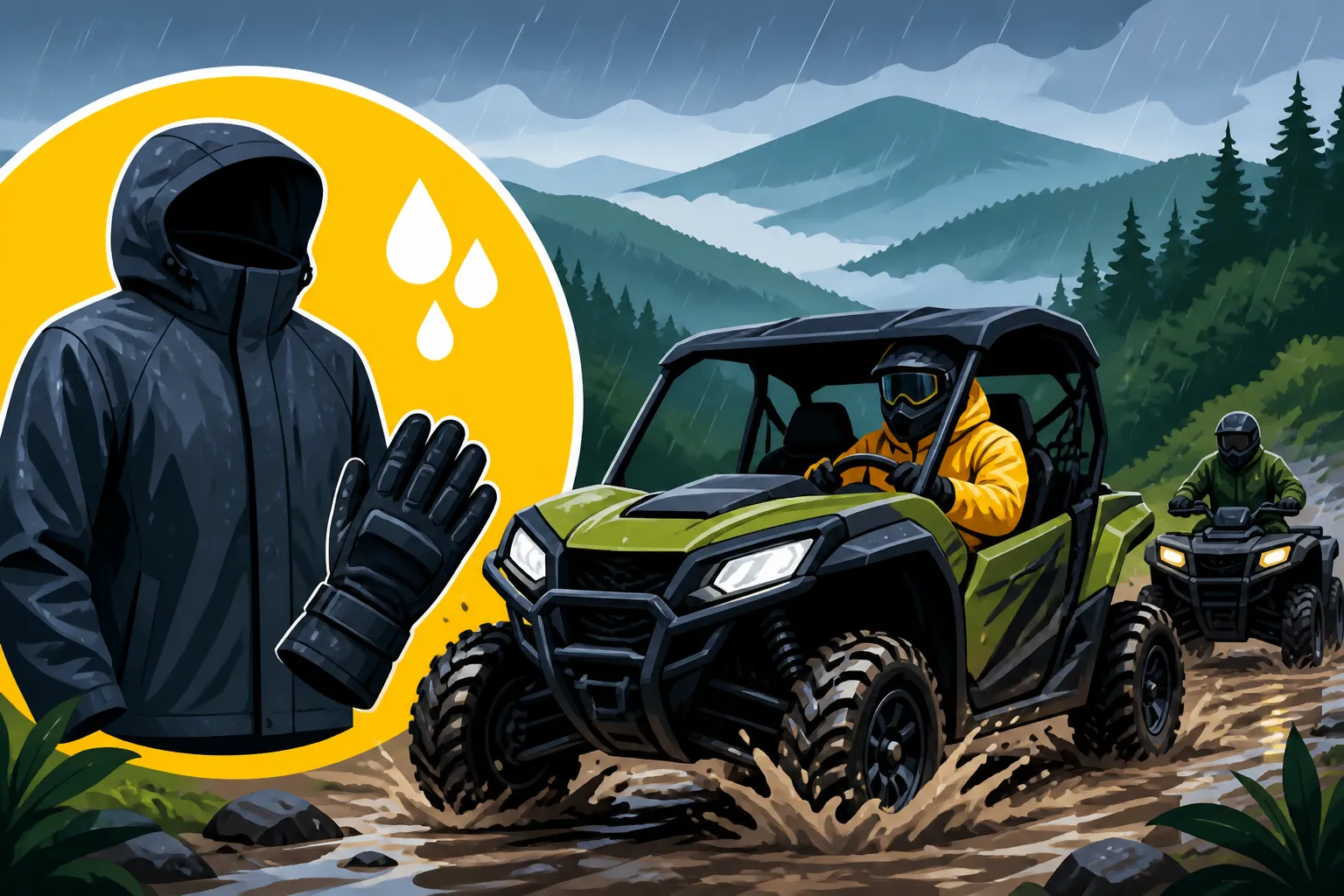
For ATV and UTV riding, rain gear needs to do more than shed water while you stand still. You’ll be reaching for controls, shifting your weight, climbing on and off the machine, and possibly walking through mud. Look for a waterproof jacket with room to move your shoulders and elbows, a hood that can be secured or tucked away, and closures that stay out of your hands and the controls.
A shell that fits over a warm layer is often more useful than a heavily insulated rain jacket. Riding can be strenuous, especially on steep, uneven terrain, and an insulated jacket may leave you sweaty underneath. Sweat dampens clothing too, so once you stop moving, you can feel chilled even if rain never gets through the shell.
Pants matter just as much as the jacket. Rain pants should fit over your riding pants and boots without dragging, snagging, or restricting your knees. If you regularly ride in wet conditions, check how the cuffs sit over your boots while seated. Water can run down a pant leg and into a boot if the layers overlap the wrong way.
Layer underneath instead of relying on one thick garment
A practical layering system usually starts with a moisture-managing base layer, adds a warm middle layer when needed, and uses a waterproof shell as the outside barrier. The middle layer should be easy to remove if you warm up. Cotton clothing can stay damp after getting wet, so many riders prefer synthetic or wool layers that are more comfortable when conditions turn humid or rainy.
Think about what happens during a stop. You may be warm while riding and quickly cool down when you park to check a map, help someone through a difficult section, or wait for a group. Keep a dry insulating layer protected in a waterproof bag, rather than wearing every warm layer from the start.
For a wider look at changing temperatures and clothing choices, see Packing for Mountain Weather and Virginia Mountain Weather on the Trail. The same basic principle applies to rain: prepare for the conditions you may encounter later in the ride, not only the conditions you see at the trailhead.
Compare gear by the job it needs to do
| Gear | What it helps with | What to check before riding |
|---|---|---|
| Waterproof shell jacket | Blocks rain and wind | Fit over layers, hood management, cuffs, and freedom of movement |
| Rain pants | Keeps legs and riding clothes drier | Fit over boots, knee movement, and cuff placement |
| Waterproof gloves or glove covers | Helps keep hands warmer and drier | Grip on controls, dexterity, and whether they fit under or over your cuffs |
| Dry insulating layer | Adds warmth during stops | Pack it in a sealed bag and keep it separate from wet clothing |
| Spare socks | Gives you a dry option if boots get wet | Store them in a waterproof bag |
| Waterproof phone pouch | Protects a phone from rain and splashes | Confirm you can still use the screen and reach the phone safely |
| Small pack cover or dry bag | Protects extra clothing and essentials | Check closures and pack it where it won’t interfere with riding |
No single item solves every wet-weather problem. A pricey shell can still leak around poorly managed cuffs, while a modest jacket may work well if it fits properly and is used with suitable layers. Test the full outfit at home: put on your riding clothes, sit as you would on your machine, bend your knees, reach forward, and check for gaps.
Protect the Parts That Get Wet First
Keep hands warm without losing control
Wet hands can make a ride uncomfortable and can make it harder to operate controls confidently. A glove that feels warm in a shop may become unpleasant once it is damp, so consider how your gloves handle rain, sweat, and repeated use. Some riders carry a dry backup pair in a sealed bag, especially for longer outings or group rides.
The fit is important. Gloves that are too bulky may make it harder to use levers and buttons, while a tight waterproof glove can feel clammy if your hands perspire. Try the gloves with your regular grip and controls before leaving. If you use a glove cover, make sure it does not slide around or interfere with a secure hold.
When the rain is steady, pay attention to where water enters. If your jacket sleeves sit inside the glove opening, water may run down your arms and into the gloves. If the gloves sit under the sleeves, check that the cuff overlap stays in place when you reach forward. The right arrangement depends on your jacket and glove design, so test it before a long ride.
Keep boots, socks, and spare clothing dry
Boots can take on water from above, through the material, or from standing in puddles and mud. Rain pants that cover the boot opening can help limit water running down your legs, but they won’t make a boot waterproof if its construction or condition lets water through. If your boots are already wet before you set out, consider whether the temperature and length of the ride make that a comfortable choice.
Pack spare socks and a dry layer in a waterproof bag. A regular backpack is not automatically waterproof, and a rain cover may leave openings around straps or seams. Keep the bag closed and place it where mud and spray are less likely to reach it. For a UTV, the cab or storage area can offer a convenient place to protect supplies, but don’t assume it stays dry in every configuration or during every ride.
It helps to separate wet clothing from clean clothing once you stop. A second bag for used gloves, socks, or rain layers prevents damp items from soaking the rest of your supplies. This small bit of organization can make the drive home much more comfortable, especially if you have several riders sharing a vehicle.
Protect your phone, maps, and other essentials
Rain can make it difficult to handle a phone safely, and a wet touchscreen may not respond as expected. Use a secure waterproof pouch or another protective setup that you have tested in advance. Keep your phone somewhere reachable without taking attention away from riding, and avoid stopping in an exposed or unsafe spot just to check directions.
Mountain routes may include areas where cell service is unreliable. Before leaving, review the route and save the information you’ll need in a way that does not depend on a live connection. A mapping tool such as onX Offroad can help you review route information before the ride; check that your selected map or route is available for the conditions you expect. Keep a backup plan, such as a paper map or written directions, when the trip is unfamiliar.
Wet-weather planning is also route planning. A route that looks straightforward on a dry day may feel different when visibility drops, surfaces become slick, or a stream crossing rises. Read Virginia Trail Conditions Before You Haul before making a long drive to a riding area, and confirm access details with the relevant land manager or trail operator.
Pack for Rain and Changing Trail Conditions
Build a compact wet-weather kit
A useful rain kit does not have to fill a whole cargo box. Start with the items that solve the most likely problems: a shell, rain pants, dry socks, a spare warm layer, a protective bag for your phone, and a way to keep clean clothing separate from wet gear. Add gloves or glove covers based on how often your hands get cold or wet.
Keep essential items easy to reach, but secure them so they cannot fall off or interfere with the machine. In a group, agree on where the first-aid supplies, basic tools, and dry layers are stored. It is frustrating to discover that everyone brought useful gear but nobody knows which bag it is in.
Before setting out, inspect the kit rather than assuming it is ready from the last ride. Check for damaged seams, broken closures, missing gloves, and damp clothing left in a storage bag. A quick check at home is easier than sorting through wet gear at a trailhead near Edinburg, Grundy, or Coeburn.
Adjust the plan when rain changes the ride
Rain affects more than clothing. Mud can reduce traction, water can obscure holes or rocks, and fog or heavy rain can shorten how far you can see. Give yourself more time, leave room between machines, and avoid pushing a group into terrain that feels beyond anyone’s comfort level. A route that is manageable for an experienced rider may be stressful for someone new to mountain trails.
Check for closures and local guidance before riding, especially after prolonged or heavy rain. Conditions can vary from one riding area to another, and a forecast alone does not tell you whether a specific trail is open or suitable. Trail Closures After Rain and Virginia Trail Riding After Heavy Rain are useful topics to review before choosing a route.
If you are using onX Offroad or another mapping tool to examine options, treat the map as one part of the decision, not proof that a trail is open or passable. Confirm current access with the trail system or land manager. Have a shorter alternative in mind, and make sure everyone in the group knows when you will turn around rather than continuing into worsening conditions.
Make the ride easier on the whole group
A rain plan should include the least experienced rider, the slowest machine, and the person most likely to get cold—not just the rider who is comfortable in any weather. Agree on regrouping points and a simple way to communicate if someone needs to stop. Keep the pace moderate enough that riders can react to slick sections and maintain a safe distance.
Respect trail users and land access rules, even when weather makes the group eager to get off the trail. Don’t create a new route around a puddle or muddy section if doing so means leaving the designated trail or entering land without permission. Virginia Trail Etiquette Locals Expect and Virginia Landowner Permission Forms offer useful background for riding responsibly.
If rain becomes heavy, visibility drops, or a rider is shivering or struggling to stay comfortable, stopping or shortening the ride is a sensible decision. The goal is not to prove that your gear can survive every storm. It is to stay warm enough, maintain control, and make a safe choice when conditions are no longer enjoyable.
Get Ready Before You Leave Home
Check the route, forecast, and access information
Look at the forecast for the riding area rather than relying only on conditions where you live. Mountain weather can differ across elevations and valleys, so a dry driveway does not guarantee a dry trail. Check for likely temperature changes and precipitation, then pack for the possibility that the ride will be cooler or wetter than expected.
Confirm that the area is open and that your planned route is appropriate for your machine and group. If you are heading to Peters Mill Run or Taskers Gap, for example, review the applicable riding rules and seasonal information before hauling there. Conditions and access can change, so verify details with the responsible agency or operator before departure. Virginia Riding in Spring is also helpful when planning rides during a season when conditions can shift quickly.
Before setting off, share the plan with everyone: where you intend to ride, where you can turn back, what gear each person is bringing, and what to do if the group gets separated. If your route information is stored digitally, review it before service becomes an issue. onX Offroad can be one way to prepare and check route details, but bring a backup plan rather than depending on a phone alone.
Do a quick clothing and gear check
Put on the complete outfit before loading the machines. Make sure the jacket closes fully, the pants stay in place when you sit, the gloves work with the controls, and your footwear is comfortable. If the weather is cold, try the layers together rather than discovering at the trailhead that the shell is too tight over a warm midlayer.
Then check what is packed: dry socks, a spare layer, protected phone or navigation equipment, water, and any personal essentials. Confirm that bags are secured and that wet items can be separated later. For a group ride, ask each person to bring their own basic rain protection instead of assuming one person can provide gear for everyone.
Finally, be willing to change the plan. The best rain gear is useful, but it does not remove the need to judge conditions. If the forecast worsens, the route is closed, or the group is not equipped for the weather, postponing can be the most comfortable and responsible choice.
Disclaimer
This article is for general informational purposes only and does not constitute professional advice. Laws, prices and regulations vary by location and change over time. Consult a qualified professional for guidance on your specific situation.