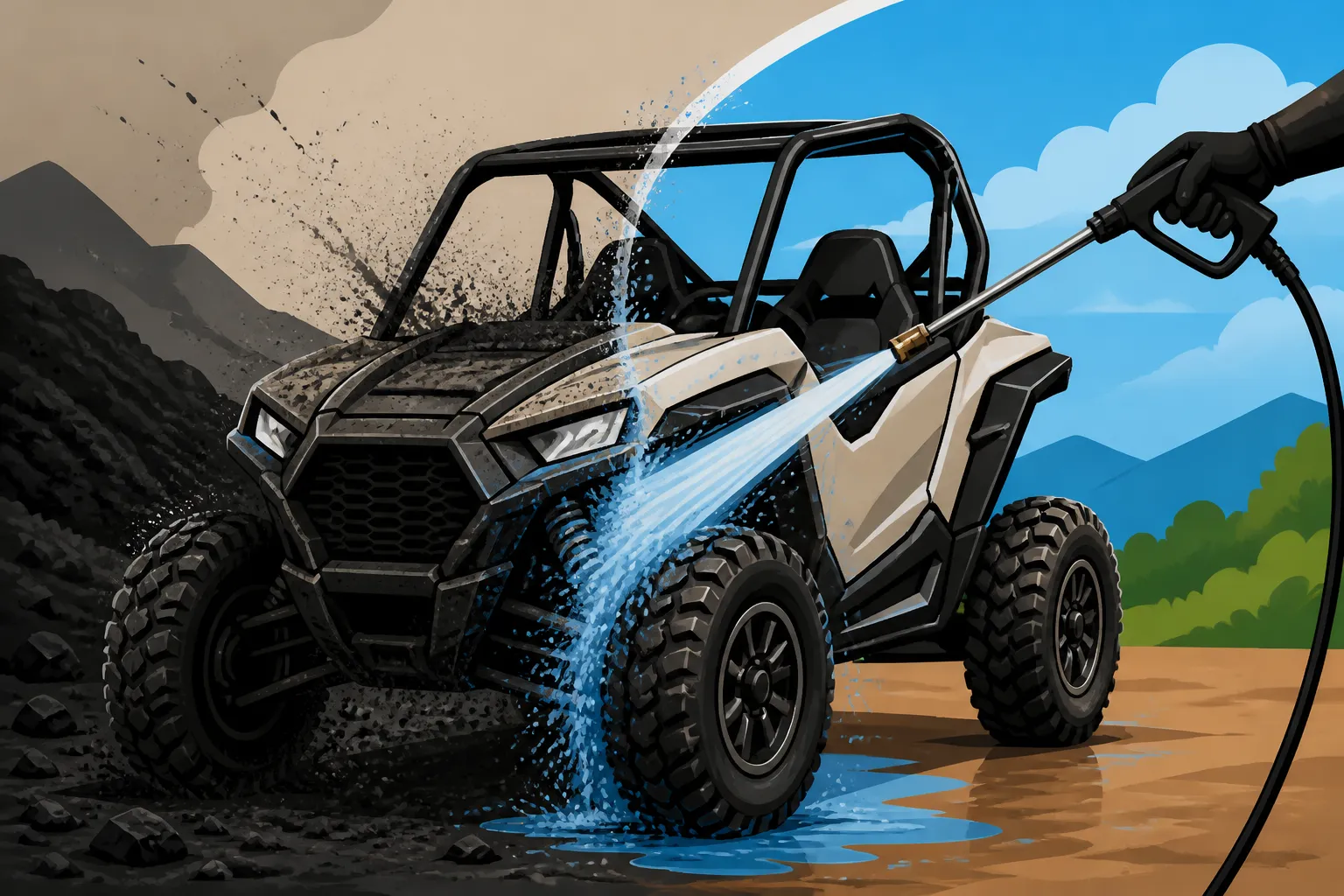
Washing Coal Dust Off a Machine
Coal dust can cake onto an ATV or UTV after a ride around Virginia’s coalfields, then turn into a gritty mess that’s hard to shift without damaging paint, seals, or electrical parts. This guide explains how to wash it off safely, what to avoid around sensitive components, and how to handle muddy runoff responsibly before you haul your machine home.
Why coal dust needs a careful wash
Coal dust is more than a cosmetic problem. Mixed with water, trail mud, and grease, it can settle into crevices and make routine checks harder. Scrubbing a dry, dusty machine may seem like the quickest fix, but it can grind grit across painted surfaces and plastics.
Rinse before you wipe
Start by knocking loose dust off with a gentle rinse. If you wipe a dusty body panel with a dry rag, the fine particles can act like abrasive grit. That can leave dull patches or fine scratches, especially on glossy plastic and clear instrument covers.
Let the rinse do the first part of the work. Start high and work downward so dirty water runs away from areas you’ve already cleaned. If the dust has mixed with mud and stuck fast, give it time to soften rather than trying to scrape it away with a brush or fingernail.
A low-pressure garden hose is usually easier to control than a pressure washer. Keep the spray broad and moderate, and avoid aiming it directly at seals, bearings, electrical connectors, the radiator, or the air intake. A forceful jet can push water and grit where they don’t belong.
Check the machine before washing
Park on stable ground, switch the engine off, remove the key, and let hot parts cool. Washing a hot engine or exhaust can cause rapid temperature changes, and working around a running machine adds avoidable risk. If your ATV or UTV has recently been through deep mud, look for packed debris around the wheels and suspension before you begin.
Coal dust can hide leaks and damage, so take a quick look around the machine before rinsing. Check for loose body panels, cracked plastic, damaged wiring, and wet spots around the engine or drivetrain. If you notice a new leak or a damaged connector, don’t try to blast the area clean. Note what you found and inspect it more closely once the machine is dry.
Pay particular attention to the radiator and its protective screen. Dirt and plant matter can collect there, but a narrow, high-pressure stream may bend delicate fins. If debris is packed into the screen, loosen it gently and rinse from a direction that pushes material back out rather than deeper into the radiator. For more on that kind of buildup, see Radiator Screens for Mountain Leaf Litter.
Use the right tools for stuck-on grime
A soft brush, microfiber cloth, and mild vehicle-safe cleaner can help once the loose dust is rinsed away. Use a separate brush for tires and grimy underbody areas so you don’t carry grit onto bodywork or clear plastic. Avoid abrasive pads and harsh household cleaners, which may damage finishes or leave residue.
If a spot remains stubborn, wet it again and let it soften before brushing lightly. Work in small sections instead of trying to clean the whole machine at once. This is especially helpful on a side-by-side, where fenders, steps, skid plates, and cargo-bed corners can hold a surprising amount of trail grime.
| Area | Safer cleaning approach | Avoid |
|---|---|---|
| Painted panels and plastic | Rinse first, then use a soft cloth or brush | Dry wiping or abrasive pads |
| Tires and underbody | Use a separate brush and rinse gently | Reusing a gritty brush on bodywork |
| Electrical connectors and seals | Rinse from a distance with low pressure | Direct pressure-washer spray |
| Radiator and screen | Remove loose debris gently and rinse carefully | Narrow, forceful spray aimed at the fins |
| CVT intake and exhaust opening | Keep direct spray away and check for obstructions | Forcing water into an opening |
A step-by-step way to wash off coal dust
A little organization makes cleanup faster and helps prevent the same dirt from being moved from one part of the machine to another. Set out your hose, cloths, brushes, and cleaner before you start. If you’re washing at a designated facility, follow its posted instructions and make sure washing is allowed there.
1. Let the machine cool and prepare the area
Choose a stable washing spot where dirty water won’t flow into a creek, ditch, storm drain, or other waterway. Don’t wash your machine in a stream or on a trail. If you’ve ridden around Grundy, Richlands, Haysi, or another coalfield area, make a plan for cleanup before leaving rather than assuming a convenient wash spot will be available at the trailhead.
Check local rules for the property or wash area. Some private parks and facilities have their own cleanup procedures, while a trailhead may not have a wash station at all. Planning ahead can save an unpleasant surprise after a dusty ride. Virginia Trail Conditions Before You Haul is useful reading when you’re organizing a trip, and Virginia Private Off-Road Parks may help you think through the different rules that can apply at a riding property.
2. Rinse loose dust from top to bottom
Use a gentle, steady rinse and work from the roof or upper body panels down toward the wheels. On a UTV, rinse the exterior of the cab carefully, including the doors, fenders, cargo bed, and steps. On an ATV, give the racks, plastics, and exposed frame a light first rinse.
Don’t aim water directly into the air intake, exhaust, electrical connectors, wheel hubs, suspension seals, or CVT intake. The exact locations vary by model, so check your owner’s manual if you’re unsure where those openings are. Avoid spraying the instrument cluster and switches at close range.
Once loose dust is gone, look at the remaining dirt in good light. If grime is still stuck to the surface, wet it again rather than trying to remove it with a dry cloth. For trail-specific etiquette and cleanup practices, see Leaving a Coalfield Trailhead Tidy and Virginia Trail Etiquette Locals Expect.
3. Clean the stubborn areas in sections
Apply a suitable cleaner according to its label, then use a soft brush or cloth. Work on one area at a time, rinsing your tool frequently so grit doesn’t build up in the bristles. Begin with cleaner body panels and leave tires, skid plates, and the underbody until later.
For packed mud around the footwells, suspension, and skid plate, loosen the material carefully. Don’t use a screwdriver or metal pick against hoses, wiring, or plastic parts. If a lump won’t come away easily, soak it and try again rather than levering against a component.
It’s tempting to use a pressure washer because it seems efficient after a particularly dusty ride. If you choose one, use a broad spray and keep the nozzle well back from sensitive parts. Never use a concentrated jet to clean around bearings, seals, connectors, radiator fins, or the CVT system. When in doubt, use a hose and a soft brush instead.
4. Rinse, dry, and inspect
Rinse away cleaner and loosened dirt, again working from top to bottom. Then let the machine drain and use clean microfiber cloths on surfaces where water spots or trapped grit could be a concern. Don’t start the engine just to dry the machine unless the owner’s manual recommends a specific procedure.
After washing, inspect the air intake area, radiator screen, wheels, brakes, and visible wiring. Check that no mud or leaves remain packed around moving parts. If you found debris near the intake or suspect water entered an opening, consult the owner’s manual or a qualified mechanic before riding.
A final inspection is also a good time to notice fresh damage. If a ride through rocky terrain has left a scraped skid plate or a loose fastener, make a note and address it before the next trip. Tires for Appalachian Rock has related guidance for preparing a machine for rough trail surfaces.
Protect sensitive parts while cleaning
A machine can look clean on the outside and still have dirt lodged in places that matter. The goal isn’t to soak every component. It’s to remove harmful buildup while keeping water and grit away from areas that need to stay protected.
Keep water away from openings and electrical parts
Avoid directing a hose or pressure washer into the air intake, exhaust, switch housings, electrical connectors, and instrument panel. Use a damp cloth around delicate controls instead of spraying them directly. If the machine has an aftermarket snorkel or other modification, follow the instructions for that setup rather than assuming the opening is waterproof.
On a UTV, pay special attention to openings near the cab, cargo bed, and engine compartment. On an ATV, look for exposed connectors and intake openings around the bodywork. Their locations differ by machine, so the owner’s manual is a better guide than guessing from another model.
If you suspect water has entered the air intake or another critical opening, don’t keep rinsing or try to start the machine to see whether it runs. Stop and follow the manufacturer’s guidance. A cautious pause is easier than dealing with a preventable mechanical problem later.
Don’t ignore the underside
Coalfield trail grime often collects beneath the machine, where it is harder to see. Skid plates, footwells, suspension arms, and the area around the wheels can trap a mixture of dust, mud, leaves, and small stones. A light rinse and visual check can help reveal buildup without blasting the underside at close range.
Be careful around brake components and moving parts. Don’t put your hands near a wheel or suspension component while the machine is running, and avoid directing a high-pressure jet at seals or hubs. If you find a large clump lodged somewhere you can’t reach safely, use a suitable tool gently or ask a mechanic to remove it.
The same care applies after riding forest trails, where leaves and other debris may be mixed with coal dust. Virginia Forest Equipment Requirements can help you think about machine readiness for forest riding, while Virginia Trail Closures After Rain is a reminder to check conditions before heading out. Riding on a wet trail can add heavy mud that takes much longer to clean.
Dry the machine and follow up on maintenance
Let the machine drain in a well-ventilated place. Wipe down accessible body panels and controls with a clean cloth, and check the owner’s manual for any model-specific maintenance after washing. If you use a cover, wait until the machine is sufficiently dry so moisture isn’t trapped underneath it.
After the next short ride, take another look at the machine. A brief check can reveal mud that loosened and shifted, a spot that stayed wet, or a new noise you didn’t notice during cleanup. This matters especially when grime has been thick enough to hide a leak or a damaged part.
Plan cleanup before the next Virginia ride
Cleaning is easier when you know where the ride ends and what facilities are available. Don’t assume that every trail system has a place to wash a machine, or that washing is permitted wherever you park. Check the rules for your destination, and bring basic cleaning supplies if you expect to haul a dusty machine back in a trailer.
Check access and facilities before you travel
Before leaving home, confirm where you’re allowed to ride, park, and clean your machine. A map can help you plan the route and identify nearby towns, but a mapped location doesn’t guarantee a wash station or permission to use private property. Use onX Offroad as one planning tool, then verify access and facilities with the land manager, trail system, or property operator. If you use onX Offroad to plan a route, make a separate plan for the ride home and cleanup.
For a Coal Canyon or Mountain View trip, for example, you might be traveling through the Grundy or Coeburn area. Think through whether you’ll wash at home, at a permitted facility, or not until you can reach an appropriate place. A muddy machine secured on a trailer can still spread grime, so protect your trailer and check that the load is safe before you leave.
onX Offroad can also help you orient yourself while planning a trip, but it should not replace posted signs, permission from a landowner, or direct confirmation from the trail operator. If you’re uncertain whether a road or property is open to riders, resolve that question before you set out. Check Virginia Road Access in the Coalfields for related access considerations.
Keep dirty runoff out of waterways
Do not wash an ATV or UTV in a creek or stream. Avoid letting dirty water run into storm drains, ditches, or other waterways, especially if it contains oil, grease, fuel residue, or cleaning products. Choose a location where runoff can be handled appropriately, and follow any rules posted at a commercial or private wash area.
If you’re cleaning at home, use only products suitable for vehicle washing and follow their labels. Don’t let concentrated cleaner or oily residue wash off the driveway and into a drain. If the machine has an active leak, clean it where the residue can be contained and deal with the leak before the next ride.
When planning with onX Offroad, treat it as a navigation aid, not confirmation that an area is suitable for washing or that a facility is open to the public. A quick call or check with the trail operator can prevent a frustrating end to an otherwise good day.
Make a small cleanup kit
A basic kit can make post-ride cleanup less of a chore. Keep a few microfiber cloths, a soft brush, a separate tire brush, and a small bottle of vehicle-safe cleaner together with your riding gear. A pair of work gloves and a trash bag can be useful for removing debris and packing out dirty wipes.
If you expect heavy coal dust or mud, bring an old towel or a washable mat to protect the trailer or vehicle interior. Don’t use the same cloth on the instrument panel and the underbody. Keeping clean and dirty tools separate reduces the chance of spreading grit across surfaces you’ve already rinsed.
A quick rinse, a careful inspection, and a sensible cleanup location are usually more useful than an aggressive wash. Take your time around openings, seals, and electrical parts; the machine doesn’t need to be drenched to be ready for its next ride.
Disclaimer
This article is for general informational purposes only and does not constitute professional advice. Laws, prices and regulations vary by location and change over time. Consult a qualified professional for guidance on your specific situation.