Tires for Appalachian Rock
Rocky Virginia trails can chew up tires faster than a smooth farm lane, and the wrong tread can make a steep climb feel needlessly slippery. This guide explains how to choose ATV and UTV tires for Appalachian rock, what to check before you ride, and how to balance traction, puncture resistance, comfort, and handling on Virginia’s varied trails.
What Appalachian Rock Does to ATV and UTV Tires
Expect sharp edges, loose stone, and changing grip
“Rocky” can mean very different things from one Virginia ride to another. On a Spearhead trail near Grundy, you may encounter rough, broken rock, embedded ledges, and loose material on a climb. In the George Washington National Forest near Edinburg, a route may mix hard-packed dirt, gravel, and exposed stone. A tire that feels planted on one surface can spin, bounce, or feel harsh on another.
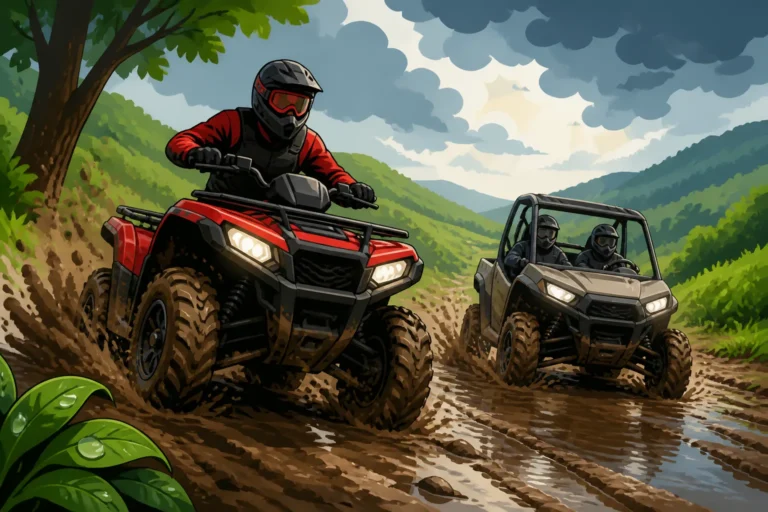
The challenge is that Appalachian trails often change under the machine. A tire may grip a dry rock face and then meet loose shale or damp leaves just beyond it. On a downhill, loose stone can shift under braking; on a climb, it can roll away under a spinning tire. That variability is why a tire’s overall behavior matters more than an aggressive-looking tread alone.
It helps to check what kind of riding a route actually offers before choosing or changing tires. Look at trail descriptions and current conditions for places such as Coal Canyon or Mountain View, and compare the route’s difficulty with your machine and experience. Virginia ATV Trails: Spearhead and the Forest and Virginia Trail Difficulty Ratings are useful starting points. For route planning, onX Offroad can help you review mapped trails and terrain before you haul, but confirm access, closures, and local rules with the trail operator as well.
Understand the trade-offs between traction and protection
A tire with a tough casing can be reassuring when sharp rock is a regular part of your ride. More substantial construction may help resist cuts and impacts, but it can also add weight. On a heavier UTV, added tire weight may affect steering feel, acceleration, braking, and suspension response. On an ATV, a heavy tire can make the machine feel less nimble, especially when you are picking a careful line through rocks.
Tread design is another compromise. Open, aggressive lugs can help bite into loose soil and climb over uneven surfaces, but they may feel less smooth on packed ground. A less aggressive tread can be comfortable and predictable on mixed terrain, yet may struggle to find purchase in loose dirt or mud. Neither style is automatically best for all Virginia trails. Consider the surfaces you ride most often, not just the roughest obstacle you might encounter once in a season.
Puncture resistance also depends on how you ride. Hitting a sharp edge at speed, carrying a heavy load, or running unsuitable pressure can increase the chance of damage. Even a sturdy tire cannot make a poor line harmless. Slow down around exposed rock, avoid pinching a sidewall against a ledge, and leave enough room to steer around obstacles rather than trying to bulldoze over every one.
Choosing Tires for Your Machine and Riding Style
Match the tire to your ATV or UTV
Start with the machine manufacturer’s specifications. Check the owner’s manual, the tire placard if your model has one, and the size and load information on the tires already fitted. Keep the tire size and load capacity appropriate for the machine and its intended use. A tire that physically fits may still change clearance, handling, or drivetrain load in ways that make it a poor choice.
ATV and UTV needs can differ even when the riders travel the same trail. A lighter ATV may benefit from a tire that keeps steering manageable and lets the rider make small line corrections. A side-by-side may need tires suited to its greater weight and passenger or cargo load. For UTVs, also confirm that tire dimensions and width suit the trail system: a machine’s overall width can determine where it is allowed to ride. Virginia Trails That Allow Side-by-Sides can help you think through access before planning a trip.
Your usual riding style matters, too. A rider who spends most weekends on rough, rocky climbs may reasonably prioritize durability and sidewall protection. Someone who mixes forest roads, gravel, and occasional rocky sections may prefer a more balanced tire that feels comfortable across surfaces. If you ride with passengers, carry tools, or bring camping gear, account for that added load when checking the tire and vehicle guidance.
Compare tire priorities before buying
Use this table to clarify what you want the tire to do. The right choice depends on your machine, riding conditions, and manufacturer guidance rather than one feature in isolation.
| Riding priority | What to look for | Trade-off to consider |
|---|---|---|
| Frequent sharp rock | Durable construction and suitable load capacity | Added weight may affect steering and ride feel |
| Mixed trail surfaces | A balanced tread pattern suited to dirt, gravel, and rock | May be less specialized in deep mud or loose terrain |
| Loose climbs | Tread that can find purchase without relying on speed | Spinning can still damage the trail and reduce control |
| Long rides on packed ground | Predictable handling and a comfortable ride | A less aggressive pattern may offer less bite in loose material |
| Heavier UTV or loaded machine | Tires appropriate for the machine’s load and operating conditions | Load, pressure, and tire size must all work together |
Before buying, compare the exact tire size, construction, load rating, and intended use with the vehicle manual. Avoid choosing solely by appearance or by a rider’s account of how a tire performed on a different machine. If you can, ask a knowledgeable tire dealer to confirm compatibility using your model and the way you load and ride it.
Consider where you ride in Virginia
Virginia’s trail systems are not interchangeable. A Coalfield ride near Grundy can involve different terrain and obstacles from a forest route around Peters Mill Run and Taskers Gap. Some systems also have separate machine-access requirements, trail rules, or seasonal restrictions. Virginia Trail Conditions Before You Haul is a useful reminder to check the actual route rather than assuming that a tire recommendation from another riding area will transfer perfectly.
Think about your regular riding loop, not just an individual feature. If most of your day is on packed trail with a handful of rocky sections, a balanced setup may be more pleasant than a heavy tire designed around constant rock crawling. If you routinely encounter ledges and sharp stone, protecting the tire and riding carefully may matter more than minimizing weight.
Mapping tools can help you understand the route before departure. onX Offroad may be useful for reviewing a planned trail and noting where terrain changes, but a map is not a substitute for current trail information or permission to ride. Check the riding area’s own updates, especially after storms or maintenance closures, and make sure your machine is permitted on the routes you plan to use.
Tire Pressure, Riding Technique, and Trail Preparation
Set pressure using the right guidance
Tire pressure is not a one-number-fits-every-ride decision. The appropriate pressure depends on the tire, vehicle, load, terrain, and manufacturer’s recommendations. Begin with the owner’s manual and the tire maker’s guidance; do not copy a pressure from an unrelated machine just because another rider uses it on rocky trails.
Pressure that is too low can increase the risk of the tire flexing excessively or the rim striking an obstacle. Too much pressure may make the ride harsh and reduce the tire’s ability to conform to uneven ground. A loaded UTV and a lightly loaded ATV also place different demands on their tires, so check pressure with the machine configured as you intend to ride it.
Bring a reliable gauge and check tires before setting out, when they are cool. Look for cuts, embedded stones, damaged valve stems, and uneven wear. If you make a pressure adjustment, record what you changed and how the machine behaved. That gives you a practical reference for future rides without treating someone else’s setup as a universal rule.
Ride the line, not just the obstacle
Good tire choice helps, but line selection is often what keeps a ride controlled. Approach rock steps slowly enough to look for a stable path. Avoid sharp steering or abrupt throttle changes when a tire is partly on a ledge. If the machine begins to spin, easing off and reassessing the line is often safer than applying more throttle and hoping the tires find grip.
On a downhill, use controlled speed and avoid sudden braking that can make the tires slide on loose stone. Leave room between machines so a rider ahead does not force you into a poor line. If you are riding a UTV, pay attention to the vehicle’s width and turning space; a line that works for a narrow ATV may not be safe or feasible for a wider machine.
Rocky sections also make basic recovery preparation worthwhile. Carry a tire repair kit suited to your tires, a pump or compressor, and tools that fit your machine. A spare tire or other backup may make sense for remote or long rides, depending on your vehicle and the route. For steep terrain, plan recovery equipment and safe stopping points in advance; Winches for a Steep Coalfield Climb covers another part of that preparation.
Protect the rest of the machine
Tires are only one part of a rocky-trail setup. A sharp ledge can also damage the underside of an ATV or UTV, especially if the rider tries to climb over it without checking clearance. Consider whether your machine needs suitable underbody protection for the routes you ride. Skid Plates for Coalfield Ledge explores that related concern.
Before leaving home, check the trail system’s rules and your machine’s condition. Confirm that brakes work properly, lug nuts are secure, and tires are free of obvious damage. Carry water, basic tools, a first-aid kit, and a way to contact your group if you become separated. Trail etiquette matters when another rider is approaching or waiting to pass; Virginia Trail Etiquette Locals Expect is worth reviewing before a busy weekend ride.
Keeping Tires in Good Shape Between Rides
Inspect after every rocky outing
A quick inspection after the ride can catch small problems before they become a roadside repair. Look across the tread and sidewalls for cuts, bulges, missing chunks, exposed cords, and objects lodged in the rubber. Check that the valve stems are intact and that the tires appear evenly seated. If you find damage, do not assume it is harmless simply because the tire held air during the ride.
Pay attention to changes in how the machine feels. A new vibration, pulling, wobble, or loss of predictable steering can signal tire damage or another mechanical issue. Stop somewhere safe and inspect rather than continuing at speed to see whether it disappears. If you are uncertain whether a damaged tire is safe to use, ask a qualified tire professional.
After a ride through dust, grit, or mud, clean the machine and tires enough to spot damage. Removing packed debris can also help you see uneven wear and check the wheel area. If the outing involved coal dust or heavy trail grime, Washing Coal Dust Off a Machine offers related cleanup guidance.
Store and replace tires thoughtfully
When the machine will sit for a while, follow the manufacturer’s storage recommendations. Keep tires away from conditions that can accelerate deterioration, and avoid leaving the vehicle with a heavy load on a tire for an extended period unless the manual’s guidance supports it. Before the next ride, inspect the tires again rather than assuming they are ready because they were fine at the end of last season.
Uneven wear can point to more than tire age. Check for changes in pressure habits, riding load, machine alignment, suspension condition, or repeated hard impacts. If one tire is wearing differently from the others, replacing only the visibly worn tire may not be the right answer for every machine. Consult the vehicle and tire manufacturers or a qualified service professional about matching tires and maintaining predictable handling.
Finally, match your tire plan to the whole trip. If you are hauling to the Coalfields or heading toward a forest trail, check current conditions, machine-access rules, and parking arrangements before departure. A route map from onX Offroad can support your planning, while the riding area’s own guidance should determine whether a trail is open and suitable for your vehicle. The best tire is the one that fits your machine, your regular terrain, and the way you ride—paired with careful pressure checks, steady technique, and a realistic plan for the trail.
Disclaimer
This article is for general informational purposes only and does not constitute professional advice. Laws, prices and regulations vary by location and change over time. Consult a qualified professional for guidance on your specific situation.