Locked Gates on a Timber Company Road
There's nothing quite like the allure of an old logging road disappearing into the dense Virginia wilderness, hinting at miles of adventure for your ATV or UTV. We’ve all been there: you're exploring a new area, the perfect trail seems to unfold before you, only to be met by a sturdy, unyielding locked gate. It's a moment that can deflate the excitement right out of a planned ride, leaving you wondering if that promising path is forever off-limits. This guide is here to shed light on why those gates exist, what your options are, and how to navigate the complexities of riding on timber company roads in Virginia so you can spend less time scratching your head and more time enjoying the trails you can access.
The Frustration of Locked Gates on Timber Roads in Virginia
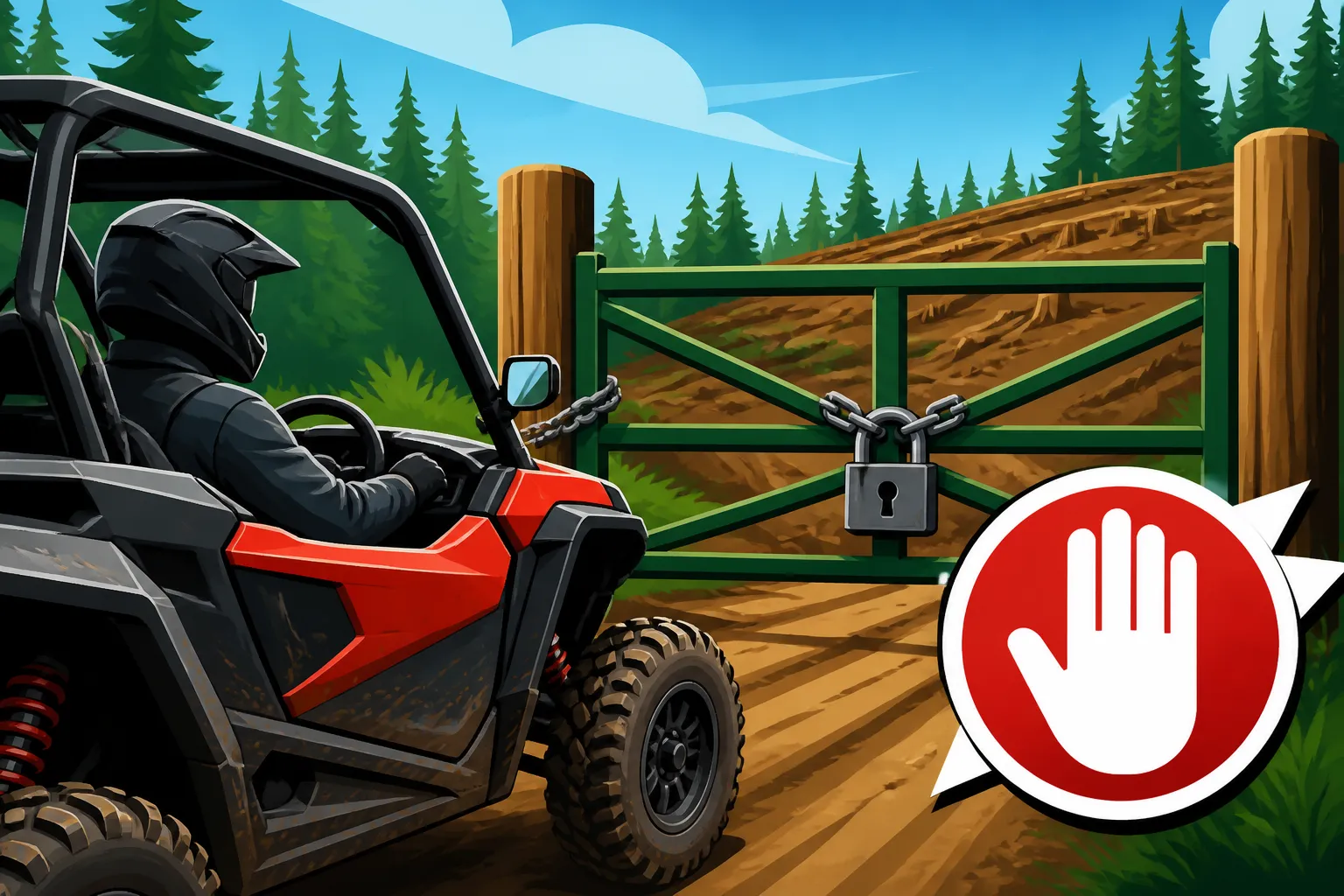
It’s a common scenario across the Commonwealth, especially in the more rural, forested regions. You've heard whispers of incredible views or challenging terrain down a particular stretch of what looks like an old access road, only to arrive and find a freshly painted gate, often secured with a heavy chain and padlock. This isn't an arbitrary act to spoil your fun; timber companies have very real, very important reasons for restricting access.
Why Timber Companies Lock Their Gates
Timber companies are in the business of managing vast tracts of forest land, not operating public recreational parks. Their primary concerns revolve around business operations, safety, and liability. Imagine a company has thousands of acres of valuable timber ready for harvest. Leaving gates open creates an open invitation for a host of problems. One major concern is preventing timber theft. It might sound old-fashioned, but valuable lumber is still a target. Unauthorized access also leads to illegal dumping, which is a costly and environmentally damaging issue. People sometimes see these remote roads as perfect places to discard everything from old tires to household garbage, creating a nightmare for the landowner.
Beyond theft and dumping, there are significant safety and operational considerations. Active logging sites are dangerous places with heavy machinery, falling trees, and unpredictable hazards. Allowing public access, especially to recreational vehicles, puts both the public and company employees at undue risk. Companies also need to manage access for fire prevention and suppression, especially during dry seasons when a single spark from an unauthorized vehicle could lead to a devastating forest fire. Protecting sensitive ecosystems and ensuring the long-term sustainability of their forest resources are also paramount. These companies often have detailed management plans for their land, and uncontrolled recreational use can interfere with those plans, impacting everything from reforestation efforts to wildlife management. When you encounter a locked gate, it’s rarely personal; it's usually about protecting valuable assets and ensuring safe, sustainable operations.
The Misconception of Public Access
One of the biggest sources of frustration for ATV riders in Virginia stems from a common misconception: that if a road looks old, unmaintained, or has been used informally by the public for years, it must be public property. This simply isn't the case for most timber company roads. While some old logging trails might eventually be converted into public access roads or official trail systems, the vast majority remain private property. Just because you've seen other people using it, or perhaps even used it yourself in the past, doesn't change its legal status.
In Virginia, the law is quite clear about private land access. Unless a road is explicitly designated as a public right-of-way, maintained by the state or county, or falls within a sanctioned public trail system, it is considered private property. This means that even if a gate appears to have been recently installed on a path you've ridden for years, the landowner has every right to secure their property. Thinking that a road should be public because it feels like a natural trail can lead to uncomfortable — and expensive — encounters with law enforcement. Understanding that most timber roads are private is the first step in avoiding potential legal trouble and focusing your energy on legitimate riding opportunities. Always assume private land is private, especially when it comes to timber operations.
Navigating Permission and Legalities for ATV Access
So, what do you do when you really want to ride that beautiful stretch of timber land? The key, as with all private property, is permission. But not just any permission. In Virginia, it needs to be explicit and, ideally, in writing.
The Absolute Necessity of Written Landowner Consent
In the Commonwealth of Virginia, riding an ATV or UTV on private land without the landowner's express permission is trespassing, plain and simple. This isn't just a friendly reminder; it's a legal requirement. Section 18.2-132 of the Code of Virginia, related to trespassing, makes it clear. For timber company land, where there are often significant assets and active operations, enforcement can be particularly stringent. You might think a verbal "it's probably fine" from a local or a tacit understanding is enough, but it isn't. When a game warden or sheriff's deputy encounters you behind a locked gate, a verbal claim of permission might not hold up, and you could face fines, or worse, have your machine impounded.
To protect yourself, you absolutely need [What a Landowner's Written Permission Note Should Say]. This note should specify who is allowed to ride, what machines (by VIN or description) are permitted, the exact dates or period of access, and the specific areas of the property where riding is allowed. It should also clearly state the name and contact information of the landowner or their authorized representative. Having this physical document with you while riding is crucial. Think of it as your passport to the trail; an officer will ask for it, and having it readily available can save you a lot of hassle. [Carrying Papers on a Coalfield Trail] is not just good practice, it's essential for proving legal access and avoiding the civil penalties associated with illegal riding in Virginia. Without that written consent, you're taking a significant legal risk.
How to Seek Permission from Timber Companies
Getting written permission from a large timber company isn't like asking your neighbor if you can cut across their field. These are large corporations with structured land management divisions, and their primary focus isn't recreational access. However, it's not entirely impossible, though success rates can be low due to liability concerns. Your first step is to identify the specific landowner. This can often be done through county tax assessor's offices or online GIS maps that show property lines and ownership details. Once you've identified the company, look for their land management or forestry division. Avoid calling general customer service numbers; you need to reach the right department.
When you contact them, be professional, polite, and clearly state your intentions. Explain that you understand it's private land and that you're seeking formal, written permission for recreational ATV use. Be prepared for a "no," as many companies have blanket policies against public recreational access due to the immense liability risks. Some might have a system for leasing hunting rights or timbering contracts, but rarely for casual ATV riding. If direct access is denied, don't press the issue. Instead, you might explore alternatives. For example, some large landholders might work with ATV clubs or organizations that have existing lease agreements for specific trail sections. Joining such a club might grant you access that you couldn't secure individually. Even if you get access, ensure your machine is up to the task. Quality parts from a brand like SuperATV can ensure your ride can handle the rigors of whatever terrain you might encounter, though always remember to adhere to the terms of your permission and stick to the designated routes.
Alternatives to Timber Company Roads for Virginia ATV Riders
Given the challenges of securing permission for private timber roads, many Virginia riders find themselves seeking reliable, legal alternatives. The good news is that Virginia offers some fantastic, designated off-road riding opportunities that are purpose-built for ATVs and UTVs.
Exploring Virginia's Designated Off-Road Trail Systems
Instead of wrestling with the uncertainties of private land access, Virginia is home to some incredible, legally sanctioned trail systems. The Spearhead Trails in Southwest Virginia, for instance, offer hundreds of miles of diverse terrain across multiple systems like Coal Canyon, Mountain View, and Jawbone. These trails are specifically designed for off-road enthusiasts, complete with clear signage, designated parking, and varying difficulty levels. You'll need a permit to ride them, but the cost is often a small price to pay for reliable, legal access to vast networks of trails. [Virginia Spearhead Trail Permits] are easy to obtain and cover a full year or a three-day period, giving you peace of mind that you're riding legally and responsibly.
Similarly, the George Washington and Jefferson National Forests host designated OHV trails like the Peters Mill Run and Taskers Gap system near Edinburg. These trails operate under National Forest OHV permits, which are also readily available. [Virginia National Forest OHV Permits] allow you to explore the natural beauty of the national forest on marked trails, often providing a different kind of riding experience with distinct rules regarding things like spark arresters and noise limits. The benefit of these systems is obvious: you know where you can ride, you know the rules, and you don't have to worry about locked gates or trespassing. Instead of hoping for private land access, you can invest in durable components from a brand like SuperATV – maybe a robust winch or heavy-duty suspension – to enhance your experience on these well-maintained, but still challenging, public trails.
Understanding Farm and Household Exceptions
It's worth briefly touching on Virginia's specific exceptions regarding ATV use, as they sometimes lead to confusion. Virginia law does make provisions for ATVs being used for "farming, agricultural, or horticultural purposes" or "for a household or personal use, when ridden on the property of the owner of the vehicle." [Virginia Farming and Household Exceptions] While these exceptions allow you to use your ATV on your own farm or property, they do not extend to timber company land.
Unless you are an owner, employee, or contractor directly engaged in agricultural or household operations for that specific timber company, these exceptions do not grant you recreational access. You cannot claim you are performing "household use" on land you do not own. This distinction is vital, as misinterpreting these exceptions is a common mistake that can lead to trespass violations. The spirit of these exceptions is to allow landowners and their legitimate workers to utilize ATVs as tools for property management, not to open up private lands for general recreational riding.
Joining ATV Clubs and Associations
For many riders, connecting with local ATV clubs and associations can unlock new opportunities. These organizations often play a crucial role in advocating for rider rights, maintaining trails, and sometimes even negotiating access agreements with private landowners. While it's rare for a club to secure widespread access to locked timber company roads, some may have specific arrangements for limited, controlled rides on certain properties. More commonly, clubs work with public land managers to help maintain designated trail systems or raise funds for trail improvements.
Becoming a member of a Virginia ATV club, such as those that support the Spearhead Trails or advocate for national forest access, can provide you with a network of experienced riders, access to organized group rides, and a voice in shaping future off-road opportunities. [Virginia ATV Clubs Worth Joining] often have insights into local riding spots, upcoming trail projects, and the nuances of navigating regional regulations. If you're looking to expand your riding horizons beyond your own property or the designated trail systems, a club can be a valuable resource and a way to contribute positively to the riding community.
Equipping Your Machine for Virginia's Varied Terrain
Once you’ve got your legal access sorted, whether it's through written permission for private land (rare but possible!) or, more likely, a permit for one of Virginia’s fantastic designated trail systems, it's time to make sure your machine is ready for the adventure. Virginia's terrain, from the rocky outcrops of the Appalachians to the muddy lowlands, demands a well-prepared ATV or UTV.
Essential Upgrades for Permitted Trails
Riding on designated trails, like those in the Spearhead system or Peters Mill Run, means you're going to encounter a wide variety of conditions. These aren't always manicured paths; they can be rugged, steep, rocky, or muddy. Investing in smart upgrades can significantly enhance your safety, comfort, and the longevity of your machine.
One of the first things many experienced riders consider is undercarriage protection. Skid plates are your best friend against hidden rocks, stumps, and debris that can quickly damage vital components like oil pans, CV boots, and differentials. A high-quality set of aluminum or UHMW (ultra-high molecular weight polyethylene) skid plates, like those offered by SuperATV, can save you from a costly repair bill and keep you from being stranded miles from the trailhead. Another crucial upgrade, especially for those who venture into challenging terrain or ride alone, is a winch. Whether you're stuck in mud, need to clear a fallen log, or help a buddy out of a bind, a reliable winch is an invaluable tool. Look for one with sufficient pulling power for your machine's weight and a durable synthetic rope.
Suspension upgrades, such as heavy-duty springs or aftermarket shocks, can also make a huge difference, particularly if you carry extra gear, passengers, or frequently tackle technical trails. These improvements can provide better ground clearance, a smoother ride over rough terrain, and improved handling. Similarly, upgrading to more aggressive tires designed for specific Virginia conditions – like rocky trails or muddy sections – will give you better traction and control. While you won't be using these upgrades to bust through locked gates, they are indispensable for maximizing enjoyment and safety on the trails you are permitted to ride.
Carrying Necessary Gear on the Trail
Beyond equipping your machine, what you physically carry with you is just as important. Responsible riding, especially in remote areas of Virginia, means being prepared for anything. A well-stocked first-aid kit is non-negotiable, capable of handling everything from minor scrapes to more serious injuries. You'll also want a basic tool kit with common wrenches, a tire plug kit, and an air pump to deal with trailside repairs. [First Aid on a Long Coalfield Loop] can be crucial when you're far from any cell signal or assistance.
Navigation is another key area. Even on marked trails, it's easy to get turned around. Carry a physical map of the trail system you're on, even if you primarily use GPS on your phone or a dedicated device. Cell service can be spotty, especially in the Appalachian regions of Virginia. A fully charged power bank for your phone, a headlamp, and a small survival kit (including a knife, fire starter, and emergency blanket) are all smart additions. Staying hydrated is also paramount, so carry plenty of water and some high-energy snacks. Remember, your goal is to have a fun and safe day, and that means being prepared for unexpected situations that can arise miles from civilization.
Comparing Access Options for Virginia ATV Riders
To help clarify the differences and guide your riding choices in Virginia, here's a quick comparison of accessing timber company roads versus utilizing designated public trail systems:
| Feature | Timber Company Roads (Private Land) | Designated Public Trail Systems (e.g., Spearhead, National Forest) |
|---|---|---|
| Legal Access | Requires explicit, written permission from the landowner. Trespassing laws apply without it. | Requires a valid trail permit or pass. Clearly marked for OHV use. |
| Likelihood of Access | Very low for recreational use due to liability, operational concerns. | High, assuming you purchase the necessary permit. |
| Liability for Rider | High risk of legal action for trespassing if no permission. | Lower risk, as long as you follow posted rules and regulations. |
| Trail Maintenance | Unpredictable. Roads maintained for logging, not recreation. Can be overgrown or blocked. | Actively maintained by trail authorities or volunteers. |
| Amenities/Services | None. No restrooms, parking, or emergency services. | Often includes designated parking, restrooms, emergency services, maps. |
| Signage | Limited to private property signs; no recreational trail markers. | Extensive signage for directions, difficulty, and rules. |
| Emergency Response | Difficult to locate due to lack of marking. | Easier due to marked trails and designated access points. |
| Cost | Free, if permission is granted. | Annual or multi-day permits typically required. |
| Recommended Gear | Winch, recovery gear, first-aid, navigation. Heavy-duty parts from SuperATV. | Winch, recovery gear, first-aid, navigation. Quality protective gear. |
This table clearly illustrates why, for most recreational riders, focusing on Virginia's designated trail systems is the most practical, safest, and legal approach to enjoying your ATV or UTV. While the idea of exploring vast, untamed timber roads is appealing, the realities of private land ownership and liability in Virginia make it an exceedingly difficult and often illegal endeavor without explicit, written consent. Embrace the opportunities available on the Spearhead Trails and National Forest systems; they are built for you to enjoy.
Disclaimer
This article is for general informational purposes only and does not constitute professional advice. Laws, prices and regulations vary by location and change over time. Consult a qualified professional for guidance on your specific situation.