Crossing a Highway by the Most Direct Route
Many Virginia ATV and UTV riders dream of hitting the trails, but navigating the state's road laws, especially when it comes to briefly crossing a public highway, can feel like trying to solve a puzzle with half the pieces missing. It's frustrating when you're just trying to get from one section of private land to another, or access a legitimate trail system, and you're faced with a paved road. This guide is here to untangle the specifics of Virginia's rules regarding Crossing a Highway by the Most Direct Route with your off-road machine, helping you understand exactly what you can and cannot do.
Understanding Virginia's General ATV Road Ban
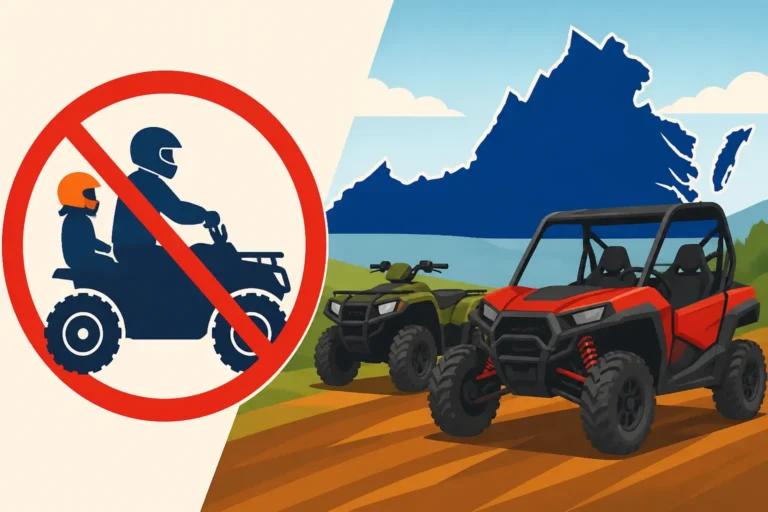
Virginia, like many states, generally restricts the operation of All-Terrain Vehicles (ATVs) and Utility Terrain Vehicles (UTVs) on public highways and roads. This isn't just a suggestion; it's enshrined in state law, specifically Virginia Code § 46.2-915.1. Many riders, especially those new to the sport or new to the state, often find this rule a bit of a bummer, thinking it unfairly limits their access. However, understanding the core reason behind this ban is crucial before diving into the exceptions. The state prioritizes public road safety, and ATVs and UTVs are simply not designed with the same safety features as conventional street-legal vehicles. They lack standard safety equipment like turn signals, brake lights that meet highway standards, and often have tires not suited for asphalt.
Think about it: an ATV is designed for gripping loose dirt, rocks, and mud. Those knobby tires, while excellent off-road, can be unstable and wear quickly on pavement, affecting handling and braking performance. This fundamental design difference is why [Virginia Bans ATVs on Public Highways]. It's not about prohibiting fun, but about preventing accidents involving vehicles not built for the speeds, traffic, and surfaces of public roads.
The Rationale Behind the Ban
The primary reason Virginia and most other states ban ATVs from public roads stems from a clear difference in vehicle design and intended use. Street-legal vehicles are engineered to meet specific federal motor vehicle safety standards (FMVSS) that cover everything from lighting and braking to emissions and crashworthiness. ATVs and UTVs, on the other hand, are classified as off-road vehicles. They are designed for agility, traction on uneven surfaces, and lower speeds, not for the rigors of highway travel.
For example, most ATVs lack proper mirrors for monitoring traffic, their suspension systems are often tuned for absorbing impacts on rough terrain rather than stable handling on smooth pavement, and their lights might not be bright enough or positioned correctly to be seen effectively by other motorists, especially at night. Furthermore, the exposed nature of most ATVs offers minimal protection to the rider in the event of a collision with a car or truck. It’s a matter of incompatible design for a high-speed, high-traffic environment. The state aims to protect both ATV riders and other motorists from potentially dangerous encounters on roads where ATVs are simply out of their element.
What "Public Highway" Really Means
When the Virginia Code mentions "public highways," it's not just talking about busy interstates. It encompasses a much broader range of publicly maintained roads. This includes everything from bustling multi-lane thoroughfares to quiet two-lane state routes, county roads, and even some paved back roads that might feel very remote. The key is "publicly maintained." If your local county or the Virginia Department of Transportation (VDOT) is responsible for its upkeep, it’s generally considered a public highway for the purposes of this law. This can be a point of confusion for riders who think a quiet gravel county road might be fair game. However, unless specific local ordinances allow it (which are very rare outside of a couple of specific coalfield counties), these are typically off-limits.
It's vital to recognize that the definition doesn't discriminate based on traffic volume or your personal perception of how "safe" a particular road feels. A paved rural road with hardly any cars is still a public highway under the law. Understanding this broad definition is the first step toward staying compliant and avoiding penalties. Don't assume that just because a road looks like a forgotten track, it means you can legally operate your off-road vehicle on it. Always err on the side of caution and assume any road maintained by the public is off-limits unless you know for certain it falls under a specific, rare exception.
The "Most Direct Route" Exception for Highway Crossings
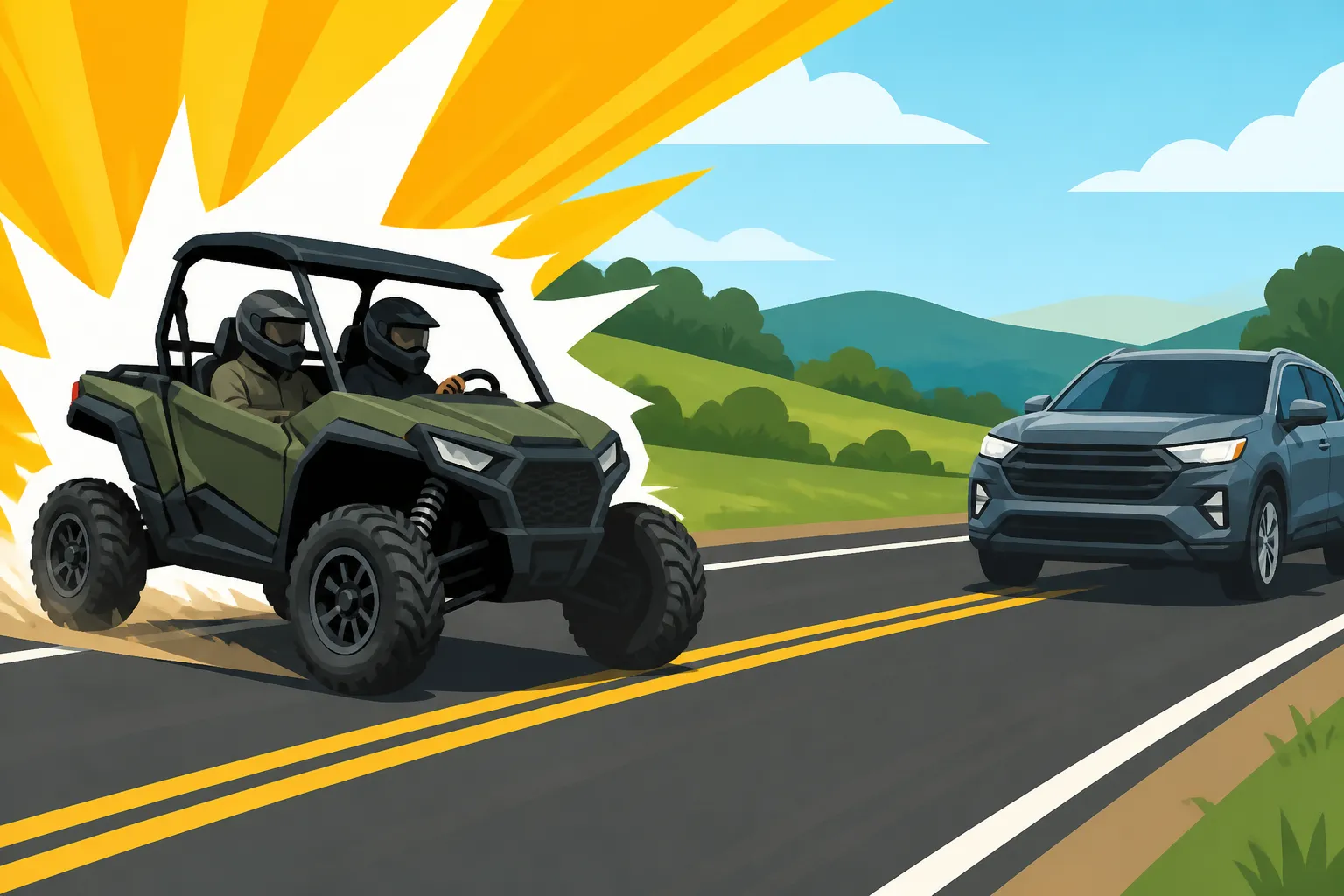
Now, for the critical exception that many riders need! While the general ban on ATVs on public highways is firm, Virginia law does provide a very specific, limited allowance for crossing a public highway. This is laid out in Virginia Code § 46.2-915.1, which states that ATVs may "cross a public highway other than an interstate highway, dual highway, or limited access highway by the most direct route after coming to a complete stop and yielding to all traffic." This is a lifeline for riders who need to transition from one private property to another, or from private land to a designated trail system, where a public road acts as a barrier. Without this provision, many riders would find their access severely curtailed.
It's important to stress that this is a crossing provision, not a riding provision. You cannot ride down the shoulder, cruise along for a mile, or use the highway as a shortcut between two non-contiguous sections of trail. The intent is strictly to allow a brief, direct traversal to continue your off-road journey. Misinterpreting this can lead to citations, so understanding the nuances of "most direct route" and the associated conditions is absolutely vital for any Virginia ATV or UTV owner.
Defining "Most Direct Route"
The phrase "most direct route" is critical here, and it’s often where riders get into trouble if they stretch its meaning. It essentially means the shortest, most perpendicular path across the highway. Imagine drawing a straight line from where you enter the pavement on one side to where you exit on the other. That's your "most direct route." You should not be riding parallel to the highway for any appreciable distance. This means no turning onto the highway to "find a better crossing spot" a hundred feet down the road, and certainly no traveling on the shoulder for any length of time.
For example, if you're on a private farm field and need to get to another field across a two-lane state road, you should approach the road, stop, look both ways, and then drive straight across to the opposite side as quickly and safely as possible. You shouldn't turn right, drive 50 yards, and then turn left to cross. That's no longer the "most direct route." The law is designed to minimize the time your ATV or UTV spends on the highway, reducing the potential for conflict with faster-moving, highway-designed vehicles. This also implies you should be crossing at a point where visibility is good, not necessarily where it's "convenient" to avoid a mud puddle. Sometimes, the safest direct route might require you to be patient and wait for a clear opening in traffic.
Conditions for a Legal Crossing
Beyond just taking the "most direct route," there are several other non-negotiable conditions you must meet for a legal highway crossing in Virginia:
- Complete Stop: Before entering the paved surface of the highway, you must bring your ATV or UTV to a full and complete stop. This isn't a "rolling stop" or a "slow down and look." It's a full stop, just like you would at a stop sign. This ensures you have ample time to assess traffic conditions.
- Yield to All Traffic: Once stopped, you must yield the right-of-way to all traffic on the highway. This means waiting until the road is clear enough for you to cross safely without impeding the flow of vehicles. Don't assume traffic will slow down for you; it's your responsibility to wait for an opportune moment. If a vehicle is approaching and you can't cross without them having to adjust their speed or direction, you haven't yielded.
- No Interstate, Dual Highway, or Limited Access Highway Crossings: This is a huge one. The exception explicitly states you cannot cross "an interstate highway, dual highway, or limited access highway."
- Interstate Highway: These are the big multi-lane highways (like I-81, I-95). They're always off-limits.
- Dual Highway: This refers to divided highways where there's a median or barrier separating opposing directions of traffic. You cannot cross these.
- Limited Access Highway: These are roads where access is restricted to specific entry and exit points, often with on-ramps and off-ramps, much like interstates or some major parkways. They are also prohibited.
This means the crossing exception is generally limited to two-lane roads, undivided state routes, or county roads. Any road with a median, even if it's not an interstate, is a no-go. Riders often overlook this detail, especially with some of the wider state routes. Always check your surroundings and road signage carefully. Being familiar with local road classifications is key to avoiding a serious legal mistake. [Virginia Rules for Crossing a Highway] clearly lays out these critical distinctions.
Practical Considerations and Safety for Crossings
Even when you're legally allowed to cross a public highway with your ATV or UTV, safety should always be your paramount concern. Just because the law permits it doesn't mean it's without risk. The brief moments your machine spends on a paved road, especially one with higher speed limits, are the most dangerous part of your ride. Other drivers simply aren't expecting an ATV to pop out onto the road, and their reaction time might be compromised. This is where proactive safety measures and smart riding choices come into play, regardless of the law. You want to make yourself as visible as possible and execute the crossing with confidence and caution.
It’s about more than just following the letter of the law; it's about making sure you and your machine return safely to the dirt. Think about the conditions: Is it raining? Is it foggy? Is it dusk or dawn? All these factors can significantly impact visibility and your ability to cross safely. Preparing your machine and yourself for these brief road encounters can make all the difference.
Visibility and Preparation
Maximizing your visibility is perhaps the single most important thing you can do when preparing to cross a public highway. Off-road machines aren't typically known for their highway-bright lights or their reflective qualities. This is where a little preparation goes a long way.
- Lighting: Ensure your headlights and taillights are clean and fully functional. If you plan to ride during dawn, dusk, or in low-light conditions, consider aftermarket LED light bars or auxiliary lights. While not legally required for a crossing, enhanced lighting can significantly increase your visibility to oncoming traffic. Products from brands like SuperATV often include light kits or accessory options that can boost your visibility.
- Reflective Gear: Wear bright, high-visibility clothing, especially a reflective vest, anytime you anticipate needing to cross a road. This simple addition can make you stand out from a distance. You can also add reflective tape to your ATV itself.
- Flags: A brightly colored, whip-style safety flag mounted on your ATV can also help draw attention to your presence, especially if you're approaching from an area with tall grass or bushes.
- Machine Maintenance: Check your brakes before crossing. Ensure they are in perfect working order. You need to be able to stop quickly if an unexpected hazard arises or if traffic changes course. Your tires should also be properly inflated, as under-inflated tires can affect stability on pavement.
- Situational Awareness: Before you even approach the highway, scout the crossing point if possible. Look for blind spots, dips in the road, or anything that might obscure your view or make it harder for drivers to see you. Choose a crossing point with the best possible visibility for both yourself and other drivers.
Legal vs. Smart
There's a significant difference between what is legally permissible and what is smart or safe. While Virginia law allows for direct highway crossings under specific conditions, exercising good judgment is crucial. Just because you can cross doesn't mean you should in every situation.
Consider these scenarios:
- Heavy Traffic: If the highway has continuous, fast-moving traffic, even a legal "most direct route" crossing becomes incredibly risky. It might be legal to wait for a gap, but waiting for an unreasonably long time or attempting to dart across during a small break is not smart. In such cases, it might be safer to find an alternative route that avoids the highway altogether, or even to load your ATV onto a trailer and transport it across.
- Poor Visibility: Fog, heavy rain, snow, or even the glare of a rising or setting sun can drastically reduce visibility. Attempting a highway crossing in these conditions, even if it's the "most direct route," dramatically increases the risk of an accident. It's far smarter to postpone your ride or find a different path.
- Blind Curves/Hills: Never attempt a crossing immediately after a blind curve or over the crest of a hill where you cannot see oncoming traffic well in advance, and they cannot see you. These are inherently dangerous spots, and choosing to cross here, even if it's the most direct geographical point, is poor judgment. You might need to adjust your approach slightly to gain better visibility, even if it adds a few feet to your travel, as long as the spirit of "most direct" is maintained.
- Passenger Safety: If your UTV or ATV is designed for a passenger and you're carrying one, their safety is also your responsibility. Ensure they are properly seated, buckled (if applicable), and understand the need for caution during the crossing. Many accessories, from sturdy grab handles to full roll cages and seat belt upgrades from companies like SuperATV, can enhance passenger safety, which becomes even more critical during brief road exposures.
Ultimately, your goal is to minimize risk. Be patient, be visible, and if a crossing feels unsafe, trust your instincts. There's no trail worth risking your life or the lives of others over.
Penalties for Improper Crossings and Violations
Ignoring Virginia's ATV road laws, especially the specifics of highway crossings, can lead to more than just a stern talking-to from law enforcement. The state takes these regulations seriously, and violations carry real consequences that can quickly sour a fun day of riding. It's not just about a ticket; it can involve significant fines, court costs, and even the impoundment of your machine. Understanding these potential penalties is a strong motivator for every rider to learn and adhere to the rules, ensuring your adventures stay on the right side of the law.
The law regarding ATVs on public highways (Virginia Code § 46.2-915.1) is specific, and officers are generally well-versed in its provisions, especially in areas frequented by off-road enthusiasts. Don't assume that because you're "just going a little way" or "didn't see anyone," you'll be immune from enforcement. An officer might be waiting just around that blind curve, or a concerned citizen might have reported your activity.
What Happens If You Get Caught
If a law enforcement officer observes you operating your ATV or UTV on a public highway in violation of the "most direct route" crossing rules, or if you're caught on a prohibited road like an interstate, you could face a civil penalty. Virginia's law specifies that any person who violates the provisions of § 46.2-915.1 is subject to a civil penalty of not more than $500. This is a significant sum for what might seem like a minor infraction.
Here's a breakdown of what that could entail:
- Civil Penalty: As mentioned, up to $500. This isn't a criminal charge, so it generally won't go on your criminal record, but it's still a substantial financial hit. This [Virginia's Civil Penalty for Illegal Riding] is designed to deter violations and underscore the seriousness of the rules.
- Court Costs: In addition to the civil penalty, you'll likely be responsible for court costs, which can add another layer of expense. Even if you don't fight the ticket, these fees will apply.
- Impoundment: In some cases, particularly for egregious violations or repeat offenses, your ATV or UTV could be impounded by the authorities. If this happens, you'll be on the hook for towing fees, storage fees, and potentially administrative release fees, all of which can quickly add up and often exceed the initial fine itself. Getting an impounded machine back can be a headache and a costly ordeal. [Cities Can Impound an ATV Ridden on a Sidewalk] outlines similar powers for cities regarding other illegal ATV operations.
- Loss of Riding Privileges: While not directly tied to your driver's license in the same way a traffic ticket for a car might be, repeated violations could lead to issues with accessing public trail systems or future interactions with law enforcement.
It’s a costly lesson to learn, and often one that catches riders by surprise because they mistakenly believe ATV laws are less strict than those for cars. They are different, but no less enforced.
Avoiding Common Mistakes
To steer clear of penalties and keep your riding experiences positive, be proactive and avoid these common mistakes:
- Misinterpreting "Most Direct": Don't try to justify riding along a highway for any distance. "Most direct" means straight across. If you find yourself turning onto the highway and then turning off a short distance later, you've likely violated the spirit and letter of the law.
- Ignoring Prohibited Highways: Double-check that you're not attempting to cross an interstate, dual highway, or limited-access highway. These are absolute no-go zones. If you're unsure if a particular road is a dual highway (one with a median), assume it is and find an alternative.
- Failing to Stop and Yield: Always come to a complete stop and ensure the road is absolutely clear before proceeding. Rushing a crossing or performing a "California roll" is a quick way to attract an officer's attention and risk a collision.
- Lack of Visibility: Riding at dusk or in adverse weather without proper lighting and reflective gear is not only dangerous but can also be seen as an additional factor if an officer stops you. While not a direct violation of the crossing rule itself, it speaks to negligence. Consider enhancing your machine with additional lighting or mirrors; SuperATV offers many such accessories that can make a huge difference in safety and visibility.
- Assuming Local Variations: While some very specific counties (like Buchanan and Tazewell) have limited [Virginia Buchanan and Tazewell County Road Access] for ATVs on certain named routes, these are highly specific exceptions. Do not assume your local county has similar allowances. The "most direct route" crossing rule is statewide, but general road riding is not. Always verify local ordinances if you think there might be an exception in your area, and recognize that these are exceedingly rare for general public roads.
Staying informed about [Virginia ATV Road Rules Under 46.2-915.1] and exercising caution will not only keep your wallet heavier but, more importantly, keep you safe on your off-road adventures. The goal is to enjoy your machine responsibly, and that includes respecting the boundaries set by state law.
| Condition | Requirement | Notes |
|---|---|---|
| Highway Type | Not an Interstate, Dual, or Limited Access Highway | Applies only to undivided, non-interstate public roads. |
| Route | Most Direct Route | Shortest, most perpendicular path across. No parallel travel. |
| Stop | Complete Stop Before Crossing | Must come to a full halt before entering the paved surface. |
| Yield | Yield to All Traffic | Wait until traffic is clear enough to cross safely without impeding. |
| Rider/Vehicle | Must meet all other ATV operation requirements (e.g., helmet) | [Virginia Helmet Law Applies to Every Rider]. [Virginia Age Limits by Engine Size] also apply. |
Disclaimer
This article is for general informational purposes only and does not constitute professional advice. Laws, prices and regulations vary by location and change over time. Consult a qualified professional for guidance on your specific situation.