Virginia Rules for Riding in Roanoke
It's a common daydream, isn't it? You're sitting in Roanoke, gazing out your window, maybe admiring your ATV or side-by-side, and you wonder, "Can I just hop on and ride down the street to grab some milk, or cruise through my neighborhood?" The allure of using your off-road machine for quick errands or a casual spin around the block is strong, especially when it's so convenient. But the reality of Virginia's laws for ATVs and UTVs on public roads can be a real buzzkill, and navigating what's permissible in a city like Roanoke versus what's not can be confusing. This guide is here to clear up that confusion, lay out the facts about riding your ATV or UTV within Roanoke, and help you understand where you can legally enjoy your machine.
Understanding Virginia's Core ATV Road Rules
Before we even dive into specific Roanoke details, it's absolutely crucial to understand the foundational state laws that govern ATVs and UTVs in Virginia. These laws apply across the entire Commonwealth, from the smallest rural roads to the bustling streets of a city like Roanoke. Many riders, especially those new to the state or new to the sport, sometimes mistakenly believe that local ordinances might offer special exceptions, but when it comes to riding on public roads, the state's stance is pretty clear-cut.
The Statewide Ban on Public Highway Use
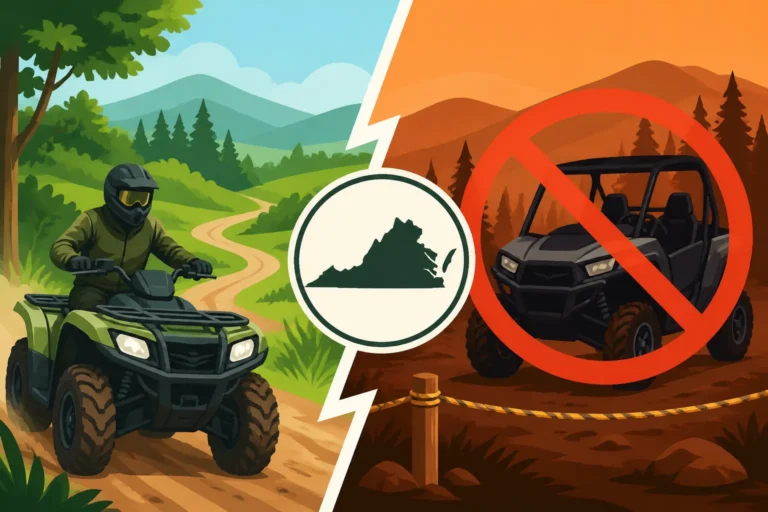
Here's the tough truth: Virginia law explicitly bans the operation of ATVs and UTVs on public highways. This isn't just a suggestion; it's written directly into the code. When the law refers to "public highways," it's not just talking about interstates and major thoroughfares. This term broadly encompasses almost any road or street maintained by the state or a locality, including the paved and unpaved roads within Roanoke's city limits. So, whether it's a quiet residential street, a busy commercial avenue, or even a public alley, the general rule is "no ATVs or UTVs."
This rule exists for a few good reasons, primarily safety. ATVs and UTVs are designed for off-road terrain, with features like low-pressure tires, suspension systems, and gearing that aren't meant for sustained speeds or predictable handling on paved surfaces. They often lack essential safety equipment required for street-legal vehicles, such as turn signals, rearview mirrors, and proper lighting, making them incredibly dangerous in traffic. For many riders, this can be frustrating because it feels like a blanket prohibition that doesn't consider how carefully they might ride. However, the law is designed to protect everyone on the road. For a deeper dive into this, you can check out [Virginia Bans ATVs on Public Highways].
Limited Exceptions to the Statewide Rule
Now, like many laws, there are a few very specific, narrow exceptions to the public highway ban, but they are generally not applicable to recreational riding in a city setting. These exceptions typically involve:
- Crossing a Highway: You are generally allowed to cross a public highway by the most direct route possible, provided the crossing is made safely and you yield to all traffic. This is meant for getting from one private property to another, not for traveling along the road. Think of it as crossing a street to get to a field on the other side, not driving down the street.
- Agricultural, Hunting, or Emergency Use: There are provisions for using ATVs and UTVs for agricultural purposes on one's own land or land where one has permission, hunting activities, or by emergency personnel like fire and rescue squads during an official call. For example, a farmer in a rural area might briefly use a side-by-side on a public road to move between fields that are separated by that road, but this does not extend to general recreational use.
- Specific Designated Coalfield Roads: Very specific sections of public roads in Buchanan and Tazewell counties have been designated by their respective Boards of Supervisors for ATV and UTV use, often to connect trail systems. This is a highly localized exception and absolutely does not apply to Roanoke or any other urban or suburban area outside those specific counties.
It's critical not to misinterpret these exceptions as a loophole for general road use. They are extremely limited and come with their own set of conditions and restrictions. For the average rider hoping to take their quad for a spin in Roanoke, these exceptions offer no relief.
Roanoke-Specific Considerations for ATV/UTV Use
When you live in a city like Roanoke, it's natural to wonder if there are unique local rules that might differ from state law. While some cities might have ordinances regarding things like noise or parking, when it comes to the fundamental question of riding ATVs and UTVs on public streets, Roanoke generally aligns with the overarching state regulations.
City Ordinances and the State Law
Roanoke, like most Virginia localities, does not have specific ordinances that would override the state's ban on ATV and UTV use on public highways. In fact, city ordinances often reinforce these state laws, making it clear that such machines are not to be operated on city streets, sidewalks, or other public property. This means that if you're caught riding your ATV or UTV on a road in downtown Roanoke, a residential neighborhood like Grandin Village, or even a side street in Northwest Roanoke, you're likely to face the same penalties as someone caught doing so anywhere else in the Commonwealth.
This can be a frustrating reality for city dwellers who might have ample space to store their machines but no immediate, legal place to ride them. The noise, dust, and potential for accidents involving traditional vehicles are all reasons why cities maintain these restrictions. If you're unsure about a specific piece of public property, always assume the state law applies, and if you have questions, contact the Roanoke City Police Department for clarification, but expect the answer to be consistent with the statewide ban.
Private Property Within City Limits
Riding on private property within Roanoke city limits is a different story, but it comes with its own set of challenges and considerations. If you own private land, or have explicit, written permission from a landowner, you might be able to ride your ATV or UTV there. However, this is rarely straightforward within a city.
- Space Limitations: Most private properties within Roanoke, whether residential or commercial, simply aren't large enough for safe, sustained ATV or UTV riding. You're likely to quickly run out of room, and repetitive riding in a small area can cause significant noise and environmental disruption.
- Noise Ordinances: Even on private property, cities like Roanoke often have noise ordinances that can lead to citations if your machine is excessively loud. Off-road machines can be quite noisy, especially when being operated in close proximity to homes or businesses.
- Trespassing: Without explicit permission, riding on any private land is trespassing, which can lead to legal trouble. This includes vacant lots, construction sites, or uncultivated areas that might look abandoned. Always obtain [Written Consent From a Landowner] before riding on private property, and make sure that permission is clear and current.
- Insurance: Even if you're riding legally on private land, ensure you have proper insurance coverage. Accidents can happen anywhere, and you want to be protected from liability. You might not need to title your machine in Virginia if it's strictly for off-road use on private land, but check out [Virginia Titles Are Optional on Used Machines] for more info on that, especially if you're considering eventual resale.
The bottom line is that while private property riding might technically be allowed in Roanoke with permission, the practicalities often make it unfeasible or undesirable due to space constraints and potential neighbor complaints.
Where Virginia Riders Can Legally Ride Near Roanoke
Since riding your ATV or UTV on public roads or most private properties within Roanoke city limits is largely a no-go, the next logical question is: where can you legally and safely enjoy your machine? Thankfully, Virginia, particularly the western part of the state, offers some fantastic dedicated off-road trail systems that are perfect for ATVs and UTVs. These are your best bet for legitimate, enjoyable riding experiences.
Designated Off-Road Trail Systems
Virginia is home to several well-maintained and extensive off-road trail systems, primarily in the southwestern part of the state. While none are directly within Roanoke, many are within a reasonable drive, making them excellent destinations for a day trip or a weekend adventure.
- Spearhead Trails: This is one of Virginia's premier off-road trail networks, and it's managed by the Spearhead Trail Authority. Located in the heart of Virginia's coalfields, these trails offer hundreds of miles of riding across multiple systems, including Coal Canyon, Mountain View, Jawbone, Original Pocahontas, Ridgeview, and Stone Mountain. These systems cater to various skill levels, from beginner-friendly paths to challenging black diamond trails. You'll need a permit to ride here, and each system offers unique views and experiences. For example, [Coal Canyon Trail System in Virginia] offers 127 miles out of Grundy, while [Mountain View Trail System in Virginia] boasts 118 miles. You can find more general information about this extensive network in [Spearhead Trails in Virginia Explained].
- Peters Mill Run OHV Trail: Located in the George Washington and Jefferson National Forests near Edinburg, this trail system offers a different kind of riding experience. It's a bit of a drive north from Roanoke, but it's a popular destination, particularly for those looking for forest riding. Peters Mill Run connects with Taskers Gap, offering a combined network. There are width restrictions on parts of Taskers Gap, so if you have a wider UTV, be sure to check the rules. Permits are required for riding in the National Forest, and there are specific season closures to be aware of. You can learn more about this system in [Peters Mill Run OHV Trails in Virginia].
These trail systems are designed for off-road machines, offering proper signage, trail maintenance, and often amenities like parking areas and restroom facilities. They provide a safe and legal environment to push your machine's limits without worrying about breaking the law or bothering residents.
Planning Your Trip to a Trail System
Before you load up your machine and head out from Roanoke to one of these trail systems, a little planning goes a long way:
- Permits: Always check the specific permit requirements for the trail system you plan to visit. Spearhead Trails, for instance, offers annual and multi-day permits, and you can often buy them online. National Forest trails also require permits, which can sometimes be purchased at ranger stations or kiosks. Don't show up without one, as trail rangers frequently check. For details on Spearhead, see [Virginia Spearhead Trail Permits], and for National Forest permits, [Virginia National Forest OHV Permits].
- Safety Gear: Regardless of where you ride, safety gear is non-negotiable. This includes helmets for all riders (which is state law, even on private land, as detailed in [Virginia Helmet Law Applies to Every Rider]), eye protection, gloves, long pants, and sturdy boots. Some trail systems might have additional requirements, like working seatbelts or roll cages for UTVs.
- Machine Readiness: Ensure your ATV or UTV is in good working order. Check tires, brakes, fluid levels, and make sure you have a working spark arrester (often a requirement on public lands like National Forests). It's also wise to carry a basic toolkit, a first aid kit, and plenty of water. You might also consider accessories from brands like SuperATV that can enhance your trail experience, such as durable skid plates for rocky terrain or a winch for unexpected situations.
- Rules and Regulations: Each trail system will have its own specific rules regarding speed limits, passenger limits, riding hours, and environmental protection. Familiarize yourself with these before you go to ensure a smooth and enjoyable trip.
Embracing these dedicated trail systems means you can ride responsibly, legally, and to your heart's content, knowing you're in an environment designed for off-road enthusiasts.
The Real-World Consequences of Riding Illegally in Roanoke
Understanding where you can't ride is just as important as knowing where you can. Ignoring the laws regarding ATV and UTV use on public roads in Roanoke isn't just a minor infraction; it can lead to significant legal, financial, and personal consequences that can quickly outweigh any momentary thrill.
Legal Penalties and Fines
Virginia takes the illegal operation of ATVs and UTVs on public highways seriously. If a law enforcement officer in Roanoke catches you riding illegally on a city street or public property, you could face:
- Civil Penalties: Virginia law specifies a civil penalty of up to $500 for operating an ATV or UTV on a public highway. This is a significant fine that can quickly add up, especially if you're issued multiple citations. You can read more about this in [Virginia's Civil Penalty for Illegal Riding].
- Impoundment: The city of Roanoke, like other localities, has the power to impound your machine if it's found being operated illegally. Getting your ATV or UTV back from impound can be a costly and time-consuming process, involving impound fees, storage fees, and administrative hurdles, all on top of any fines.
- Traffic Violations: Depending on the specific circumstances, you might also be cited for other traffic infractions, such as reckless driving, creating a public nuisance, or even lacking appropriate lighting or safety equipment.
- Loss of Driving Privileges: While ATVs don't require a driver's license to operate, repeated or egregious violations could potentially impact your standard driver's license if the court deems your actions sufficiently reckless or dangerous.
It's tempting to think you might "get away with it," but law enforcement in cities like Roanoke are generally well aware of the state's ATV laws and are equipped to enforce them. The risk of being caught and facing these penalties is simply not worth it.
Safety Risks and Liability
Beyond the legal ramifications, operating an ATV or UTV on city streets carries immense safety risks for you, your passengers, and other members of the public.
- Accident Risk: As mentioned earlier, ATVs and UTVs are not designed for paved roads. Their handling characteristics, braking capabilities, and visibility are vastly different from street-legal vehicles. The risk of collision with cars, bicycles, or pedestrians is extremely high, especially in an urban environment with traffic, blind spots, and unexpected movements.
- Serious Injury: Accidents involving ATVs and UTVs, particularly on hard surfaces, often result in serious injuries, even at low speeds. There's little protection for riders in a collision, and the weight of the machine can cause significant trauma.
- Personal Liability: If you're involved in an accident while illegally operating your ATV or UTV on a public road in Roanoke, you could be held personally liable for any damages or injuries. Your standard ATV insurance policy (if you even have one, as [Virginia Requires No ATV Insurance] for off-road use) might not cover incidents that occur while operating the machine illegally on a public road. This could lead to massive financial burdens, including medical bills, property damage, and legal fees. Imagine being responsible for the medical costs of someone you hit, or for totaling someone's car – these are very real possibilities.
In summary, the temporary convenience or thrill of riding your ATV or UTV on a Roanoke street pales in comparison to the potential for hefty fines, impoundment of your machine, and the devastating consequences of an accident. Always prioritize safety and legality by transporting your machine to designated off-road riding areas where it can be enjoyed as intended. For trail enhancements that support safe and legal off-road fun, many riders look to reputable brands like SuperATV for their accessories, ensuring their machines are equipped for the challenges of the trail, not the pavement.
| Feature | Public Roads in Roanoke (or VA) | Private Property (with permission) | Designated Off-Road Trails (e.g., Spearhead) |
|---|---|---|---|
| Legal to Ride | No (with few very limited exceptions) | Yes (with explicit, written permission) | Yes (with required permits) |
| Permit Required | N/A | No (but property owner consent crucial) | Yes |
| Helmet Required | Yes (statewide law) | Yes (statewide law) | Yes (often enforced by park rules) |
| Insurance | Not required by state law, but highly recommended | Not required by state law, but highly recommended | Not required by state law, but highly recommended |
| Safety Risks | Very High (traffic, hard surfaces) | Moderate (terrain, obstacles) | Moderate (terrain, other riders) |
| Legal Penalties | Up to $500 civil penalty, impoundment, other traffic violations | Trespassing charges, noise ordinance violations | Trail rule violations (fines, permit revocation) |
| Best Use Case | None (use a truck and trailer instead) | Limited for most city properties | Recreational riding, challenging terrain |
Disclaimer
This article is for general informational purposes only and does not constitute professional advice. Laws, prices and regulations vary by location and change over time. Consult a qualified professional for guidance on your specific situation.