Virginia Rules for Riding a County Road
It's a common dream for many of us ATV and UTV enthusiasts in Virginia: heading out your driveway, turning onto a peaceful county road, and cruising right to your favorite trail system or hunting spot. There's a real temptation, especially when you see other riders or think your local road is quiet enough, to believe it's perfectly fine. But the truth is, navigating Virginia's laws about riding your ATV or side-by-side on county roads can feel like slogging through deep mud – confusing, frustrating, and often leading to unexpected pitfalls. This guide is here to clear the air, to give you a realistic look at what the law actually says, and to help you understand the very specific circumstances under which you might – and we stress might – be able to legally ride on a Virginia county road.
The Stark Reality: Virginia's General Ban on Public Roads
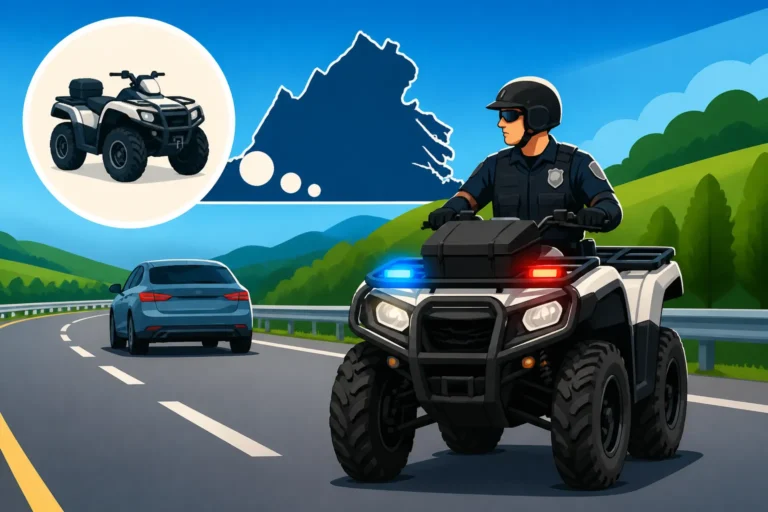
Let's cut right to the chase, because this is where many riders get into trouble. In the Commonwealth of Virginia, the general rule is crystal clear and, frankly, quite restrictive: ATVs and UTVs are not permitted on public highways, which includes almost all county roads. I know, it's a bummer, especially when your rig is perfectly capable and you just want to get from Point A to Point B without having to trailer it everywhere. But this isn't some obscure, rarely enforced rule; it's fundamental to [Virginia Bans ATVs on Public Highways].
Why the Strict Prohibition?
The reasoning behind this strict stance often boils down to safety and vehicle design. ATVs and UTVs are primarily designed for off-road use. They handle differently than street-legal vehicles; they lack many safety features mandated for road-going cars and trucks, like turn signals, specific lighting requirements, and even just the basic stability needed for paved surfaces at higher speeds. The state legislature views these machines as inherently unsuitable for the hazards of shared public roadways, regardless of how rural or quiet a particular county road might seem. It's not about how you drive your machine, but rather the general risk ATVs pose when interacting with cars, trucks, and even pedestrians on roads not designed for them. This means that even if you're the safest rider in the world, the law doesn't make an exception.
Understanding "Public Highways" in Virginia Law
When Virginia law refers to "public highways," it's not just talking about busy interstates or four-lane state routes. This definition is broad and encompasses virtually any road maintained by the state or a locality that is open to public travel. Yes, that includes the quiet, gravel lane that runs past your farm, the scenic backroads winding through the foothills, and the paved county roads connecting small communities. If it's a road you could drive a car on, it's generally considered a public highway for the purposes of ATV restrictions. This distinction is crucial because many riders mistakenly believe that "off-road" simply means not on an interstate, failing to realize the vast majority of local roads fall under this umbrella. Unfortunately, Virginia Rules for Riding a County Road are very clear on this point, and ignorance of the law is rarely an excuse.
Limited Exceptions: Where You Might Be Able to Ride
While the general rule is a firm "no," Virginia law does include a few very specific, highly conditional exceptions where an ATV or UTV might legally touch a county road. These exceptions are often misunderstood or stretched beyond their legal limits, so it's vital to grasp the precise details. These aren't blanket permissions; they are narrow pathways designed for specific, limited purposes.
Authorized Crossings and Short Distances
One of the most common exceptions people point to involves crossing a highway or traveling a short distance. Virginia law permits an ATV or UTV to cross a public highway by the most direct route, and only where the operation can be done safely. This isn't permission to ride down the road for a mile to get to your friend's house. It's about bridging two pieces of private land or two trail sections that are separated by a road. Even then, you must exercise extreme caution. You're expected to yield to all traffic, enter the road safely, and exit promptly. Think of it as merely passing over, not traveling on. There’s also a rarely used provision that allows for a maximum of one mile of travel on a road to connect two trail systems, but this is contingent on very specific local ordinance approval and signage. These kinds of connectors are incredibly rare, mostly found in the designated coalfield counties, which we'll get into next. [Virginia Rules for Crossing a Highway] covers the specifics.
Designated Roads in Buchanan and Tazewell Counties
There are special provisions in Virginia law for ATVs and UTVs in two specific counties: Buchanan and Tazewell. These counties, nestled in Virginia's coalfields, have a unique allowance to designate certain secondary highways (which are typically county roads) for ATV and UTV use. This is a big deal for local riders and those visiting the Spearhead Trails, as it allows for direct access to trailheads and even connectivity between trail systems. However, even within these counties, it's not a free-for-all. Roads must be specifically designated by the county's board of supervisors, and they are usually clearly marked with signs indicating ATV access. There are also strict conditions: a speed limit of 25 mph, daylight-only operation, and adherence to specific routes. You'll often see machines equipped with SuperATV aftermarket accessories like mirrors or specific lighting when navigating these designated routes, even if not strictly required, to enhance safety. Remember, these rules apply ONLY to the specifically designated roads in THESE TWO COUNTIES. Anywhere else, the general ban holds. For more on this, check out [Virginia Buchanan and Tazewell County Road Access] and [Virginia's Named Route in Buchanan County].
Agricultural and Emergency Exceptions
Finally, there are narrow exceptions for legitimate agricultural purposes or emergency services. Farmers may operate ATVs or UTVs on public highways to the extent necessary to perform farm duties, but again, this is highly limited and tied directly to the farming operation. This isn't permission to take a joyride down the road; it's for moving between fields or accessing farm equipment. Similarly, authorized emergency responders (firefighters, rescue squads, law enforcement) may use ATVs on public roads when responding to emergencies. These exceptions are not for the general public and certainly not for recreational riding. Your hunting trip or a casual ride through the woods does not qualify as an agricultural or emergency purpose. [Virginia Farming and Household Exceptions] clarifies these specific use cases.
Navigating Local Ordinances and Landowner Permissions
Beyond the state-level exceptions, local rules and private land access often intersect with county roads, creating further layers of complexity. It's not enough to know state law; you also need to understand what's happening on the ground where you ride.
The Power of Local Boards and Supervisors
While the general state law restricts ATVs on county roads, the unique allowance for Buchanan and Tazewell counties highlights the role local governing bodies can play. A board of supervisors in any county has the authority to request special legislation from the General Assembly to open specific roads, but this is an incredibly rare occurrence outside the coalfields. Most counties in Virginia simply don't have the legal framework or the desire to open their roads to ATVs. If you're hoping to ride a particular county road, your first step should always be to check with the local county sheriff's office or the county's administration office. They will have the most up-to-date information on any specific ordinances or designations in their area. Don't rely on hearsay or what you see other people doing; get the official word.
Private Land Access and Road Crossings
A huge part of responsible ATV riding in Virginia involves securing landowner permission. Even if you're on your own private property, if that property is bisected by a county road, you still fall under the state's rules for crossing that road. You can't just treat the road as an extension of your private land. This is where [Virginia Written Landowner Consent] becomes critical. If you have permission to ride on adjacent private properties, and a county road separates them, you can typically make that direct, safe crossing. However, this is not an invitation to extend your ride onto the road itself. Always ensure your crossing is quick, direct, and that you're yielding to all traffic. Many riders invest in durable SuperATV UTV accessories like heavy-duty tires that are great for both off-road trails and handling the brief, necessary road crossings without issue.
The Importance of Due Diligence
Riding on a county road without explicit legal permission can lead to serious consequences. Before you ever put a wheel on a county road, ask these questions:
- Is this road specifically designated for ATV use by a local ordinance? (Highly unlikely outside Buchanan/Tazewell).
- Am I only crossing the road by the most direct, safest route to get from one piece of private land to another?
- Does my operation fall under a legitimate agricultural or emergency exception?
If the answer to all of these is "no," then you should assume you cannot legally ride your ATV or UTV on that county road. It's always better to err on the side of caution. Relying on the assumption that "everyone else does it" is a recipe for a ticket, or worse, an accident.
Consequences of Breaking the Rules
Ignoring Virginia's laws regarding ATVs on public roads isn't just about a slap on the wrist. The penalties can be significant, both financially and in terms of losing your riding privileges. Understanding these consequences might just be the push you need to always trailer your machine when public roads are involved.
Fines, Court Costs, and Civil Penalties
Operating an ATV or UTV illegally on a public highway in Virginia is a serious offense. It's often classified as a traffic infraction, but unlike some minor parking tickets, the fines can be substantial. Virginia law allows for a civil penalty of up to $500 for violations of ATV operation laws. This isn't just a small fee; it's a hefty fine that can quickly add up, especially once court costs are factored in. Imagine getting a $500 ticket for a quick hop down the road to check your mail – it just isn't worth it. This penalty is designed to deter illegal riding and encourage compliance with off-road specific rules. For a detailed look at the financial impact, consider [Virginia Penalties for Illegal Riding].
Machine Impoundment and Towing Fees
Beyond the monetary fines, you run the very real risk of your machine being impounded. If a law enforcement officer catches you illegally operating your ATV or UTV on a county road, they have the authority to tow and impound the vehicle. Getting an impounded machine back is rarely easy or cheap. You'll be on the hook for towing fees, daily storage fees at the impound lot, and possibly administrative release fees from the county or city. These costs can quickly eclipse the initial fine, potentially costing you hundreds, if not thousands, of dollars. Furthermore, if you're far from home, arranging for transport of your impounded machine back to your property can be a logistical nightmare.
Insurance Implications and Liability
Even though [Virginia Requires No ATV Insurance] for off-road use, riding illegally on a public road can have severe insurance implications if you do carry a policy. Most off-road ATV/UTV insurance policies are designed to cover accidents and incidents that occur during legal operation. If you're involved in an accident while illegally riding on a county road, your insurance provider might deny coverage, citing illegal activity. This means you could be personally liable for property damage to other vehicles, medical bills for injured parties, and even legal defense costs. Imagine causing an accident with a car while illegally on a county road – the financial fallout could be devastating. It's a risk that far outweighs any perceived convenience of riding on public roads. It's always smart to check your policy for specific exclusions related to illegal operation.
Navigating Virginia's ATV and UTV laws, especially concerning county roads, can be tough. The key takeaway is this: the default position is "no riding on public roads," with very limited, specific exceptions. Always know the law, understand the precise conditions of any exceptions, and prioritize safety and legality to avoid frustrating and costly consequences.
Disclaimer
This article is for general informational purposes only and does not constitute professional advice. Laws, prices and regulations vary by location and change over time. Consult a qualified professional for guidance on your specific situation.