Virginia Rules for Crossing a Highway
We’ve all been there: you’re out on a fantastic trail, maybe in the beautiful Virginia mountains, and suddenly, you hit a paved road. It’s a moment of truth, isn’t it? That little stretch of asphalt can feel like a massive barrier, splitting your adventure in two. The frustration is real when you’re unsure if you can even touch that pavement, let alone cross it, to connect to the next segment of your ride. This guide will clarify Virginia's specific, often misunderstood, rules for ATV and UTV riders when it comes to encountering and crossing public highways.
The Core Rule: Public Highways Are Generally Off-Limits
Let's start with the hard truth that can be a real buzzkill for many riders: in Virginia, ATVs and UTVs are, with very few and specific exceptions, legally prohibited from operating on public highways. This isn’t just a suggestion; it’s a foundational aspect of Virginia’s off-road vehicle laws. The state code is quite clear on this, drawing a distinct line between off-road recreational use and public road travel.
This rule isn't meant to be arbitrary. It stems from significant safety concerns and the fundamental design differences between ATVs/UTVs and vehicles meant for road use. Your average quad, with its high center of gravity, knobby tires, and lack of standard automotive safety features like crumple zones or turn signals (unless aftermarket ones are added, perhaps from a reputable source like SuperATV, though they still don't change the legal status), is simply not built for the speeds, traffic, and unpredictable environments of public highways. The state is trying to protect both off-road riders and other motorists from potentially dangerous encounters. You can find more on the general prohibition here: [Virginia Bans ATVs on Public Highways].
What "Public Highway" Actually Means
It's crucial to understand what Virginia considers a "public highway." Many riders might think of a "highway" only as a multi-lane interstate or a major state route. However, in Virginia, the definition is much broader. A public highway generally refers to any publicly maintained way that is open to the use of the public for purposes of vehicular travel. This often includes most paved and even many unpaved secondary roads maintained by the Virginia Department of Transportation (VDOT) or local municipalities.
This definition can sometimes be confusing for riders, especially in rural areas where what looks like a simple country road might still fall under the "public highway" umbrella. It’s not about the number of lanes or the speed limit; it’s about public access and maintenance. So, that quiet, tree-lined road connecting two sections of private land or trails? If it's publicly maintained, it's likely considered a highway in the eyes of the law, and your ATV is not allowed to cruise on it. Knowing this distinction is your first step in staying legal and safe.
Why the Ban Exists
The rationale behind banning ATVs and UTVs from public highways is rooted deeply in public safety and the design limitations of these machines. Imagine a fast-moving car encountering an ATV, which might be slower, less visible, and more unpredictable in traffic. The risk of serious accidents skyrockets. ATVs are designed for specific terrains – dirt, mud, rocks, and trails – not asphalt. Their suspension, braking systems, and tires are optimized for off-road conditions, not for maintaining traction and stability at higher road speeds or in tight turns on pavement.
Furthermore, most ATVs and UTVs lack the safety equipment mandated for street-legal vehicles, such as proper lighting, mirrors, turn signals, and often, even basic occupant protection like roll cages (though UTVs typically have them, they're not certified to automotive standards). Mixing these machines with cars, trucks, and motorcycles on public roads creates a hazard for everyone involved. The ban is a preventive measure designed to keep off-road enthusiasts safe and ensure the smooth, safe flow of traffic for all road users. It's about recognizing that a machine built for the woods and fields simply isn't engineered for the freeway.
The Crucial Exception: Crossing by the Most Direct Route
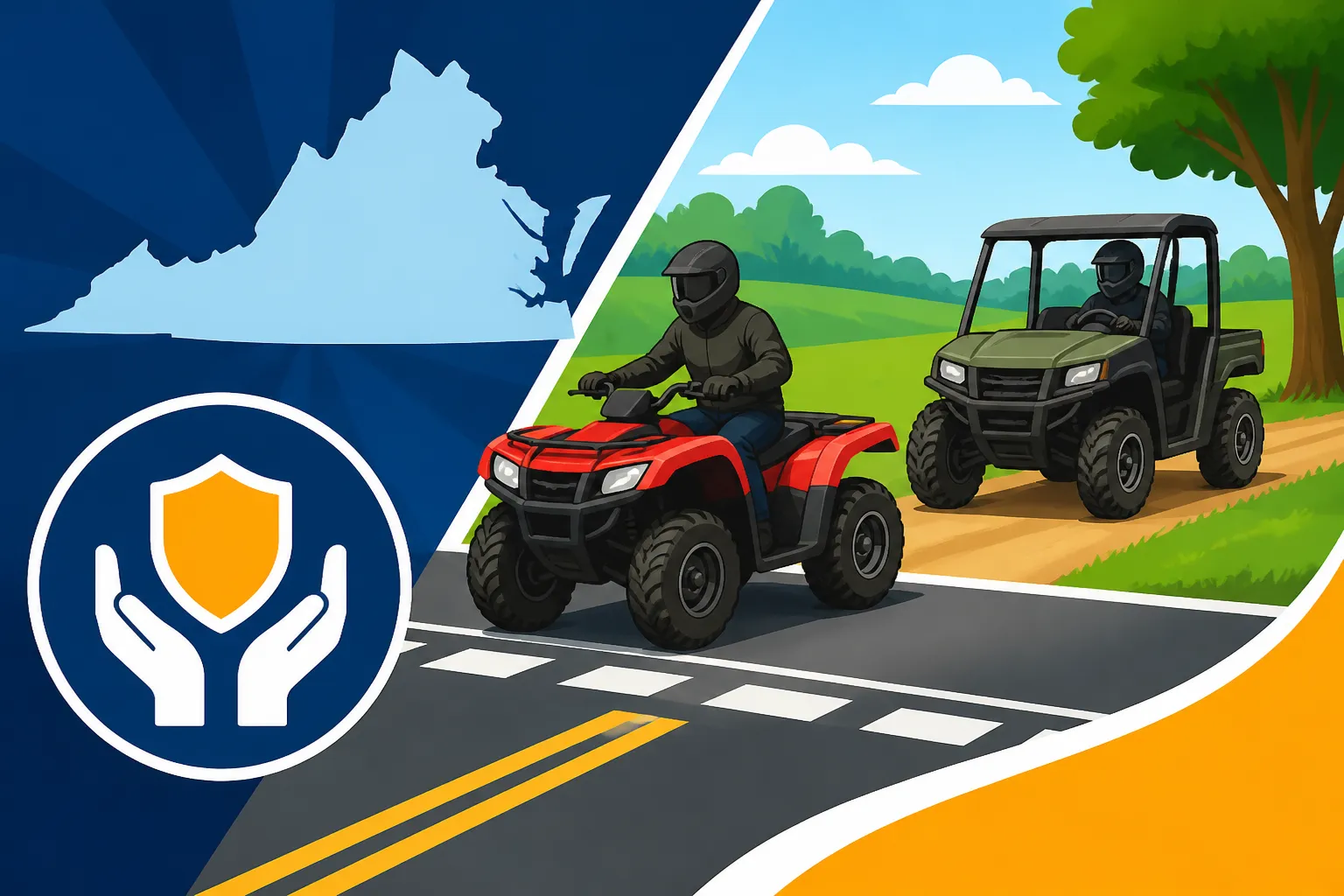
Now, for the glimmer of hope for riders: there is a specific, narrowly defined exception that allows ATVs and UTVs to cross public highways in Virginia. This isn't a loophole for joyriding down the road; it's a practical provision designed to help riders connect legal off-road areas without breaking the law. The key phrase here is "by the most direct route," and understanding its implications is paramount. You can dive deeper into this specific exception here: [Virginia Crossings by the Most Direct Route].
This exception acknowledges the reality of trail systems and private land access, where a public road might be the only physical barrier between two otherwise legal riding areas. Without this provision, riders would often be forced into illegal maneuvers or lengthy detours, undermining the very spirit of off-road recreation. However, it's a privilege, not a right to road access, and it comes with strict conditions that must be adhered to.
How to Make a Legal Crossing
Making a legal highway crossing is a precise maneuver, not an opportunity for casual road travel. Here's how it generally breaks down:
- Identify the Crossing Point: You must cross the highway at approximately a 90-degree angle to its centerline. This means you approach the road, turn to face directly across it, and then proceed straight over. You are not allowed to drive along the highway to find a better spot or to gain momentum.
- Come to a Complete Stop: Before entering the highway, you must stop completely and yield to all oncoming traffic. Treat it like a stop sign at an intersection. Look both ways, multiple times, to ensure the way is absolutely clear.
- Cross Directly and Swiftly: Once clear, proceed across the highway on the most direct path. This means minimizing your time on the paved surface. Accelerate smoothly but safely to get across and onto the legal riding area on the other side.
- No Riding on the Shoulder: You cannot use the shoulder of the road, even briefly, to prepare for a crossing or to merge onto another trail. The "most direct route" implies the shortest possible path across the travel lanes.
- Be Visible: While not explicitly required for a crossing, good visibility is always a wise choice. If your machine is equipped with lights, especially at dawn, dusk, or in inclement weather, use them. Consider adding some reflective tape to your machine or wearing high-visibility gear. Manufacturers like SuperATV offer a range of lighting options that, while not legalizing road travel, can significantly enhance your presence during these brief, critical moments.
Following these steps meticulously is crucial not just for legal compliance but, more importantly, for your safety and the safety of others.
Restrictions on Time and Distance
The "most direct route" language isn't just about the angle of your crossing; it also implicitly places severe restrictions on how long and how far you can travel on a public highway. This is not permission to ride on the highway for any appreciable distance. It is strictly for traversing the paved surface from one side to the other.
Think of it as a momentary interruption in your off-road journey, not a change in your mode of transportation. There are no specific mileage limits mentioned in the code for a "crossing," but the intent is clear: the shortest practical distance necessary to get from one side to the other. If an officer observes you traveling down the highway for any significant stretch, even if you eventually turn off, it's highly likely they will consider it illegal operation, not a "crossing." This means you can't ride a mile down the road to get to a specific connecting trail; you must cross at the immediate point where your trail meets the road. It's a precise rule for a very specific scenario.
Consequences of Illegal Highway Use
Ignoring Virginia's ATV and UTV highway rules can lead to a host of unpleasant consequences, ranging from financial penalties to the complete loss of your machine. It's not just a minor infraction; it can be a costly and inconvenient mistake that puts a serious damper on your riding season. Understanding these repercussions is a strong motivator to always stay on the right side of the law.
The state takes these rules seriously because of the inherent dangers involved when off-road machines mix with traditional road traffic. It's not just about protecting other motorists; it's also about protecting you, the rider, from situations your machine isn't designed for and where you're at a significant disadvantage in a collision.
Fines and Potential Impoundment
The most immediate consequence of illegally operating an ATV or UTV on a Virginia highway is a civil penalty. This isn't a criminal charge, but it certainly isn't cheap. Virginia law allows for a civil penalty of up to $500 for violations of ATV rules. That can be a hefty sum, especially if you're hit with additional fees and court costs. You can learn more about these penalties here: [Virginia's Civil Penalty for Illegal Riding] and [Virginia Riding Illegally Costs Up to $500 in Virginia].
Beyond the fine, there's the very real possibility that your machine could be impounded. If law enforcement deems your ATV or UTV to be illegally operated on a public highway, they have the authority to seize it. Getting an impounded machine back is rarely a simple or inexpensive process. You’ll likely face towing fees, daily storage fees, and potentially other administrative costs on top of any fine. This means a quick, illegal jaunt down a paved road could easily turn into hundreds or even thousands of dollars in expenses, not to mention the hassle of retrieving your machine from an impound lot. It's a stark reminder that the convenience of an illegal shortcut isn't worth the potential financial burden.
Safety Risks and Liability
Even more critical than the legal and financial repercussions are the immense safety risks and potential liability issues that arise from operating an ATV or UTV on a public highway. These machines are simply not designed for the road, and their characteristics make them inherently dangerous in a traffic environment.
Consider the following:
- Speed and Maneuverability: While your ATV might feel fast off-road, it's often much slower than road traffic. This speed differential creates a significant hazard. Furthermore, the handling characteristics, particularly at higher speeds or in emergency braking situations, are vastly different from a car or motorcycle.
- Visibility: ATVs are generally smaller and lower to the ground than cars, making them harder for other drivers to see, especially in blind spots or at dusk/dawn. Even with aftermarket lighting, like those offered by SuperATV, they still don't blend seamlessly into road traffic.
- Tires: Knobby off-road tires, while excellent for traction on dirt and mud, provide poor grip on hard asphalt, especially when wet or during sudden braking. This can lead to skidding and loss of control.
- Lack of Safety Features: As mentioned, ATVs lack critical safety features found in street-legal vehicles. In the event of a collision with a car, the ATV rider is almost always at a severe disadvantage, leading to a much higher risk of serious injury or fatality.
- Legal Liability: If you're involved in an accident while illegally riding your ATV on a public highway, you will almost certainly be found at fault. This opens you up to significant personal liability for damages to other vehicles, property, and, most importantly, for any injuries sustained by others. While [Virginia Requires No ATV Insurance] for off-road use, an accident on a public highway can leave you personally responsible for astronomical costs. This is why many riders still opt for comprehensive coverage, even if not legally required, for peace of mind against unforeseen incidents, even if they're not legally covered for road use.
The safety and liability aspects alone should be compelling reasons to strictly adhere to the highway crossing rules. No shortcut is worth risking your life, your machine, or your financial future.
Special Cases and Local Ordinances (Coalfields)
While the general rule in Virginia is a firm "no" to ATVs on public highways, the state acknowledges the unique circumstances of certain regions, particularly the coalfields of Southwest Virginia. Here, off-road vehicles play a significant role in the local economy, culture, and recreational tourism. Because of this, specific legislative exceptions have been carved out for certain counties, allowing limited road access under very particular conditions.
These exceptions are not universal throughout the state, and it’s critical for riders to understand that what might be permissible in Buchanan County is strictly prohibited in, say, Chesterfield County. These special provisions are a direct result of local advocacy and the unique landscape of these mountainous regions, where off-road trails are often integral to the community.
Buchanan and Tazewell County Exceptions
The most notable exceptions to Virginia's general ATV highway ban are found in Buchanan and Tazewell counties. These counties have specific provisions in the state code that permit the operation of ATVs and UTVs on designated public highways or portions thereof. However, these are not blanket permissions. They come with very strict conditions:
- Designated Routes: Only specific, clearly marked sections of public highways are open to ATVs and UTVs. These routes are typically secondary roads that connect various sections of the Spearhead Trails system or other private lands open to riding. You cannot just pick any road.
- Speed Limits: On these designated routes, ATVs and UTVs are typically subject to a lower speed limit, often 25 mph, regardless of the posted speed limit for other vehicles. This is a crucial safety measure to minimize speed differentials.
- Daylight Hours Only: Operations on these designated roads are generally restricted to daylight hours. Riding after dark is typically prohibited, even on these special routes.
- Specific Lighting Requirements: While not street-legal, machines operating on these designated routes usually require functional headlights and taillights for visibility.
- Helmet Use: Even on these special routes, the [Virginia Helmet Law Applies to Every Rider]. This is a non-negotiable safety requirement for all ATV and UTV operators and passengers.
- Trail Permits: Often, these road sections are integrated into a larger trail system like Spearhead Trails, and a valid trail permit is required to ride, even on the road connectors.
Riders planning to use these exceptions must consult the specific local ordinances and maps provided by the counties or trail systems (like Spearhead Trails). Do not assume anything. The local authorities, such as the Buchanan County Board of Supervisors or the Tazewell County Board of Supervisors, are the ones who formally designate these routes. You can learn more about these specific allowances here: [Virginia Buchanan and Tazewell County Road Access].
Understanding Local Signs and Limits
When riding in areas with special allowances, like Buchanan or Tazewell counties, understanding and adhering to local signage and limits is paramount. These aren't suggestions; they are enforceable laws unique to those specific areas. You'll often see distinct signage indicating where ATV and UTV access is permitted or restricted.
Here’s what to look for and remember:
- Specific Trail Markers: Designated road sections that are open to ATVs will usually have specific markers or signs that identify them as part of an OHV trail system or as an approved connector. If you don't see such a sign, assume the road is off-limits.
- Speed Limit Signs: Pay close attention to any posted speed limits specifically for ATVs/UTVs. These might be lower than the general vehicle speed limit.
- Time Restrictions: Some signs might indicate "Daylight Hours Only" or similar restrictions.
- Jurisdiction Matters: Remember that these allowances are county-specific. Crossing from an approved road in Buchanan County into a neighboring county without such provisions immediately puts you in violation of the law.
- Updates and Changes: Local ordinances can change. It's always a good practice to check the most current information from the local county government or the managing authority of the trail system (e.g., Spearhead Trails) before you haul your machine to the area. Information can be found on their websites or by contacting their offices.
A good practice is to carry a physical or digital map of the authorized routes and always double-check your location. An officer performing [Virginia Equipment Checks by Officers] or [What an Officer Can Ask For at a Trailhead] will expect you to know and follow these very specific rules. Being informed and prepared is your best defense against inadvertently breaking the law and ruining your riding day.
Here’s a quick summary table contrasting typical Virginia highway rules for ATVs versus the exceptions:
| Feature | General Virginia Public Highway Rule | Buchanan/Tazewell County Exceptions (Designated Routes) |
|---|---|---|
| Operation Allowed | No (except for direct crossings) | Yes, on designated and marked routes only |
| Crossing Allowed | Yes, by the most direct route, yielding to traffic | Yes, same direct crossing rules apply |
| Speed Limit | N/A (not permitted for travel) | Typically 25 mph, even if general road limit is higher |
| Operating Hours | N/A (not permitted for travel) | Generally daylight hours only |
| Required Equipment | Basic machine functionality, helmet for rider | Functional lights (head/tail), helmet for rider, permit may be required |
| Permits Required | No | Often requires a valid trail system permit (e.g., Spearhead Trails) |
| Legal Basis | Virginia Code Title 46.2-915.1 | Specific local ordinances under state code allowance for those counties |
| Consequences for Viol. | Up to $500 civil penalty, potential impoundment, high liability | Fines, potential impoundment, high liability if rules are not followed |
This article is for general informational purposes only and does not constitute professional advice. Laws, prices and regulations vary by location and change over time. Consult a qualified professional for guidance on your specific situation.