Virginia Rules for a 16-Year-Old Rider
Turning sixteen is a huge milestone for so many young folks in Virginia, bringing with it a sense of independence and the open road – or, in our world, the open trail! If you're 16 and dreaming of tearing up the woods on an ATV or cruising around in a UTV, you've probably got a ton of questions about what you can and can't do. It can feel really confusing with all the different rules for various ages and machines, but this guide is here to break down exactly what Virginia law says about a 16-year-old riding an ATV or UTV, so you can ride safely and legally.
Understanding Virginia's Core Age and Engine Size Rules
When you hit 16 in Virginia, the world of off-road riding changes quite a bit compared to your younger years. Many of the strict engine size limitations that applied to younger riders suddenly lift, opening up a wider range of machines for you to experience. It’s a big step towards more freedom on the trails, but it’s still within a very specific set of guidelines.
The 16-Year-Old Threshold and Engine Size
Virginia law has a clear progression for ATV riders, tying engine size to age. For riders under 12, there are strict limits to machines 70cc or less, as detailed in [Virginia Riders Under 12 and 70cc]. Then, for those between 12 and 16, the rules allow for machines up to 90cc, which you can learn more about in [Virginia Riders 12 to 16 and 90cc]. But once you celebrate that 16th birthday, a significant change occurs: the engine size cap is officially removed.
What does this mean for you? It means that at 16 years old, you are legally permitted to operate an ATV or UTV of any engine size in Virginia. That's right, no more restrictions like 70cc or 90cc. You can ride those powerful utility quads, the high-performance sport ATVs, or even a large side-by-side without being limited by the engine's displacement. This is often referred to as the "no cap after sixteen" rule in riding circles. For example, if you've been eyeing a 450cc sport quad or a 1000cc side-by-side that your older brother rides, at 16, you can legally take the controls (assuming all other rules are followed, of course!). This newfound freedom can be incredibly exciting, allowing you to explore more challenging terrains and experience a wider range of off-road adventures.
No Specific License or Permit Required for ATVs
This is another common point of confusion for young riders, especially as friends start getting their learner's permits and driver's licenses. It's natural to assume that if you're operating a motorized vehicle, some kind of state-issued license is necessary. However, for the specific purpose of operating an ATV or UTV off-road in Virginia, a standard driver's license or learner's permit is generally not required.
Virginia law explicitly treats ATVs and UTVs differently from on-road motor vehicles when it comes to licensing. While you'll absolutely need a driver's license to drive a car or even to operate a moped on public roads (as discussed in [Virginia Moped Rules Compared]), these requirements do not extend to off-road machines used in their intended environment. This means that a 16-year-old, even without a driver's license, can legally operate an ATV or UTV on private property or designated trail systems. It's a key distinction that sometimes surprises people, but it's important to remember that this only applies to off-road use. If you’re curious about the broader question, you can read more in [Do You Need a License for an ATV in Virginia?]. This exemption underscores the state's intent to regulate these vehicles primarily for recreational or utility purposes away from public roadways.
Where a 16-Year-Old Can and Cannot Ride in Virginia
Understanding where you can legally ride your ATV or UTV in Virginia is just as important as knowing the age and engine size rules. This is often where riders, especially younger ones, can get into trouble, as the rules for off-road vehicles are vastly different from those for cars or motorcycles. The temptation to take a shortcut on a paved road or explore public land can be strong, but it's critical to know the boundaries to avoid fines and potential impoundment.
The Strict Ban on Public Roads and Highways
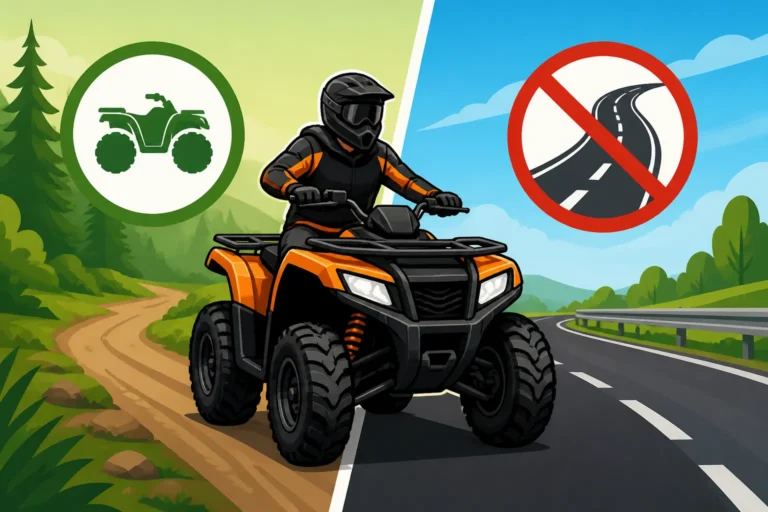
One of the biggest frustrations many young riders express is the inability to simply ride their ATV or UTV down the street to a friend's house or to the nearest convenience store. You've got this awesome machine, and it feels like it should be able to go anywhere, right? Unfortunately, Virginia law is crystal clear on this: ATVs and UTVs are generally prohibited from being operated on public roads, streets, or highways. This includes paved roads, gravel roads maintained by the state or county, and even the shoulders of these roads. The state considers these vehicles as off-highway vehicles, not designed for public thoroughfares. You can delve deeper into this specific prohibition by checking out [Virginia Bans ATVs on Public Highways].
There are a few, very specific, and highly regulated exceptions to this rule, primarily found within the coalfield regions of southwestern Virginia in Buchanan and Tazewell counties. These areas have some designated routes that allow for limited ATV use, often with speed restrictions and daylight-only operation, as highlighted in [Virginia Road Access in the Coalfields]. However, these are rare and explicitly marked exceptions, not a free pass. Attempting to use a public road as a shortcut, even for a short distance, can lead to significant civil penalties and even have your machine impounded. It’s a harsh reality, but one that every 16-year-old rider needs to understand fully to avoid legal trouble.
Riding on Private Land and Designated Trails
So, if public roads are largely off-limits, where can a 16-year-old rider legally enjoy their ATV or UTV? The answer primarily lies in two places: private property and designated off-road trail systems. This is where the true spirit of off-road riding comes alive in Virginia.
Riding on private land is perfectly legal, provided you have the explicit permission of the landowner. This isn't just a friendly nod; it needs to be clear consent. It's always best practice to have [Virginia Written Consent on Private Land] to avoid any misunderstandings or accusations of trespassing. Many families have their own land, or access to friends' and relatives' properties, which become fantastic places to ride and develop skills. Just remember, even on private land, you're still subject to the state's safety gear requirements, like helmets, which we'll discuss shortly.
Beyond private land, Virginia boasts some fantastic designated trail systems specifically designed for ATVs and UTVs. The Spearhead Trails system, for instance, offers hundreds of miles of diverse terrain across several counties in the southwestern part of the state. You can find detailed information about these incredible opportunities in [Spearhead Trails in Virginia Explained]. Additionally, parts of the George Washington National Forest, like the Peters Mill Run OHV Trails, provide another regulated environment for off-road enthusiasts. When riding on these public trail systems, remember that specific permits are required, and there are often additional rules concerning speed, noise, and machine width, and it's essential to understand [Virginia Trail Rules for Riders Under 18]. For serious trail riders looking to customize their machine for Virginia's rugged terrain, companies like SuperATV offer a huge range of aftermarket parts, from lift kits and heavy-duty axles to winches and lighting, all designed to enhance your off-road experience on these demanding trails. Whether you're navigating rocky climbs or muddy creek beds, outfitting your machine with quality components from a reputable brand can make a significant difference in performance and durability.
Essential Safety Gear and Training for a 16-Year-Old
Safety is paramount when riding an ATV or UTV, regardless of age, but for a 16-year-old, it’s particularly critical to instill good habits early on. Virginia law mandates certain safety equipment, and while not all training is legally required, it's highly recommended. Ignoring these aspects isn't just risky for your well-being; it can also lead to legal consequences.
Mandatory Helmet and Eye Protection
Virginia's approach to ATV safety is commendably strict on one point: helmets are not optional. This isn't just for kids; [Virginia Helmet Law Applies to Every Rider] of an ATV or UTV, no matter their age or where they are riding – even on private land! This means that as a 16-year-old, every single time you swing a leg over that seat or buckle into that side-by-side, a helmet must be securely fastened. This law is in place because head injuries are among the most severe and preventable consequences of ATV accidents.
The helmet you wear isn't just any old helmet either. It must meet specific safety standards. Typically, this means a helmet approved by the Department of Transportation (DOT) or other recognized safety organizations. The Virginia State Police often reference these standards, so understanding [Virginia Helmet Standards From the State Police] can help you choose the right gear. Beyond the helmet, eye protection is also crucial. Goggles or a full-face helmet with a visor will protect your eyes from dust, branches, insects, and flying debris. Imagine hitting a dusty trail without goggles – you'd be blinded in seconds, leading to a dangerous situation. A good pair of impact-resistant goggles ensures your vision remains clear, allowing you to react quickly to obstacles. Don't ever skimp on this gear; it's your primary protection against serious injury.
The Value of an ATV Safety Course (Even if Not Required)
While many states have mandatory ATV safety courses for younger riders, Virginia currently has [Virginia Has No Safety Course Requirement] for any age group. This might sound like good news – one less hoop to jump through, right? However, it's a huge misconception to think that no requirement means no need. For a 16-year-old, especially one who might be stepping up to a larger, more powerful machine, taking a formal ATV safety course is an incredibly smart move.
These courses, often offered by organizations like the ATV Safety Institute (ASI), teach fundamental skills that can prevent accidents and improve your riding enjoyment. You'll learn proper riding posture, how to safely accelerate and brake, navigate turns and hills, and react to emergency situations. Think about it: an ATV handles very differently from a bicycle or even a dirt bike. Learning these techniques from certified instructors in a controlled environment can build confidence and reduce the likelihood of a crash. Consider a scenario where you encounter an unexpected ditch or log on the trail; a rider who has taken a safety course will instinctively know how to shift their weight and apply throttle to navigate it, while an untrained rider might panic and crash. Aftermarket accessories from brands like SuperATV can significantly enhance safety and performance, offering things like wider A-arms for stability or more robust skid plates for protection, but they're no substitute for proper training and smart riding habits. The investment in a safety course pales in comparison to the potential costs, both physical and financial, of an accident.
Navigating Common Scenarios and Misconceptions
Even after you've grasped the basic age rules and where to ride, there are still a few common situations and misunderstandings that often trip up 16-year-old riders in Virginia. These relate to carrying passengers, the role of adult supervision, and even the administrative side of machine ownership. Getting these right can save you a lot of headaches and ensure a smoother, more enjoyable riding experience.
Passenger Rules for 16-Year-Olds
You're 16, you've got your ATV or UTV, and naturally, you want to share the fun with friends. But can you legally take a passenger with you? Virginia law is pretty specific about this, and it's a point where many riders make mistakes. Generally, [Virginia Passenger Rules on an ATV] state that an ATV is designed for one operator only. This means if your ATV has a single seat, you cannot legally carry a passenger on it, regardless of their age or yours.
The exception to this rule is for machines that are specifically "designed by the manufacturer to carry more than one person." This typically applies to certain UTVs (side-by-sides) with multiple seats, or specialized two-up ATVs that have a longer, padded seat and sometimes footrests for a passenger. If your machine is designed this way, then yes, you can carry a passenger. But if it's a standard single-seat quad, even if a friend can squeeze on behind you, it's illegal and highly unsafe. Imagine a quick turn on a trail with a passenger not properly seated – their weight shift could easily cause you to lose control and potentially flip the machine. Always check your owner's manual or the manufacturer's specifications to confirm if your specific ATV or UTV is designed for a passenger.
The Myth of "Supervised Riding" Exemptions
This is perhaps one of the most persistent myths surrounding ATV laws for younger riders, and it's crucial for 16-year-olds to understand that it doesn't apply in Virginia. Many states have provisions where a minor can ride a larger machine if they are under direct adult supervision. However, Virginia has [Virginia Has No Supervision Escape Clause] written into its ATV laws.
What this means is that the age and engine size limits are strict and non-negotiable. While you, as a 16-year-old, no longer have engine size restrictions, the underlying principle holds: for younger riders, the age limit for a particular engine size cannot be bypassed simply because an adult is watching them. So, if a 10-year-old is operating a 250cc ATV, it's illegal in Virginia, even if their parent is riding right beside them. For you at 16, this largely means that while adult supervision is always wise for safety, it doesn't grant you any special exemptions or permissions beyond what the law already allows for your age group. The rules are clear-cut based on age, not on who is present.
Titling and Ownership Considerations
While this guide focuses on riding rules for 16-year-olds, it's worth a quick mention about titling, as it often goes hand-in-hand with machine ownership. In Virginia, new ATVs bought after July 1, 2006, generally require a title, as explained in [Virginia Titles Machines Bought New Since 2006]. For used machines, titling is optional unless a lien is involved, which you can learn more about in [Virginia Titles Are Optional on Used Machines].
So, can a 16-year-old legally hold a title for an ATV or UTV in their own name? While a minor can theoretically be listed on a title, practically speaking, most ATV purchases and titles for a 16-year-old will involve an adult. Financing companies typically won't lend to minors, and dealers will often require an adult co-signer or for the adult to be the primary purchaser. This doesn't stop you from being the primary rider, but it means the official paperwork and financial responsibility usually fall to a parent or guardian. When outfitting your machine, whether it's for performance or utility, checking out the robust offerings from SuperATV can really transform your ride. They have everything from full suspension kits to durable tires that can stand up to aggressive riding, and their products are often considered when planning out machine ownership and customization. It’s always good to be aware of how the adult in your life is managing the machine's paperwork, even if you’re the one who’s always out on the trails.
Here’s a quick summary of the key rules for a 16-year-old ATV or UTV rider in Virginia:
| Rule Category | Specific Rule for 16-Year-Olds | Important Notes |
|---|---|---|
| Engine Size Limit | None (can ride any engine size) | This is a major change from younger age groups (under 12 = up to 70cc, 12-16 = up to 90cc). |
| Driver's License | Not required for off-road ATV/UTV operation | This applies ONLY to off-road use. A driver's license IS required for on-road vehicles like cars or mopeds. |
| Riding Location | Prohibited on public roads, streets, highways, and their shoulders | Exceptions exist in specific coalfield counties with designated routes, but these are rare and highly regulated. Stick to private land with permission or designated trail systems. |
| Private Land | Permitted with landowner's express written consent | Always get permission to avoid trespassing charges. |
| Designated Trails | Permitted on systems like Spearhead Trails or National Forest OHV areas, with required permits and rules | Be aware of specific trail rules regarding permits ([Virginia Spearhead Permit Cost]), speed limits ([Virginia's 25 mph Trail Speed Limit]), and safety regulations. |
| Helmet Requirement | MANDATORY at all times, for every rider | Must be a DOT-approved helmet. Applies on private land and trails. This is a strict law ([Virginia Helmet Law Applies to Every Rider]). |
| Eye Protection | MANDATORY | Goggles or a full-face helmet with a visor are essential to protect against debris. |
| Passenger Rules | Only if the machine is specifically designed by the manufacturer to carry a passenger | Most single-seat ATVs are NOT designed for passengers. UTVs (side-by-sides) often are. Never carry a passenger on a single-seat ATV ([Virginia Passenger Rules on an ATV]). |
| Supervision Exemption | Virginia has NO "supervised riding" exemption | Age and engine size limits (for younger riders) are strict and cannot be bypassed by adult supervision. For 16-year-olds, this means your privileges are based on your age, not on who is with you ([Virginia Has No Supervision Escape Clause]). |
| Titling/Ownership | While a minor can be on a title, adults typically handle purchase/financing/primary titling | New machines over 50cc bought after 2006 must be titled ([ATVs Over 50cc Bought New Since 2006 Need Titles]). Titling used machines is optional unless a lien is involved. |
Disclaimer
This article is for general informational purposes only and does not constitute professional advice. Laws, prices and regulations vary by location and change over time. Consult a qualified professional for guidance on your specific situation.