Virginia Moped Statute Compared
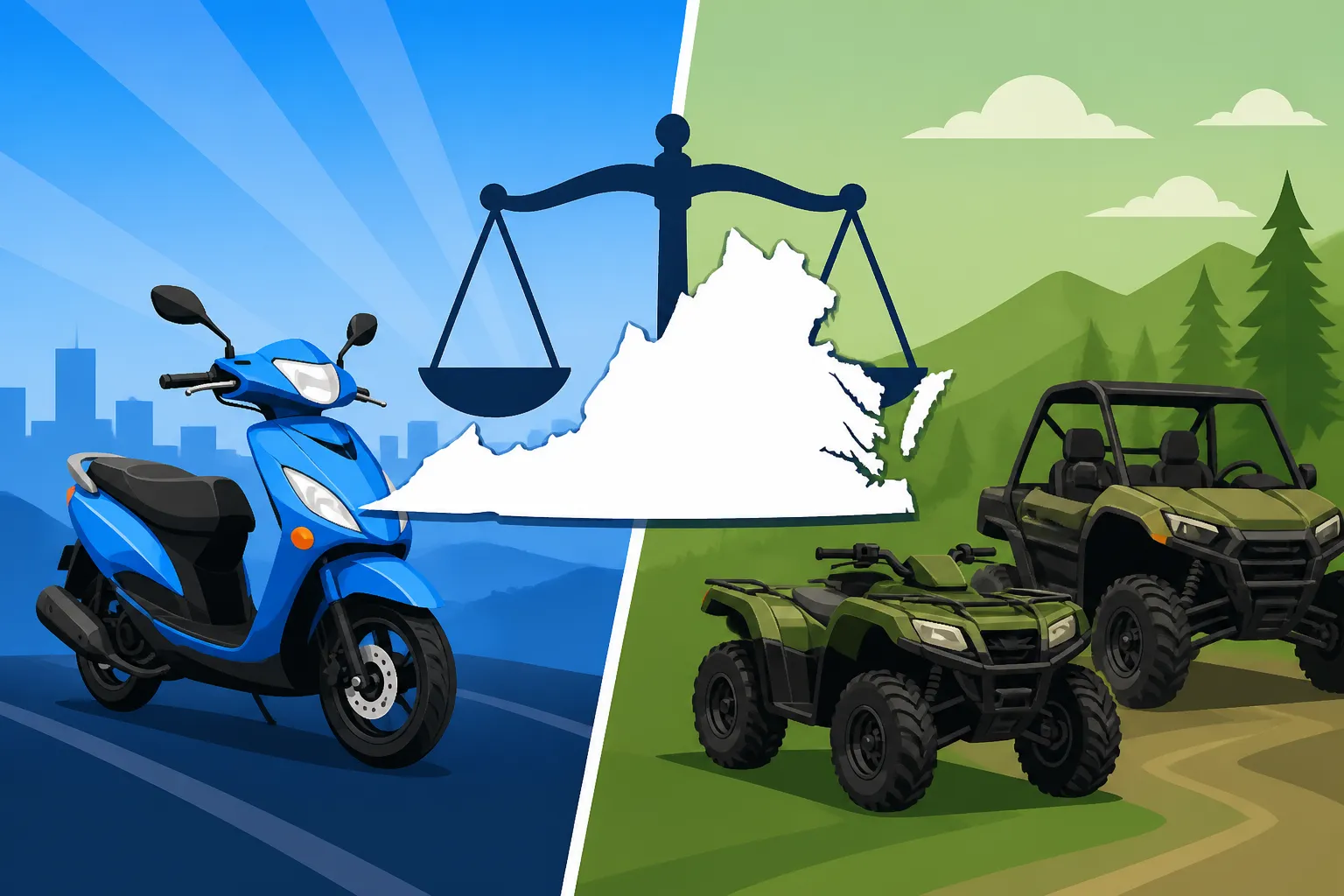
It's easy to look at a nimble moped zipping around town and then glance at your ATV, wondering why one gets street privileges and the other is strictly forbidden from public roads in Virginia. This confusion is incredibly common, and honestly, it’s frustrating when you just want to understand the rules. This guide will meticulously break down the Virginia moped statute and compare it to the laws governing ATVs, helping you clearly understand why these two seemingly similar machines are treated so differently.
Understanding the Legal Landscape: Mopeds vs. ATVs in Virginia
Navigating the world of off-road vehicles and their legal standing in Virginia can feel like deciphering a secret code. Many folks understandably assume that if one small, motorized vehicle can legally traverse public roads, then another, perhaps more robust, small motorized vehicle should be able to do the same. This perception often leads to a lot of head-scratching and, unfortunately, sometimes to costly citations for well-meaning riders who just didn't know the intricate differences in the law.
The Common Confusion: Why Many Assume Similarity
Picture this: you're driving down a country road, and a moped putters by, its rider wearing a helmet, a license plate clearly visible on the back. Then, you see your quad, shiny and capable, parked in your driveway. Both are relatively small, open-air, and designed for a single rider or perhaps two. It’s a natural leap for many to think, "If that moped can ride on the road, why can't my ATV?" The visual similarities, the open-air feel, and the general perception of them both being "small" vehicles create a powerful but misleading assumption that the legal frameworks governing them would be similar. It feels unfair, even illogical, to some.
This confusion deepens because riders often focus on what they can do with their ATV – it has an engine, wheels, and it moves! They don't always consider the specific design intent or the legal definitions that Virginia uses to categorize vehicles. The frustration stems from a disconnect between common sense perception and the precise language of the law. You might have even heard tales of people trying to "street legal" an ATV, only to run into brick walls at the DMV, wondering why a moped is so much simpler.
How Virginia Law Defines Each Vehicle Type
Virginia's legal code is very specific about what constitutes a "moped" versus an "all-terrain vehicle," and these definitions are the bedrock of why the rules diverge so dramatically. A "moped" is generally defined as a two- or three-wheeled vehicle with a motor that displaces less than 50 cubic centimeters, or if it's electric, has a power output of less than 1,500 watts. Crucially, it must not be capable of going faster than 35 miles per hour on level ground. These specific limitations are key because they place mopeds into a category that Virginia deems suitable for limited road use, albeit with certain restrictions.
On the other hand, an "all-terrain vehicle" or ATV is defined as a motor vehicle that is designed for off-road use, has three or more wheels, an engine displacement of more than 50 cubic centimeters, and is intended to be ridden by an operator sitting astride a seat. This definition is starkly different from that of a moped. The law clearly states "designed for off-road use," which is the critical phrase that sets the stage for all subsequent regulations. Even though many modern ATVs are far more powerful and sophisticated than mopeds, their fundamental classification by Virginia law as off-road machines dictates their legal status. For clarity, Virginia also defines "utility vehicles" (UTVs or side-by-sides) under the umbrella of off-road vehicles, aligning their road-use restrictions with ATVs.
The Critical Distinction: Designed for Road vs. Off-Road
The single most important factor differentiating a moped from an ATV in Virginia is its design intent. Mopeds, by their very nature and the way they are legally defined, are designed with some level of road-worthiness in mind. They have basic road safety features, limited speed capabilities, and are built to share the pavement, albeit in a restricted capacity. They are generally slower, lighter, and more maneuverable in a way that minimizes their impact on traffic and their risk to other road users.
ATVs, however, are fundamentally engineered for navigating challenging, uneven, unpaved terrain. Think about their characteristics: knobby tires designed for grip in mud and dirt, high ground clearance to clear obstacles, a suspension system built for absorbing impacts from rough trails, and a narrow, high center of gravity ideal for shifting weight to navigate inclines and declines. These very features, which make an ATV so incredibly capable off-road, render it inherently unstable and unsafe on paved surfaces. The knobby tires offer poor traction and unpredictable handling on asphalt, the suspension designed for bumps feels squishy and unstable on smooth pavement, and the high center of gravity makes them prone to rollovers during sharp turns at speed. Even adding aftermarket components like street tires from a brand like SuperATV can't change the fundamental design and engineering that makes an ATV dangerous on public roads, and certainly won't change its legal classification. This core difference in design purpose is why Virginia's laws treat them like two entirely different species of vehicle.
Mopeds: Virginia's Path to Limited Street Legality
While ATVs are confined to trails and private land, mopeds in Virginia are given a specific, albeit limited, green light to operate on public roadways. This isn't a free-for-all, however; moped riders face their own set of rules and requirements designed to ensure their safety and the safety of others on the road. It's a path that looks very different from anything an ATV rider will ever encounter with the DMV.
What Virginia Requires for Moped Road Use (License, Registration, Plate)
Unlike ATVs, which [Virginia Titles ATVs but Does Not Register Them], mopeds in Virginia do require registration and display a license plate. This is one of the most visible distinctions between the two vehicle types. To legally operate a moped on Virginia's public roads, you need a valid driver's license, learner's permit, or even a moped operator's permit. This isn't some relaxed guideline; it's a hard and fast rule. When you register your moped, you'll go through a process much like registering a car, providing proof of ownership and paying the necessary fees. The state wants to know who is operating these vehicles on public thoroughfares, which is a stark contrast to the hands-off approach Virginia takes with ATVs, which are generally not registered for public road use.
For a moped, that little metal plate on the back signals to law enforcement and other drivers that the vehicle is recognized by the state for road travel. It means the vehicle has met specific criteria and the operator has at least basic driving credentials. An ATV, on the other hand, will never receive a Virginia license plate because it simply isn't recognized as a road-worthy vehicle. This difference in registration and licensing requirements is a primary indicator of their disparate legal statuses, clearly illustrating Virginia’s intent for their use.
Specific Equipment and Safety Features for Mopeds
Beyond the paperwork, mopeds are mandated to have certain safety equipment if they're going to share the road with cars and trucks. These aren't optional upgrades; they're legal necessities. Every moped must be equipped with working headlights and taillights for visibility, even during daylight hours in some conditions. Rearview mirrors are also a must, allowing the rider to see traffic approaching from behind. Functional brakes are non-negotiable, ensuring the moped can stop safely. And, of course, a horn to alert others to their presence. These are all standard features that you'd expect on any road-going vehicle, and their presence on mopeds underscores their classification for public road use.
Now, think about your typical ATV. While it might have headlights and taillights, especially if you've added some aftermarket lighting from SuperATV for night trail riding, it often lacks the full suite of road-specific safety equipment. Many ATVs don't come standard with mirrors, and their braking systems are designed for off-road speeds and conditions, not necessarily for quick stops on high-speed asphalt. This difference in mandatory equipment isn't just about bells and whistles; it's about the fundamental safety requirements for interacting with other vehicles on public roads. Without these, an ATV poses a significant risk.
Age and Passenger Restrictions for Moped Operators
Virginia also has specific rules about who can operate a moped and under what conditions. While you don't need a full-blown motorcycle endorsement, you do need a permit or license. There are also age restrictions, generally requiring an operator to be at least 16 years old. This aligns with the idea that operating any vehicle on public roads requires a certain level of maturity and understanding of traffic laws. Furthermore, Virginia law typically states that mopeds are designed for one rider, and carrying passengers is usually prohibited unless the moped is specifically designed for two riders and equipped with a passenger seat and footrests.
Compare this to ATVs, where age restrictions are tied to engine size rather than road use. For instance, a rider under 12 can operate a machine up to 70cc, and 12-16 year olds up to 90cc. These rules are purely for off-road safety and development, not for road integration. And while some ATVs and many UTVs are designed to carry passengers, these rules are exclusively for off-road environments. The idea of a young rider on a moped sharing a paved road is treated very differently from a young rider on an ATV, highlighting the state's clear distinction in acceptable operating environments for each vehicle type.
ATVs: Strictly Off-Road by Virginia Design and Law
There's no sugarcoating it: Virginia is very clear about where ATVs belong. Despite their versatility and the joy they bring on the trails, they are not designed, nor are they legally permitted, for general use on public highways. This can be a hard pill to swallow for riders who might see a short paved section as a convenient connector between two trails, but the law is resolute.
Why ATVs Are Fundamentally Unsuited for Paved Roads
Let's get real for a moment. An ATV's design, which makes it an absolute beast on a muddy trail or rocky climb, is precisely what makes it a hazard on asphalt. Those aggressive, knobby tires that dig into dirt and gravel for traction? On a smooth, hard road surface, they provide very little grip, leading to unpredictable handling, especially when braking or turning. This can feel incredibly "squirrelly" to a rider, even at low speeds. The high center of gravity, essential for navigating rough terrain and shifting weight, becomes a dangerous liability on pavement, making the machine prone to tipping or rolling over during sudden maneuvers or sharp turns. It’s not just about comfort; it’s a critical safety issue.
The suspension system, designed for absorbing big bumps and dips off-road, is often too soft for road speeds, leading to excessive body roll and instability. Imagine trying to make an emergency swerve on a public highway with a vehicle that feels like it wants to wobble out from under you. It’s a recipe for disaster. Unlike a moped, which is built for the pavement, an ATV's very DNA screams "off-road only." Even if you were to swap out your tires for something smoother, the underlying geometry and suspension design are still working against you when you hit the blacktop.
The Major Equipment Gaps Preventing Street Legality
Beyond the inherent design challenges, ATVs typically lack the essential safety and regulatory equipment required for street legality in Virginia. We're talking about things like DOT-approved tires, which are designed to handle sustained speeds and provide reliable traction on paved surfaces. Most ATVs come with knobby, low-pressure tires optimized for off-road conditions, not highway speeds. Turn signals, often missing or rudimentary on ATVs, are a mandatory communication tool for road vehicles. Horns, if present, might not meet road-legal specifications for volume and tone.
Consider the absence of proper mirrors or even a speedometer that accurately reads road speeds. While you can certainly buy aftermarket parts from companies like SuperATV to add turn signals, mirrors, or even a horn, these modifications, no matter how well-made, cannot magically transform an ATV into a street-legal vehicle in Virginia. The state's definition and requirements are far more comprehensive than simply bolting on a few accessories. The lack of robust crash protection, like the enclosed cabin and seatbelts you'd find in a car or even the basic frame of a street motorcycle, further underscores why these machines are deemed unsafe for sharing roads with higher-speed traffic.
[Virginia Bans ATVs on Public Highways]: What This Means for Riders
The law in Virginia is crystal clear: [Virginia Bans ATVs on Public Highways]. This isn't a suggestion; it's a mandate. This means that with very limited and specific exceptions, you cannot legally ride your ATV on any road maintained by the state, county, or municipality. This includes paved roads, gravel roads, and even the shoulder. For riders, this means if you're caught operating an ATV on a public highway, you could face significant penalties.
These penalties are not just a slap on the wrist. They can include substantial fines, and in some jurisdictions, your ATV could even be impounded. Imagine having your prized machine towed away, incurring impoundment fees on top of the legal costs. It's a harsh reality, but one that underscores the seriousness with which Virginia views this particular transgression. The intent of this ban is to protect both the ATV rider, who is at a severe disadvantage on a public road, and other motorists who may not anticipate an off-road vehicle operating in traffic. It's crucial for every ATV owner to understand this core prohibition to avoid legal trouble and, more importantly, to stay safe.
Navigating Ownership: Titling, Taxes, and Insurance Differences
The journey of owning an ATV versus a moped in Virginia continues to diverge even after purchase, particularly when it comes to the administrative necessities like titling, how sales tax is applied, and the often-confusing world of insurance. These differences are not minor bureaucratic quirks; they reflect fundamental distinctions in how the state views and regulates these two types of vehicles.
[Virginia Moped Titling Compared to ATVs]
When it comes to titles, Virginia treats mopeds and ATVs quite differently, leading to some understandable confusion for owners. If you buy a new moped in Virginia, you'll go through a titling and registration process very similar to that of a car. You'll get a title that establishes legal ownership, and you'll receive a license plate that you must display. This clear, consistent process ensures mopeds are accounted for as road-going vehicles.
For ATVs, however, the situation is more nuanced. While [Virginia Titles ATVs but Does Not Register Them] for road use, the titling requirement depends heavily on when and how the machine was acquired. Generally, if you bought a new ATV from a dealer in Virginia since July 1, 2006, it must be titled. This is primarily for ownership tracking and preventing theft. But if you're talking about a used ATV, titling is often optional. That's right, you heard that correctly! Many used ATVs in Virginia can change hands without ever getting a title, which can be a double-edged sword for buyers and sellers. It removes some paperwork, but it also creates potential headaches if proof of ownership becomes an issue later. This system is a stark contrast to the mandatory titling and registration of mopeds, further highlighting the ATV's designated off-road status.
[Virginia Sales Tax at Titling] and Other Fees
The way sales tax applies to mopeds and ATVs in Virginia is another area where these two categories go their separate ways. When you purchase a moped, it's generally subject to the state's motor vehicle sales and use tax rate. This is the same rate that applies to cars, trucks, and motorcycles, and it often includes a minimum tax amount. This tax is typically collected by the DMV when the moped is titled and registered.
ATVs, on the other hand, are specifically carved out of the motor vehicle sales and use tax statute. Instead, they are subject to Virginia's general retail sales and use tax rate. This means the tax is applied at the point of sale, usually by the dealer, or paid directly to the Department of Taxation if purchased in a private sale. While the percentage rates might sometimes be similar depending on the region, the classification of the tax is different. This seemingly minor detail reinforces that ATVs are not viewed by the state as "motor vehicles" in the same vein as street-legal vehicles. Additionally, you'll pay a title fee for an ATV, but you won't pay registration fees or yearly renewal fees like you would for a moped or other registered vehicle, again emphasizing its non-road status.
[Virginia Requires No ATV Insurance] – A Key Difference
Perhaps one of the most significant differences, especially from a financial and risk management perspective, is how Virginia treats insurance for these vehicles. For mopeds, because they operate on public roads, you are legally required to carry liability insurance. This is non-negotiable, just like with a car. This insurance provides financial protection in case you cause an accident that results in injury or property damage to another party. Without it, you cannot legally operate your moped on public roads.
However, [Virginia Requires No ATV Insurance]. That's right, there's no state law mandating insurance for ATVs. This doesn't mean it's a bad idea to have it – in fact, it's highly recommended – but it's not a legal requirement to ride. This absence of a mandate further solidifies the ATV's off-road-only status. The state isn't requiring you to be insured against accidents with other road users because, legally, you shouldn't be on the road in the first place. This difference highlights the state's perception of the risks associated with each vehicle type and their designated operating environments. While insurance might not be legally required, many savvy riders still choose to insure their ATVs for theft, damage, or liability on private land or designated trails.
Exploring Exceptions and The 'What If' Scenarios
Even with all the strict rules, there are always those "what if" questions. Are there any circumstances where an ATV might legally touch pavement in Virginia? The answer is a heavily qualified "yes," but these exceptions are incredibly narrow and often misunderstood. It’s crucial not to mistake these limited scenarios for a blanket permission slip for road use.
The Very Narrow [Virginia Farming and Household Exceptions] for ATVs
Virginia law does provide extremely specific, limited exceptions for ATVs to operate on public roads, but these are almost exclusively tied to agricultural or very localized household uses. For example, if you're a farmer and need to move your ATV from one field to another across a public road, the law allows for a direct crossing by the most direct route. Similarly, for household duties, if you live on a large property and need to move an ATV a short distance on a specific type of road to reach another part of your property, an exception might apply.
However, these are not permissions for joyriding down the road to your buddy's house or to connect two recreational trails that aren't specifically designated for ATV use. The language of the law specifies "agricultural or horticultural purposes" or "for use in the household of the owner or a member of the owner's family." It’s about necessity for work, not convenience for recreation. These exceptions typically require daylight operation, extreme caution, and adherence to all other traffic laws, effectively treating the ATV as a piece of farm equipment rather than a recreational vehicle during that very brief, specific period. Misinterpreting these exceptions is one of the quickest ways to run into trouble with law enforcement.
Why Dirt Bikes Can Convert, But ATVs Cannot
This is where the distinction gets even finer and often frustrates ATV owners. Virginia has a legal pathway for converting certain off-road motorcycles, commonly known as dirt bikes, into street-legal machines. This involves meeting a rigorous set of requirements, passing inspections, and completing specific forms like [Virginia Dirt Bike Conversion Rules]. These converted dirt bikes then receive a motorcycle title and can be registered and plated for road use, effectively becoming motorcycles in the eyes of the law.
The critical point here is that this conversion path is explicitly for off-road motorcycles, not ATVs. Despite what some aftermarket parts vendors might suggest, there is no legal equivalent for an ATV. You cannot take an ATV, no matter how many road-specific parts you bolt onto it – even high-quality mirrors, lights, and turn signals from SuperATV – and have it reclassified as a street-legal vehicle in Virginia. The fundamental design, stability characteristics, and legal definitions simply do not allow for it. Many riders find this unfair, especially if they've invested heavily in making their quad "road-ready," but the law makes no provision for it. An ATV, no matter how much you modify it, remains an ATV for legal purposes in Virginia.
Limited [Virginia Buchanan and Tazewell County Road Access] for ATVs
While the general rule in Virginia is a strict ban on ATVs on public roads, there are very specific, geographically limited exceptions in a couple of coalfield counties: Buchanan and Tazewell. Through special legislation, these counties have been granted the authority to designate certain secondary highways, often gravel or low-traffic paved roads, as legal routes for ATVs. This is usually done to connect residents to designated trail systems like the Spearhead Trails, allowing riders to access trailheads from their homes or local businesses.
However, these routes are not widespread, they are clearly marked, and they come with their own set of specific rules, including speed limits (often 25 mph), daylight-only operation, and helmet requirements. [Virginia Buchanan and Tazewell County Road Access] is not an open invitation to ride anywhere in those counties, nor does it extend to other parts of the state. These are hyper-local, carefully controlled exceptions designed to support tourism and provide local access in specific, rural environments with established off-road trail networks. If you’re not in one of these very specific, designated areas, and on a clearly marked route, the general ban on ATVs on public highways still applies in full force. It’s a crucial distinction that many out-of-town riders might misunderstand, leading to potential legal issues if they assume the rules are universal.
Moped vs. ATV Virginia Regulations Comparison
To help clarify the numerous distinctions we've discussed, here's a quick comparison of key regulations for mopeds and ATVs in Virginia. This table highlights the fundamental differences in how these vehicles are treated under state law.
| Feature | Virginia Moped Regulations | Virginia ATV Regulations |
|---|---|---|
| Legal Road Use | Permitted on public roads with restrictions | Generally banned on public roads, with very few, narrow exceptions |
| Registration | Required, displays a state-issued license plate | [Virginia Titles ATVs but Does Not Register Them] for road use |
| License/Permit | Valid driver's license, learner's permit, or moped permit required | No specific license/permit required for off-road operation |
| Insurance | Liability insurance required | [Virginia Requires No ATV Insurance] by law |
| Titling | Required for all new machines, similar to a car | Required for new machines bought since 2006, often optional for used |
| Sales Tax | Subject to Virginia's motor vehicle sales and use tax | Subject to Virginia's general retail sales and use tax |
| Design | Limited speed, basic road safety features, built for pavement | High ground clearance, knobby tires, high center of gravity, built for off-road |
| Conversions | N/A – Already road-legal by design (with restrictions) | No legal pathway for conversion to street-legal status |
| Helmet Law | Rider required to wear a helmet | Rider required to wear a helmet on trails and designated areas |
| Passenger Rule | Generally one rider, unless specifically designed for two | Varies by machine design (one-up or two-up seating), for off-road use only |
This article is for general informational purposes only and does not constitute professional advice. Laws, prices and regulations vary by location and change over time. Consult a qualified professional for guidance on your specific situation.