Why a Virginia DMV Branch Cannot Title a Conversion
It’s a truly frustrating experience, isn't it? You’ve put in all the hard work, the wrench time, the research, converting your dirt bike into a machine you hope will be street legal in Virginia. You’ve added the lights, the mirrors, the horn – maybe even special DOT-approved tires. You haul it down to your local Department of Motor Vehicles branch, brimming with anticipation, only to be met with a blank stare or a polite but firm "we can't help you with that here." It feels like hitting a brick wall after investing so much. This guide is here to explain precisely why your local Virginia DMV branch cannot process the titling for a converted dirt bike, and what you do need to do to get it done.
The Allure and Complexity of Converting a Dirt Bike in Virginia
There's a special kind of freedom that comes with making an off-road machine street legal. Imagine being able to ride from your garage directly to the trails, or even just hop over to the store for a quick errand without having to load your bike onto a trailer. For many dirt bike enthusiasts in Virginia, the dream of a street-legal conversion is powerful, offering unparalleled convenience and expanding their riding possibilities. It transforms a weekend warrior into a versatile everyday companion, bridging the gap between wild trails and paved roads.
The Dream: Making Your Dirt Bike Street Legal
The appeal is undeniable. You love the nimble handling and rugged capability of your dirt bike, but you’re tired of the logistical dance of trailering it everywhere. The idea of simply twisting the throttle and riding directly to your next adventure, or using it for quick trips around town, is incredibly tempting. This dream often sparks a deep dive into aftermarket parts and regulations, with riders poring over online forums and product catalogs, envisioning their transformed machine. It's not just about utility; it's about extending the joy of riding.
Achieving this transformation typically involves adding specific components: a headlight with high and low beams, a taillight, brake light, turn signals, mirrors, a horn, and often DOT-approved tires. Sometimes, even the exhaust system needs to be considered for noise and emissions. The process can be time-consuming and expensive, requiring mechanical skill, careful selection of parts, and an understanding of legal requirements. Many riders take immense pride in their build, meticulously ensuring every detail is perfect for its new dual-purpose role. This personal investment only amplifies the frustration when the administrative hurdles seem insurmountable.
Virginia's Specific Path for Dirt Bike Conversions
It's crucial to understand that Virginia does offer a path for converting a dirt bike to be street legal, making it distinct from ATVs and side-by-sides, which generally do not have such a route. While ATVs are titled in Virginia, they are expressly forbidden from most public roads, with only very limited exceptions in specific counties. [Virginia Bans ATVs on Public Highways] is a good read on this. For dirt bikes, the state provides a very specific, narrow avenue for those who want to navigate the transition from off-road only to street-legal. This isn't a casual process; it’s a formal procedure designed to ensure that the converted vehicle meets safety standards comparable to those of a factory-built street motorcycle.
The key to this process lies in a specific form and a rigorous certification. You're not just registering an existing vehicle; you're changing its fundamental legal classification. This involves more than just bringing in a bill of sale. It requires demonstrating that your machine, originally designed for dirt, now conforms to the safety and equipment standards required for highway use. [Virginia Dirt Bike Conversion Rules] delves into the specific requirements you’ll need to meet. It’s a path that demands attention to detail and a willingness to provide extensive documentation.
Why Your Local DMV Isn't Equipped for Conversion Titling
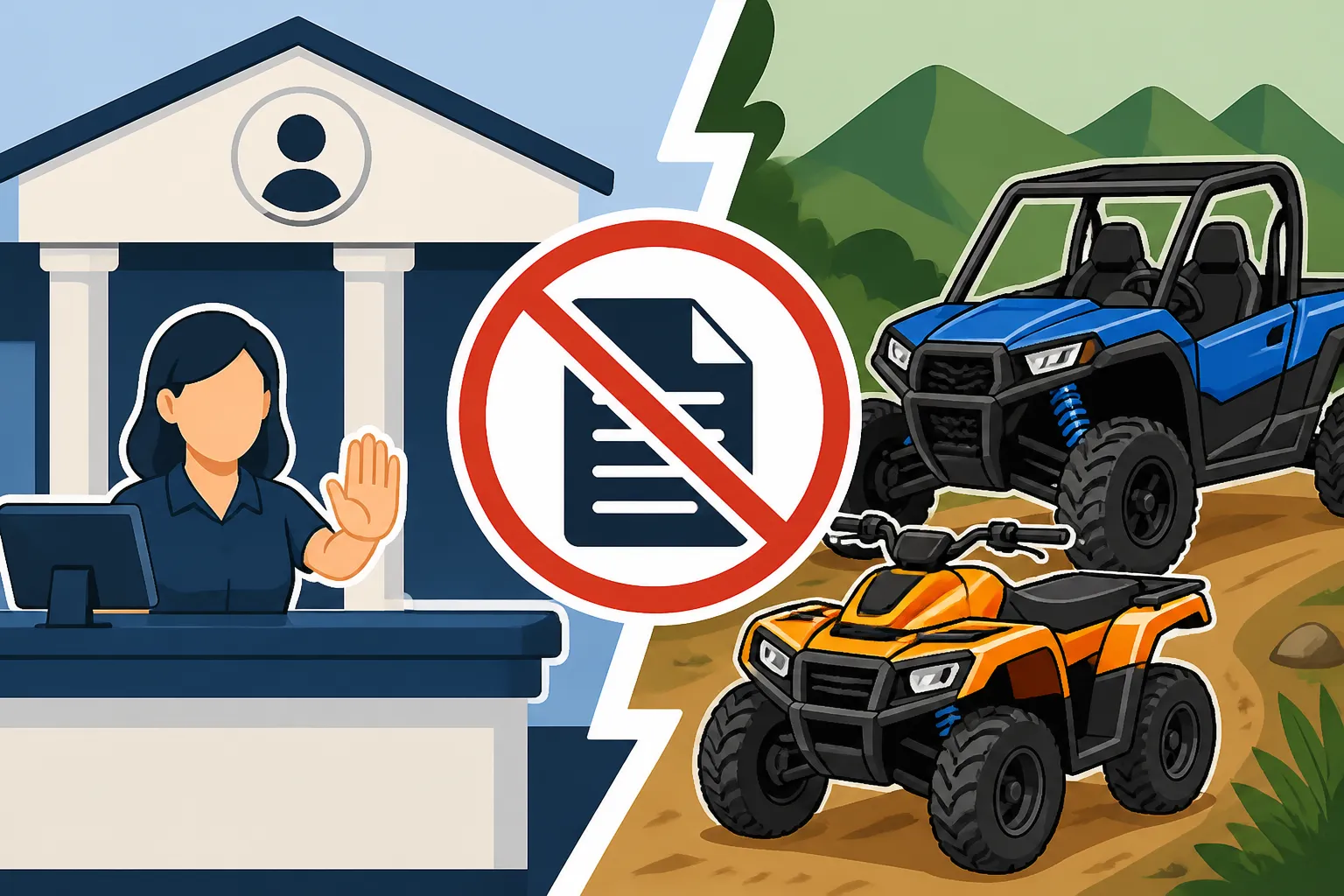
The core reason your friendly local DMV branch can't process a dirt bike conversion title comes down to specialization. Think of it like this: your family doctor can handle a common cold or a sprained ankle, but for complex heart surgery, you need a cardiologist at a specialized hospital. The DMV operates on a similar principle. Local branches are set up for high-volume, relatively standardized transactions, while conversions fall into a unique, highly specialized category that requires expert review.
Beyond Standard Vehicle Transactions
Local DMV customer service centers are masters of routine. They process thousands of transactions daily for cars, trucks, standard motorcycles, and even ATVs. When you walk in to title a new car, for example, the process is streamlined: they check your Manufacturer's Statement of Origin (MSO), verify your identity, collect sales tax and fees, and issue a title. [Virginia Requires an MSO for a New Machine] explains this in more detail. Similarly, titling a used ATV is typically straightforward, often requiring the previous owner's signed title and a bill of sale. These processes rely on established vehicle classifications and pre-defined documentation requirements.
A dirt bike conversion, however, doesn't fit neatly into these existing boxes. You're not just titling a vehicle; you're essentially presenting a new class of vehicle that needs to be officially recognized as suitable for highway use. This involves a much deeper technical and legal review than what a front-line clerk is trained or authorized to perform. They can handle transactions where the vehicle's type is already established, but they can't make the judgment call on whether your modified dirt bike meets the complex criteria for street legality.
The Specialized Role of Virginia's Central Office
The task of reviewing and approving dirt bike conversions falls to a dedicated, specialized unit within the Virginia DMV's central office in Richmond. This isn't a matter of convenience; it's a necessity driven by the intricate nature of the conversion process. These specialists possess a deeper understanding of federal motor vehicle safety standards (FMVSS) and specific Virginia state equipment regulations that apply to street-legal vehicles. They're trained to scrutinize documentation that goes far beyond what's needed for a standard title.
Consider the level of detail required: a converted dirt bike needs Department of Transportation (DOT) approved tires, a specific type of headlight and taillight, turn signals, mirrors, and a horn. The central office specialists need to verify, through documentation and detailed photographic evidence, that all these components are present and meet the required standards. A local branch clerk simply doesn't have the training, the time, or the resources to conduct such an exhaustive technical audit. Their primary function is transactional efficiency for common vehicle types, not engineering compliance review for custom builds. [Why a Virginia DMV Branch Cannot Title a Conversion] further elaborates on this distinction, though it's our current topic.
The Forms and Affidavits That Go to Richmond
The cornerstone of the conversion titling process in Virginia is Form VSA 130, titled "Certification of Converted Off-Road Motorcycle or All-Terrain Vehicle for Highway Use." This form is specifically designed for this purpose, and it’s what sets the conversion process apart from any other standard title application. [Virginia Form VSA 130 Explained] outlines its critical role. This isn't a form you'd encounter for a typical vehicle purchase or transfer; it's unique to street-legal conversions.
Along with the VSA 130, you'll need to submit a host of supporting documents. This often includes your original proof of ownership (like an MSO or an existing off-road title), a bill of sale, receipts for all the conversion parts you installed, and very detailed photographs of your motorcycle from various angles, clearly showing all the newly installed street-legal equipment. Sometimes, the DMV may require additional notarized affidavits from you, attesting to the installation of certain parts or compliance with specific standards. If you ever need to draft a legal document like an affidavit for other purposes, services like LawDepot can be helpful for structuring and ensuring clarity, though for VSA 130, you'll use the DMV's prescribed form. All this comprehensive package needs to be mailed directly to the central DMV office, as local branches do not have the facility or the expertise to review such a specialized dossier.
The Certification Process: More Than Just Paperwork
Getting a dirt bike titled as street-legal isn't merely about filling out a form and attaching a few photos. It's about a rigorous "certification" process, where you, as the owner, must demonstrate that your once off-road machine now meets the exacting federal and state standards for safe operation on public highways. This is a significant responsibility and a major reason why local DMV branches are out of their depth. They deal with vehicles that already have this certification from the manufacturer; with a conversion, you are providing that certification.
Proving Federal Safety Standards Compliance
When a manufacturer builds a street-legal motorcycle, it adheres to a multitude of Federal Motor Vehicle Safety Standards (FMVSS) and Environmental Protection Agency (EPA) regulations right from the factory. These standards cover everything from brake effectiveness and lighting visibility to tire strength and exhaust emissions. When you convert a dirt bike, you are essentially taking on the responsibility to bring it into compliance with these same rigorous standards. This is no small feat. It's not enough to simply bolt on a headlight; that headlight must meet specific lumen outputs and beam patterns. Tires aren't just "round and black"; they must carry a DOT stamp, indicating they've been tested and approved for highway speeds and loads.
The central DMV office needs evidence that your conversion isn't just cosmetic, but genuinely functional and safe according to these standards. This often means providing receipts for DOT-approved parts, confirming that the work was done correctly, and sometimes even submitting a detailed breakdown of how each component contributes to overall compliance. A standard title application for a car or even an ATV doesn't require this level of engineering scrutiny. The challenge lies in proving that a machine originally exempt from many of these standards now fully embraces them.
The Affidavit Requirement and Its Weight
As part of the certification process, you'll often be required to sign specific affidavits, typically within the VSA 130 form itself, declaring that your converted dirt bike meets all necessary federal and state equipment requirements. These are not casual statements; they are legal declarations. By signing, you're attesting, under penalty of law, that your vehicle is compliant. This places a significant legal burden on the owner to ensure all modifications are up to par.
In some instances, if additional specific declarations are needed outside the VSA 130's scope, you might prepare a separate affidavit. For such cases, tools and templates provided by services like LawDepot could be valuable to help draft legally sound documents, though it's crucial to always use the official Virginia DMV forms when available and ensure any supplemental affidavits align with state requirements. The central office's specialists review these documents with a critical eye, looking for any inconsistencies or omissions that might indicate non-compliance. A local DMV clerk is not typically trained to evaluate the legal weight and technical implications of such detailed affidavits, nor to challenge them on grounds of technical non-compliance. The gravity of these sworn statements is paramount to the entire process.
What Happens If Something Is Missing or Incorrect
One of the biggest frustrations riders face during the conversion titling process is the potential for delays or outright rejection due to missing or incorrect documentation. Because the central DMV office's review is so thorough, even a small oversight can send your application back to square one. For example, if your photos don't clearly show all the required lighting components, or if a receipt for a DOT-approved part is absent, the specialists will likely send a letter requesting more information or clarification. This back-and-forth communication is part of the rigorous review.
This iterative process further explains why a local branch cannot handle these conversions. Imagine a line of people waiting to renew their registrations while a clerk tries to decipher engineering specifications for a custom build. It's simply not feasible. The central office is equipped to manage this detailed review process, allowing for careful deliberation and clear communication with applicants. While it can feel slow, it ensures that only genuinely compliant and safe converted vehicles are granted street-legal status. It's a system designed for thoroughness, not speed, especially given the inherent safety implications of putting a modified off-road vehicle on public roads. [Virginia Title Processing Time] provides general expectations for standard titling processes, but conversions typically take longer.
Navigating the Conversion Titling Process Successfully
Successfully titling your converted dirt bike in Virginia requires meticulous preparation, an understanding of the correct submission channels, and a good dose of patience. It’s a process that rewards thoroughness and attention to detail. Skipping steps or assuming a local branch can help will only lead to delays and frustration. By following the prescribed path, you significantly increase your chances of a smooth approval.
Preparing Your Documentation Meticulously
The key to a successful dirt bike conversion title application lies in your paperwork. Gather every single piece of documentation you have. This includes your original title or [Virginia Requires an MSO for a New Machine] if it's a new bike, a comprehensive bill of sale, and all receipts for every single part you purchased and installed for the conversion (headlights, taillights, turn signals, mirrors, horn, DOT tires, etc.). Don't just list them; present the actual receipts.
Additionally, take clear, well-lit, detailed photographs of your converted motorcycle from every angle. Ensure these photos clearly show all the newly installed street-legal equipment. The DMV needs to see unambiguous proof that everything is present and appears correctly installed. Think of it like a visual inspection in absentia. Complete [Virginia Form VSA 130 Explained] with absolute accuracy, ensuring every box is checked and every required signature is present, possibly using a notarization service for any additional affidavits if needed. Having a well-organized folder or binder for all these documents will not only make the submission process easier for you but also demonstrates your attention to detail to the DMV specialists.
The Importance of Mailing to the Right Place
This is a critical step where many riders make a mistake. Do not take your conversion paperwork to your local DMV customer service center. They will not be able to process it, and it will only delay your application. Instead, all conversion titling applications, including Form VSA 130 and all supporting documents, must be mailed directly to the Virginia Department of Motor Vehicles' central office in Richmond. While the specific mailing address can sometimes change or be directed to a particular department, you should always consult the official Virginia DMV website or the instructions on Form VSA 130 itself for the most current and correct mailing address.
Often, you'll find a specific address for "Special Titling" or "Vehicle Branding and Compliance" within the DMV's central operations. Sending it to the general DMV mailing address can also cause delays as it gets routed internally. Double-check the address, use certified mail with a return receipt if you wish, and ensure everything is securely packaged. This direct submission ensures your application lands on the desk of the specialists who are trained to review it, not a clerk who will simply redirect it.
Patience and Follow-Up
The processing time for a dirt bike conversion title application in Virginia will almost certainly be longer than for a standard vehicle title. Given the specialized review required, it’s not uncommon for it to take several weeks, or even a couple of months, for the central office to process your application. Don't expect a quick turnaround like you might get at a local branch for a routine transaction. During this waiting period, it's natural to feel anxious, but frequent calls to a general DMV line may not yield specific answers.
If you need to follow up, avoid calling your local DMV branch. They won't have access to the status of applications being processed by the central office's specialized units. Instead, look for a specific contact number or email address provided on the DMV website or on Form VSA 130 for inquiries related to vehicle compliance or special titling. When you do call, have all your submission details ready, including the date you mailed the application and any tracking numbers. Patience is truly a virtue here, as the detailed review process is designed for accuracy and compliance, not speed. Eventually, you will receive your new Virginia title, which will properly classify your converted dirt bike as street legal, and then you can proceed with getting [Insurance Once a Virginia Dirt Bike Becomes Street Legal].
Virginia ATV vs. Dirt Bike Conversion Titling
Understanding the differences between titling an ATV and a dirt bike conversion in Virginia is crucial for any off-road enthusiast. While both involve the DMV, the underlying regulations and the paths to compliance are vastly different.
| Feature | Virginia ATV Titling | Virginia Dirt Bike Conversion Titling |
|---|---|---|
| Vehicle Status | Off-road only; titled but not registered for highway use. | Converts an off-road motorcycle to be street-legal, titled, and registered for highway use. |
| DMV Location | Typically handled at local DMV customer service centers or by mail for standard transactions. | Exclusively handled by the Virginia DMV's central office in Richmond. |
| Primary Form(s) | [Virginia Form VSA 17A Explained], MSO or previous title, Bill of Sale. | [Virginia Form VSA 130 Explained] (Certification of Converted Off-Road Motorcycle), plus MSO/title, bill of sale, receipts, photos. |
| Key Documentation | Proof of ownership, ID, sales tax payment. | Proof of ownership, ID, sales tax, detailed receipts for ALL street-legal parts, detailed photographs, sworn affidavits. |
| Compliance Check | Basic verification of ownership and machine identification number (VIN/Serial). | Extensive review of federal and state safety standards compliance for highway use (e.g., DOT tires, lighting, brakes). |
| Required Equipment | Basic safety equipment (helmet, eye protection usually for rider). | Must meet all highway vehicle requirements (DOT tires, headlight/taillight/brake light, turn signals, mirrors, horn, etc.). |
| Street Legality | No. ATVs are generally prohibited on public roads. [Virginia ATV Road Rules Under 46.2-915.1] outlines strict limits. | Yes. Once approved and titled, it is street-legal and can be registered for highway use. [The Street-Legal Path Open to Dirt Bikes Alone] |
| Processing Time | Typically faster, often completed in person or within a few weeks by mail. | Significantly longer, often several weeks to months, due to specialized review. |
| Cost | Standard title fee ([Virginia ATV Title Cost] is usually a small flat fee), plus sales tax. | Standard title fee, plus sales tax, potentially costs for certification or inspection, and the significant investment in parts. |
As you can see, the path for dirt bike conversion is fundamentally different and much more rigorous, demanding a specialized review that only the central office is equipped to provide. Understanding this distinction is vital to avoid unnecessary trips to your local branch and to ensure your application progresses efficiently.
Disclaimer
This article is for general informational purposes only and does not constitute professional advice. Laws, prices and regulations vary by location and change over time. Consult a qualified professional for guidance on your specific situation.