Why 50cc Decides Whether Your ATV Needs a Title
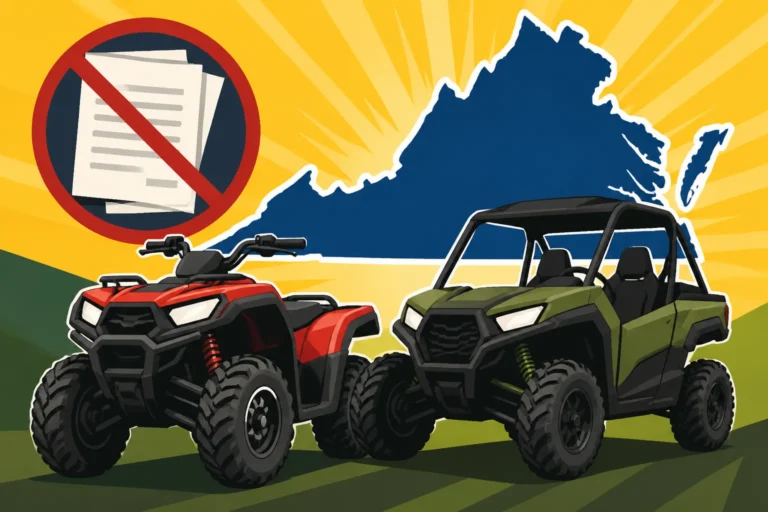
It's a question that trips up countless riders across Virginia: do I actually need a title for my ATV, or can I just hit the trails? The confusion is real, and it’s a pain point for anyone trying to navigate the rules for off-road machines in the Commonwealth. The answer, as with many things involving vehicles and the Department of Motor Vehicles, isn't always straightforward, but it almost always comes down to one crucial number: 50cc. This guide will clarify why that small engine displacement makes all the difference in Virginia when it comes to titling your ATV or side-by-side.
The Foundational Rule: Why 50cc Matters for Titling
Understanding the 50cc rule is absolutely essential for any ATV owner or prospective buyer in Virginia. It’s not an arbitrary number; it’s a specific threshold written into the law that dictates whether your off-road machine is considered a "motor vehicle" for titling purposes. This distinction has significant implications for how you prove ownership, sell your machine, or even finance it.
Virginia's Vehicle Code and Off-Road Machines
Virginia’s vehicle code, specifically Title 46.2, lays out the definitions and requirements for various types of vehicles. While cars, trucks, and even most street-legal motorcycles are clearly defined and require titles and registrations, off-road vehicles like ATVs occupy a unique space. Many people mistakenly assume that if it has an engine, it needs a title and registration, just like their car. This isn't the case for ATVs in Virginia, where registration (meaning license plates and yearly fees) is never required for these machines, but titling can be.
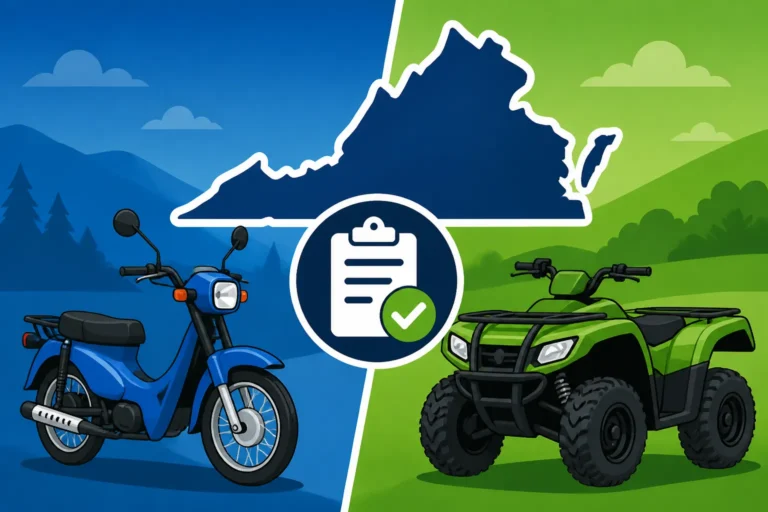
The legal framework attempts to distinguish between recreational and utility machines that operate off public roads and those designed for street use. This is where the 50cc engine size comes into play. It's a specific carve-out, much like how mopeds have different rules. Navigating these distinctions can be frustrating, especially when you just want a clear "yes" or "no" answer. Knowing the precise [Virginia ATV and Utility Vehicle Definitions] is critical to understanding which rules apply to your machine. It’s also helpful to compare this to [Virginia Moped Rules Compared] to see how engine size can dictate entirely different sets of requirements across different vehicle types.
The Line in the Sand: Over vs. Under 50cc
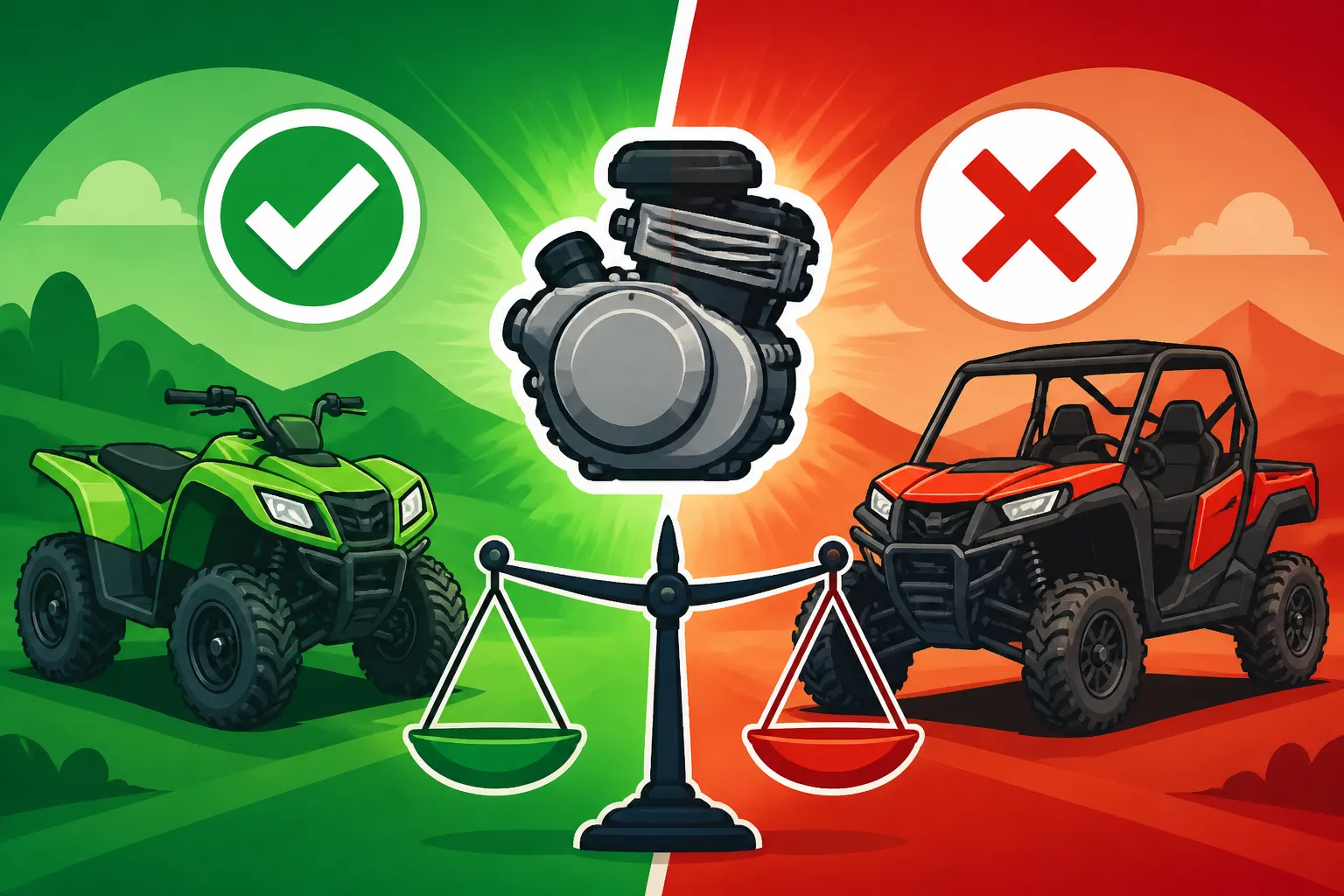
For ATVs and similar off-road machines, the 50cc mark acts as a definitive dividing line. If the engine displacement is over 50 cubic centimeters (cc), the Commonwealth of Virginia generally considers it a machine that requires a title if bought new after July 1, 2006. If the engine displacement is 50cc or under, it is typically exempt from titling requirements. This isn't a suggestion; it's a legal mandate that fundamentally alters the paperwork process for your machine.
Imagine you're a parent looking to buy a small quad for your child. If that quad has a 49cc engine, you won't be able to get a Virginia title for it, and you won't need to try. The DMV simply doesn't process titles for machines that small. But if you opt for a slightly larger 70cc youth model, suddenly you're in a different category, and a title will be expected if it was a new purchase after the cutoff date. This distinction also applies to older, smaller utility machines that might be used around a farm. The engine size is the first, most important question to ask when considering the titling process.
Understanding Virginia's ATV Definitions and Requirements
Before diving deeper into the 50cc rule, it's helpful to establish exactly what Virginia considers an ATV and the general conditions under which a title is issued. This provides crucial context for why engine size plays such a pivotal role in the titling landscape for these specific machines.
What Virginia Defines as an ATV
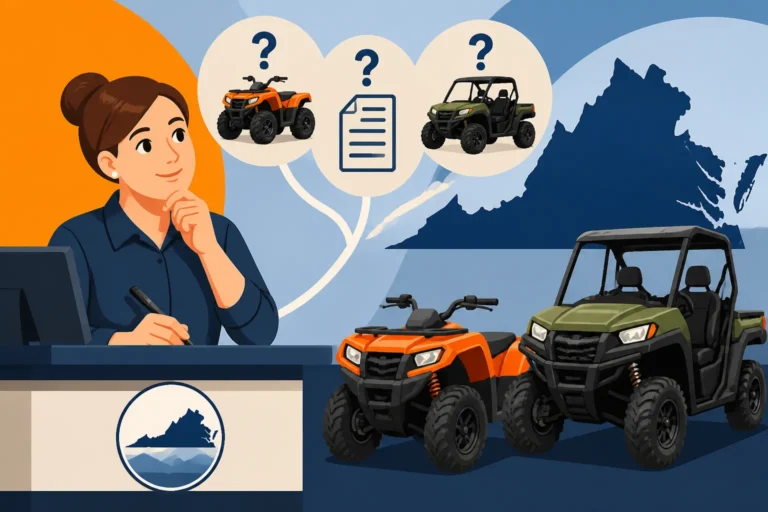
In Virginia, an all-terrain vehicle (ATV) is specifically defined. It’s not just any vehicle with four wheels designed for off-road use. The legal definition typically includes characteristics such as being designed for off-road travel, having three or more low-pressure tires, a seat designed to be straddled by the operator, and handlebars for steering. This definition helps differentiate ATVs from other types of off-road machines, like utility vehicles (UTVs), which might have side-by-side seating and a steering wheel, or dirt bikes, which are two-wheeled.
For example, a traditional four-wheel quad designed for a single rider who straddles the seat and steers with handlebars fits the classic ATV definition. A side-by-side with bucket seats and a steering wheel would fall under the "utility vehicle" definition, but critically, these also follow the same titling rules as ATVs when it comes to the 50cc threshold. Understanding [Why Your Side-by-Side Counts as an ATV] for titling purposes is important because even though they look different, the titling regulations often lump them together. This is a key distinction from [Virginia Off-Road Motorcycle Definitions], which applies to two-wheeled machines and has its own set of rules.
The Core Titling Mandate for Larger ATVs
If your ATV or UTV is over 50cc and was purchased new on or after July 1, 2006, Virginia law generally requires it to be titled. This date, [Virginia's July 2006 Titling Cutoff], is extremely important. Before this date, titling was not a statewide requirement for ATVs, regardless of their engine size. This means if you have a venerable old quad that was bought new in, say, 2005, it likely doesn't need a title even if it's a massive 600cc machine. However, if your machine is a brand-new 450cc sport quad bought last year, then a title is definitely in order.
This mandate means that when you buy a new, larger ATV from a dealer, they will typically handle the initial titling paperwork, including submitting the Manufacturer's Statement of Origin (MSO) to the DMV. The MSO is essentially the birth certificate for your new machine. It's the proof that the vehicle has never been titled before and provides all the necessary manufacturing details. This requirement for new machines over 50cc ensures a clear chain of ownership from the manufacturer to you, the first owner. You can learn more about this by reading [Virginia Requires an MSO for a New Machine].
The "Under 50cc" Exception: What It Means in Practice
Now let’s zero in on the machines that fall into the unique category of being exempt from titling in Virginia. This exception often comes as a surprise to new buyers or those moving from states with different regulations, but it’s a firmly established part of Virginia law.
No Title, No Problem: Machines Under 50cc
For ATVs and utility vehicles with engine displacements of 50 cubic centimeters (cc) or less, Virginia simply does not issue a title. It's not a matter of choice; it's a matter of state policy. If you attempt to apply for a title for a 49cc youth quad, for instance, your application would be denied because the machine falls below the minimum titling threshold. This can be a relief for parents who purchase smaller machines for young riders or for individuals using very compact utility vehicles on private property.
This exemption means that while larger ATVs might have a formal state-issued document proving ownership, your under 50cc machine will not. This is an important distinction, as many new owners might be looking for a title that simply doesn't exist for their particular model. It reinforces the point that [ATVs Under 50cc Do Not Need a Title] in Virginia. Therefore, if you are expecting a title for a small displacement machine, you will be looking in vain.
Implications for Ownership and Resale
Since there's no state-issued title for ATVs 50cc and under, proving ownership becomes even more critical when it comes to buying, selling, or even reporting theft. Without a title, the primary document establishing ownership is your bill of sale. This document, especially for a private transaction, needs to be comprehensive and clearly state the buyer, seller, date, purchase price, and a detailed description of the ATV, including its Vehicle Identification Number (VIN) or serial number.
When you're buying or selling a smaller ATV, ensure that the bill of sale is robust. A simple handwritten note on a scrap of paper might seem sufficient, but it leaves you vulnerable. Consider using a standardized legal template from a service like LawDepot to ensure all necessary information is included and legally sound. This makes it easier to track the machine's history and prove your legal ownership, whether for insurance purposes, future resale, or resolving any disputes. Without an official title, a strong bill of sale is your best friend. For anyone [Buying From a Private Seller in Virginia], especially a machine under 50cc, insisting on a detailed and properly executed bill of sale is non-negotiable.
| Feature / Engine Size | ATVs 50cc and Under | ATVs Over 50cc (Bought New Since July 2006) | ATVs Over 50cc (Bought Used) |
|---|---|---|---|
| Virginia Title? | No (Exempt) | Yes (Required) | Optional (But often wise) |
| MSO Needed? | No | Yes (For new purchases) | No |
| Primary Proof of Ownership | Detailed Bill of Sale | Virginia Title & Bill of Sale | Virginia Title & Bill of Sale |
| Lender Requirement? | N/A (Typically not financed) | Yes (Almost always) | Yes (Almost always) |
| Resale Implications | Relies heavily on Bill of Sale | Title transfer required by seller | Title transfer recommended |
| State DMV Fee? | No | Yes ($15 Virginia Title Fee) | Yes ($15 Virginia Title Fee) |
| Registration (Plate)? | No (ATVs never registered) | No (ATVs never registered) | No (ATVs never registered) |
Titling a Machine Over 50cc: Your Responsibilities
If your ATV or UTV has an engine larger than 50cc and was purchased new after the July 1, 2006, cutoff, then you're squarely in the territory where a Virginia title is required. This comes with specific responsibilities and a process you'll need to follow to ensure you're in compliance with state law.
When a Title Becomes Necessary
The clearest scenario requiring a title is when you purchase a brand-new ATV or utility vehicle that has an engine displacement greater than 50cc from a dealer in Virginia. In this instance, the dealer will typically initiate the titling process, using the Manufacturer's Statement of Origin (MSO) as the foundational document. The MSO verifies that the machine is new and has not been previously titled. It’s essentially its birth certificate, linking the machine directly to the manufacturer. Without a valid MSO, titling a new machine becomes incredibly difficult, if not impossible.
Things get a little more nuanced when you're buying a used ATV over 50cc. While the law states that [Virginia Titles Are Optional on Used Machines], in practice, it's almost always recommended to get a title, especially if the machine originally had one. If you're financing your used purchase, your lender will almost certainly require a title to protect their interest in the collateral. Even for cash buyers, having a clear title in your name provides undeniable proof of ownership, which is invaluable for resale, insurance claims, or proving legitimate possession to law enforcement.
The Process for Securing Your Title
If you've bought a new, larger ATV or are choosing to title a used one, the process involves a few key steps and documents. For a new machine, your dealer will typically handle most of the initial paperwork. You'll need to provide identification and proof of address, and pay the applicable fees and sales tax. The dealer will then submit your application along with the MSO to the DMV. You'll receive your official title in the mail, usually within a few weeks. The [Virginia Title Fee of $15] is typically collected at this time, along with any sales tax.
For a private sale of a used machine that has a title, the seller must sign over the existing title to you. This is a crucial step – inspect the title carefully to ensure all information is correct and that there are no liens. You'll then take the signed-over title, a bill of sale, and proof of identification to your local DMV office to apply for a new title in your name. If the previous owner lost the title, they might need to apply for a duplicate or provide an affidavit. For these situations, forms like [Virginia Form VSA 17A Explained] are vital, and you might even need a notarized affidavit (such as [Virginia Form VSA 12M Affidavit] or one from a service like LawDepot) if the paperwork chain is broken. Always ensure you have all signatures, especially if there are multiple owners.
Common Misconceptions and What to Do Next
The 50cc rule for ATV titling in Virginia, while seemingly straightforward, still leads to a lot of confusion. Many riders make assumptions based on experiences in other states or with other types of vehicles. Let’s clear up some of these common misunderstandings and offer practical advice for all ATV owners.
Debunking Titling Myths
One of the biggest misconceptions is that if you get a title for your ATV, you'll also get a license plate and yearly registration fees, just like a car. This is absolutely not the case in Virginia. The state explicitly [Virginia Titles ATVs but Never Registers Them]. A Virginia ATV title serves purely as proof of ownership. It doesn't mean your ATV is street-legal, nor does it require you to pay annual registration fees or display a plate. This distinction often confuses new residents or those used to other states' rules where ATVs might indeed be registered for limited road use or have specific decals.
Another myth is that all ATVs need a title, or conversely, that no ATVs need one. As we've seen, the 50cc threshold, combined with the purchase date for new machines, creates a specific set of circumstances. Some people also believe that if they only ride on private land, they don't need to worry about titles at all. While the risk of law enforcement checking for a title on private property is minimal, having a title or robust bill of sale is crucial for protecting your ownership rights, especially in cases of theft or resale. Understanding [Virginia Titles Are Optional on Used Machines] is also key here; "optional" doesn't mean "unnecessary," especially if you ever plan to sell or finance the machine.
Best Practices for Any ATV Purchase
Regardless of whether your ATV or UTV requires a title due to its engine size, there are fundamental steps every buyer and seller should take to protect themselves and ensure a smooth transaction. For any ATV purchase, a detailed and properly executed bill of sale is paramount. This document should clearly state:
- The full names and addresses of both the buyer and seller.
- The date of the transaction.
- The agreed-upon purchase price.
- A comprehensive description of the ATV, including its make, model, year, and crucially, its Vehicle Identification Number (VIN) or serial number.
- A statement that the vehicle is sold "as-is," if applicable.
- The signatures of both the buyer and seller.
Even for machines under 50cc that don't get a title, this bill of sale is your primary proof of ownership. For machines over 50cc, it complements the title transfer process. If you're encountering a situation where a seller claims to have no paperwork or a lost title, especially for a larger machine, proceed with extreme caution. For missing titles, a notarized affidavit of ownership can sometimes replace the physical title for transfer purposes. Services like LawDepot can provide templates for such legal forms, offering peace of mind and legal standing for your transaction. Having a clear paper trail, from purchase price to [Virginia Notarized Affidavits in Lieu of Title], is always the smart way to go.
Disclaimer
This article is for general informational purposes only and does not constitute professional advice. Laws, prices and regulations vary by location and change over time. Consult a qualified professional for guidance on your specific situation.