Helmet Rules at a Virginia Riding Park
Helmet rules can vary between Virginia law, a Forest Service trail system and a privately operated riding park. The safest way to plan is to start with the statewide requirement, then check the rules for the specific place you’re riding. Here’s how those requirements fit together, what to verify before unloading, and how to avoid arriving with a helmet that doesn’t meet the venue’s standard.
Start With Virginia’s Statewide Helmet Rule
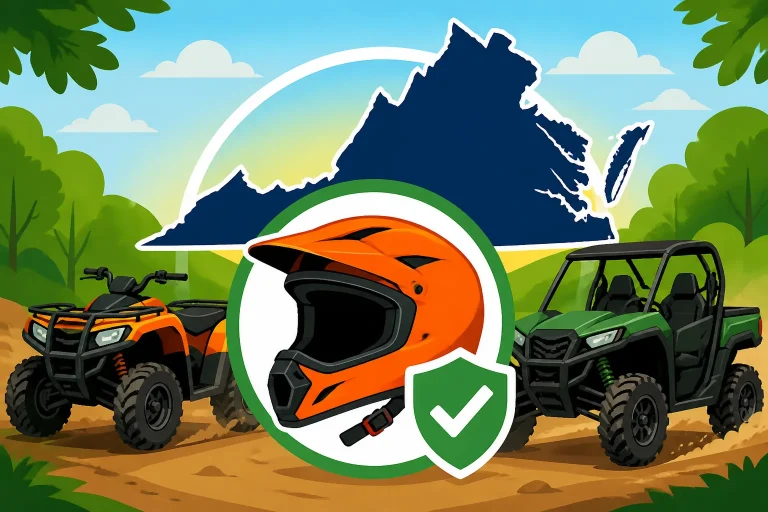
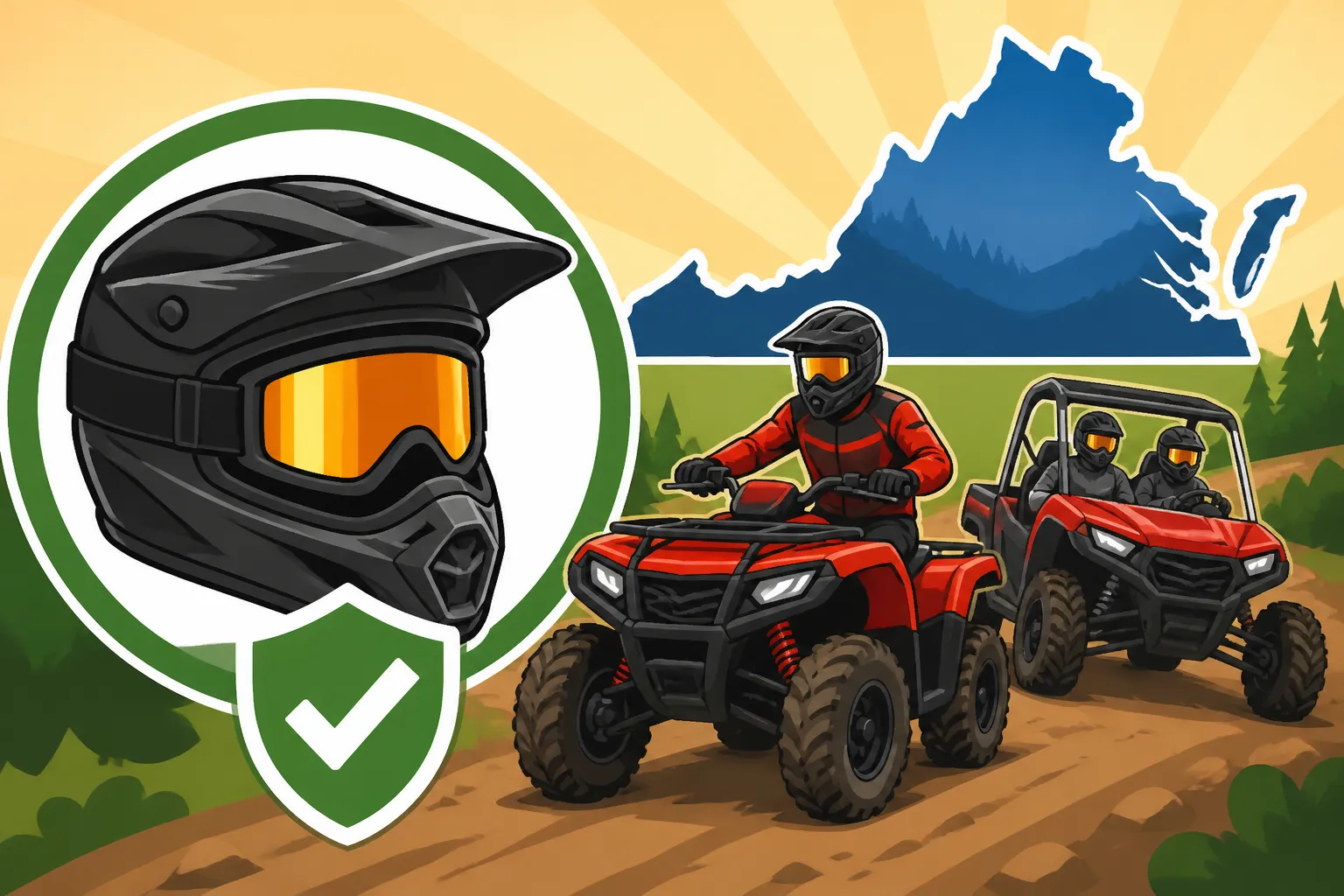
Virginia requires every ATV operator to wear a protective helmet, according to the Virginia Department of Motor Vehicles. The Virginia General Assembly specifies that the helmet must be approved by the Superintendent of State Police. The requirement is not limited to children or to riders on public roads; it applies to ATV operation generally.
That statewide rule is a baseline, not a guarantee that every riding venue has identical wording in its own rules. A park or trail system may specify a helmet standard or require other protective equipment. Check the venue’s current rules before you ride, especially if you’re visiting a private park whose operator sets admission and riding conditions.
For Forest Service trail systems, the agency names a more specific standard. The Forest Service requires operators of motorcycles and ATVs at Peters Mill Run and Taskers Gap to wear a Department of Transportation-approved protective motorcycle helmet. It also requires operators and riders on the South Pedlar ATV Trail System to wear a DOT-approved protective motorcycle helmet. If you plan to ride on those trails, choose a helmet that meets the stated DOT requirement and check that it is in good condition.
| Riding location | Helmet rule to check | What to do before riding |
|---|---|---|
| Virginia generally | The Virginia General Assembly requires ATV operators to wear a protective helmet approved by the Superintendent of State Police. | Wear a protective helmet and verify that it meets the state requirement. |
| Peters Mill Run and Taskers Gap | The Forest Service requires operators of motorcycles and ATVs to wear a DOT-approved protective motorcycle helmet. | Bring a helmet that meets the stated DOT standard. |
| South Pedlar ATV Trail System | The Forest Service requires operators and riders to wear a DOT-approved protective motorcycle helmet. | Make sure every rider has a qualifying helmet, including a passenger where the machine allows one. |
| Private riding park | The park’s own requirements may add to the statewide rule. | Confirm the park’s helmet standard and any other gear rules before you travel. |
If you want a closer look at the statewide requirement, see Virginia Helmet Law Applies to Every Rider and Virginia Helmet Standards From the State Police. Those rules matter whether you’re riding on a trail, private land or another permitted location. A riding park’s policy does not replace state law; it can add another condition for entering or using that park.
One practical point: don’t rely on a helmet’s general description alone. Check the helmet’s labeling and the venue’s exact requirement. If you’re uncertain whether a particular helmet meets the rule for your destination, ask the park or trail office before you go. That is especially useful when you own a helmet intended for a different kind of riding and aren’t sure whether it qualifies as a protective motorcycle helmet.
Forest Service Trails Have Their Own Specific Standard
Virginia has more than one kind of riding destination, and a Forest Service trail system is not the same thing as a privately operated riding park. The Forest Service identifies off-highway vehicle riding as a recreational opportunity on National Forest lands, but motorized travel is limited to areas, roads and trails designated as open to off-highway vehicles. Check the route and access rules as well as the helmet requirement.
At Peters Mill Run and Taskers Gap, the Forest Service calls for a DOT-approved protective motorcycle helmet for operators of motorcycles and ATVs. The system has designated OHV trails, and the Forest Service says its recreation area operates from sunrise to sunset. Trails marked with a V are designated for off-highway vehicle use. Before setting out, confirm that your intended trail is open and that your helmet meets the stated standard.
South Pedlar has its own requirements. The Forest Service requires a DOT-approved protective motorcycle helmet for operators and riders there. It also states that people between 12 and 16 may operate an ATV only within the applicable engine-size limit and under adult supervision, while its site-specific rule bars operators under 12 from any vehicle. That site rule is stricter than the statewide age allowance for some younger ATV operators, so families should not assume that a child allowed to operate an ATV under state law is also allowed to ride at South Pedlar.
These details are easy to miss when comparing destinations. Virginia Trails for Kids can help with broader planning, but the specific trail system’s rules still control your visit. For more on one of the Forest Service destinations, see Peters Mill Run OHV Trails in Virginia or Virginia National Forest OHV Permits.
A permit and a helmet answer different questions. A permit authorizes use of a particular trail system under its rules; it does not show that the rider has the required helmet or that the machine may use every route. The Forest Service requires operators on designated trails and roads within the Peters Mill Run/Taskers Gap complex to possess and display a permit. South Pedlar also requires a permit for each ATV operator. Check the trail system’s permit instructions separately from its equipment rules.
Private Riding Parks May Set Additional Conditions
The statewide helmet requirement applies to ATV operators, but private riding parks can have entry rules of their own. A park may specify what helmet types it accepts, whether passengers must wear helmets, or what other gear riders need. The facts available here do not establish a single helmet policy for every private park, so don’t assume that a rule from one venue applies at another.
Before you leave, contact the park or review its current rider information. Ask direct questions:
- What helmet standard does the park accept?
- Does the rule cover passengers as well as operators?
- Is there a separate gear rule for children or for particular machines?
- Does the park require anything beyond the state helmet requirement?
- Are helmets available to rent, or must every rider bring one?
These questions can prevent a frustrating surprise at the gate. A helmet that satisfies the statewide requirement may still fail to meet a park’s more specific entry condition. If a park’s wording is unclear, ask the operator to identify the standard it expects rather than guessing based on a product description.
It also helps to distinguish private riding parks from Virginia’s public lands. The Forest Service’s system-specific requirements apply at the named Forest Service trail systems, not automatically at every privately operated venue. Likewise, the rules for one private park should not be treated as a statewide rule. Virginia Private Off-Road Parks is a useful next read when you’re comparing places to ride, while Virginia State Parks Ban ATVs addresses a different kind of public recreation area.
If you’re shopping for a helmet, compare its labeling with the exact requirement for the place you plan to ride. Amazon may be one place to browse, but a listing title or seller description is not a substitute for checking the helmet’s labeling and confirming that the venue accepts it. When in doubt, ask the venue before buying or hauling the helmet along.
A Pre-Ride Helmet Check That Avoids Guesswork
Once you know the rule for your destination, make the helmet check part of loading the machine. Don’t leave it until you arrive. That gives you time to resolve questions about the standard, fit or condition before the ride.
- Identify the destination. Confirm whether you’re going to a private park, Peters Mill Run and Taskers Gap, South Pedlar or another location. Don’t assume that similar names or nearby trailheads share the same rules.
- Check the official rule for that destination. For Virginia’s statewide requirement, the Virginia General Assembly says ATV operators must wear a helmet approved by the Superintendent of State Police. For Peters Mill Run and Taskers Gap and for South Pedlar, the Forest Service specifies a DOT-approved protective motorcycle helmet.
- Check who needs a helmet. Virginia requires ATV operators to wear a helmet, and the Forest Service expressly requires operators and riders at South Pedlar to wear one. Confirm the passenger rule at any other venue rather than assuming an operator-only rule.
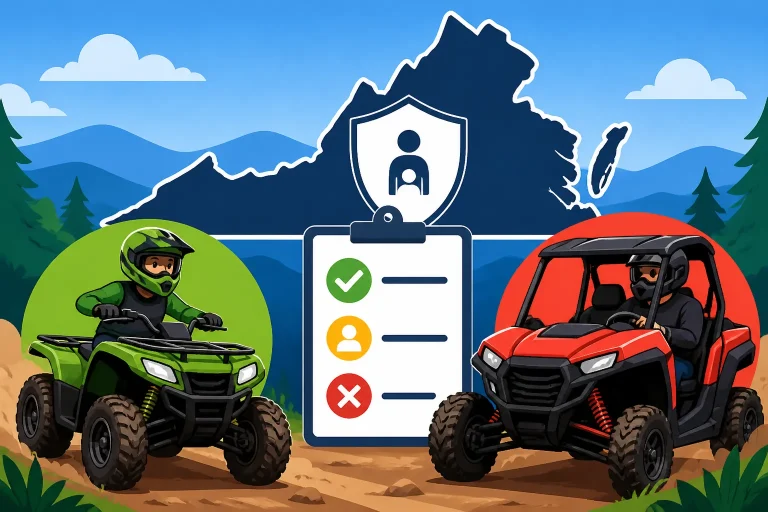
- Inspect the helmet before the trip. Make sure it is in usable condition, fits securely and can be fastened as intended. Replace or set aside a helmet that is damaged or whose labeling is missing or unreadable; ask the park or trail office if you’re unsure whether it will be accepted.
- Pack for every rider. If passengers are permitted on the machine and the venue requires them to wear helmets, bring one for each rider. Virginia prohibits carrying a passenger on an ATV unless the machine is designed and equipped for multiple riders, according to the Virginia General Assembly.
- Confirm the remaining trail rules. A compliant helmet does not make an unapproved route, machine or riding time legal. Review access, age, passenger and permit requirements for the destination before you start.
For families, check the age and machine rules along with the helmet policy. The Virginia General Assembly allows children under 12 to operate ATVs with engines no greater than 70 cubic centimeters, and children ages 12 to 16 to operate ATVs with engines no greater than 90 cubic centimeters. The Forest Service’s South Pedlar rule is different for younger children: it does not allow operators under 12 on any vehicle there. Ask the venue about its requirements before bringing a young rider.
If you’re planning a Forest Service ride, don’t stop at checking the helmet. The Forest Service limits OHV use to designated routes, and a permit is required at the systems described above. Virginia Forest Equipment Requirements and Virginia Forest Permit Purchase Options can help you check other planning details. Confirm the current conditions with the responsible office or park before traveling, since access and local rules can vary by location.
The short version: wear a protective helmet whenever you operate an ATV in Virginia, then match the helmet to the specific venue’s rule. For Peters Mill Run, Taskers Gap and South Pedlar, the Forest Service explicitly requires a DOT-approved protective motorcycle helmet. For private parks, ask the operator what it accepts, and verify the rules for every rider before you arrive.
Sources
- Virginia Department of Motor Vehicles — Off-Road Vehicles | Virginia Department of Motor Vehicles (checked November 3, 2026)
- Virginia General Assembly — § 46.2-915.1. All-terrain vehicles and off-road motorcycles; penalty (checked November 3, 2026)
- Forest Service — George Washington and Jefferson National Forests | Peters Mill Run/Taskers Gap Trail System | Forest Service (checked November 3, 2026)
- Forest Service — George Washington and Jefferson National Forests | South Pedlar ATV Trail System | Forest Service (checked November 3, 2026)
- USDA Forest Service, Glenwood & Pedlar Ranger Districts — South%20Pedlar%20ATV%20Permit%20Order%20Form.pdf (checked November 3, 2026)
Disclaimer
This article is for general informational purposes only and does not constitute professional advice. Laws, prices and regulations vary by location and change over time. Consult a qualified professional for guidance on your specific situation.