Virginia State Park Rules for Machines
Virginia’s state parks can look like inviting places to ride, but a park trail, campground road, or open field is not automatically an ATV route. The key point is that Virginia State Parks are generally not for recreational ATV or UTV riding. Here’s how to avoid mistaking park access for permission and where to check before you haul a machine.
Can you ride an ATV or UTV in a Virginia state park?
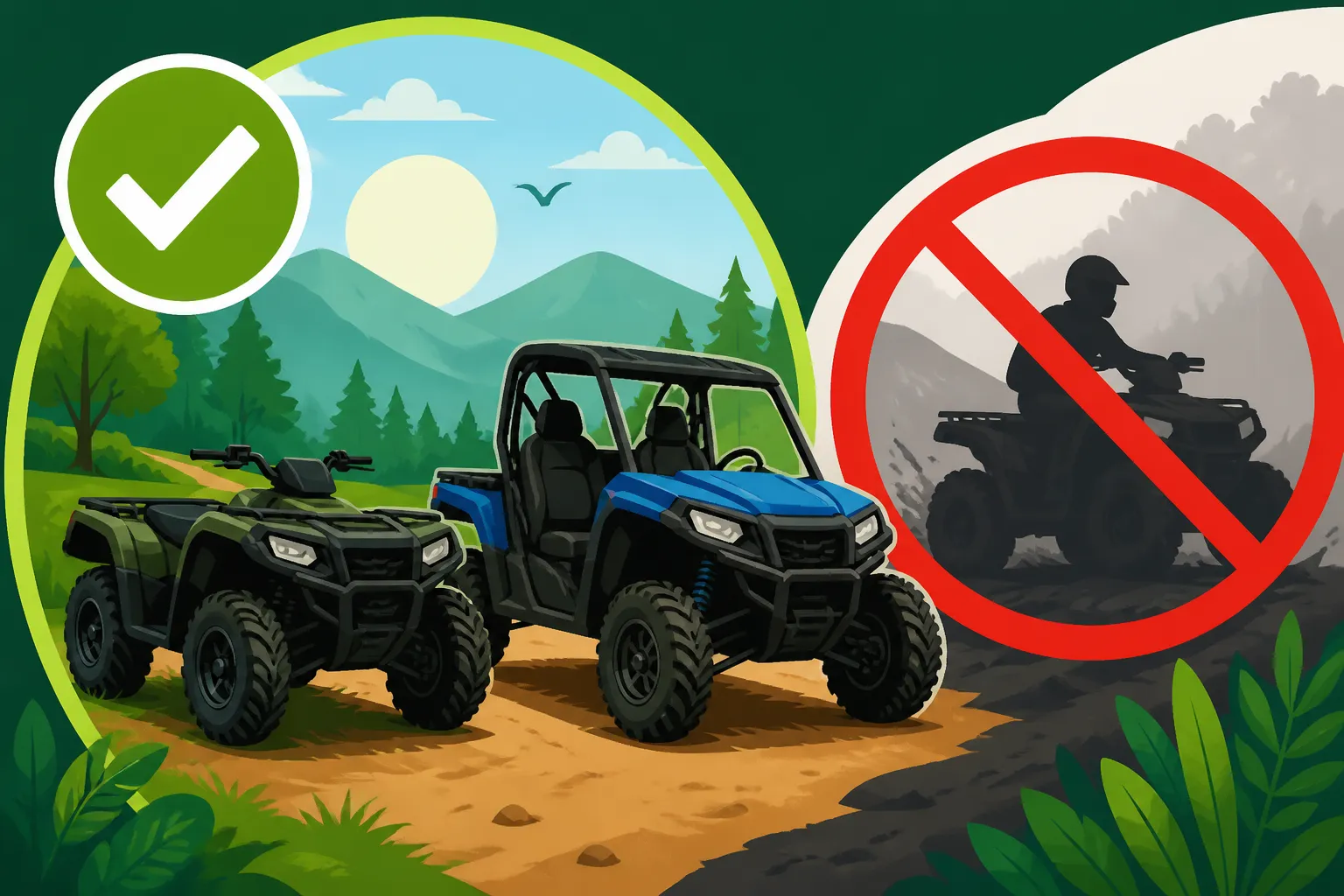
Generally, no. Virginia State Parks are not designated recreational ATV or UTV riding areas, and riders should not assume that a trail, road, beach, or campground within a park is open to off-highway machines. The state’s general rule is summarized in Virginia State Parks Ban ATVs. A park’s trails are intended for the activities allowed there, such as hiking, biking, or horseback riding, not for riding a personal ATV unless the park expressly says otherwise.
That distinction matters because a machine’s ability to travel over dirt does not make a route an authorized riding trail. A wide service road, an unpaved campground lane, and a trail that appears open can all be off-limits to recreational motorized use. Riding where it is not allowed can create safety problems, disturb other visitors and wildlife, and damage the surface.
The policy also applies to UTVs and side-by-sides used for recreation. A larger machine is not exempt just because it resembles a small car or has a steering wheel. Nor does a Virginia title, a trail permit, or permission to use an off-road park automatically authorize riding inside a state park.
There can be motorized vehicles in a state park for reasons unrelated to recreational riding. Park staff, contractors, emergency responders, and people using authorized vehicles for park operations may travel in places ordinary visitors cannot. That does not establish a general right for visitors to ride their own machine in the same area.
| Situation | What to assume | What to do |
|---|---|---|
| Riding your ATV or UTV on a park trail | Not allowed unless the park explicitly authorizes it | Confirm directly with the park before unloading |
| Driving a street-legal vehicle on a public park road | Use only roads open to ordinary vehicle traffic and obey posted rules | Check road access, parking, and any vehicle restrictions |
| Hauling an ATV or UTV to a campsite | Transporting it is different from riding it | Ask whether the trailer and machine can be parked there |
| Using a golf cart or other small vehicle | Rules may be specific to the park or purpose | Ask about authorization, routes, and permitted users |
| Riding on a designated off-road trail elsewhere | A state park restriction does not answer rules for other land | Check the riding area’s access rules and permit requirements |
Treat “not listed as forbidden on a sign” as different from “permitted.” If a route or activity is unclear, the practical answer is to ask the park before riding—not to test the boundary.
What counts as park access, and what does not?
Visitors sometimes use “taking the ATV to the park” to mean two different things: bringing the machine to the property in a trailer, or riding it around the park. Those are separate questions. A park may have vehicle roads and parking areas while prohibiting recreational ATV use. Being allowed to enter in a truck and trailer does not mean you can unload the quad and ride it from the campsite.
Public roads inside a park
A road within a state park may be open to ordinary road vehicles, but that does not make it an ATV trail. If your ATV or UTV is not lawful for road use, do not assume that you can drive it along the road simply because cars use that route. And even a road-legal vehicle must follow posted restrictions, closures, and traffic directions.
Virginia does not generally give ATVs a street-legal path simply because they have lights or safety equipment. See Virginia ATV Road Rules Under 46.2-915.1 for the separate road-use rules. A route inside park property still needs to be open to the type of vehicle being operated.
Trails, maintenance roads, and closed areas
A trail’s appearance is not a reliable indicator of what vehicles may use it. Some paths are limited to foot traffic, bicycles, or horses; others may be closed temporarily to protect the land or for maintenance. A service road used by park staff does not become a public route for recreational machines.
Stay off gates, berms, and marked closures. Do not ride around a barrier or follow tire tracks into an area that appears unofficially used. If a map or sign does not clearly allow motorized recreational use, ask a park employee rather than relying on what another visitor is doing.
Campgrounds and parking areas
A campground is not an ATV staging area unless the park says it is. Riding around a loop, between campsites, or from a campsite to a trail can create conflicts with pedestrians and other visitors. Even if a machine is being transported into the park, its movement on the property may be restricted.
Before making a reservation, ask whether the park allows a trailer, where it can be parked, and whether an off-road machine may remain secured at the site. Confirm whether the answer differs between a campsite, day-use area, and overflow or trailer parking. If the park allows storage but not operation, keep the machine unloaded or secured as instructed.
Golf carts and other small vehicles
Golf carts are not the same thing as ATVs, and a park’s policy for one does not establish permission for the other. Some parks may have specific golf-cart rules for certain visitors, locations, or uses. Those rules can include limits on who may operate a cart and where it may travel. The existence of a golf-cart exception is not a general authorization for motorized recreation; see Virginia Golf Cart Trail Access at Parks for that distinction.
Do not assume that a personal utility vehicle, side-by-side, or neighborhood vehicle qualifies under a golf-cart policy. Ask the park to identify the vehicle type and the intended use when you call.
How to check a park’s rules before you go
Rules can differ by activity and location, and access information can change when a road or area closes. A quick confirmation before a trip can prevent a wasted drive, a conflict at the entrance, or an avoidable citation.
- Identify the exact park and activity. Say whether you want to bring a machine on a trailer, park it at a campsite, or ride it on a particular road or trail. “Can I bring an ATV?” may not make clear which permission you mean.
- Describe the machine accurately. Give the park its basic type—ATV, UTV, side-by-side, golf cart, or another vehicle—and explain whether it is street legal and whether you plan to unload it.
- Ask about the exact route or area. If you have a map, trail name, campground, or access road in mind, mention it. General approval to enter the park is not the same as permission to ride on a specific route.
- Confirm transport and parking separately. Ask whether a trailer can enter and where it may be left, even if riding is prohibited. Keep the answer about parking separate from the answer about operating the machine.
- Check for temporary restrictions. Closures, construction, weather, and special events can affect access. Review the park’s current notices and confirm with staff if the trip depends on a particular road or facility.
- Follow the answer you receive. Keep any written information with your trip notes, but obey signs and instructions on site. If a posted restriction conflicts with what you expected, stop and ask park staff before proceeding.
Useful questions include:
- Are personal ATVs or UTVs allowed anywhere inside the park?
- May I bring a machine on a trailer if I do not operate it?
- Is trailer parking available near the area I’m visiting?
- Are there any approved motorized routes or vehicle-specific exceptions?
- Do the rules change for a golf cart or accessibility device?
- Are there temporary closures or event restrictions I should know about?
For a vehicle that is not a recreational ATV, describe its actual purpose and ask the park how it is classified. A park employee can explain the rule that applies to the vehicle and activity, rather than making a decision based only on its appearance.
Where to ride instead, and how permits fit in
If the main goal is to ride, choose a place that expressly offers motorized off-road access. Virginia has designated trail systems and private riding areas, but each has its own vehicle limits, routes, hours, permits, and operating rules. A park pass or campground reservation is not a substitute for an off-road riding permit.
For public riding options, start with Virginia ATV Trails: Spearhead and the Forest. Spearhead trail systems and National Forest routes are distinct from Virginia State Parks, and the rules for one do not carry over to the other. For example, Virginia Spearhead Trail Permits covers a separate permit system; a Spearhead permit does not authorize riding in a state park. Likewise, Virginia National Forest OHV Permits explains a different system for Forest Service riding areas. Check the exact route and machine eligibility before traveling.
Private off-road parks are another option, but admission or a park waiver does not mean every machine is accepted. Confirm vehicle size, rider age requirements, safety equipment, trail conditions, and whether the facility is open on your intended date. Virginia Private Off-Road Parks can help distinguish these areas from state parks. If you are specifically shopping for routes that allow side-by-sides, review Virginia Trails That Allow Side-by-Sides and verify the current vehicle limits with the operator.
When comparing destinations, check more than whether a place is described as an “off-road park” or “trail.” Ask:
- Is the route open to ATVs, UTVs, or both?
- Are there width, height, or other machine restrictions?
- Is a permit required, and where must it be purchased?
- Are there age, helmet, or supervision rules?
- Are camping and riding access part of the same reservation, or separate?
- Are closures or seasonal conditions affecting the route?
Those details can determine whether your machine is allowed and whether your planned trip works. A permit may only cover one specific trail system, and a route that allows one category of vehicle may not allow another. Do not rely on a permit from a different operator or land manager as proof of permission.
The simplest plan is to treat Virginia State Parks as places for the activities they authorize, not as a convenient place to ride between other destinations. If you want to visit a state park and ride elsewhere, keep those plans separate: confirm the park’s vehicle and parking rules, then use a designated riding area whose current rules specifically allow your machine.
Disclaimer
This article is for general informational purposes only and does not constitute professional advice. Laws, prices and regulations vary by location and change over time. Consult a qualified professional for guidance on your specific situation.