Virginia Requires an MSO for a New Machine
So, you’ve just made the exciting decision to buy a brand-new ATV or UTV in Virginia, perhaps a shiny new side-by-side ready for the trails of Spearhead or a powerful utility quad for your farm in the Shenandoah Valley. That feeling of rolling off the dealer lot with a fresh machine is incomparable! But then reality sets in, and you remember the paperwork. One crucial piece of paper you absolutely must have, and one that often causes a little head-scratching, is the Manufacturer's Statement of Origin, or MSO. This guide is here to walk you through exactly what an MSO is, why Virginia requires it for your new machine, and how to use it to smoothly get your ATV or UTV titled in the Commonwealth.
Understanding the Manufacturer's Statement of Origin (MSO)
When you buy a brand-new ATV or UTV, it doesn't come with a title right away. Think about it: it's never been owned before, so there's no previous owner to sign over a title. This is where the MSO steps in. It's an absolutely foundational document, and understanding its role is key to a hassle-free titling experience in Virginia.
What Exactly Is an MSO and Why Does It Matter?
An MSO is essentially the birth certificate of your new off-road machine. It’s issued by the manufacturer when the ATV or UTV is produced, and it serves as official proof that the vehicle is new and has never been registered or titled to an owner before. Without this document, the Virginia Department of Motor Vehicles (DMV) has no way of verifying that your machine is indeed new and that you are its legitimate first owner.
Imagine trying to enroll a child in school without a birth certificate – it’s a non-starter. The MSO plays that exact role for your ATV or UTV. It establishes a clear chain of custody from the factory to the dealership, and then finally to you, the first retail buyer. It’s what prevents fraud, ensures proper sales tax collection, and allows the state to accurately track newly introduced vehicles. For any machine over 50cc bought new since July 2006, the MSO is the starting point for its official life in Virginia's records. [Virginia Titles Machines Bought New Since 2006]
Key Information Found on an MSO
The MSO isn't just a generic piece of paper; it’s packed with specific, vital information that the DMV will scrutinize during the titling process. You should always double-check these details as soon as you receive the MSO from your dealer, especially before leaving the dealership.
Typically, an MSO will include:
- Manufacturer’s Name: The company that built the ATV or UTV (e.g., Honda, Polaris, Yamaha).
- Vehicle Identification Number (VIN): This is the unique 17-character serial number that identifies your specific machine. It's like your ATV's fingerprint. Make sure it matches the VIN stamped on the frame of your machine.
- Make and Model: The brand and specific model name of your ATV or UTV.
- Model Year: The year of manufacture.
- Engine Size (Cubic Centimeters – CCs): Crucial for Virginia, as it determines whether your ATV needs a title. Machines over 50cc are generally required to be titled. [Virginia Titles Required on Machines Over 50cc]
- Type of Vehicle: Clearly stating if it's an ATV, UTV, or off-road motorcycle. This distinction is important for how Virginia treats it for titling purposes. [Virginia ATV and Utility Vehicle Definitions]
- Shipping Weight: The weight of the machine as it left the factory.
- Dealer Information: The name and address of the dealership that sold you the machine, often including their dealer license number. [Virginia Dealer License Numbers on an MSO]
- Date of Issuance: When the MSO was created.
- Signature of Authorized Agent: A signature from the manufacturer or an authorized representative, verifying the document's authenticity.
Any discrepancy in these details, even a minor typo, can cause delays or even rejection of your titling application at the DMV. It's far easier to get it corrected by the dealer before you leave than to try to fix it later.
MSO vs. Title: The Crucial Distinction
This is where many new ATV and UTV owners get confused. An MSO is not a title. It's the document that allows you to obtain the first title for your vehicle. Think of it as the raw material that gets processed into the finished product (the title).
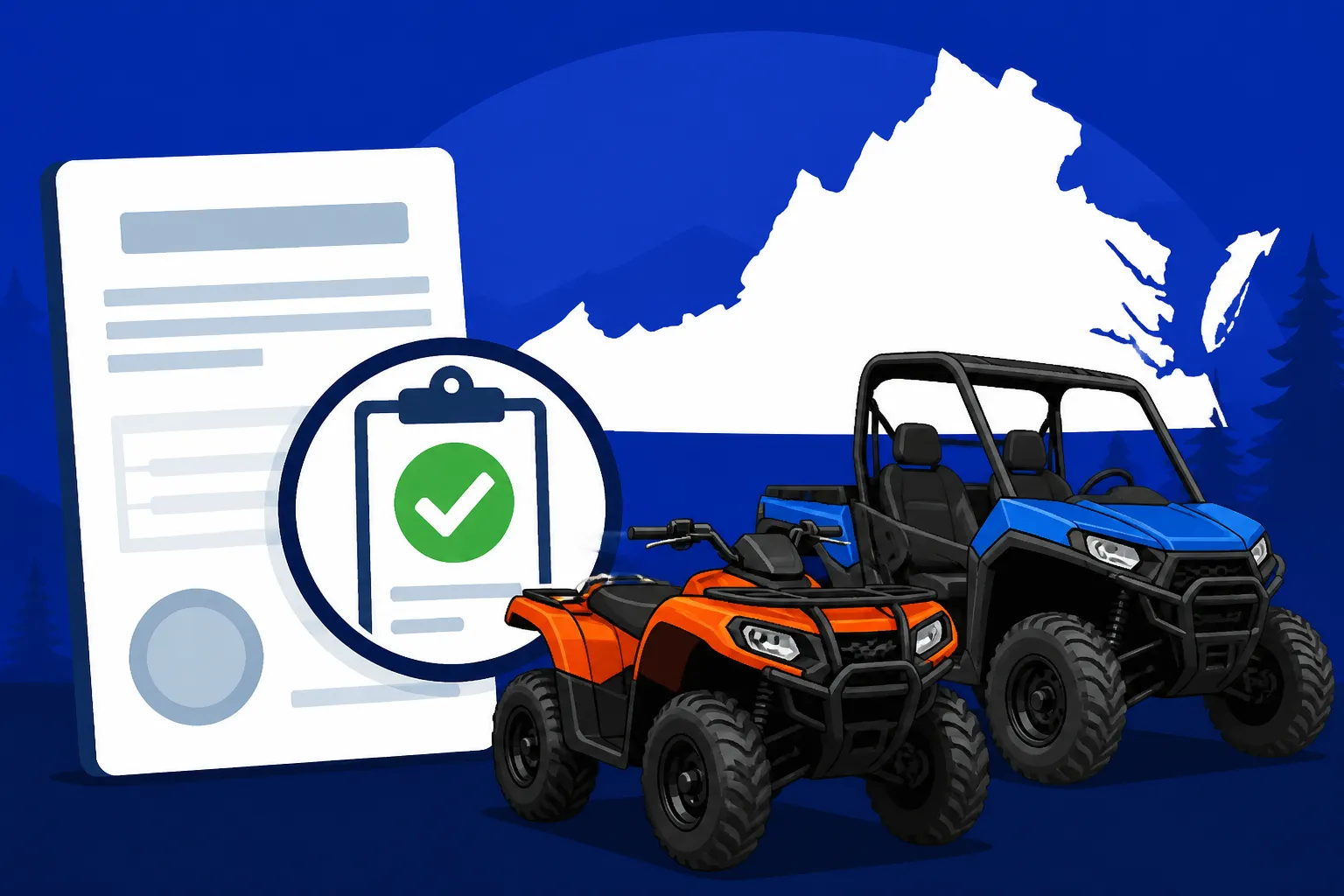
Once you present the MSO to the Virginia DMV, along with your application, sales tax payment, and other required documents, the state will then issue you an official Virginia Certificate of Title. This certificate is the legal document proving ownership. The MSO essentially gets "consumed" in this process – it's the bridge from the manufacturer to the first legal owner. You won't get the MSO back; the DMV keeps it as part of their record-keeping. It's a one-time use document for the first owner.
Why Virginia's DMV Demands an MSO for New ATVs & UTVs
The Commonwealth of Virginia, like most states, has a vested interest in tracking vehicle ownership and ensuring proper procedures are followed. The MSO is a cornerstone of this system, especially for new off-road machines.
Establishing First Ownership and Preventing Fraud
The MSO acts as undeniable proof that the ATV or UTV has never been previously owned or titled. This is critical for several reasons. Firstly, it prevents potential fraud, such as someone trying to title a stolen machine as new. The VIN on the MSO can be cross-referenced with manufacturer records and national databases to ensure the machine hasn't been reported stolen or has a problematic history.
Secondly, it clearly establishes the first legitimate owner, which is you if you're buying new from a dealer. This chain of custody is essential for all future transfers of ownership. Without an MSO, the DMV would have no reliable way to confirm the machine's origin story, leading to a messy and potentially unmanageable system of ownership records. This document is your official "welcome letter" to the world of ATV ownership, as far as the state is concerned.
Linking to Virginia's Titling Requirements
Virginia has specific rules for titling ATVs and UTVs, and the MSO plays directly into these. Since July 1, 2006, any new ATV or UTV with an engine displacement greater than 50 cubic centimeters (cc) purchased in Virginia is required to be titled. If your machine falls into this category, the MSO is the primary document you'll use to meet that initial titling requirement. [Virginia's July 2006 Titling Cutoff]
For example, if you bought a new 450cc Honda Rancher from a dealership in Fredericksburg last week, you must present the MSO to the DMV to get your title. However, if you bought a used 450cc Honda Rancher from a private seller, you wouldn't use an MSO; you'd use the previous owner's signed-over title. This distinction between new and used machines, and the role of the MSO, is fundamental to understanding [How to Title an ATV in Virginia].
The Role of the Selling Dealer in the MSO Process
Your dealership plays a crucial role in getting the MSO to you. They are the intermediary between the manufacturer and the first retail buyer. When the dealer receives a new ATV or UTV from the factory, it arrives with its MSO. The dealer holds onto this document until the sale is complete.
Upon purchase, the dealer typically signs the MSO over to you, the buyer. This endorsement confirms that the dealership has legally transferred ownership to you. In many cases, especially if you finance your purchase, the dealer will even handle the entire titling process on your behalf, sending the MSO and other paperwork directly to the DMV. This is often a convenience fee they charge, but it can save you a trip to the DMV and ensure all forms are correctly filled out. [Letting the Dealer File Your Title Paperwork]
However, if you're paying cash or prefer to handle the titling yourself, ensure you receive the original MSO, signed and dated by the dealer, before you leave their lot. Don't accept a copy, as the DMV will almost always require the original. Make sure the dealer's information, including their license number, is clearly visible and accurate on the MSO if applicable.
Navigating the Titling Process with Your MSO
Once you have that MSO in hand, you're well on your way to getting your official Virginia title. But it's not the only piece of the puzzle. There are other documents and considerations to keep in mind to make the trip to the DMV as smooth as possible.
What to Bring to the DMV Beyond the MSO
While the MSO is paramount for a new machine, it's just one item on a checklist. To successfully title your new ATV or UTV, be prepared with the following:
- Original Manufacturer's Statement of Origin (MSO): As discussed, this is non-negotiable for a new machine.
- Application for Certificate of Title and Registration (Form VSA 17A): This is the main form you'll fill out to apply for your title. You can usually download and pre-fill it from the Virginia DMV website, or get a copy at the DMV office. Make sure all information matches the MSO exactly. [Virginia Form VSA 17A Explained]
- Proof of Identity: Your valid Virginia driver's license or state-issued ID card. If you're a new resident, you might need additional documentation. [Virginia Title for a New Resident]
- Proof of Address: A utility bill, lease agreement, or other document showing your current Virginia residential address. This is important for their records. [Virginia Proof of Address at Titling]
- Bill of Sale: While the MSO proves the machine is new, a bill of sale or purchase agreement from the dealer will typically outline the sale price, which is crucial for calculating sales tax. Even if you're not explicitly asked for it for a new machine (as the MSO and VSA 17A often have sales price), having it ready is always a good idea. For private sales, a bill of sale is even more critical. If you ever need a robust, legally sound bill of sale for any future private transaction, services like LawDepot can provide customizable templates.
- Payment for Fees and Taxes: Be ready to pay the Virginia title fee (which is typically a fixed amount, check the DMV website for current figures, but historically around $15) and any applicable sales tax. The sales tax rate on ATVs is different from regular motor vehicles in Virginia. [Virginia ATV Title Cost] and [Virginia Sales Tax at Titling]
It’s always a good practice to call your local DMV office or check their official website before your visit to confirm their specific requirements and operating hours.
Common Pitfalls: Missing or Incorrect MSO Information
Even with the best intentions, things can sometimes go wrong. The most common issues arise from inaccuracies or omissions on the MSO itself.
- Missing Signature: If the MSO from the dealer isn't properly signed by an authorized representative, the DMV will likely reject it. They need that endorsement to prove the transfer of ownership.
- Incorrect VIN: A single digit off on the VIN can cause a major headache. The VIN on the MSO must match the VIN stamped on the machine's frame, and the VIN you write on Form VSA 17A. If there’s a mismatch, you'll need to go back to the dealer for a correction.
- Misspelled Name or Address: If your name or address is misspelled on the MSO (or on the VSA 17A you filled out), it will need to be corrected. Accuracy is key for state records. [Correcting a Misspelled Name at the Virginia DMV]
- Accepting a Copy Instead of the Original: As mentioned, the DMV almost always requires the original MSO. A photocopy, no matter how clear, will typically not be accepted.
If you encounter any of these issues, your first step should always be to contact the selling dealer immediately. They are responsible for providing you with a correct and properly executed MSO. Dealing with these issues upfront, before you trek to the DMV, will save you a lot of time and frustration.
The Importance of a Notarized Bill of Sale Alongside Your MSO
While the MSO is king for proving a machine is new and establishing its first ownership, a bill of sale still holds significant value, especially in clarifying the financial transaction and protecting both buyer and seller. Even with a new machine from a dealer, your purchase agreement serves this purpose. For future sales, particularly when you eventually sell your titled ATV or UTV to a private party, a detailed, notarized bill of sale becomes indispensable.
A bill of sale provides a clear record of the purchase price, which directly impacts the sales tax calculation in Virginia. It also specifies the date of sale, the parties involved, and sometimes includes disclosures about the machine's condition (though less relevant for a brand-new one). While the MSO handles the "birth certificate" aspect, the bill of sale manages the "transaction receipt." Using a reliable template from a service like LawDepot can ensure you cover all necessary legal bases when either buying or selling. This can be particularly helpful if the sales price differs from the theoretical "book value" the DMV might consult in some situations, helping to justify the tax paid.
Special Considerations and Troubleshooting
The path to titling your new ATV or UTV in Virginia is usually straightforward with an MSO, but sometimes unique situations or unexpected bumps in the road can occur. Being prepared for these can make all the difference.
When Your Dealer Handles the MSO and Titling for You
Many dealerships offer to handle the titling paperwork for their customers, often for an additional "dealer processing fee." This can be a huge convenience, saving you a trip to the DMV and ensuring all forms are filled out correctly and submitted on time.
- Pros: Convenience, peace of mind that paperwork is handled by experienced staff, potential for faster processing as dealers often submit batches of titles. It's especially helpful if you're not familiar with DMV procedures or if the DMV office is far from you. [Virginia Dealer Paperwork at Delivery]
- Cons: An additional fee (sometimes called a "doc fee" or "processing fee") that adds to your overall purchase cost. You also give up some control over the timing of the submission. Ensure the dealer clearly discloses all fees upfront. [Virginia Dealer Fees to Expect]
If your dealer is handling the titling, make sure you receive a clear timeline for when you can expect your title to arrive in the mail. Keep all your purchase agreements and receipts. It's still wise to double-check that the VIN and your personal information are correct on the purchase order, as this is what the dealer will use to fill out the VSA 17A.
Dealing with a Lost or Damaged MSO
Imagine the sinking feeling: you've bought your new quad, driven it home, and now you can't find that crucial MSO. Or perhaps it got damaged beyond recognition. Don't panic, but know it will require an extra step.
If your MSO is lost or severely damaged, you cannot get a title without a replacement. Your first and only course of action is to contact the selling dealership immediately. They are the ones who received the MSO from the manufacturer, and they are typically the only entity that can request a duplicate MSO on your behalf.
The dealer will usually have a process for this, which might involve a form and a fee from the manufacturer. Be prepared for a potential wait, as it can take some time for a duplicate to be issued and mailed. This is a strong argument for carefully storing your original MSO in a safe place as soon as you receive it, even if the dealer is handling the titling. Make a digital copy for your records, but remember the DMV will need the original.
MSO for Out-of-State Purchases
What if you bought your brand-new ATV or UTV from a dealership just across the border, say in West Virginia or North Carolina, but you live in Virginia? The process is very similar, but with a few nuances.
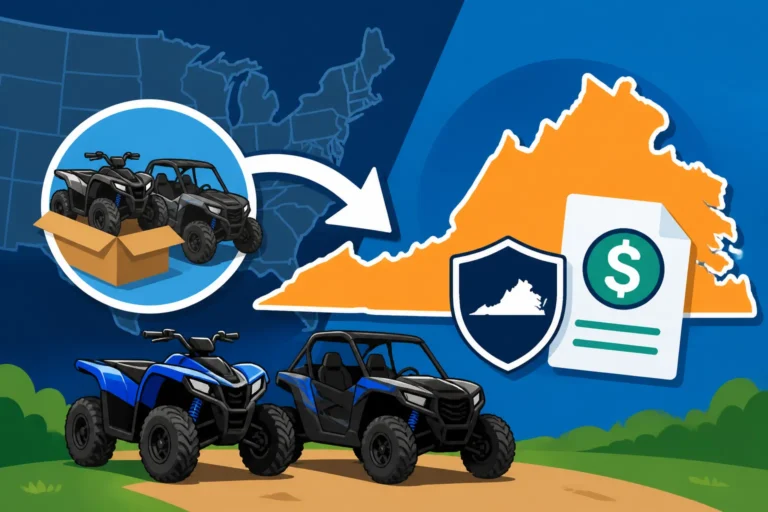
You will still receive an MSO from the out-of-state dealer. This MSO will then be presented to the Virginia DMV, along with your Virginia identification and proof of address. The key difference might be how sales tax is handled. If you paid sales tax in the state of purchase, Virginia might offer a credit for that tax paid, though you'll still owe Virginia's sales tax rate if it's higher. If no sales tax was collected (which is rare for a new machine from a dealer), you will owe the full Virginia sales tax when you apply for your title. [Virginia Tax on an Out-of-State Purchase]
Make sure the out-of-state dealer understands you are a Virginia resident and that the machine will be titled in Virginia. They should be familiar with preparing the MSO for an out-of-state transfer. Ensure all the information on the MSO is complete and accurate, just as if you bought it in Virginia. [Virginia Titles for a Machine Bought Out of State]
Beyond the MSO: What Happens After Titling
So, you've successfully presented your MSO and other documents to the Virginia DMV. What can you expect next? The final steps involve receiving your official title and understanding what it means for your new off-road adventures.
The Virginia Title: What You'll Receive
After your application is processed and all fees and taxes are paid, the Virginia DMV will mail your official Certificate of Title to the address you provided. This isn't an instant process; it can take a few weeks to arrive.
Your Virginia title will be a physical document, typically on security paper, listing you as the owner, along with the VIN, make, model, and year of your ATV or UTV. It will serve as the legal proof of ownership for as long as you own the machine. Keep this document in a safe place, such as a fireproof safe or safety deposit box. Do not keep it on your ATV or UTV, as it could be lost or stolen. You only need to present it when you sell the machine or if you need to prove ownership for other official reasons.
It's worth noting that [Virginia Skips the Odometer Rule for ATVs], meaning your ATV title won't have an odometer reading section, unlike a car title. This is because ATVs and UTVs are not designed for public road use and mileage tracking is not a state requirement for them.
Understanding Liens on Your Title
If you financed the purchase of your new ATV or UTV, the lender (a bank, credit union, or the dealership's financing partner) will have a lien on your machine. This means they legally own a portion of the vehicle until you pay off the loan.
When your title is issued, it will typically list the lienholder (the bank or credit union) on the front. You, as the owner, will receive the title, but the lienholder's interest will be noted. Once you pay off your loan, the lienholder will send you a lien release document. You'll then need to submit this release to the Virginia DMV, which will issue you a new title with the lien removed, officially making you the sole legal owner with no encumbrances. [Virginia Title and Lien Records]
This is standard practice for financed vehicles and ensures the lender's interest is protected. Always make sure you understand the terms of your financing agreement and the process for obtaining a clear title once the loan is satisfied. [Financing an Off-Road Machine in Virginia]
The Lack of Registration, Plates, or Decals in Virginia
This is a point of common confusion for new ATV and UTV owners, especially those coming from states with different regulations. It's a critical aspect of Virginia's off-road vehicle laws:
- No Registration: Virginia does not register ATVs or UTVs in the same way it registers cars or trucks. You get a title, but you don't get yearly registration renewals or stickers. [Virginia Titles ATVs but Does Not Register Them]
- No Plates: You will not receive license plates for your ATV or UTV. These machines are not street legal, and therefore do not require or receive plates for public road use. [Virginia Issues No Plates for ATVs]
- No Decals: Similarly, there are no annual decals or tags to affix to your machine. The title is your proof of ownership, but there's no visible state identifier that needs to be displayed. [Virginia Issues No Decals for ATVs]
This means that while your machine is officially titled, its use is restricted to private land (with landowner consent) and designated off-road trails like the Spearhead Trails system. [Can You Ride an ATV on the Road in Virginia?] The absence of registration requirements is part of why [Virginia Requires No ATV Insurance] as a mandatory item, though obtaining insurance is always a smart personal decision.
Here's a quick comparison of the MSO and a Virginia Title:
| Feature | Manufacturer's Statement of Origin (MSO) | Virginia Certificate of Title |
|---|---|---|
| Purpose | Establishes initial manufacturing and transfer to the first retail buyer. | Legal proof of vehicle ownership within Virginia. |
| Issued By | The vehicle manufacturer. | The Virginia Department of Motor Vehicles (DMV). |
| Use Case | Required by the DMV to apply for the first title for a new machine. | Required for selling, transferring, or proving ownership. |
| Ownership | Shows the initial transfer from manufacturer to dealer to buyer. | Clearly lists the current legal owner(s) and any lienholders. |
| Lifespan | Single-use document; surrendered to the DMV for titling. | Stays with the vehicle and transfers with each subsequent owner. |
| Availability | Only for brand-new vehicles that have never been titled. | For all titled vehicles, new or used. |
Ultimately, securing your MSO and correctly using it to obtain your Virginia ATV or UTV title is a straightforward process when you know what to expect. Don't let the paperwork overshadow the excitement of your new machine. By understanding these steps, you'll be ready to hit the trails or get to work on your land with full confidence in your machine's legal standing.
Disclaimer
This article is for general informational purposes only and does not constitute professional advice. Laws, prices and regulations vary by location and change over time. Consult a qualified professional for guidance on your specific situation.