Carrying Papers on a Coalfield Trail
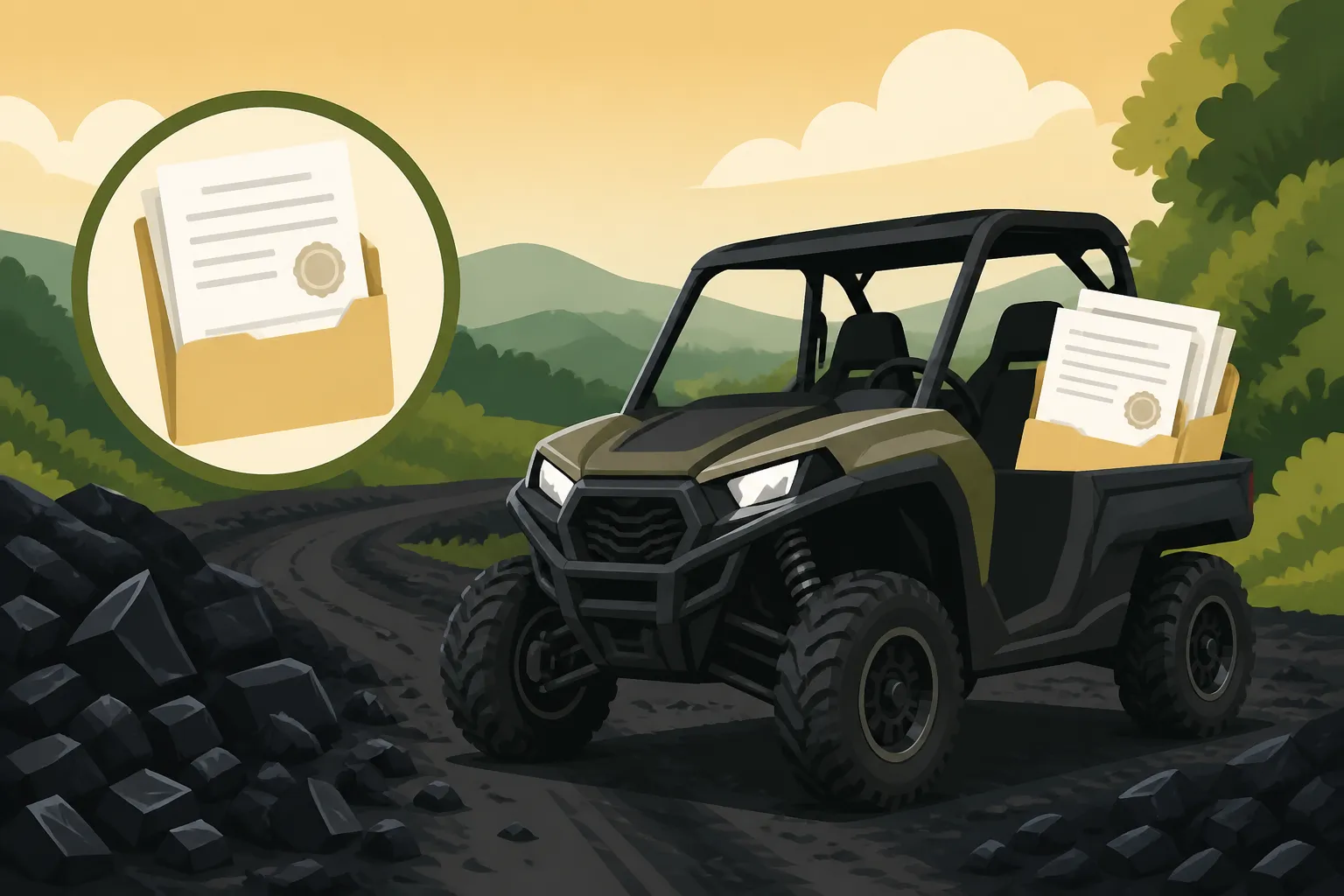
It's a frustrating scenario many off-road enthusiasts know all too well: you're out enjoying the rugged beauty of Virginia's coalfield trails, the engine purring beneath you, the dust flying, when suddenly, you see a uniform. Your heart might skip a beat, not because you're doing anything wrong, but because you're suddenly questioning if you have all the right paperwork. The rules around ATVs and UTVs in Virginia can feel like a maze, especially when it comes to what documents you need to carry on the trail. This guide aims to cut through that confusion, helping you understand precisely which papers you should have on hand to ensure your ride is smooth, legal, and stress-free.
Why Papers Matter: Avoiding Hassles and Proving Your Legitimacy
Hitting the trails in Virginia's stunning coalfields is about freedom, adventure, and camaraderie. But with that freedom comes responsibility, and a big part of that is being prepared. It's not about expecting trouble, but about being ready for routine checks that ensure everyone is enjoying the trails safely and legally. The last thing you want is a fantastic day to turn sour because of a simple oversight regarding your documents.
What an Officer Might Ask For on the Trail
When an officer approaches you on a trail, whether it's a Virginia Department of Wildlife Resources officer, a local sheriff's deputy, or a forest ranger, they're generally not looking to ruin your day. Their job is to ensure compliance with state laws and local ordinances, which helps keep the trails safe and accessible for everyone. Typically, they'll want to see your personal identification, proof that you're authorized to be on that specific trail system, and evidence that the machine you're operating rightfully belongs to you.
This isn't unlike getting pulled over in a car; you'd expect to show your driver's license, registration, and proof of insurance. While ATV rules differ significantly from highway vehicle laws – for instance, your ATV isn't registered for road use, and [Virginia Requires No ATV Insurance] – the principle of proving who you are and that your machine is legitimate remains. Understanding [What an Officer Can Ask For at a Trailhead] can help you approach these interactions calmly and confidently, turning a potentially stressful stop into a quick verification.
The Importance of Proving Ownership
One of the most common points of confusion for ATV and UTV owners in Virginia revolves around titles. For cars and trucks, a title is non-negotiable proof of ownership. For off-road machines, it's a bit more nuanced. [Virginia Titles ATVs but Never Registers Them], and there's a specific cutoff date and engine size requirement that dictate whether a title is even issued. However, regardless of whether your machine legally requires a title, proving you own it is absolutely critical.
Imagine this scenario: you're stopped, and the officer asks for proof of ownership. If you can't provide it, even if your machine doesn't require a title by law, it can lead to significant headaches. They might suspect the machine is stolen, resulting in delays, impoundment, and a whole lot of paperwork to get your ATV back – assuming you can eventually prove ownership. While [Virginia Titles Are Optional on Used Machines] might suggest less formality, a robust paper trail demonstrating your ownership is always the smartest move, whether it's a formal title or a comprehensive bill of sale.
For private sales, especially of used machines where a title might not exist or be transferred, a detailed bill of sale becomes your primary proof. This document should clearly state the buyer, seller, machine details (VIN/serial number, make, model), purchase date, and price. Many riders find value in using a reliable platform like LawDepot to generate a professional, legally sound bill of sale. This ensures all the necessary information is included, leaving no room for ambiguity about who legally owns the machine. It’s a small step that provides immense peace of mind and protection for both buyer and seller.
Essential Documents for Virginia Coalfield Trails
Navigating Virginia's diverse off-road landscape means understanding which documents are critical for each type of trail system. While some papers are universally important, others are specific to where you choose to ride. Being prepared means having both your personal identification and the necessary machine-related documents ready to go.
Your Identification and Trail Permits
First and foremost, you need to prove who you are. This seems obvious, but it's easy to overlook when you're focused on gearing up for a ride.
Driver's License or State ID
For any adult operating an ATV or UTV on Virginia's trails, carrying a valid driver's license or state-issued identification card is essential. This is your primary way to confirm your identity to an officer. It proves you are of legal age to operate the machine and helps verify your permit if you're on a permitted trail system. Even if you're riding a youth quad on private land, if you're an adult supervising, you should still have your ID on you.
Spearhead Trails Permit
If you're planning to ride any of the incredible Spearhead Trails systems, such as Coal Canyon, Mountain View, or Jawbone, a valid permit is absolutely mandatory. These permits fund the maintenance and operation of the trail system, ensuring a high-quality riding experience for everyone. [Virginia Spearhead Trail Permits] come in various forms, including annual and three-day options, and even discounted permits for residents of specific counties.
When you purchase a Spearhead permit, it's usually digital and tied to your identity. Trail rangers have the ability to look up your permit using your name and photo ID. Therefore, having a clear, current photo ID that matches the name on your permit is non-negotiable. Don't assume a screenshot on your phone will always suffice; while digital, you might need to show official identification to verify. Remember, [Virginia Annual vs Three-Day Permits] have different validity periods, so make sure yours is current for your ride dates. For younger riders, there are also [Virginia Youth Permits at $38], which have specific rules about accompanying adults and their own permits.
National Forest OHV Permit
Beyond the Spearhead systems, Virginia also offers fantastic riding opportunities on federal lands, notably the Peters Mill Run/Taskers Gap system within the George Washington National Forest. Riding here requires a specific [Virginia National Forest OHV Permits]. These are different from Spearhead permits and are typically purchased from forest service offices or authorized vendors.
Like Spearhead permits, you'll need to present your personal identification to obtain and verify these permits. It's crucial not to confuse the two types of permits; a Spearhead permit will not grant you access to a National Forest OHV trail, and vice-versa. Always check the specific requirements for the trail system you intend to ride before you haul your machine there.
Proof of Machine Ownership
This is where things can get a little tricky, especially for machines bought used or older models. However, having clear proof of ownership is one of the most vital documents you can carry.
Certificate of Title
For any ATV or UTV purchased new in Virginia since July 2006 (and over 50cc), a Certificate of Title from the Department of Motor Vehicles (DMV) is required. This document, which you receive after paying the [Virginia Title Fee of $15], serves as the definitive proof of legal ownership. It's a small, official document that clearly lists you as the owner. If your machine falls into this category, carrying a physical copy of this title (or a clear, notarized copy) is highly recommended. It’s the easiest way to satisfy an officer's request for proof of ownership.
Bill of Sale
For machines that don't have a Virginia title (e.g., used machines where titling was optional and the previous owner didn't title it, or machines bought before the 2006 cutoff), a comprehensive bill of sale becomes your most important ownership document. This is particularly true if you acquired your machine through a private sale. A good bill of sale should include:
- The full names and addresses of both the buyer and the seller.
- The date of the transaction.
- A detailed description of the ATV or UTV, including make, model, year, and crucially, the full Vehicle Identification Number (VIN) or serial number.
- The purchase price.
- Signatures of both parties.
To ensure your bill of sale is legally robust and includes all necessary details, consider using a template from a reputable source. LawDepot is an excellent resource for creating customizable bill of sale documents that can be tailored to your specific situation, providing clear evidence of your transaction. Having a professionally prepared document can save you immense trouble by clearly establishing the chain of ownership.
MSO (Manufacturer's Statement of Origin)
For brand new ATVs or UTVs, the Manufacturer's Statement of Origin (MSO) is the initial document of title provided by the manufacturer to the dealership. When you purchase a new machine, the MSO is what the dealership uses to title the machine in your name at the DMV. While you won't typically carry the original MSO on the trail once your machine is titled, understanding [The MSO You Need to Title a New Quad] highlights its foundational role in establishing your machine's legal history and your initial ownership. If your machine is so new it hasn't been titled yet, but you're operating it, carrying the MSO along with your purchase agreement might be necessary to prove you legitimately possess it.
Affidavit in Lieu of Title
In rare circumstances, such as inheriting a machine or acquiring one where the title has been lost and cannot be replaced by the seller, you might use a notarized affidavit in lieu of title to prove ownership. This is a legal document where you swear under oath to certain facts about the machine's acquisition. While less common, if this applies to your situation, this affidavit becomes your critical proof of ownership.
Other Smart Papers to Carry (Even If Not Required)
While not legally mandated for every ride, some additional documents can offer extra peace of mind and preparedness for unexpected situations on the trail.
Insurance Card
As mentioned earlier, [Virginia Requires No ATV Insurance] by law. However, many responsible riders choose to carry comprehensive off-road vehicle insurance for their ATVs and UTVs. This coverage can protect you from financial burden in case of an accident, theft, or damage to your machine. If you have a policy, carrying your insurance card or a copy of your policy declarations page is a smart move. It demonstrates responsibility and provides immediate contact information for your insurer if an incident occurs on the trail.
Emergency Contacts/Medical Info
While not legal documents, carrying a laminated card or a note in your wallet with emergency contact numbers and any critical medical information (allergies, conditions, medications) can be invaluable. In the event of an accident or medical emergency, this information allows first responders to act quickly and notify your loved ones. This is purely for your safety and well-being, but it’s a critical piece of "paperwork" for any outdoor adventure.
Landowner Permission
Virginia has very strict laws regarding riding on private property without consent. It's imperative that you only ride on land where you have explicit permission. If you frequently cross or ride on private land, even if it's connected to a public trail system, having [Virginia Written Landowner Consent] can save you from potential trespassing charges and civil penalties. A simple, signed letter from the landowner, detailing the permission granted, dates, and names, is your best defense.
Using a platform like LawDepot can be incredibly useful for drafting landowner permission forms. You can customize templates to clearly outline the terms of access, ensuring both you and the landowner are protected and on the same page. This professional approach can help prevent misunderstandings and legal issues, making your private land access secure and legitimate.
Trail Map
While not a legal document, a physical, waterproof trail map is an indispensable tool, especially in the remote coalfields where cell service can be spotty or nonexistent. It helps you stay on designated trails, avoid trespassing onto restricted areas, and navigate safely back to your staging area. Combine it with a GPS device for the best results, but a paper map never runs out of battery.
Practical Tips for Carrying and Protecting Your Documents
You've gathered all the right papers – fantastic! But simply having them isn't enough. They need to be protected from the elements and easily accessible when you need them most. Off-road riding is dusty, muddy, and often wet, so your important documents need robust protection.
Waterproofing and Accessibility
The trails can be unforgiving on paper. A sudden rain shower, a muddy splash, or even just sweat can quickly render your documents unreadable.
- Waterproof Bags: Invest in small, high-quality dry bags or heavy-duty Ziploc-style bags specifically designed for outdoor use. These are relatively inexpensive and provide excellent protection against moisture and dirt. Double-bagging for extra security is never a bad idea.
- Document Holders: Many ATVs and UTVs have small, built-in storage compartments, but these are rarely fully waterproof. You can find aftermarket document tubes or sealed boxes that mount securely to your machine, offering a more robust storage solution.
- Personal Pouch: For items like your ID, permit, and emergency contacts, a small, waterproof fanny pack or a pouch worn inside your jacket is ideal. This keeps your most critical documents on your person, ensuring they aren't lost if you get separated from your machine. Avoid just tossing them into a back pocket where they could fall out or get soaked.
- Digital Copies: While physical copies are generally preferred for official checks, having digital backups of your bill of sale, title, and permits on your smartphone (stored offline, in case of no signal) is a smart contingency. However, be prepared to present physical documents if an officer requests them.
What About Copies vs. Originals?
This is a common dilemma. Carrying original titles or bills of sale can make you nervous about loss or damage, but carrying only copies might not be sufficient in every situation.
- Titles and Affidavits: For official ownership documents like a Certificate of Title or an Affidavit in Lieu of Title, an original document is always best. If you're truly concerned about carrying the original, then a high-quality, clear, and preferably notarized copy is the next best thing. This demonstrates a greater level of authenticity than a simple photocopy.
- Permits and ID: For trail permits (especially digital ones) and your driver's license/state ID, physical originals are generally expected. Your photo ID is fundamental, and a printed copy of a digital permit is usually acceptable, as long as it's clear and matches your ID.
- Bills of Sale: If you used a service like LawDepot to create a detailed bill of sale, keep the original signed document in a safe place at home. Carry a clear, legible physical copy on the trail. This way, you have the crucial information readily available without risking the unique original.
When in doubt, err on the side of caution. An officer might be more understanding if you have a clear, well-protected copy that looks official than if you present a crumpled, illegible piece of paper.
Preparing for a Stop
Knowing how to react if an officer stops you can make the interaction go smoothly.
- Stop Safely: When you see an officer signaling you, pull over to a safe spot, turn off your engine, and remove your helmet. This shows respect and allows for clear communication.
- Keep Hands Visible: Place your hands on the handlebars or in a visible location.
- Be Polite and Cooperative: Greet the officer respectfully. They will typically explain why they stopped you.
- Present Documents: When asked, present your identification, permit, and proof of ownership calmly. Having them organized and easily accessible in your waterproof pouch will make this process quick and efficient.
- Answer Questions Truthfully: Answer any questions honestly. If you don't understand a question, politely ask for clarification.
Remember, most officers are simply ensuring everyone is following the rules for safety and preservation of the trails. Your preparedness and cooperation can turn a potentially uncomfortable moment into a quick "have a nice day" before you're back on the trail.
Common Misconceptions and Specific Virginia Nuances
Virginia's ATV and UTV laws have some unique characteristics that often lead to misunderstandings among riders. Being aware of these specific nuances is key to staying compliant and enjoying your ride without unexpected issues.
The "No Title Needed" Trap for Used Machines
One of the biggest areas of confusion revolves around ATV titles, especially for machines that have changed hands several times. While it’s true that [Virginia Titles Are Optional on Used Machines] if they were manufactured before July 1, 2006, or if a previous owner never titled a machine that met the criteria, this doesn't mean you can ride around with no paperwork. The "optional" part means the state doesn't force you to get a title, but it doesn't waive the need to prove legitimate ownership.
What an officer is looking for, even if your machine has no title, is clear proof that you are the rightful owner and that the machine isn't stolen. This is where a well-executed bill of sale, perhaps generated using LawDepot's comprehensive templates, becomes absolutely vital. Without it, you might face delays, questions, and even potential impoundment until you can establish a clear chain of ownership, which can be a drawn-out and frustrating process. Don't mistake "optional title" for "no proof of ownership needed."
Virginia's Unique Trail System Permits and Rules
Virginia boasts incredible trail systems, but it’s important to remember that they often operate under different authorities and require distinct permits. Riders often make the mistake of assuming one permit covers all trails.
- Spearhead vs. National Forest: As discussed, a Spearhead Trails permit is valid only for the Spearhead network (like Coal Canyon, Mountain View, etc.), and a National Forest OHV permit is required for trails like Peters Mill Run/Taskers Gap. These are not interchangeable.
- Hatfield-McCoy: If you're a Virginia rider who also crosses into West Virginia, remember that [Virginia Hatfield-McCoy Permits Are Separate] and absolutely necessary for those trails. Your Virginia permit will not work there.
- Age Limits and Helmets: Beyond permits and ownership, always remember Virginia's strict rules regarding age limits by engine size ([Virginia Age Limits by Engine Size]) and the universal helmet law ([Virginia Helmet Law Applies to Every Rider]). While not "papers" you carry, officers on the trail will absolutely be enforcing these safety regulations. Knowing these rules is part of being prepared for any interaction on the trail.
What an Officer Can Ask For at a Trailhead
Beyond your personal identification and machine documents, an officer might also conduct a quick check of your ATV or UTV's equipment. As outlined in [What an Officer Can Ask For at a Trailhead], this can include:
- Spark Arrestor: Ensuring your machine has a properly functioning spark arrestor to prevent wildfires, especially in dry conditions.
- Muffler: Checking that your exhaust system isn't excessively loud, adhering to noise regulations where applicable.
- Lights and Brakes: Verifying that your machine's lights and brakes are in working order for safe operation.
- Width Limits: On certain trails, particularly federal lands like Taskers Gap, there might be width restrictions (e.g., 50 inches). An officer might visually check or even measure your machine.
These checks are all part of maintaining a safe and responsible riding environment. Being prepared with your documents and knowing your machine meets basic safety and equipment standards will ensure your coalfield adventure remains a positive one.
Here's a quick reference table for your convenience:
| Document Type | Required for Trail Use (Generally) | Recommended to Carry (Always Smart) | Ideal Storage Method | Why It's Important |
|---|---|---|---|---|
| Personal ID | Yes (Driver's License/State ID) | Yes | Waterproof pouch, on your person | Verifies identity, age, permit matching |
| Trail Permit | Yes (Spearhead/National Forest) | Yes | Waterproof pouch, easily accessible | Grants legal access to specific trail systems |
| Certificate of Title | Yes (if applicable, new since 2006) | Yes (original or notarized copy) | Waterproof bag, secure on machine/person | Definitive legal proof of machine ownership |
| Bill of Sale | Yes (if no title exists) | Yes (clear copy) | Waterproof bag, secure on machine/person | Proof of ownership for untitled/used machines |
| MSO | No (dealer uses to title machine) | No (keep safely at home) | N/A | Foundation for new machine title (not trail-carry) |
| Insurance Card | No (not required by VA law) | Yes | Waterproof pouch, on your person | Shows responsibility, helps with accidents |
| Landowner Permission | Yes (if riding private land) | Yes (clear copy) | Waterproof bag, secure on machine/person | Prevents trespassing charges |
| Emergency Info | No | Yes | Waterproof pouch, on your person | Critical for medical emergencies/contacts |
| Physical Trail Map | No | Yes | Waterproof bag/map holder | Navigation, staying on legal routes |
Disclaimer
This article is for general informational purposes only and does not constitute professional advice. Laws, prices and regulations vary by location and change over time. Consult a qualified professional for guidance on your specific situation.