Virginia Riding in Winter
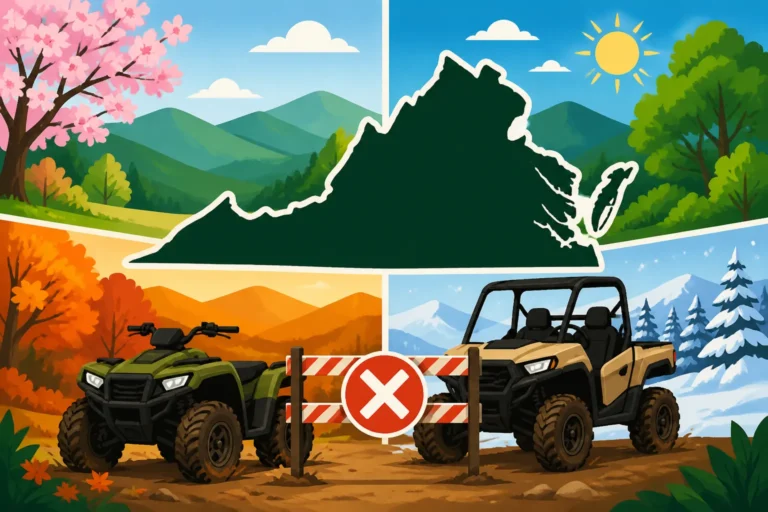
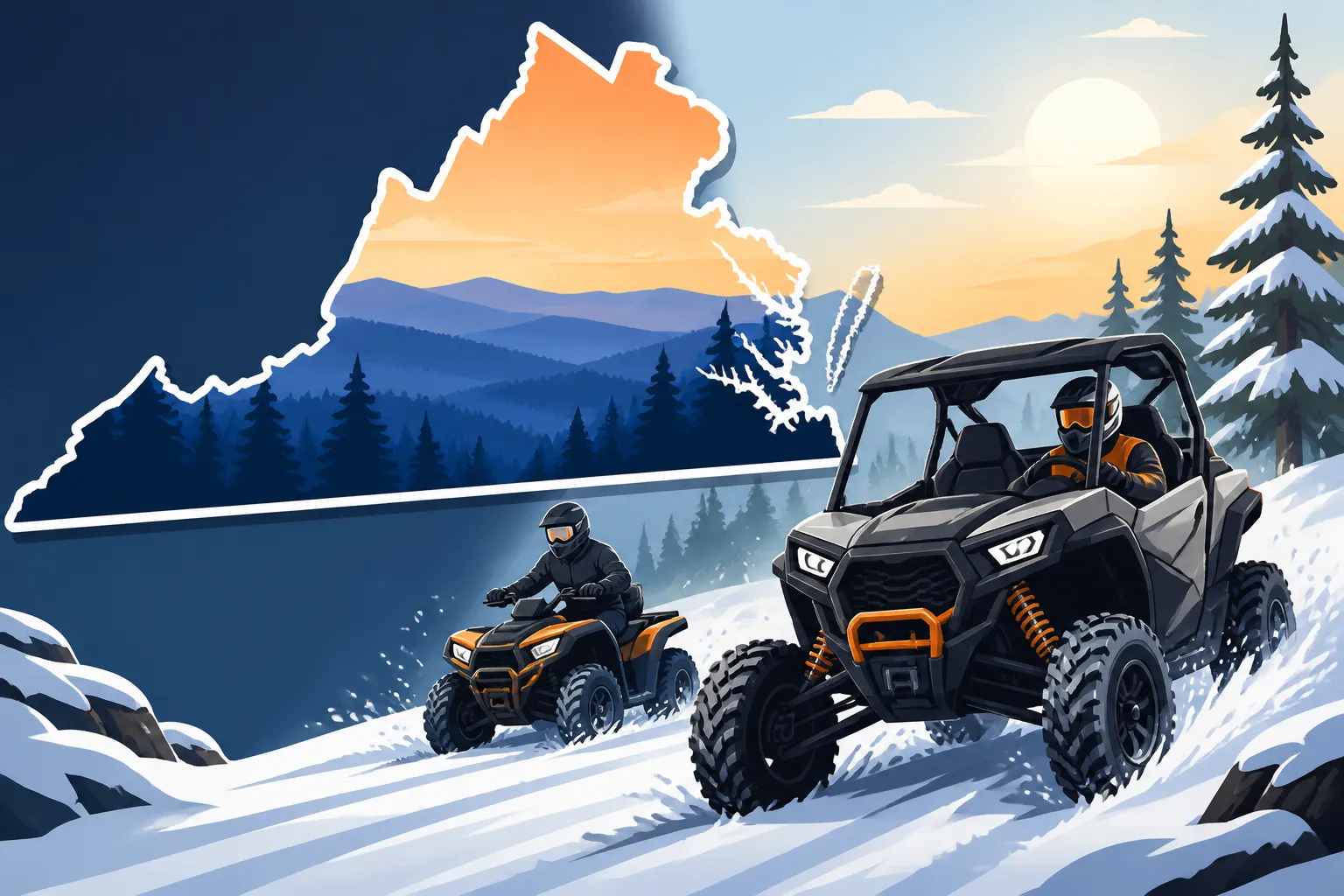
Virginia winter riding can mean crisp, quiet trails—or a locked gate, slick clay, and a long haul to discover that your route is closed. This guide explains how to choose a legal riding area, check seasonal access, prepare for cold-weather conditions, and plan a safer day on Virginia trails without assuming that every trail stays open all winter.
Where to Ride an ATV or UTV in Virginia During Winter
Winter access depends on the trail system and the land manager, not simply on whether a trail appears on a map. Some Virginia riding areas may remain open through winter, while others close seasonally or temporarily because of weather, maintenance, or surface conditions. Confirm access before loading your machine.
Check the trail system before you plan the drive
The Spearhead trail systems in Southwest Virginia are worth researching for a winter outing. Coal Canyon is near Grundy, while Mountain View is near Coeburn; Jawbone is another system in the Richlands area. Their locations make them useful starting points for riders visiting the coalfields, but a trail system’s general operating season does not guarantee that every route will be open or suitable on your chosen day.
For a forest ride farther east, Peters Mill Run and Taskers Gap are near Edinburg in the George Washington National Forest. Peters Mill Run has a winter closure period, so it is especially important to check the official seasonal information before making the trip. See [Peters Mill Run Closes Mid-January Through Mid-March] and [Virginia Trail Closures and Seasons] when planning around access changes.
Do not treat a search result, an old social post, or a line on a recreational map as confirmation that a route is open. Check the trail operator or land manager’s current notices, then look for specific information about closures, weather-related restrictions, and permitted vehicle types. A route that allows ATVs may not allow every side-by-side, especially where width or vehicle requirements apply.
Know the difference between open all year and rideable today
A trail system described as open year-round may still have a particular route closed after rain, snow, a maintenance issue, or a safety concern. Winter weather can change quickly in Virginia’s mountains, and conditions may differ between a town, a trailhead, and a higher ridge. The fact that a system is generally available in winter is a reason to investigate, not a promise that your planned loop will be passable.
That distinction matters for forest routes as well. Peters Mill Run’s winter shutdown is a known planning consideration, but seasonal dates are only one piece of the picture. Weather closures and temporary restrictions may affect access outside the regular shutdown window. Review [Virginia Trails Open Year-Round] alongside [Virginia Trail Conditions Before You Haul], and verify the status with the responsible office before departing.
Also check that the site actually permits your type of machine. Virginia state parks generally do not provide ATV riding access, so don’t assume a state park road or trail is open to recreational machines. OnX Offroad can help you organize a route and see mapped riding areas, but use it as a planning aid rather than permission to ride. Confirm access with the trail authority.
How Winter Conditions Change the Ride
Cold weather changes more than comfort. It affects traction, visibility, machine performance, and how quickly a pleasant outing can turn into a tiring one. A route that feels straightforward in dry summer conditions may become slippery, rutted, or difficult to navigate after freeze-thaw cycles.
Expect a mix of mud, ice, and exposed rock
Virginia winter trails can shift between frozen ground in the morning and soft or muddy sections later in the day. Shaded hollows may hold ice after sunny slopes have thawed. On rocky or steep ground, a thin film of water over stone can be harder to read than a patch of obvious mud. In the coalfields and Appalachian terrain, ledges, loose rock, and narrow turns can make careful speed and spacing especially important.
Avoid assuming that snow provides reliable traction. A shallow dusting can hide roots, ruts, rocks, or the edge of a drop, while packed snow can conceal slick ice underneath. If conditions are questionable, choose a shorter route, skip steep sections, and turn around before the terrain becomes difficult to manage. A trail ride is not improved by pushing through a section that feels unsafe simply because the group has already traveled partway.
Pay attention to how the machine behaves before committing to a challenging climb or descent. If the tires begin sliding, stop somewhere safe and reassess rather than adding speed. Keep enough distance between vehicles to avoid following too closely into a sudden stop or a loss of traction. On a narrow trail, agree on a safe place to regroup before setting off so riders do not bunch up on a hill or blind corner.
Build your plan around daylight and mountain weather
Winter days offer less usable daylight than summer outings, and cold temperatures can make even a modest delay feel much longer. Set a turnaround time before riding, and plan to be back at the staging area with a margin for a slower pace, a trail closure, or a mechanical problem. A route that looks short on a screen may take longer when the group is navigating cautiously or stopping to help a rider.
Check the forecast for the trail area rather than relying only on conditions at home. Elevation, wind, and exposed ridgelines can make a trail feel colder than a nearby town. Review [Virginia Mountain Weather on the Trail] and pack layers that you can adjust as conditions change. A warm base layer, wind-resistant outer layer, gloves suited to riding, and dry spare clothing can make a real difference if someone gets wet or has to wait.
Mapping is useful, but winter can make a backup plan particularly valuable. OnX Offroad can be one layer in your route planning, especially when you save the information you expect to need before entering areas with weak cell service. Compare the route with the trail operator’s current map and notices. Do not rely on a phone signal, an app, or a single device as your only way to find your way back.
| Winter issue | Why it matters | Practical response |
|---|---|---|
| Seasonal closure | A familiar trail may be closed for part of winter | Check the land manager’s current closure notice before loading |
| Freeze-thaw mud | Soft ground can rut easily and reduce traction | Slow down, avoid forcing a climb, and respect closures |
| Hidden ice | Shade can preserve slick patches after nearby areas thaw | Leave extra space and avoid abrupt steering or braking |
| Short daylight | Delays can leave a group returning in darkness | Set a turnaround time and choose a route that fits the day |
| Weak cell service | Route updates or calls may not work in remote areas | Save maps and carry a backup navigation plan |
| Cold exposure | Wet clothing and wind can make stops uncomfortable | Pack layers, dry gear, water, and basic emergency supplies |
Preparing Your Machine and Group for a Cold-Weather Ride
A winter outing goes more smoothly when the group prepares for both the trail and the possibility of a delay. That means checking the machine, carrying practical supplies, and making sure every rider understands the plan before leaving the staging area.
Do a pre-ride check with cold conditions in mind
Start with the basics: inspect tires for damage, check that controls and brakes work as expected, and make sure lights are functional. Cold weather can reveal weak batteries or other problems that went unnoticed during warmer rides. Follow your machine manufacturer’s maintenance guidance for fluids, tires, and cold-weather operation, and avoid setting out if something feels unreliable.
Bring tools and supplies suited to the machine and the route. A basic repair kit, tire-repair supplies appropriate to your tires, a tow strap, and a first-aid kit can help with common problems, but only carry equipment you know how to use safely. For a longer or more remote ride, tell someone outside the group where you are going and when you expect to return.
Pack for a stop that lasts longer than expected. Water, food, a charged phone, a backup power source, a flashlight, and dry layers are sensible additions. Keep important supplies protected from moisture. A small item that seems unnecessary while you are moving can become useful if the group has to wait for a repair or help a rider who is cold.
Make the group plan realistic for the least experienced rider
Before riding, agree on the route, pace, regrouping points, and turnaround time. Ask riders about their winter experience and their machines’ capabilities without making anyone feel pressured to keep up. A group that includes a newer rider or a youth machine may need an easier route and more frequent stops than a group of experienced adults on larger machines.
Choose a lead rider and a sweep rider, and make sure everyone knows what to do if the group gets separated. Agree that riders will stop in a safe location rather than continuing alone when they lose sight of the group. Keep spacing generous on slick hills and narrow trail sections, and avoid crowding someone who is negotiating a difficult patch.
If the conditions are worse than expected, changing the plan is good judgment, not a failed ride. Turn around before a route becomes impassable, or shorten the outing if a rider is cold, tired, or uncomfortable. OnX Offroad may help keep a shared plan organized, but the group should still agree on its route and check that the land manager allows the vehicles involved.
Permits, Access, and Winter Trail Etiquette
Winter does not remove the need to follow the rules of the specific riding area. A legal trail, a current permit, and a suitable machine are all part of a responsible outing. Rules can differ between a public trail system, national forest land, and a private off-road park.
Confirm permits and machine requirements
Spearhead and national forest riding areas do not necessarily use the same permits or access rules. Before you go, identify who manages the trail and follow that operator’s instructions. Review [Virginia Spearhead Trail Permits] if you are planning to ride a Spearhead system, and check [Virginia National Forest OHV Permits] for forest riding. A permit for one network should not be assumed to cover another.
Confirm vehicle restrictions as well. Some routes or systems may limit machine width, require particular safety equipment, or exclude certain vehicle types. This is especially important for side-by-sides, because a trail suitable for a narrower ATV may not accommodate a wider UTV. Check the specific requirements for the route you intend to use rather than relying on the general description of the overall trail network.
Carry whatever proof of access the operator requires, and make sure every rider understands the rules before reaching the trailhead. If the permit process or vehicle requirements are unclear, ask the trail office or land manager directly. A small amount of preparation can prevent a frustrating drive followed by a turn-away at the gate.
Ride in a way that protects the trail and other visitors
Winter ground can be vulnerable to damage when it is wet or thawing. Deep ruts can make a route harder for everyone to use and may lead to additional restrictions. Stay on designated trails, obey closures, and avoid riding around a blocked section by cutting into the woods or creating a new path. If a trail is too soft or slippery for a safe passage, turning back is often the better choice.
Be considerate around other trail users and local communities. Keep a controlled speed, especially near staging areas, intersections, and blind corners. Give other riders room to pass where it is safe, and do not assume that a quiet winter trail is empty. Follow posted rules about noise, operating hours, and vehicle equipment, and leave the staging area as tidy as you found it.
A winter ride in Virginia can be rewarding when the route, weather, and group are a good match. Check access before you haul, plan for mud and ice, and keep enough flexibility to turn around. The quiet season can offer beautiful mountain views and a less crowded experience, but the safest day is one built around current trail conditions—not wishful thinking.
Disclaimer
This article is for general informational purposes only and does not constitute professional advice. Laws, prices and regulations vary by location and change over time. Consult a qualified professional for guidance on your specific situation.