Nine Primitive Sites With No Fee
Nine no-fee primitive campsites can make a weekend near Peters Mill Run more affordable, but “free” does not mean reservable, serviced, or automatically connected to a legal ATV route. This guide explains what to expect at Little Fort Campground near Edinburg, how to plan around basic facilities and busy trail days, and what to check before hauling your machine into the George Washington National Forest.
What the Nine No-Fee Sites Actually Offer
Understand the campground before you arrive
Little Fort Campground is a primitive camping option in the George Washington National Forest, near Edinburg and the Peters Mill Run and Taskers Gap riding area. Its nine sites are known as no-fee campsites, which can be a welcome change when you are already paying for fuel, hauling, trail permits, and a weekend’s worth of supplies. Still, a campground fee and a trail permit are different things. A no-fee campsite does not make OHV trails free to ride.
The word “primitive” is the useful part to plan around. Treat the campground as a place to sleep and regroup, not as a developed campground with dependable services. Do not assume there will be electrical hookups, showers, potable water, a dump station, or a staffed check-in. Bring enough drinking water for everyone, plus water for cooking and basic cleanup. If you are unsure about toilets, fire facilities, or current site conditions, ask the Lee Ranger District before setting out.
That distinction can prevent a frustrating late arrival. Imagine reaching the campground after a long drive from Richmond, only to discover that the site you expected to use is occupied and the nearest store is not around the corner. With a primitive site, self-sufficiency is part of the deal: arrive with food, water, a way to manage waste, and a backup plan for sleeping elsewhere if all nine sites are taken.
No fee does not mean a site is guaranteed
The sites are generally treated as first-come, first-served rather than as a reservation you can count on holding. That makes Little Fort appealing for flexible travelers, but less reassuring for a large group, a holiday weekend, or anyone arriving after dark. Nine sites can fill up faster than they sound like they will, particularly when riders and other forest visitors are arriving for the same stretch of good weather.
If your group is meeting from different parts of Virginia, agree on a decision point before you leave home. For example, decide that the first vehicle to arrive will check for open sites, then tell the rest of the group whether to continue to the campground or use a backup. That is much easier than having several loaded trucks and trailers arrive separately and try to sort out sleeping arrangements in the dark.
Have a second option in mind, and check its rules before you need it. A private campground, a different public campground, or a motel in the wider Edinburg or Woodstock area may work, depending on your plans and the current availability. Do not assume that you can simply pull off into the woods and camp wherever you find a flat patch. National Forest camping rules and site restrictions still matter, even when the campground itself has no fee.
| What to plan for | Practical approach |
|---|---|
| Campsite availability | Arrive with a backup plan, especially on weekends |
| Water | Bring your own drinking and cooking water |
| Power and showers | Do not count on developed-campground amenities |
| Toilets and fire facilities | Confirm current conditions before departure |
| Riding access | Check the current trail map and legal connections |
| Trail permit | Handle it separately from the no-fee campsite |
For more context on the nearby camping setup, see [Virginia Little Fort Campground]. If your trip is specifically about riding Peters Mill Run, it is also worth reviewing [Virginia's 36-Mile Peters Mill Run and Taskers Gap System] before you choose a camp and trail plan.
Plan the Ride Separately From the Campsite
Confirm which routes are open to your machine
The campground and the riding area are close enough to make the combination attractive, but proximity is not the same as permission to ride directly from your campsite. Before unloading, work out the legal route from where you are parked to the trail system. Use current official Forest Service information for closures, access points, machine restrictions, and route designations rather than relying on a line that appears passable on a phone map.
This is especially important if your group includes different types of machines. A narrow ATV, a wider side-by-side, and a registered four-wheel-drive vehicle may not have the same access. The Taskers Gap side of the area has a width restriction, so measure your machine as it is actually set up, including accessories that extend beyond the tires. A widened wheel setup, aftermarket fenders, or a mounted accessory can turn a machine that seems close to the limit into one that does not qualify. Check [Virginia's Taskers Gap Width Limit] before you commit to that route.
Digital navigation can help you understand the area, but it should support—not replace—official rules. Riders may use onX Offroad to inspect a planned route and save map information for offline use, then compare that plan with Forest Service maps and current notices. A map can show where a road or trail goes without proving that it is open to your machine today. Keep a paper map or a saved official map available in case mobile service drops out.
Treat permits and closures as part of the trip plan
The campground fee and OHV permit are separate issues. A no-fee campsite does not waive any permit requirement that applies to the trail system. Check which permit is required for the riding area you intend to use, whether it must be purchased before arrival, and whether your group needs separate permits for a second riding network. Do not assume that a permit from another Virginia trail system—or from a neighboring state—covers Peters Mill Run.
The easiest time to discover a permit requirement is at home, not at a trailhead with a loaded trailer and no signal. Review [Virginia National Forest OHV Permits] and [Virginia Forest Permits Bought Before Arrival] as part of your checklist. Confirm the permit type and purchase process through the appropriate official channel, and keep proof accessible even if your phone has no connection. A screenshot can be useful, but it is not a substitute for meeting the applicable permit rules.
Closures deserve the same attention as permits. Peters Mill Run has a seasonal winter closure, and trail conditions can also change because of weather, maintenance, or other restrictions. Check [Peters Mill Run Closes Mid-January Through Mid-March] and [Virginia Trail Conditions Before You Haul] before loading the machine. A campsite may still be available when a riding route is closed, so avoid treating “campground open” and “trail open” as the same status.
Make Primitive Camping Comfortable and Low-Stress
Pack for a site without services
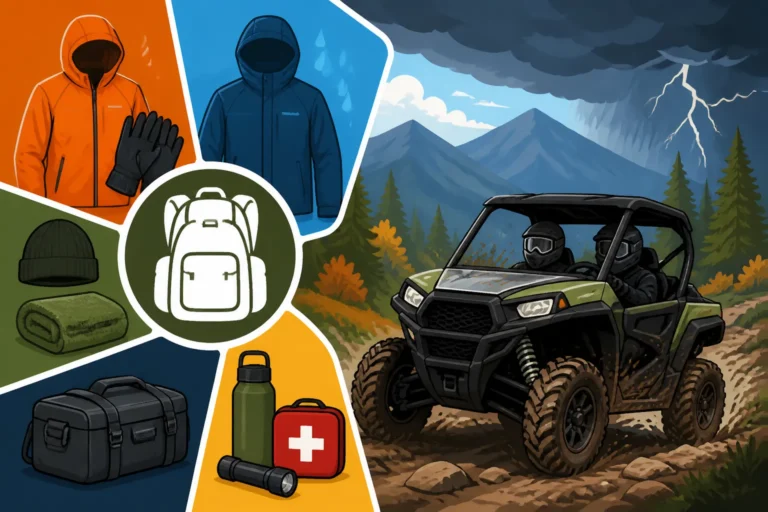
The most useful primitive-camping kit is not complicated; it is the kit that covers the basics without depending on a nearby store. Bring drinking water for every person, plus extra for cooking and washing. Pack food that does not require elaborate preparation, a reliable light source, warm layers, rain protection, and a way to keep food and rubbish secured. Mountain weather can shift during a weekend, so check the forecast for the area rather than assuming conditions will match those back home.
Plan your sanitation and waste habits before leaving. Bring bags for packing out trash, and do not leave food scraps or disposable items at the site. If your group is using a portable toilet or other personal sanitation setup, know how you will handle waste properly. Likewise, bring any needed medications and a basic first-aid kit; a remote-feeling camping area is not the place to discover that the one item you rely on is still on the kitchen counter.
A small camp can also be easier to manage than an overpacked one. Instead of bringing several bulky tables and extra gear, coordinate shared items among the group. One person can handle cooking equipment, another can bring water containers, and someone else can carry repair supplies. That reduces clutter around the campsite and leaves more room to organize riding gear and helmets without turning the site into a jumble of open bins.
Use fire and food practices that fit the forest
Before lighting a fire, check whether fires are permitted and whether any temporary restrictions are in effect. If a designated fire ring is provided, use it rather than making a new fire site. Keep a fire manageable, attend it continuously, and extinguish it fully before leaving or going to bed. Dry conditions can make even a small campfire a serious risk, and local restrictions can change with weather.
Food storage is another detail that can make a quiet camp much more pleasant. Keep food in sealed containers and put it away when you are not using it. Avoid leaving coolers open while everyone heads to the trail, and clean up crumbs and scraps rather than letting them accumulate around the site. These habits help keep wildlife from associating a campsite with easy meals and make departure cleanup less unpleasant.
Be considerate of other campers, too. A group arriving late should keep voices, music, and engine noise down. If you warm up or move machines near camp, be mindful of people who are trying to sleep and follow any posted campground rules. A no-fee site is still a shared public place. Leaving the area clean and quiet helps protect the kind of simple camping experience that makes a small primitive campground appealing in the first place.
Get There With the Right Vehicle and Expectations
Plan for the whole haul, not just the final miles
A weekend ride begins on the road, especially if you are towing a trailer through the Shenandoah Valley and into the forest. Before leaving, check your vehicle, trailer tires, lights, hitch, tie-downs, and spare tire. Make sure your load is balanced and that fuel and basic tools are easy to reach. If you are bringing multiple machines, confirm that the trailer is within your vehicle’s towing capability and that you have enough room to unload without blocking other campers.
Use a route that is suitable for your towing setup, not merely the shortest route shown on a navigation app. Forest roads can be narrower, rougher, or slower than the main highways leading toward Edinburg. A route that works well in a car may feel very different when you are pulling a long trailer. If you are unfamiliar with the area, check the final approach with the ranger district and look for current road information before departure.
Think through unloading and parking before you reach the site. If your machine cannot be ridden legally from the campground to the trailhead, you may need to transport it to an authorized access point. That affects how much room you need, whether your trailer can remain at the site, and how your group will coordinate vehicles. Make that decision early rather than assuming the campsite automatically doubles as a trail staging area.
Prepare for limited connectivity and changing conditions
Mobile coverage can be inconsistent in forest and mountain areas. Download the information you need before leaving a town with reliable service, and make sure your map app works offline if you plan to use it. onX Offroad can be one navigation aid for reviewing a route and saving map data, but use it alongside official maps and posted signs. Save the ranger district’s contact information and the campground location somewhere you can access without a data connection.
Have a simple group communication plan. Decide where everyone will meet if vehicles become separated, how you will handle a machine breakdown, and what time you will check in with the rest of the group. If several people are arriving independently, share the campground and trailhead locations in advance. Do not depend on a last-minute text arriving in a dead zone.
Conditions can change after you have packed. A storm may make a route unsuitable, a closure may affect your planned trail, or the campground may be full when you arrive. Keep a flexible itinerary and avoid pushing a machine or trailer through a questionable road simply because the original plan called for it. Use [Virginia Trail Closures and Seasons] as a reminder to check conditions, and be ready to shift to a different activity or overnight plan if riding is not appropriate.
Build a Simple Checklist Before You Leave
Sort out camping, riding, and machine details
A short checklist can prevent the common mistake of preparing carefully for the ride but forgetting the camp basics. Start with the campsite: confirm the current status, understand that there are only nine sites, and decide what you will do if they are occupied. Then make a separate list for the trail system, including the correct permit, approved access route, machine-width rules, and any closures that affect your intended ride.
Check your machine before loading. Look at tires, brakes, throttle operation, lights, fluids, and tie-down points. Carry basic tools and any machine-specific repair items you know you may need. If you are riding with a side-by-side, check its width and required safety equipment for the route and trail system. You can review [Virginia Trails That Allow Side-by-Sides] if your group needs to compare where a particular machine may be permitted.
Do a final paperwork check as well. Keep proof of ownership and any other documents that may be relevant to your machine, plus permit information and emergency contacts. Requirements can differ depending on the riding area and situation, so verify what applies rather than assuming one set of papers covers every question. For trail-specific preparation, [Virginia Proof of Ownership on the Trail] is a useful related topic.
Use a day-by-day plan that leaves room for changes
For a two-night trip, the first day can be about arriving, setting camp, and confirming trail access rather than squeezing in a full ride before dark. The second day can be your main riding day, with a planned turnaround time that leaves enough daylight to return, secure machines, and make dinner. On the final morning, allow time to pack out rubbish and inspect the site before towing away. That pacing is less stressful than arriving late and trying to do everything at once.
If you are bringing children or less experienced riders, build in extra time for equipment checks, breaks, and route decisions. A first ride in unfamiliar terrain is not the moment to rush through a map review. Explain where the group will stop, what to do if someone falls behind, and how to respond if a machine develops a problem. The goal is a ride everyone can enjoy, not a mileage target that turns the day into a race.
Before departure, check the official sources again for campsite and trail information. Use onX Offroad or another navigation aid to orient yourself, but treat posted closures and current Forest Service guidance as controlling. If the campground is full, the trail is closed, or the weather is turning, adjust the plan. A flexible weekend is usually better than forcing a trip to match an itinerary that no longer fits the conditions.
Disclaimer
This article is for general informational purposes only and does not constitute professional advice. Laws, prices and regulations vary by location and change over time. Consult a qualified professional for guidance on your specific situation.