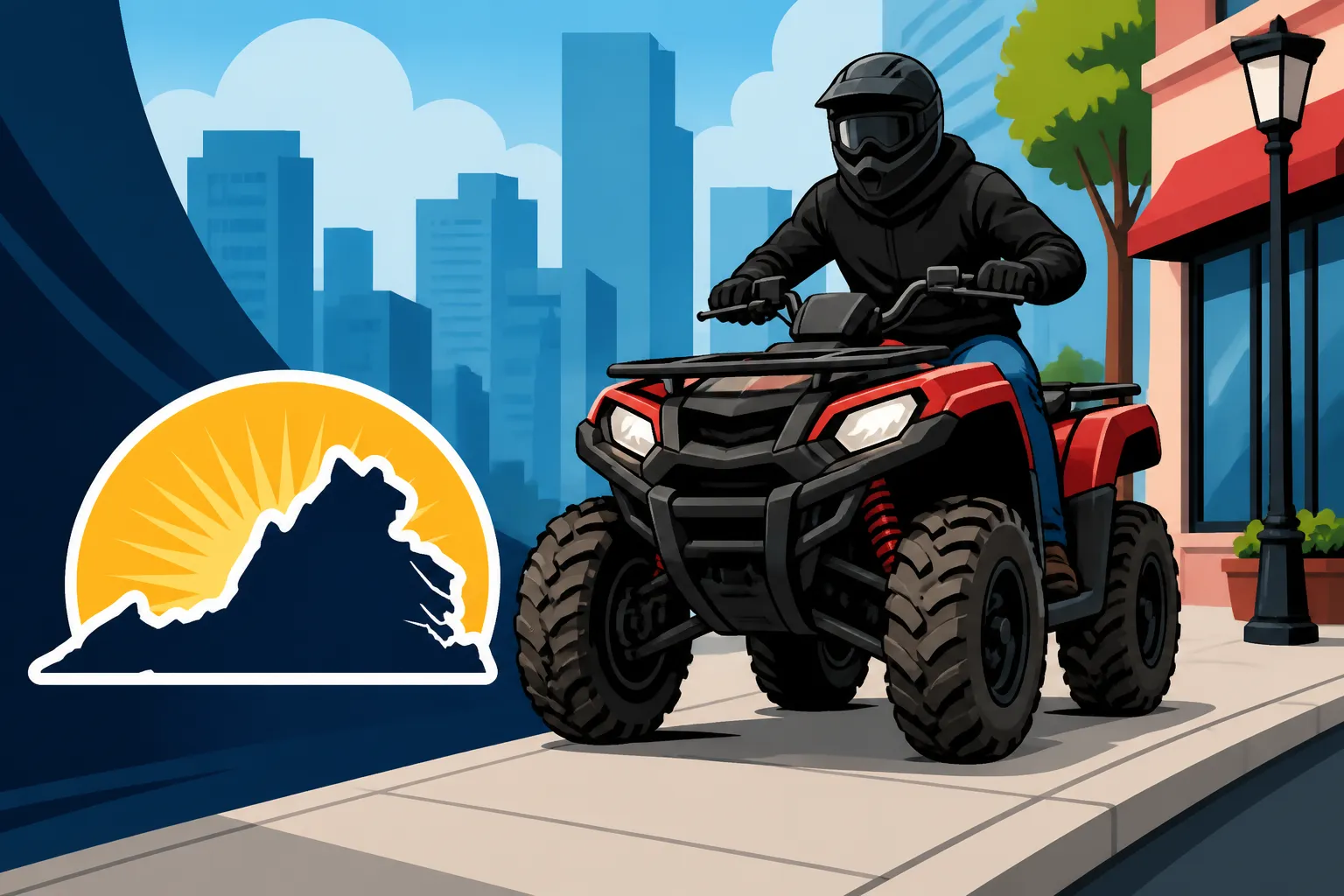
Riding an ATV on a City Sidewalk
We've all been there: you're cruising home from a fantastic day on the trails, or maybe just moving your quad from the garage to the backyard, and for a split second, the thought crosses your mind – "Could I just hop on the sidewalk for a quick minute? It would be so much faster than waiting for traffic, or maybe just a short cut around that tricky corner." It's a natural, momentary flicker of convenience, but let me tell you, that quick minute on a Virginia city sidewalk can lead to a world of trouble and expense. This guide is here to lay out exactly why riding your ATV on any city sidewalk in Virginia is a definite no-go and the serious consequences you could face for even the briefest unauthorized ride.
Why Sidewalks Are Strictly Off-Limits for ATVs in Virginia
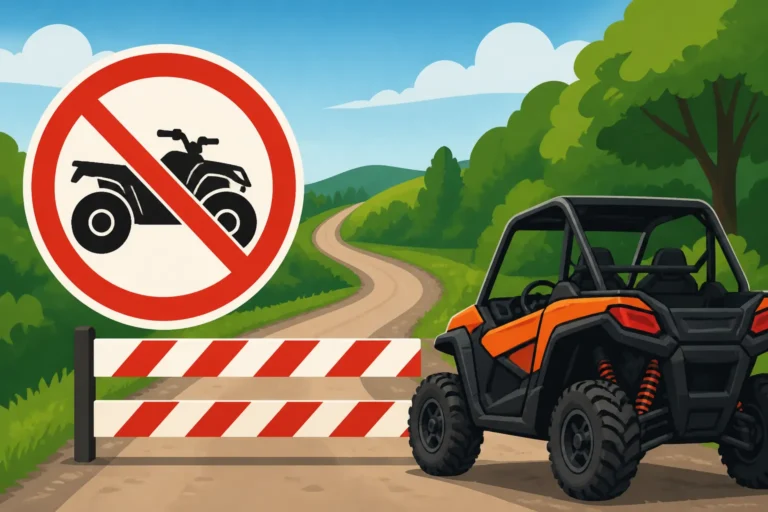
Virginia's laws regarding ATVs are very specific, and when it comes to public roads and pedestrian areas like sidewalks, the rules are abundantly clear. An ATV, by its very definition in the Commonwealth, is designed for off-road use, not for sharing space with pedestrians or traditional street traffic. Thinking about a short hop on the pavement might seem harmless, but the law and the inherent dangers tell a very different story.
The Law's Clear Definition of Public Highways
In Virginia, when the law talks about a "highway," it’s not just referring to the asphalt or concrete lanes where cars drive. The term is much broader, encompassing the entire width of the right-of-way, which includes the roadway, shoulders, medians, and yes, sidewalks. This comprehensive definition means that any area maintained for public travel, whether by vehicles or pedestrians, falls under the state's stringent rules for motor vehicles. An ATV is not classified as a street-legal vehicle under these regulations. It simply doesn't meet the safety and equipment standards required for highway use, and that includes sidewalks.
The legislative intent behind these broad definitions is primarily public safety. Imagine a situation where everyone decided to interpret "highway" loosely. Chaos would ensue, especially for vulnerable road users. These laws aim to create a clear separation between vehicles designed for high-speed travel and those intended for controlled off-road environments. For ATVs, this means they are prohibited from public roadways and associated areas like sidewalks unless a very specific, limited exception applies – which almost never includes city sidewalks. If you're looking for where the rules are written, you'll find them detailed in [Virginia ATV Road Rules Under 46.2-915.1].
Safety Concerns and Vulnerable Pedestrians
Beyond the letter of the law, there's a deeply important reason why ATVs don't belong on sidewalks: safety. ATVs are powerful machines, often heavy and capable of surprisingly high speeds. They have exposed wheels, no airbags, and a high center of gravity, making them inherently different from the bicycles or scooters you might occasionally see on a sidewalk. These characteristics, combined with the often unpredictable nature of pedestrian traffic, create an extremely dangerous situation.
Consider the typical scenario of a city sidewalk. You have parents pushing strollers, children playing, elderly individuals walking slowly, people walking dogs, or individuals with disabilities navigating their way. An ATV, even at a seemingly slow speed, can be incredibly difficult to stop quickly, especially if a child darts out unexpectedly from behind a parked car or a bush. The sheer weight and momentum of the machine make any collision with a pedestrian devastating. Furthermore, the noise level of an ATV can be startling and disruptive in residential areas, causing distress and startling pedestrians, potentially leading to accidents.
ATVs are engineered with knobby tires, powerful engines, and robust suspensions designed to conquer rough terrain, not to navigate the delicate balance of a pedestrian walkway. Their design sacrifices certain on-road safety features for off-road capability. This fundamental design difference is why they are so ill-suited for sidewalks.
The Steep Consequences of Riding a Quad on a City Sidewalk
You might think a quick dash on the sidewalk won't be noticed, or that the penalty won't be that bad. Unfortunately, that's a dangerous misconception. Virginia takes illegal ATV operation seriously, especially in areas where public safety is paramount. The consequences can be far more severe and costly than that momentary convenience is worth.
Civil Penalties and Costly Fines
Virginia law is unambiguous: operating an ATV on a public highway, which includes sidewalks, can result in a significant civil penalty. We're talking about a fine of up to $500 for violating these regulations. This isn't just a slap on the wrist; it's a substantial financial hit that can quickly drain your wallet. While it's typically a civil penalty, not a criminal charge, the monetary impact is still very real. You can learn more about these penalties in [Virginia's Civil Penalty for Illegal Riding].
Beyond the base fine, there are often additional court costs, administrative fees, and processing charges that can quickly pile up, turning that initial $500 into an even larger sum. It's a frustrating situation because many riders don't realize the severity of the offense until they're handed the ticket. While these violations generally won't put points on your driver's license in the same way a speeding ticket might, they create a record of infraction and still carry a significant financial burden. It’s far better to transport your machine legally and save your riding for designated off-road areas.
Impoundment and Recovery Headaches
Perhaps even more frustrating than the financial penalties is the very real possibility that your ATV could be impounded. Many cities and towns in Virginia have ordinances that grant law enforcement the authority to seize and impound ATVs found operating illegally on public property, including sidewalks. This isn't just a threat; it happens regularly. You can find more specific information on this topic by reading [Cities Can Impound an ATV Ridden on a Sidewalk].
Once your machine is impounded, the headaches truly begin. You'll likely face towing fees, which can be substantial, especially if your machine requires specialized equipment to move. Then, there are daily storage fees at the impound lot, which can accrue quickly, turning a bad day into an escalating financial nightmare. To get your ATV back, you'll generally need to provide proof of ownership, pay all outstanding fines and fees related to the citation, and cover all impound and storage costs. If you can't pay or don't claim the machine within a certain timeframe, it could even be sold at auction, meaning you lose your investment entirely. Imagine this scenario: you're visiting a friend in a new city, briefly hop on the sidewalk, and your quad gets towed. Now you're stranded, facing a lengthy process, and potentially a hefty bill in an unfamiliar location. It's a situation to be avoided at all costs.
Understanding Virginia's Exceptions and Designated Routes
While the rules for riding ATVs on city sidewalks and public roads are overwhelmingly restrictive, it's important to understand that there are specific, limited exceptions and designated areas where off-road machines can be legally operated in Virginia. These exceptions are critical to know, as they define where you can enjoy your ATV without fear of legal repercussions.
Limited Agricultural and Emergency Exceptions
Virginia law does provide very narrow exceptions for ATV use, primarily centered around agricultural and emergency operations. For instance, you might see an ATV being used on private land for bona fide farming, hunting, or other household purposes. These specific uses are generally exempt from the broader road restrictions, but it’s crucial to understand that these exemptions do not suddenly make it legal to ride your ATV on a city sidewalk to get from one field to another, or from your house to a nearby store. The intent is to allow the machine to be used for its intended utilitarian purpose on private property, not for public access. If you have questions about what constitutes a valid exception, it’s worth reviewing [Virginia Farming and Household Exceptions].
Similarly, emergency responders, such as police, fire, and rescue squads, may use ATVs in official capacities, often in situations where conventional vehicles cannot access a scene. These are specific, government-sanctioned uses by trained personnel under emergency conditions and bear no resemblance to a private citizen using their machine for personal convenience. [Virginia Emergency Responder Exceptions] provides more context for these specific circumstances. It's vital not to confuse these very limited and specific exceptions with a general permit for off-road vehicle use on public land or sidewalks.
Designated Off-Road Trails and Mountain Coalfield Routes
The good news for ATV enthusiasts in Virginia is that there are fantastic, legal places to ride. The Commonwealth is home to designated off-road trail systems that welcome ATVs and UTVs. The Spearhead Trails system, for example, offers hundreds of miles of thrilling riding across several different networks in Southwest Virginia. These trails are specifically designed and maintained for off-road vehicle recreation, offering a safe and legal environment for riders. For anyone serious about off-roading, places like [Spearhead Trails in Virginia Explained] are exactly where you should be focusing your riding plans.
Furthermore, in a couple of specific, rural, mountainous counties – Buchanan and Tazewell – there are designated road access points that allow ATVs to connect between trail segments or access specific services. These routes are clearly marked, subject to speed limits, and require adherence to specific rules, such as wearing a helmet and riding only during daylight hours. This is not a blanket allowance for ATVs on any county road, and certainly not city sidewalks. It's a very specific provision in [Virginia Buchanan and Tazewell County Road Access] that facilitates tourism and access in the coalfields. Even on these routes, you'll need the proper permits, such as those discussed in [Virginia Spearhead Trail Permits], and you must always stay on the designated paths. These exceptions exist for specific geographic and economic reasons in very rural areas, a far cry from a bustling city sidewalk.
Responsible ATV Ownership and Avoiding Trouble
Being a responsible ATV owner in Virginia means more than just knowing how to ride; it means understanding the laws, respecting public spaces, and ensuring you and your machine are only where you're legally permitted to be. The frustrations of not being able to ride everywhere are real, but the solutions are clear: plan, transport, and ride legally.
Transporting Your ATV Legally
Since riding your ATV on city sidewalks or public roads is largely prohibited, the most crucial aspect of responsible ownership is knowing how to transport your machine legally. This invariably means using a trailer or loading your ATV into the bed of a pickup truck. It's the only way to get your machine to and from legal riding areas without breaking the law. For example, your trailer will require a license plate, but as you know, [Your Trailer Needs a Plate but Your Quad Does Not], highlighting the distinction between street-legal vehicles and off-road machines.
When transporting your ATV, ensure it is properly secured to prevent shifting or falling off the trailer or truck. Use appropriate tie-downs and check them regularly, especially on longer hauls over Appalachian grades. Safe transport isn't just about legality; it's about protecting your investment and ensuring the safety of others on the road. Don't risk a ticket or an accident by taking shortcuts to get your machine to the trailhead.
The Importance of Knowing Local Ordinances
While Virginia state law provides the overarching framework for ATV use, it's always wise to be aware of any local ordinances that might exist in the specific city or county where you plan to ride or transport your machine. While state law clearly prohibits ATVs on sidewalks, some localities might have additional restrictions, specific enforcement practices, or even limited (though rare) local rules for very specific private property access. It's always best to check with local authorities, like the county sheriff's office or town council, if you have any unique circumstances or questions about a particular area.
Remember, even if a local ordinance doesn't explicitly mention sidewalks, the state law still applies and prohibits ATV use on them. Brands like SuperATV offer a huge range of aftermarket parts and accessories for your machine, but while they can upgrade your quad's performance, they can't change the legal rules for where you're allowed to ride it. Always prioritize understanding the legal landscape before you venture out, to ensure your riding experience is enjoyable and trouble-free.
Investing in Proper Off-Road Gear and Machine Upgrades
Responsible ATV ownership also extends to ensuring you and your machine are properly equipped for off-road riding, not for attempting to circumvent road rules. This means investing in essential safety gear, such as an approved helmet, eye protection, sturdy boots, gloves, and appropriate riding apparel. [Virginia Helmet Law Applies to Every Rider] emphasizes the importance of head protection, not just for kids, but for all riders.
Furthermore, any upgrades you make to your ATV should be focused on enhancing its performance and safety for its intended off-road environment. Products from companies like SuperATV, such as heavy-duty skid plates, robust winches, or specialized tires, are designed to help you tackle challenging trails and rugged terrain, not to make your machine suitable for pavement or city sidewalks. No amount of modification, whether it's adding mirrors, turn signals, or a horn, will make a standard ATV legal for use on Virginia city sidewalks. These machines are built for the wild, open spaces and designated trails, and that's exactly where they belong.
Legal vs. Illegal ATV Riding in Virginia
| Aspect | Legal Riding | Illegal Riding |
|---|---|---|
| Location | Designated off-road trails (e.g., Spearhead Trails, National Forests) | Public highways, streets, city sidewalks, bike paths, private land without permission |
| Road Access | Limited, specific county routes (Buchanan, Tazewell) for connectors, clearly signed | Any other public road, street, or pedestrian area |
| Permits | Required for most designated trail systems (e.g., Spearhead, Forest OHV permits) | No permit exempts you from road/sidewalk bans |
| Safety Gear | Helmet and eye protection legally required for all riders, recommended other gear | Still required, but won't prevent penalties for illegal operation |
| Penalties | Enjoyable, consequence-free riding | Civil penalties up to $500, impoundment, towing/storage fees, court costs |
| Machine Type | ATVs and UTVs designed for off-road use, meeting trail system requirements | No standard ATV/UTV is street-legal for general public road/sidewalk use |
Disclaimer
This article is for general informational purposes only and does not constitute professional advice. Laws, prices and regulations vary by location and change over time. Consult a qualified professional for guidance on your specific situation.