Virginia DUI Law and Off-Road Machines
It’s a common scenario: you’re out with friends, enjoying the beautiful Virginia backcountry on your ATV or UTV, and someone cracks open a cold one. The thought might cross your mind, "Hey, I'm not on a highway, what's the big deal?" This guide is here to tackle that exact, incredibly dangerous misconception head-on, explaining in detail how Virginia's DUI laws apply to off-road machines and the severe consequences of riding impaired.
The Dangerous Misconception: "It's Just an ATV, Not a Car!"
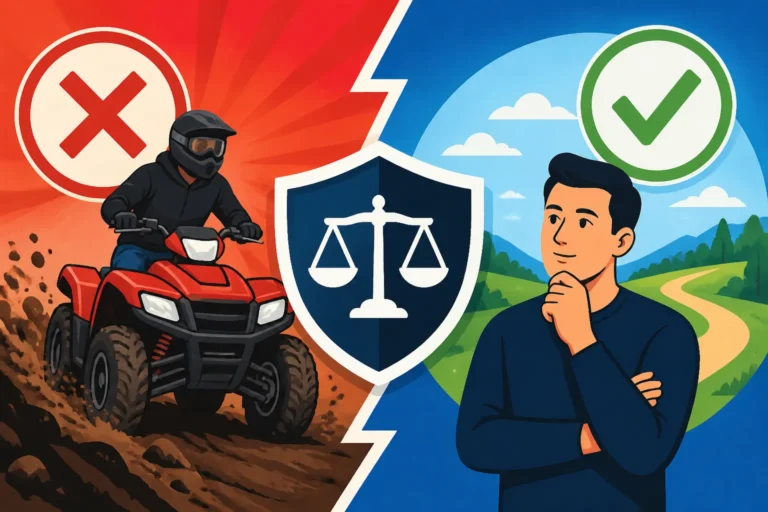
There's a persistent myth circulating among some off-road enthusiasts that somehow, because an ATV or UTV isn't a traditional street-legal car or truck, the rules for driving under the influence don't fully apply. You hear folks say things like, "It's just a quad, not a motor vehicle," or "I'm on private land, so it doesn't matter." This line of thinking is not only misguided but can lead to devastating legal and personal repercussions. Virginia law is quite clear, and the definitions can be broader than many riders realize, encompassing everything from your trusty utility vehicle to a high-performance sport quad.
Many riders, especially those new to the sport or visiting from out of state, might genuinely not understand the nuances of Virginia's statutes. They might envision DUI laws as strictly for asphalt roads, not the muddy trails or gravel paths where off-road machines thrive. This misunderstanding can lead to a false sense of security, encouraging behavior that would never be tolerated in a car on a public road. The reality is that the potential for injury, property damage, and severe legal penalties is just as real, if not more so, when operating an off-road machine under the influence.
Even seasoned riders can sometimes fall into this trap, particularly when recreating on what they perceive to be entirely private or isolated land. They might think they are far enough off the beaten path to escape scrutiny. However, as we'll explore, the distinction between "public" and "private" can become very blurry in the eyes of the law, especially if an incident occurs or if land managers have specific regulations in place. It's crucial for every rider to shed this dangerous misconception and understand the full scope of Virginia's DUI laws.
Where Virginia's DUI Laws Apply to Your Off-Road Machine
Virginia's laws regarding driving under the influence are broad, and they are designed to protect everyone, whether on the highway or in the backcountry. The core of the matter often boils down to how "motor vehicle" and "highway" are defined in the statutes, and you might be surprised at how widely these definitions can be interpreted to include your ATV or UTV.
Public Highways and Public Property
First and foremost, if you are operating an ATV or UTV on any public highway in Virginia – even briefly for a [Virginia Rules for Crossing a Highway] – you are absolutely subject to DUI laws. Virginia law defines "highway" broadly, not just as paved interstates, but also as any public street, road, alley, or way open to the use of the public for purposes of vehicular travel. This includes countless rural roads, county roads, and even some unpaved paths that are maintained by the state or local government. The law makes no distinction based on the type of "motor vehicle" being operated; if it's on a highway and you're impaired, you're in violation. This extends to public parking lots, rest areas, and even the shoulders of roads. An officer doesn't need to see you swerving down the interstate; pulling out of a gas station onto a minor state route while impaired is enough.
Beyond highways, public lands such as state forests, national forests, and designated trail systems like the Spearhead Trails (where [Virginia Spearhead Trail Permits] are required) also fall under the purview of DUI laws. While these areas are often designed for off-road recreation, they are still public property, and operating an ATV or UTV there while intoxicated is illegal. These trail systems often have their own regulations regarding alcohol consumption, but the overarching state DUI laws still apply. Imagine you're enjoying a ride on the [Mountain View Trail System in Virginia] and an incident occurs, bringing law enforcement to the scene. If you're found to be impaired, you face the same legal consequences as if you were driving a car on Route 58.
Ambiguous "Private" Land Scenarios
This is where things can get particularly tricky and where many riders find themselves in unexpected trouble. While you might assume that if you're on truly private land, the state's DUI laws don't apply, this isn't always the case, or at least not in a way that provides full immunity. If private property is accessible to the public – for example, a private road leading to a hunting club that multiple members use, or a private logging road that's frequently trespassed upon and thus tacitly open to public passage – an argument can be made that it functions as a "highway" or "public way" for the purposes of DUI enforcement. The courts have often sided with broad interpretations to ensure public safety.
Furthermore, even if you are on genuinely private land with no public access, an incident could still lead to DUI charges. Consider a scenario where an impaired rider has an accident, sustaining injuries or causing significant damage, and emergency services are called. When law enforcement arrives to investigate, if they determine that the operator was intoxicated, they can and often will charge them with DUI. The location of the incident doesn't always shield an impaired driver from prosecution, especially if the consequences are severe enough to involve public safety officials. [Virginia Accident Reporting for an ATV Crash] may involve law enforcement, regardless of where the crash occurred. This is why many experienced riders emphasize that responsible riding means staying sober, no matter where you are.
What Virginia Law Says About "Motor Vehicles"
Virginia Code § 46.2-100 defines a "motor vehicle" very broadly as "every vehicle as herein defined which is self-propelled or designed for self-propulsion." While there are specific exclusions for things like mopeds or electric power-assisted bicycles, ATVs and UTVs generally fall squarely within this definition. The law doesn't differentiate between a vehicle used on pavement versus one used on dirt. If it has a motor and you're operating it, you're subject to the state's vehicle laws, including those pertaining to DUI. This is why [Virginia Bans ATVs on Public Highways] in most cases, but the DUI law still applies if you break that rule. Many common accessories from brands like SuperATV, designed to enhance performance and safety off-road, are for machines that are nonetheless considered motor vehicles under Virginia law.
It’s crucial to understand that lawmakers intend to prevent impaired operation of any powered vehicle that poses a risk to the operator, passengers, or others. An ATV or UTV, especially one equipped with powerful engines and capable of high speeds, poses significant risks when operated by someone whose judgment and reaction time are impaired. The law prioritizes safety, irrespective of whether the machine has a steering wheel or handlebars, or whether it’s primarily used on trails or roads.
The Serious Consequences of an ATV/UTV DUI in Virginia
When it comes to the penalties, there's often no "off-road discount" for a DUI conviction involving an ATV or UTV in Virginia. The consequences are generally just as severe as if you were driving a car. This means you could be facing jail time, substantial fines, loss of your driving privileges (yes, even for your car!), mandatory participation in alcohol education programs, and the installation of an ignition interlock device on your other vehicles. These are not minor inconveniences; they are life-altering penalties that can impact your employment, finances, and freedom.
Legal Penalties: Fines, Jail Time, and License Suspension
A first offense DUI in Virginia typically carries a mandatory minimum fine and potential jail time, even if it's your first brush with the law. The exact figures vary based on the specific circumstances and your blood alcohol content (BAC), but you can expect to pay significant fines and face a suspended sentence, if not actual time behind bars. More importantly, your driving privileges will be suspended. This isn't just about losing your right to drive your quad; it means you can't drive your car, truck, or motorcycle either. Imagine not being able to drive to work, pick up groceries, or take your kids to school because of a decision made on a trail. [Virginia Ticket Costs for Riders] and [Virginia Court Costs for a Citation] can quickly add up to a staggering amount, not including attorney fees.
Subsequent offenses escalate dramatically, with longer jail sentences, higher fines, and extended license suspensions. A second or third DUI conviction can result in felony charges, years in prison, and permanent loss of driving privileges. It's a path no one wants to go down, and the consequences ripple through every aspect of your life. The law doesn't care that you thought you were "just having fun" on your ATV. It cares about impaired operation of a motor vehicle.
Long-Term Impacts Beyond the Immediate Penalties
Beyond the immediate fines and jail time, a DUI conviction carries a heavy weight that can affect your life for years, if not decades. Your insurance rates for all your vehicles, including your car, will skyrocket, making it incredibly expensive to maintain coverage. Many employers conduct background checks, and a DUI on your record can severely hinder job prospects, especially for positions requiring driving or a professional license. It can also impact housing applications, educational opportunities, and even your ability to travel internationally.
There's also the social stigma and personal toll. A DUI can damage your reputation, strain relationships with family and friends, and lead to feelings of shame and regret. If your impaired riding leads to an accident where others are injured, the emotional and financial burden of civil lawsuits can be immense, far exceeding any criminal penalties. [Virginia Impound Costs After a Machine Is Seized] will also add to your financial woes, as retrieving your ATV or UTV can be costly and time-consuming. It's a risk that simply isn't worth taking for a temporary buzz.
Responsible Riding: Avoiding DUI and Staying Safe on Virginia's Trails
The best way to avoid the severe consequences of an ATV/UTV DUI in Virginia is simple: don't drink and ride. This isn't just about legality; it's about safety, responsibility, and ensuring that everyone can enjoy the trails without undue risk. Planning ahead and making smart choices before you even start your engine can make all the difference.
Plan Ahead: Designated Drivers and Alternative Transportation
If you anticipate that there will be alcohol consumed during your outing, designate a sober driver for any vehicle you plan to operate, including your ATV or UTV. Just as you would for a car, plan who will be riding and who will be staying sober. If everyone in your group plans to drink, then the off-road machines should be parked and not operated until everyone is sober. Consider bringing alternative transportation for yourselves back to camp or home, or simply plan activities that don't involve operating the machines if alcohol is involved. Many trail systems, like those managed by Spearhead, have clear rules about alcohol on the trails, and trail rangers frequently check for compliance.
Another strategy is to separate drinking from riding entirely. Enjoy your ride during the day, then return to camp or your lodging for any social drinking activities. This creates a clear boundary and eliminates the temptation to "just ride a little bit" after consuming alcohol. Think about all the accessories you invest in for safety and enjoyment, from helmets to performance parts from SuperATV; none of them can counteract the impaired judgment that comes from alcohol. A well-maintained machine, perhaps with robust skid plates from SuperATV, is only as safe as the person operating it.
Promote a Culture of Safety and Responsibility
As an individual rider and as part of the off-roading community, you have a role to play in promoting safe practices. Encourage your friends and fellow riders to avoid drinking and riding. Speak up if you see someone about to make a poor decision. Many off-road clubs and organizations actively advocate for sober riding precisely because they understand the dangers and the negative impact DUIs have on the reputation of the sport. [Virginia Trail Etiquette Locals Expect] often includes responsible behavior regarding alcohol and other substances.
Remember, responsible riding isn't just about avoiding a ticket; it's about ensuring everyone has a good time and gets home safely. An ATV or UTV can be an incredible tool for adventure and exploration, but like any powerful machine, it demands respect and responsible operation. By staying sober, you protect yourself, your passengers, and every other rider you encounter on the trails.
Understanding the Risks and Consequences
Beyond the legal penalties, consider the very real physical risks. Operating an ATV or UTV requires quick reflexes, sound judgment, and excellent coordination – all faculties severely compromised by alcohol. The terrain on Virginia's trails can be unpredictable, with rocks, roots, steep inclines, and sudden drops. An impaired rider is far more likely to lose control, leading to serious injuries or even fatalities. [Virginia Helmet Law Applies to Every Rider], but even the best safety gear can't protect you from a crash caused by impaired judgment.
| Offense | Potential Penalties (General, Consult Attorney) |
|---|---|
| First DUI Offense | – Mandatory Minimum Fine (varies by BAC) – Up to 12 months in jail – License Suspension (12 months) – Mandatory VASAP (Virginia Alcohol Safety Action Program) |
| Second DUI Offense (within 10 years) | – Mandatory Jail Time (starts at 20 days) – Mandatory Minimum Fine – License Suspension (3 years) – Ignition Interlock Device – Mandatory VASAP |
| Third DUI Offense (within 10 years) | – Felony Charge – Mandatory Minimum Jail Time (starts at 6 months) – Mandatory Minimum Fine – Indefinite License Revocation – Ignition Interlock Device |
Note: These are general penalties and specific circumstances, BAC levels, and prior convictions can significantly alter outcomes. Always consult a legal professional for advice on your specific situation.
Ultimately, the choice to ride sober is a personal one, but it's also a choice that impacts the entire off-roading community. Let's keep Virginia's trails safe and enjoyable for everyone by making responsible decisions before we start our engines.
Disclaimer
This article is for general informational purposes only and does not constitute professional advice. Laws, prices and regulations vary by location and change over time. Consult a qualified professional for guidance on your specific situation.