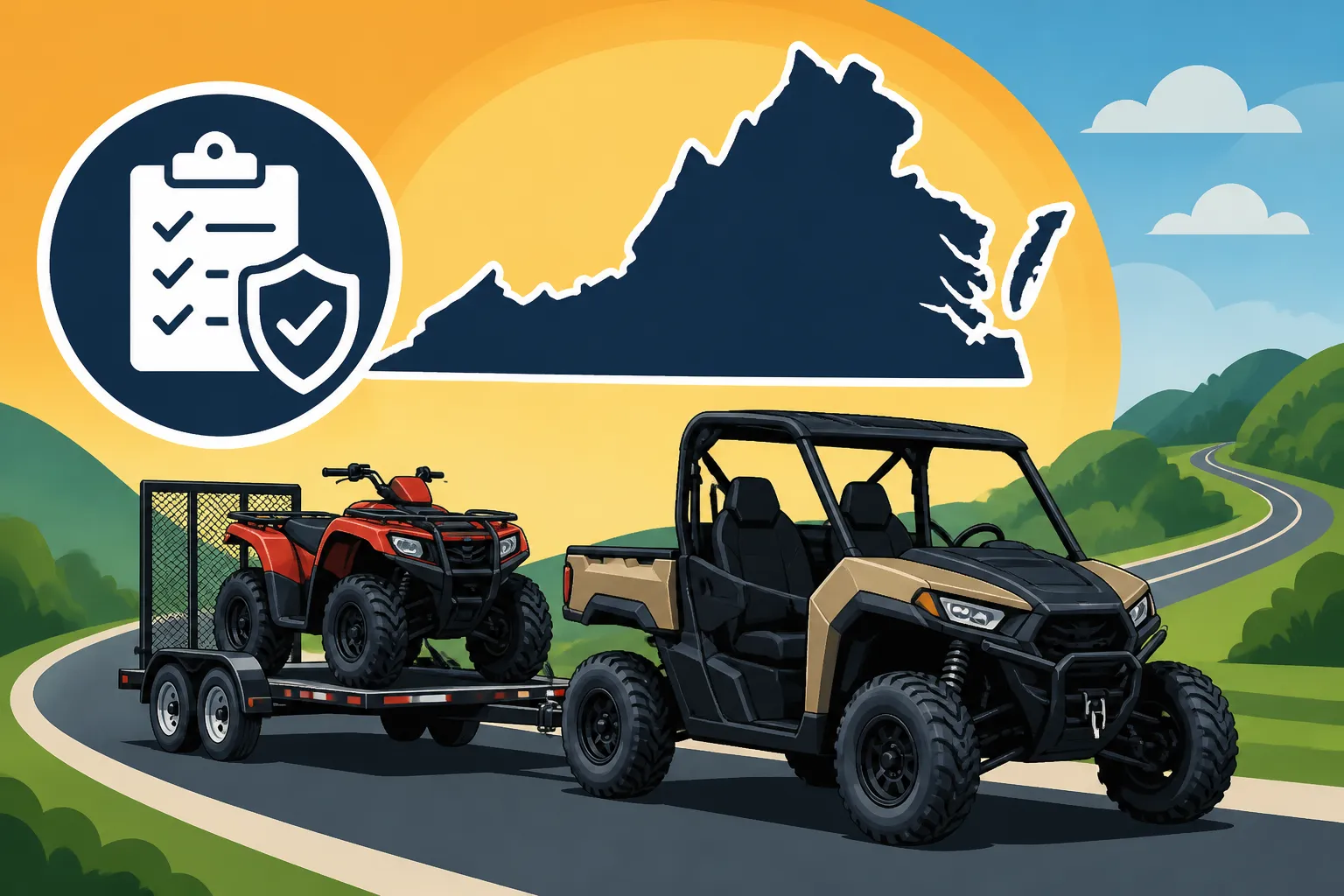
Virginia Rules for Towing a Trailer
So, you've got yourself an ATV or UTV in Virginia, and you're probably looking to get some real work out of it, or maybe just make hauling gear to your favorite hunting spot a whole lot easier. It makes perfect sense! These machines are beasts of burden, designed to tackle tough terrain and lighten your load. But then you start thinking about hitching up a trailer, and suddenly, a bunch of questions pop up: Can I even do this legally in Virginia? Are there special rules? What about on the road? It's a common point of confusion for many riders, and honestly, the Virginia law isn't always laid out in the clearest, most intuitive way for off-road enthusiasts. This guide is here to untangle the specifics of towing a trailer with your ATV or UTV in the Commonwealth, helping you understand where you can tow, what you need to consider, and how to do it safely and legally.
Understanding Virginia's Core Stance on ATVs and Trailers
Virginia has a pretty firm stance on what an ATV or UTV is and isn't, and that distinction is absolutely crucial when we start talking about towing trailers. It’s not just a technicality; it’s the foundation of how you can, and cannot, use your machine for hauling.
The Fundamental "Off-Road" Designation
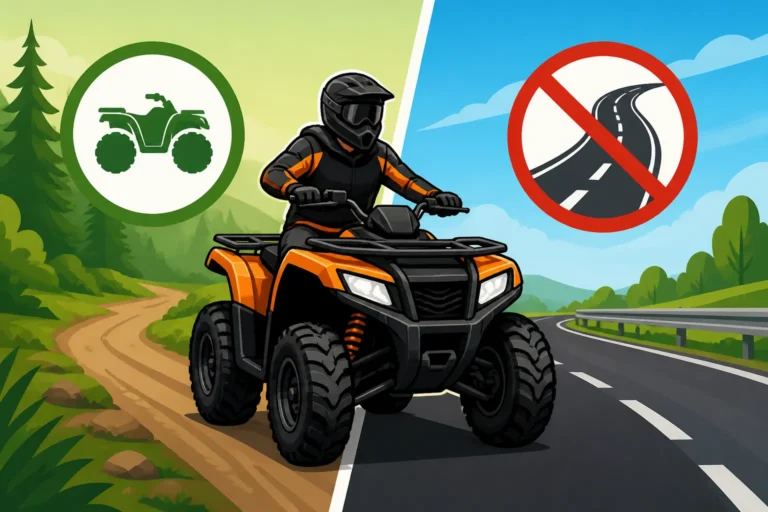
At their heart, ATVs and UTVs in Virginia are considered off-road vehicles. This isn't just a suggestion; it's a legal classification that dictates almost everything about their use. Unlike your truck or car, which is primarily designed and registered for public road use, your quad or side-by-side exists in a different legal sphere. The General Assembly carved out these machines specifically for terrain other than paved highways and public roads. This off-road designation is why things like [Virginia Issues No Plates for ATVs] and why you don't have to worry about traditional vehicle registration fees for them.
This distinction matters immensely when you consider towing a trailer. If your ATV or UTV is fundamentally an off-road machine, then any activity you undertake with it, including towing, is generally expected to remain in that off-road domain. Trying to apply the same rules you'd use for towing a utility trailer with your pickup truck to your ATV will almost certainly lead to trouble. The law isn't thinking about your ATV as a mini-truck for road tasks; it's thinking about it as a specialized machine for specific environments.
Where Towing a Trailer is Generally Permitted
Given their off-road classification, the most straightforward answer to "Where can I tow a trailer with my ATV or UTV in Virginia?" is: where your ATV or UTV is already legally allowed to operate. This primarily means private property, designated off-road trails, and certain agricultural settings. Think about it – if you're on your own land, or land where you have explicit permission, and you're not interfering with public infrastructure or safety, you generally have a lot more leeway.
For example, on a large farm, using your utility vehicle to pull a small cart of feed, tools, or even a hunting stand is perfectly fine. It's a vital part of the daily operations and exactly what many of these machines are built for. Similarly, if you're out on a private hunting lease, hauling your gear to a remote blind with a small trailer attached to your quad can save you a lot of backache. Even on some designated public trail systems, you might find allowances for utility use, perhaps to help with trail maintenance or to move camping supplies to a backcountry site, though these specific rules vary greatly by location. [Virginia Trails That Allow Side-by-Sides] often have specific stipulations about what can be towed, if anything. Always check the specific rules of the trail system before you head out.
Specific Rules and Considerations for Towing a Trailer
While Virginia's code doesn't typically get into the nitty-gritty of how much your ATV can tow, it's a matter of safety, common sense, and respecting the machine's design limits. Ignoring these can lead to accidents, damage to your equipment, or even legal issues if you're pushing boundaries.
Weight and Size Limitations
Unlike commercial trucks with clearly defined gross vehicle weight ratings (GVWR) for towing, Virginia's ATV laws don't typically spell out specific weight or size limits for trailers hitched to ATVs or UTVs. This isn't a free pass, however. The most important rule of thumb here is to always adhere to your machine's manufacturer specifications. Every ATV and UTV comes with a stated towing capacity, hitch weight limit, and sometimes even a maximum trailer size recommendation. Overloading your machine can lead to catastrophic failure of brakes, suspension, or the frame itself. It can also make the ATV unstable, difficult to steer, and prone to rollovers, especially on uneven terrain.
Imagine you're trying to haul a heavily loaded firewood trailer up a steep incline on your hunting property. If that trailer is too heavy, your ATV's engine will struggle, your brakes will be insufficient on the descent, and the added tongue weight could lift the front wheels, causing you to lose steering control. Aftermarket accessories, like heavy-duty hitches or specialized racks from companies like SuperATV, can certainly enhance your machine's utility, but they don't magically increase the manufacturer's fundamental towing capacity. Always check the maximum weight your ATV or UTV is designed to pull safely, including the weight of the trailer itself and its cargo.
Equipment Requirements for Safe Towing
Even though you're mostly off-road, some common-sense equipment considerations for safe towing are paramount. Virginia law focuses more on the use of the ATV itself, so specific trailer equipment requirements for off-road towing are less explicit in the code than they would be for on-road vehicles. However, safety dictates certain necessities. First and foremost, a proper hitch is essential. Most ATVs and UTVs come standard with a receiver hitch or a pin-style hitch. Ensure your trailer uses a compatible hitch type and that it's securely fastened. A ball hitch, common for many small utility trailers, should be the correct size for the trailer's coupler.
Beyond the hitch, consider safety chains. While not legally mandated for off-road ATV trailers, they are an inexpensive and critical failsafe should your primary hitch fail. Imagine losing your trailer down a rocky hill – not good. Braking is another huge factor. Small, lightweight trailers might not have their own brakes, relying solely on your ATV's braking system. If you're towing a heavier load, or a trailer with a substantial amount of inertia, trailer brakes can be a lifesaver, preventing jackknifing and providing much-needed stopping power. Finally, even off-road, proper lighting on your trailer can be crucial, especially if you're operating near dawn or dusk, or crossing any roads, however briefly. Remember, [Your Trailer Needs a Plate but Your Quad Does Not], which implies a fundamental difference in how they're regulated, but doesn't negate the need for practical safety measures.
Passenger and Cargo Rules on the ATV/UTV
When you're towing a trailer, the rules and recommendations regarding passengers and cargo on your ATV or UTV become even more critical for stability and control. The golden rule here is to never carry passengers in or on the trailer itself. Trailers are designed for cargo, not people. Riding in a trailer is incredibly dangerous; they lack seating, seatbelts, and protection, making occupants extremely vulnerable to falls, ejections, and impacts, especially on uneven off-road terrain.
Regarding passengers on the ATV or UTV itself, stick to the manufacturer's seating capacity. If your quad is a single-rider model, don't try to squeeze a passenger on with a trailer in tow. If it's a two-up model or a multi-passenger UTV, ensure all passengers are properly seated and belted, and that the combined weight of passengers, cargo on the ATV/UTV, and the trailer's tongue weight does not exceed the machine's gross vehicle weight rating (GVWR). Distributing cargo weight properly on your ATV or UTV, even without a trailer, is important, but with a trailer, it's amplified. Heavy items should be secured low and centered. Uneven weight distribution can throw off the machine's balance, making it much harder to handle, especially when turning or going over bumps. Virginia's [Virginia Passenger Rules on an ATV] are specific about who can ride and where, and these rules don't suddenly disappear just because you've hooked up a trailer.
Legal Exceptions and Specific Use Cases for Towing
While the general rule is "off-road means off-road," Virginia law does acknowledge practical realities, especially for those who rely on ATVs and UTVs for work or specific recreational pursuits. These exceptions are important to understand, as they define the limited circumstances where your machine, even with a trailer, might interact with public spaces.
Agricultural and Household Use Exceptions
Virginia law provides specific carve-outs for the use of ATVs and UTVs for agricultural and household purposes. This is where the utility aspect of these machines truly shines, and thankfully, the law largely supports it. You're generally permitted to use your ATV or UTV, often with a trailer attached, to perform tasks essential to farming or managing your own property. This could include hauling fence posts, moving tools, transporting hay bales, or even carrying firewood from one part of your land to another. The spirit of these exceptions is to allow landowners to efficiently manage their property without undue legal burden.
However, a critical caveat here is that these uses are primarily for private land. The moment you venture onto a public road, even if it's just to get from one field to another, the rules tighten up significantly. While the agricultural exception allows for certain movements on highways for farming purposes, such as crossing a road, it does not typically extend to extended travel with a trailer. For instance, you couldn't haul a large utility trailer full of lumber down a public highway for miles, even if it was for your farm. The key is understanding [Virginia Farming and Household Exceptions] are narrow, specific, and tethered to the actual private property and direct, short movements on public ways when absolutely necessary for those purposes.
Designated Trail Systems and Towing
Many riders love the idea of using their ATV or UTV to haul camping gear, hunting supplies, or even tools for trail maintenance on designated trail systems. The good news is that some trail systems do allow for this, but the rules are highly specific to each location. For example, Virginia's Spearhead Trails network, known for its extensive mileage in the coalfields, has its own set of regulations. Some trails within these systems might permit small utility trailers for specific purposes, while others might prohibit them entirely. It's not uncommon to see utility vehicles (UTVs) pulling small, lightweight trailers for hauling tools or recovery equipment on maintenance runs, for instance.
Before you hook up your trailer and head to a trail system like Coal Canyon or Mountain View, it is absolutely essential to check the specific rules and regulations of that particular system. What's allowed on one part of [Spearhead Trails in Virginia Explained] might be banned on another. Factors like trail width, steepness, and environmental impact are often considered. You might also find restrictions on the type of trailer or its overall dimensions. Never assume; always call ahead or check the official website for the most current rules. Ignoring these can lead to fines, expulsion from the trail, or even damage to the trail itself.
Crossing Public Roads with a Trailer
This is perhaps the trickiest area for ATV and UTV riders towing trailers. The default rule in Virginia is that ATVs and UTVs are prohibited from operating on public highways. There are very few, narrow exceptions, and adding a trailer makes these exceptions even more tenuous and risky. The most common exception is the ability to cross a public highway by the most direct route possible, at a right angle, after coming to a complete stop and yielding to traffic. This is a quick, point-to-point movement, not an extended stretch of travel.
When you add a trailer into this scenario, even a short crossing becomes more challenging and potentially hazardous. The trailer adds length, reduces maneuverability, and can obscure visibility, especially if it's loaded. While the law might permit the ATV itself to make that direct crossing, the presence of a trailer, particularly if it's wide or heavy, can make the maneuver much riskier and draw unwanted attention from law enforcement. The critical takeaway is that [Virginia Crossings by the Most Direct Route] is meant for essential, minimal interaction with public roads. It's not an invitation to use your ATV and trailer for errands or to connect long stretches of private land via public roads. The further you push the definition of "most direct route," the higher your risk of a citation.
Best Practices for Safe and Responsible ATV/UTV Trailer Towing
Even with the best equipment and a solid understanding of the rules, towing a trailer with an ATV or UTV demands a higher level of awareness and skill. It's not just about hooking it up and going; it's about anticipating challenges and adapting your driving style to ensure everyone's safety and prevent damage.
Pre-Trip Checks and Maintenance
Before you even pull out of the driveway or the staging area, a thorough pre-trip inspection of both your ATV/UTV and the trailer is non-negotiable. This isn't just a suggestion; it's critical for preventing mishaps down the trail or across the field. Start with your ATV or UTV: check your tire pressure – under-inflated tires can significantly impact handling, especially with added weight. Inspect your brakes to ensure they're functioning perfectly, as you'll need maximum stopping power. Check your engine oil and coolant levels, especially if you anticipate heavy loads or steep climbs, as towing puts extra strain on the engine.
Next, turn your attention to the trailer itself. Are the tires properly inflated and free of damage? Is the hitch securely connected to your ATV or UTV, and is the safety pin in place? Ensure safety chains are attached and crossed under the hitch. Verify that your cargo is properly distributed and securely tied down to prevent shifting during transit. A load that moves suddenly can cause the trailer to sway violently or even flip. Even a basic utility trailer from a brand you trust, when equipped with components from a company like SuperATV, still requires these checks. Don't skip these steps; they could save you from a breakdown or, worse, an accident.
Driving Techniques with a Trailer
Driving an ATV or UTV with a trailer attached is a vastly different experience than riding solo. You need to adjust your driving style significantly to account for the added weight, length, and inertia. The first and most important adjustment is speed. Everything needs to happen slower: acceleration, turning, and especially braking. High speeds can make the trailer sway uncontrollably, particularly on uneven terrain or during quick maneuvers. Anticipate turns and obstacles much earlier than you would normally.
When turning, remember the trailer will cut a tighter arc than your ATV/UTV. Take wider turns to avoid clipping trees, rocks, or other obstacles with the trailer. Braking distances will increase dramatically due to the added weight, so allow ample room. On descents, use engine braking as much as possible to control your speed, rather than solely relying on your primary brakes, which can overheat. Uphill climbs will be more demanding on your engine and transmission, so be prepared to use lower gears. Always be mindful of the weight transfer; hard braking can push the trailer into the ATV, while rapid acceleration can cause the front of the ATV to lift, reducing steering control.
Avoiding Common Mistakes
Many of the common mistakes made when towing with an ATV or UTV stem from underestimating the impact of the trailer or attempting to use the machine beyond its intended design. One of the biggest errors is overloading the trailer. Just because you can fit it, doesn't mean you should pull it. Always respect your machine's towing capacity and the trailer's weight limits. Overloading leads to instability, reduced braking performance, and premature wear on components. Another frequent misstep is using an improper or unsecured hitch. A faulty connection can lead to the trailer detaching, becoming a runaway hazard. Always double-check the connection and safety chains before moving.
Perhaps the most dangerous mistake, and one that Virginia law actively discourages, is extended road use with a trailer. As discussed, ATVs and UTVs are off-road machines, and hauling a trailer on public highways for any significant distance is illegal and incredibly unsafe. The machines are not designed for road speeds, they lack critical safety features like advanced lighting and turn signals for road use, and their tires are not meant for pavement. Even if you've got the most rugged accessories from SuperATV, it doesn't make your off-road machine street legal for towing. Stick to private land and designated off-road areas, and reserve road crossings for the absolute minimum necessary movements. Understanding and avoiding these mistakes will go a long way in ensuring your towing operations are safe and enjoyable.
Virginia ATV/UTV Trailer Towing Scenarios
| Scenario | Is Towing Generally Permitted? | Key Considerations | Legal Status |
|---|---|---|---|
| Private Land (Farm/Yard) | Yes | Manufacturer limits, secure load, safe driving | Generally legal for property owners/tenants |
| Designated OHV Trails | Varies by trail system | Check specific park/trail rules, width/weight restrictions | Legal if permitted by park/trail regulations |
| Public Highways (Extended) | No | ATVs/UTVs are not street legal for extended travel | Illegal and highly unsafe |
| Public Highways (Crossing) | Limited, by direct route only | Must stop, yield, cross at right angle; trailer adds risk | Legal if meeting specific direct-crossing criteria |
| Hunting/Timber Lease | Yes, with permission | Private land rules apply, respect landowner's rules | Legal with landowner's consent |
| Connecting Private Land (Short Road Sections) | Generally No | Virginia law is restrictive; intended for "direct crossing" only | High risk of citation if not direct crossing |
Disclaimer
This article is for general informational purposes only and does not constitute professional advice. Laws, prices and regulations vary by location and change over time. Consult a qualified professional for guidance on your specific situation.