Titling an ATV in Person at a DMV Office
Alright, let's talk about something that can feel like a real headache: dealing with the DMV. You've got your ATV, maybe you just bought it, or perhaps you've had it for a while and decided it's time to make things official. The idea of walking into a DMV office with a stack of papers, hoping you've got everything right, can be daunting. It's easy to feel lost in the shuffle of forms and regulations. This guide is here to cut through the confusion and give you a clear, step-by-step walkthrough for titling your ATV or UTV in person at a Virginia DMV office, making sure you know exactly what to bring and what to expect so you can get that title in hand and hit the trails with peace of mind.
Why Titling Your ATV Matters Even When It's Optional for Used Machines
It’s a common misconception that all ATVs in Virginia need a title, or that none of them do. The truth, like many things involving bureaucracy, is a little more nuanced. Understanding the ins and outs of Virginia's titling requirements is crucial, not just for legal compliance but for your own peace of mind as an owner.
Understanding Virginia's ATV Titling Rules
Let's clear up the core of it first: not every single ATV or UTV in Virginia must be titled. The rules depend heavily on when the machine was first purchased new and its engine size. For instance, [Virginia Titles Required on Machines Over 50cc] if they were bought new by a consumer after a specific date. That date is significant: [Virginia's July 2006 Titling Cutoff]. This means if you bought a brand-new quad from a dealership after July 1, 2006, and it has an engine larger than 50 cubic centimeters, it absolutely needs a Virginia title. No ifs, ands, or buts about it. This applies whether it's a zippy sport quad or a heavy-duty utility vehicle.
However, the situation changes quite a bit for machines that were bought new before that 2006 cutoff, or more commonly, for used machines. If you're buying a used ATV in Virginia, you're usually in a different boat. In many cases, [Virginia Titles Are Optional on Used Machines]. This can be a huge relief, but it also means you need to be extra diligent. Just because it's optional doesn't mean it's a bad idea, and often, it's highly recommended for reasons beyond just legal necessity. It’s important to clarify the exact definitions, too; for example, [Virginia ATV and Utility Vehicle Definitions] are distinct from other vehicle types in the code, which influences how they're treated for titling purposes.
The Benefits of a Virginia ATV Title
Even when titling is optional, having a title for your ATV or UTV is almost always a smart move. Think of it as the ultimate proof that your machine is, unequivocally, yours. This becomes incredibly important in a number of real-world scenarios. For starters, it serves as indisputable [Titling an Old Quad to Prove You Own It]. Imagine if your quad is stolen. Without a title, proving ownership can become a tangled mess, making it much harder for law enforcement to recover it or for your insurance company to process a claim. A title solidifies your legal claim to the machine.
Beyond security, a title greatly simplifies the process when you decide to sell your ATV. A clean title reassures potential buyers, making your machine more attractive and often commanding a better resale price. It streamlines the transfer of ownership, preventing future headaches for both you and the new owner. Furthermore, if you’re financing your ATV, whether it’s new or used, the lender will almost certainly require a title. They need that document to place a lien on the machine, protecting their investment. This is why [Why a Lender Makes You Title a Used Quad] is a common scenario, even if the state's rules technically say it's optional for you. Having that title makes these transactions much smoother.
Gathering Your Documents for a Smooth DMV Visit
The key to a hassle-free visit to the Virginia DMV office for ATV titling is preparation. Walking in with all your ducks in a row – meaning all the correct paperwork – will save you immense time and frustration. Let’s break down what you’ll need, depending on how you acquired your machine.
Essential Paperwork for a New ATV
If you just bought a shiny new ATV or UTV from a dealership, congratulations! Now comes the paperwork. The single most important document you’ll receive from the dealer for titling purposes is the Manufacturer's Statement of Origin, or MSO. This is essentially the birth certificate for your machine. It confirms that the vehicle is new and has never been titled before. Make sure the MSO is complete, signed, and accurate, with details like the VIN and engine size matching your machine precisely. This MSO is what you need to title a new quad, so keep it safe. [The MSO You Need to Title a New Quad] is non-negotiable for new machines.
Along with the MSO, you'll need a bill of sale or buyer's order from the dealership. This document will show the purchase price, any trade-in value, and sales tax collected. You will also need to bring a valid government-issued photo ID (like your driver's license) and proof of your Virginia residency. This could be a utility bill, a lease agreement, or other documents demonstrating [Virginia Proof of Address at Titling]. Remember that Virginia collects sales tax on ATVs at the retail rate, not the vehicle rate, and this will be due at the DMV unless your dealer collected it. Be prepared for [Virginia Sales Tax at Titling], which will be calculated based on your purchase price.
Essential Paperwork for a Used ATV
Titling a used ATV often presents a few more challenges, mainly because the previous owner might not have all their paperwork perfectly organized. Ideally, when you buy a used ATV, the seller should sign over their existing Virginia title to you. Make sure all the blanks are filled out correctly, including the purchase price and date of sale. [Getting the Seller to Sign the Old Title Over] is a critical step, so double-check it before you leave the seller.
What if the seller doesn't have a title? This is a common scenario, especially for older machines or those that were never legally required to be titled in the first place. In this situation, you'll need a notarized Bill of Sale and possibly an affidavit. Virginia has specific forms for this. You might use [Virginia Form VSA 12M Affidavit] or a similar notarized statement in lieu of a title. This affidavit essentially states under oath that you are the rightful owner and explains why a title isn't available. You can find templates for a robust Bill of Sale or affidavit online, and resources like LawDepot offer various legal document forms that can be customized to your situation, helping ensure you have all necessary details included. The [The Notarized Affidavit That Replaces a Missing ATV Title] is a crucial piece of this puzzle, so make sure it's filled out completely and properly notarized. For situations where you might not even have a strong bill of sale, Virginia has provisions for [Virginia Title Without a Bill of Sale], but this typically requires even more documentation and scrutiny, usually involving a thorough explanation of how you acquired the machine.
Specific Situations and Additional Forms
Sometimes, your ATV acquisition isn't a straightforward purchase. If you've inherited a machine, for example, you'll need documents like the death certificate, the will or probate documents, and perhaps an affidavit of heirship to prove your legal right to the ATV. This falls under [Virginia Titles for an Inherited Machine]. For machines purchased out-of-state, the process is largely similar to titling a used machine, but you’ll need the out-of-state title (if one exists) and a bill of sale. Virginia will typically accept [Virginia Accepts an Out-of-State Title], but they'll convert it to a Virginia title.
In all these scenarios, notarization plays a significant role. Many Virginia DMV forms, especially affidavits, require a notary's stamp and signature. This step adds a layer of legal verification. You'll need to know [Where to Find a Notary for a VSA 12M] or any other document requiring it. Banks, credit unions, and even some shipping stores often have notaries public on staff. When preparing your documents, consider using reputable online legal forms providers like LawDepot to generate any necessary affidavits or bills of sale to ensure they contain all the correct legal language. Having these templates ready, even for seemingly simple documents, can prevent a trip back to the DMV.
The Step-by-Step Process at the DMV Office
You’ve gathered your documents, double-checked everything, and now it’s time for the main event: your visit to the Virginia Department of Motor Vehicles. While it might feel like a bureaucratic maze, a little foresight and understanding of the process can make it a surprisingly smooth experience.
Before You Go: Preparing for Your Visit
First things first, check the DMV’s website for office hours and, crucially, whether your local office offers appointments for titling services. Many branches now encourage or even require appointments, which can significantly cut down on your wait time. Nothing is more frustrating than showing up only to find a two-hour line. While you're on their site, confirm any specific document requirements for ATV titling, as these can occasionally be updated. Gather all your physical documents – MSO, bill of sale, signed title, ID, proof of address, affidavits – and organize them neatly in a folder. It's a good idea to have photocopies of everything, just in case. Make sure you also have all the ATV's identifying information handy, like the Vehicle Identification Number (VIN) and engine size. You'll need this to fill out forms like [Virginia Form VSA 17A Explained].
Navigating the DMV Counter
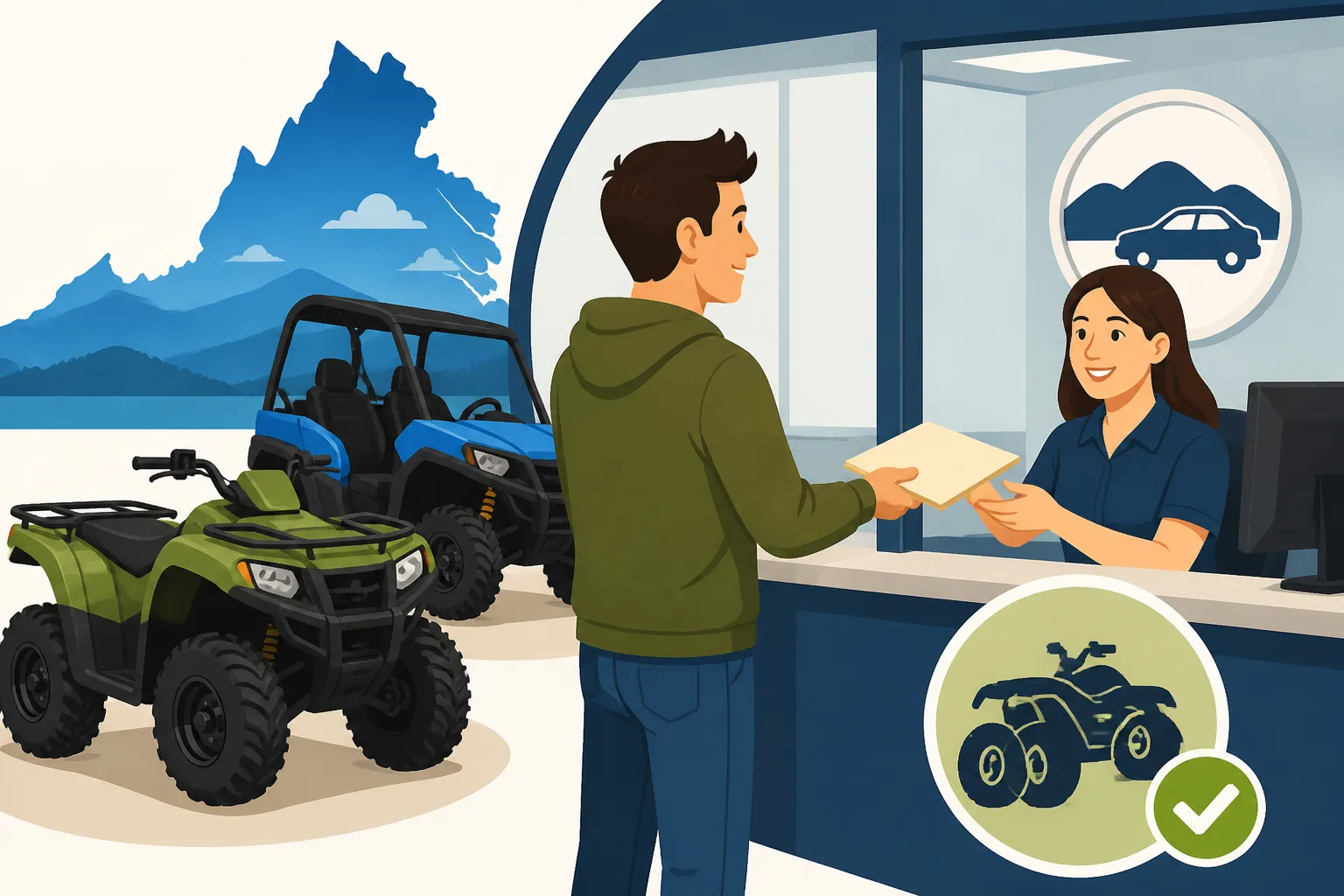
Once you arrive at the DMV (either with an appointment or prepared for a wait), you’ll typically be directed to a specific window or counter for vehicle titling. When it's your turn, present your neatly organized stack of documents to the clerk. They will review everything, checking for accuracy and completeness. You'll likely need to fill out or complete a "Vehicle Registration Application" (Form VSA 17A). This form gathers all the necessary information about you and your ATV for the title record. Be prepared to clearly state the purchase price of your ATV, as this is used to calculate sales tax. Virginia has a fixed [Virginia Title Fee of $15] for ATVs, which you'll pay along with any applicable sales tax. The DMV accepts various [Virginia Title Payment Methods], usually including cash, checks, and major credit cards, but it’s always wise to have a backup payment option. The clerk will enter all the information into their system, and if everything is in order, they’ll process your application.
What Happens After You Apply
Once your application is accepted and fees are paid, the DMV clerk will typically give you a temporary receipt. This receipt confirms that you've applied for a title and serves as proof until the official document arrives. In most cases, the physical title will be mailed to you from a central processing office in Richmond, rather than printed on the spot. [Virginia Title Processing Time] can vary, but generally, you can expect to receive your title in the mail within a few weeks. It's important to remember that ATVs in Virginia are not registered in the same way cars are, so you won't receive license plates or registration stickers. [Virginia Issues No Plates for ATVs], nor does [Virginia Issues No Decals for ATVs] for off-road machines. Your title is the primary document of ownership. Keep that temporary receipt safe until your official title arrives, and once you get the title, store it in a secure place, separate from your ATV.
Document Comparison for ATV Titling in Virginia
To make things a bit clearer, here's a quick comparison of the primary documents you'll need depending on whether your ATV is brand new or used. This isn't exhaustive for every single edge case, but it covers the most common scenarios you'll encounter.
| Document Type | New ATV Purchased from Dealer | Used ATV Purchased from Private Seller (with title) | Used ATV Purchased from Private Seller (no title) |
|---|---|---|---|
| Manufacturer's Statement of Origin (MSO) | Required | Not applicable | Not applicable |
| Previous Virginia Title (signed over) | Not applicable | Required (seller signs over to you) | Not applicable |
| Bill of Sale | Required (from dealer) | Highly Recommended (even if title exists) | Required (notarized is best) |
| Form VSA 17A | Required (fill out at DMV) | Required (fill out at DMV) | Required (fill out at DMV) |
| Form VSA 12M Affidavit (or similar) | Not applicable | Not applicable | Required (notarized, if no title) |
| Photo ID | Required | Required | Required |
| Proof of Virginia Address | Required | Required | Required |
| Payment for Title Fee & Sales Tax | Required | Required | Required |
Common Pitfalls and How to Avoid Them
Even with the best preparation, the DMV can throw a curveball. Knowing the common pitfalls can help you avoid delays and multiple trips, saving you precious time and frustration.
Missing or Incorrect Paperwork
This is, by far, the most frequent reason for a titling application to be rejected or delayed. It’s easy to overlook a signature, misinterpret a field, or simply forget a document. For new machines, an incomplete or improperly filled out MSO can be a major hang-up. Always review the MSO provided by the dealer thoroughly before you leave the showroom, and if you spot an error, get it corrected then and there. For used machines, the biggest issue is often [Fixing a Title the Seller Forgot to Sign] or improperly signing it. A title that's not correctly signed over by the seller is essentially useless to you. Double-check all signatures and dates before money changes hands.
If you're dealing with a missing title and using an affidavit like Form VSA 12M, make absolutely sure it's correctly filled out and notarized. A notary's seal is essential for these types of documents. Services like LawDepot can be incredibly helpful for preparing accurate and legally sound bills of sale or affidavits, reducing the chance of rejection due to missing information or incorrect wording. Remember, the DMV clerks are just processing agents; they can't fill in missing information or notarize documents for you. Having everything precise and complete is your best defense against a rejection.
Sales Tax Surprises
Another common issue arises with sales tax. Many riders are unaware of the exact [Virginia ATV Sales Tax Rate] or how it's applied. Virginia's sales tax on ATVs is different from the motor vehicle sales and use tax, which can lead to confusion. You generally pay sales tax based on the actual sales price of the machine, or in some cases (especially for low-value private sales where the price seems unreasonably low), the DMV might assess tax based on its fair market value. Regional tax rate differences can also play a role, with some localities adding a fraction of a percent. This is why it's important to be prepared for the financial aspect of [Virginia Sales Tax at Titling].
If you buy a machine from a private seller for a very low price, be prepared to explain the circumstances or demonstrate the actual value, as the DMV clerk might question it. For machines purchased out of state, Virginia will usually collect a use tax if sales tax wasn't paid in the state of purchase, or if the tax paid was less than Virginia's rate, you'd owe the difference. Always budget for this expense in addition to the base [Virginia Title Fee of $15] so you're not caught off guard at the counter.
What to Do If Things Go Wrong
Despite your best efforts, sometimes things don't go perfectly. Maybe a document is rejected, or the clerk identifies an issue you hadn't anticipated. Don't panic. The best approach is to politely ask the DMV clerk for a clear explanation of why the application was rejected and what specific steps you need to take to correct it. Write down their instructions, including any specific forms or additional documents required. Don't hesitate to ask [Virginia Title Questions Clerks Hear] if anything is unclear.
You might need to make a second trip, possibly after obtaining a missing signature, a new notarization (again, resources like LawDepot for correct forms can be a lifesaver here), or further documentation. If you believe there's a misunderstanding or a unique circumstance, you can ask to speak with a supervisor. In particularly complex situations, such as dealing with a machine with no VIN or a title issue that seems insurmountable, you might need to seek advice from an attorney specializing in vehicle titles, though this is rare for typical ATV titling. Often, it's just a matter of getting that one missing piece of paper.
Disclaimer
This article is for general informational purposes only and does not constitute professional advice. Laws, prices and regulations vary by location and change over time. Consult a qualified professional for guidance on your specific situation.