Virginia Title Compared to West Virginia
There's nothing quite like the open air and the rumble of an ATV or UTV beneath you, especially when you're exploring the stunning landscapes of Virginia and our neighboring states. But if you've ever crossed state lines with your machine, particularly between Virginia and West Virginia, you might have noticed a jarring difference in the rules for titles and registration. It can be a real headache trying to figure out what paperwork you need, and the last thing anyone wants is to run into trouble with an officer because of a misunderstanding. This guide is here to untangle the contrasting requirements between Virginia and West Virginia when it comes to ATV and UTV titling, helping you understand what to expect and how to stay compliant, no matter which side of the border you're riding on.
Understanding Virginia's ATV Titling Philosophy
Virginia has a somewhat unique approach to titling off-road vehicles. It’s not quite like registering a car, and it often catches new riders or those moving from other states by surprise. While we certainly care about knowing who owns what, the emphasis here is different than in many other places, especially our neighbor to the west.
Virginia's Unique Titling Requirements
In the Commonwealth, titling an ATV or UTV is primarily about establishing proof of ownership. Think of it as a deed for your off-road machine. For any new ATV or UTV over 50cc that was purchased new after July 1, 2006, a title is generally required. This rule came into effect to create a clearer paper trail for these increasingly popular vehicles. It helps prevent theft and makes it easier to track ownership in sales. When you buy a brand-new machine from a dealer, they'll usually handle the initial titling paperwork for you, ensuring that you walk out with that crucial document.
However, where things get interesting is with used machines. If you pick up a pre-owned quad or side-by-side, Virginia often makes titling optional. This can lead to a lot of confusion, as some riders might choose not to title an older machine, especially if it was purchased before the 2006 cutoff or from a private seller who never bothered with a title. While [Virginia Titles Are Optional on Used Machines] might seem like a convenience, it can also create headaches down the road. For instance, if you ever need to finance a used ATV, most lenders will insist on a title to secure their loan. Even without a loan, having a title provides undeniable proof that the machine belongs to you, which can be invaluable if it’s ever stolen or if you need to settle a dispute. The cost itself is pretty straightforward, usually just a one-time fee. If you’re curious about the specific cost, we have a detailed breakdown on [Virginia Title Cost].
What Virginia Doesn't Require
Here’s where Virginia really stands apart from many other states: we don't require registration or plates for ATVs and UTVs. That's right, you won't see Virginia-issued license plates or annual registration decals on these machines. This means there are no yearly renewal fees to pay to the DMV just to keep your off-road vehicle legal in Virginia. This is a common point of misunderstanding, as many people assume that if a vehicle has a title, it must also be registered. But for ATVs and UTVs in Virginia, that's simply not the case. We talk more about this in [Virginia Titles ATVs but Never Registers Them].
Furthermore, Virginia does not mandate ATV or UTV insurance. While it's always a good idea to have some coverage to protect yourself and your investment, the state won't require you to show proof of insurance to get a title or to operate your machine. This lack of mandatory insurance, combined with no registration, means that the administrative burden and annual costs associated with owning an ATV or UTV in Virginia are generally lower than in states with more stringent requirements. For many riders, this is a welcome relief, but it's important to understand the full implications, especially when planning a trip to a state like West Virginia where the rules are quite different. It also means you need to be proactive about your own safety and financial protection, as the state isn't stepping in to require it.
West Virginia's Approach to ATV Titling and Registration
Now, let's take a look across the border at West Virginia. If you're a Virginia rider planning a trip to the Hatfield-McCoy Trails or any other beautiful riding area in the Mountain State, you absolutely need to be aware of these differences. West Virginia takes a much more comprehensive approach, mirroring how many states handle cars and trucks.
West Virginia's Mandatory Registration for Off-Road Vehicles
Unlike Virginia, West Virginia generally requires both a title and annual registration for most ATVs, UTVs, and other off-road vehicles. This isn't just a suggestion; it's a legal requirement for operating your machine on designated trails and other approved areas within the state. When you register your ATV or UTV in West Virginia, you'll receive a registration card and typically a decal that must be displayed on your machine. This decal serves a similar purpose to a license plate, indicating that your vehicle is legally registered for the current year. These registration fees often contribute directly to the maintenance and expansion of West Virginia's extensive trail systems, which is why they are so important for the state.
This mandatory registration also comes with annual renewal fees. So, while Virginia has a one-time title fee, West Virginia requires an ongoing financial commitment to keep your machine legally operational within its borders. This is a critical distinction for anyone who owns an ATV or UTV and plans to ride in both states. A Virginia rider with a properly titled, but unregistered, ATV might be perfectly legal at home, but they would be out of compliance the moment they cross into West Virginia without proper registration. For those interested in how these neighboring states compare, we've also got insights on [Virginia Title Compared to North Carolina] and [Virginia Title Compared to Tennessee].
The Importance of a West Virginia Title and Plate
In West Virginia, having your ATV or UTV titled and registered isn't just about bureaucracy; it's about legitimizing your right to ride. The title proves legal ownership, just like in Virginia, but the registration and associated decal prove that you have paid your dues to operate on the state's trails and comply with local laws. This is essential for enjoying popular trail systems where rangers and law enforcement actively check for compliance. If you're stopped on a West Virginia trail without proper registration, you could face fines, penalties, or even have your riding privileges revoked.
For West Virginia residents, this system is well-integrated. They title their machine, register it annually, and display the decal. For Virginia residents, however, it means understanding that your Virginia title alone isn't enough to legally ride in West Virginia. You'll likely need to secure a temporary or non-resident permit, or, depending on the specific trail system, register your machine with West Virginia or a reciprocal program if one exists. Always check the specific rules of the trail system you intend to visit, as they can sometimes have additional requirements. For instance, systems like Hatfield-McCoy have their own permit requirements that are separate from state registration, though often state registration is still a prerequisite.
Key Differences and What This Means for Riders
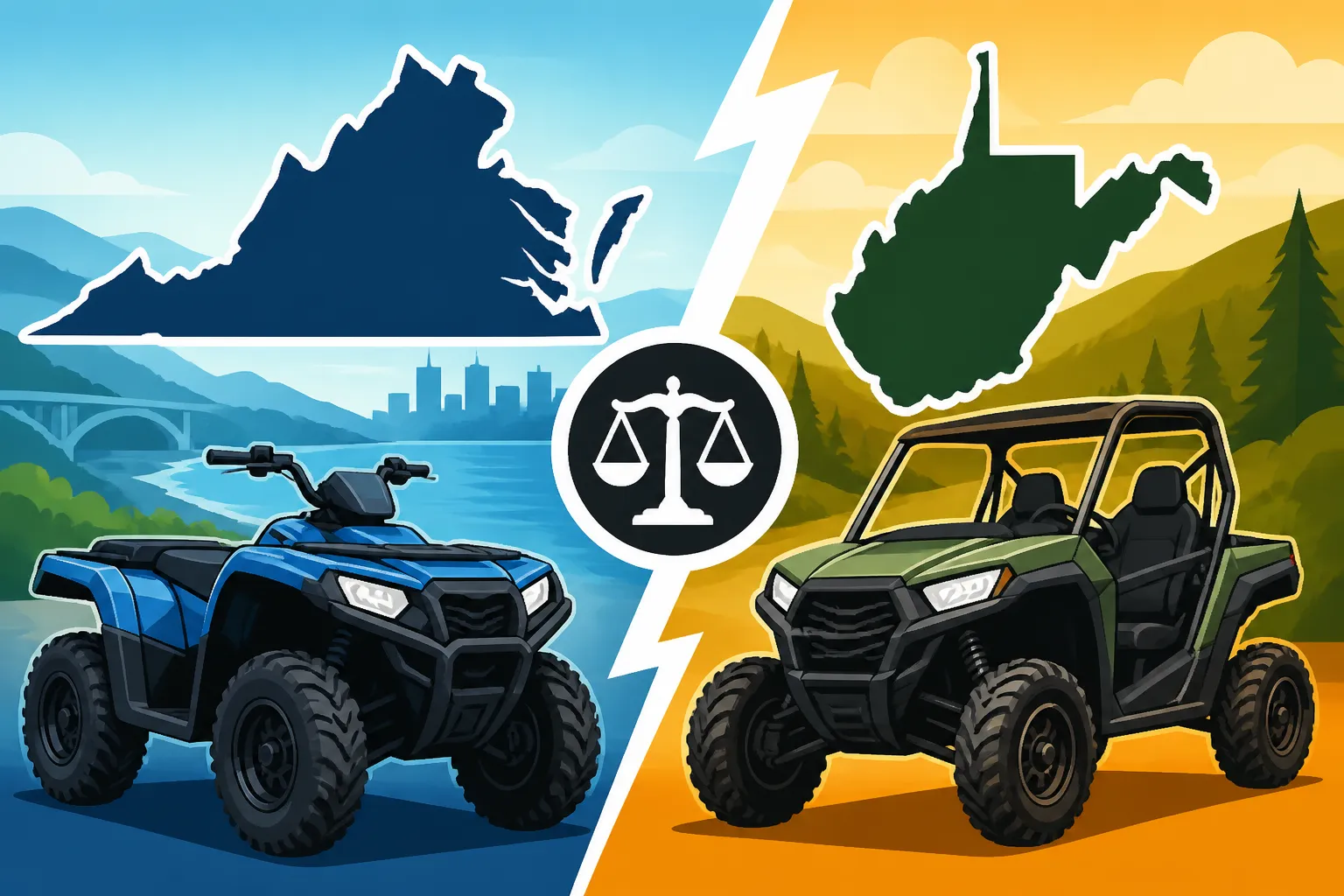
The philosophical and practical differences between Virginia and West Virginia's ATV/UTV titling and registration systems are substantial. Understanding these nuances is crucial for any rider who plans to enjoy the vast off-road opportunities found in both states. It's not just about what you need at home, but what you need when you travel.
Navigating Border States: A Tale of Two Systems
Imagine you're a proud Virginian with a shiny new side-by-side, titled properly in the Commonwealth, and you decide to take a trip up to West Virginia to ride the legendary trails. You're feeling good, your title is in order, but the moment you cross that state line and hit a West Virginia trail, you could be in violation of their laws if you haven't sorted out their specific requirements. In Virginia, your title proves ownership, but it doesn't grant you permission to ride on specific trails; that's generally handled by landowners or private park permits, and the state doesn't require registration to operate the machine itself. However, in West Virginia, that title is just the first step. The registration, with its annual fees and decals, is what signals your legal right to operate the machine on their designated off-road networks.
Conversely, if a West Virginia rider brings their fully registered and titled ATV to Virginia, they'll find that while their title is valid, Virginia has no concept of "registration" for their off-road machine. They won't need to get a separate Virginia title if their West Virginia title is in order, nor will they need to worry about annual registration here. The key takeaway is always to comply with the rules of the state you are riding in, not just the state where your machine is primarily housed. This often means carrying more paperwork than you might think necessary, just in case. When it comes to buying or selling across state lines, ensuring you have a solid bill of sale is paramount, and resources like LawDepot can be incredibly helpful for creating legally sound documents that protect both buyer and seller. These documents become even more critical when states have different titling and registration philosophies.
Practical Advice for Cross-Border Riders
The golden rule for anyone riding an ATV or UTV near state borders, especially between Virginia and West Virginia, is this: be prepared and informed. Before you load up your machine and head out, do a quick check of the regulations for your destination state. For a [Virginia Rules for a Visiting West Virginia Rider], you'll want to verify what permits, registrations, or reciprocity agreements are in place. Many West Virginia trail systems require specific permits that you'll need to purchase, and often, state registration is a prerequisite for getting those permits.
It's always a good idea to carry copies of all your relevant paperwork: your Virginia title (if you have one), a bill of sale, and any permits or temporary registrations required by the state you're visiting. Think of it as your portable "legal compliance" kit. While Virginia won't ask for much, a West Virginia trail ranger or local law enforcement officer certainly will. These differing approaches often stem from how each state funds and manages its off-road recreation. West Virginia's registration fees directly support its impressive trail infrastructure, whereas Virginia relies more on private land access and designated state forest trails with specific permit systems.
Here's a quick comparison of the two states' approaches:
| Feature | Virginia ATV/UTV Titling | West Virginia ATV/UTV Titling/Registration |
|---|---|---|
| Title Required | Yes (new over 50cc bought after 7/1/2006); Optional (used) | Yes, generally required for all Off-Road Vehicles (ORVs) |
| Registration Required | No | Yes, for legal operation on designated trails/areas |
| Plates/Decals | No | Yes, decals issued annually, must be displayed |
| Annual Fees | No (just one-time title fee of $15, see [Virginia Title Fee of $15]) | Yes, for annual registration renewal |
| Primary Purpose | Proof of ownership, vehicle identification | Proof of ownership and legal operating privilege, trail funding |
| Trail Access | No direct correlation with state titling/registration; permits typically purchased separately for specific trails or private land | Often required for designated WV trail access, sometimes in conjunction with specific trail system permits (e.g., Hatfield-McCoy) |
| Paperwork to Carry | Bill of sale, title (if applicable), proof of address if needed for titling [Virginia Title and Proof of Address] | Title, registration card, proof of insurance (if required for trails), trail permits |
Common Pitfalls and Best Practices
Navigating the different regulations between states can be tricky, and it's easy to make assumptions that can lead to problems. Let's talk about some common pitfalls and what you can do to avoid them, ensuring your off-road adventures are smooth and stress-free.
Buying or Selling Across the Virginia-West Virginia Line
One of the biggest areas where these state differences create issues is when buying or selling an ATV or UTV across the border. Imagine a scenario: you, a West Virginia resident, find an amazing deal on a used ATV from a private seller in Virginia. The seller tells you they never titled it because [Virginia Titles Are Optional on Used Machines] and they only rode it on their farm. You might think, "Great, no title issues!" But then you try to take that machine back to West Virginia to title and register it, and suddenly you hit a brick wall. West Virginia's DMV will very likely require a complete chain of ownership, including a properly signed-over title or a notarized bill of sale, especially if the machine is newer or was previously titled. Without that clear paperwork, you could find yourself with a machine you can't legally register, making it unusable on West Virginia's public trails. This is why when you're buying a machine, it's vital to build a strong paper trail. We have a lot of advice on [Virginia Machines With No Paperwork] and what to do.
The reverse situation can also be problematic. A Virginia buyer might find a well-maintained, fully titled and registered ATV in West Virginia. When they bring it back to Virginia, they'll appreciate having the title, but they'll quickly realize that the West Virginia registration and decals are irrelevant in Virginia. They won't need to renew them, nor will they get new Virginia-specific plates, because Virginia simply doesn't require them. When you're dealing with private sales, particularly across state lines, creating a comprehensive bill of sale is non-negotiable. Services like LawDepot offer templates for these kinds of documents, ensuring all necessary information, like vehicle identification numbers, purchase price, and seller/buyer details, are legally captured. This formal documentation can save you immense headaches later on, whether you're trying to title the machine in your home state or prove ownership.
Protecting Your Investment, Regardless of State
Even though Virginia's titling requirements are lighter than West Virginia's, it's still a best practice to title your ATV or UTV. If your machine is eligible for a Virginia title, getting one provides undeniable proof of ownership. This isn't just about legality; it's about protecting your investment. If your ATV is ever stolen, having a title makes it significantly easier for law enforcement to track it and for you to prove it's yours. Without a title, proving ownership can become a complicated, drawn-out process, especially if all you have is a handwritten bill of sale. For specific steps on getting one, check out [How to Title an ATV in Virginia].
Furthermore, while Virginia doesn't require insurance for ATVs, strongly consider purchasing a policy. Accidents happen, and off-road machines are a significant investment. Comprehensive coverage can protect you against theft, damage, and liability if you're involved in an incident. Many insurance companies offer specialized policies for ATVs and UTVs that are surprisingly affordable. Lenders will almost certainly require you to title a machine if you're financing it, simply because it helps them secure their loan. [Why a Lender Wants a Virginia ATV Titled] is a common question. Even without a loan, having that clear paper trail and insurance coverage means you're prepared for anything, whether you're tearing up the trails in the Appalachian mountains or simply enjoying a ride on your own property. By taking these proactive steps, you can focus on the fun of riding, knowing that you've covered all your bases.
Disclaimer
This article is for general informational purposes only and does not constitute professional advice. Laws, prices and regulations vary by location and change over time. Consult a qualified professional for guidance on your specific situation.