Virginia Off-Road Motorcycle Definitions
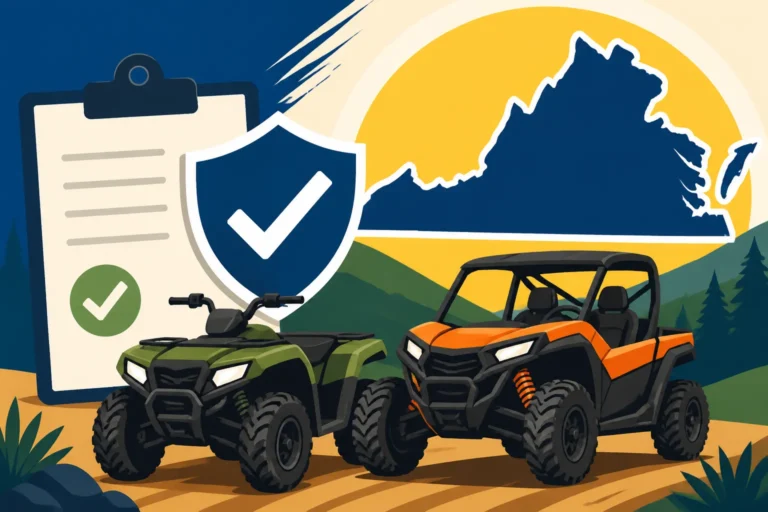
It's incredibly common for folks to get tangled up in the legal definitions of off-road vehicles here in Virginia, especially when it comes to distinguishing a dirt bike from an ATV, or even a moped. This confusion isn't just a minor headache; it can impact everything from whether you need a title to where you can legally ride. This guide is here to clear up the muddy waters, giving you a comprehensive breakdown of Virginia's official definitions for off-road motorcycles and how they stack up against other machines.
Why Virginia's Vehicle Definitions Are So Important for Off-Roaders
Navigating the world of off-road machines in Virginia can feel like trying to read a map printed in a foreign language. You've got your dirt bike, your buddy has a side-by-side, and your neighbor's kid has a mini-quad, and everyone's wondering, "What exactly is this thing in the eyes of the law?" The truth is, Virginia law carves out very specific definitions for different types of vehicles, and knowing where your machine fits is absolutely crucial. It's not just about semantics; these definitions dictate what you can and can't do, and what paperwork you'll need.
The Legal Line Between Categories
The Virginia Code isn't always the easiest read, but it draws clear lines between what constitutes an "all-terrain vehicle" (ATV), a "utility vehicle" (UTV, often lumped into the ATV definition for many purposes), a "moped," and an "off-road motorcycle." These distinctions might seem minor on the surface, but they are the foundation for all the rules that follow. For example, an off-road motorcycle has different titling requirements than an ATV, and certainly different operating restrictions than a moped. Misidentifying your machine can lead to incorrect paperwork, unexpected fines, or even having your vehicle impounded if you're caught riding somewhere you shouldn't be. It’s about more than just a name; it’s about a whole set of legal parameters.
Impact on Titling and Registration
One of the biggest areas where these definitions hit home for Virginia riders is with titling and registration. Generally, ATVs over 50cc bought new in Virginia since July 1, 2006, require a title. But what about off-road motorcycles? The rules can diverge significantly. For instance, you might find that while your quad needs a title, your dirt bike, depending on its type and how it's used, might not have the same mandatory titling requirement. This distinction is vital because a title is your proof of ownership, essential for selling your machine, financing it, or even just recovering it if it's ever stolen. Understanding these nuances helps you avoid headaches down the road. We’ve explored some of these differences in [Virginia Titles Required on Machines Over 50cc] and [Virginia Titles Are Optional on Used Machines].
Effect on Riding Rules and Equipment
Beyond titling, the legal definition of your off-road machine directly impacts where you can ride it and what equipment it needs. Virginia has specific laws regarding riding ATVs on public highways, for example, which generally prohibit it with very few, limited exceptions in specific counties. Off-road motorcycles, however, have a separate pathway to becoming street-legal, which ATVs simply do not. This means if you have an enduro bike, its definition might allow for modifications and a titling process that could eventually get it on paved roads, whereas a typical ATV, regardless of how many lights you add, cannot follow that same path. From helmet laws to age restrictions, the classification of your vehicle is the first step in understanding the regulations you must follow.
Unpacking the "Off-Road Motorcycle" Definition in Virginia
When you talk about an "off-road motorcycle" in Virginia, you're not just talking about any two-wheeled machine that goes off pavement. The law has a pretty specific idea of what this means, and it's important for owners of dirt bikes, trail bikes, and even some enduro models to understand these parameters. This definition forms the backbone of how these vehicles are regulated, from their initial purchase to how and where they can be ridden.
Key Characteristics of an Off-Road Motorcycle
In Virginia, an "off-road motorcycle" is generally defined as any motorcycle that is not manufactured for use on public highways. Think about that for a moment: "not manufactured for use on public highways." This means it typically lacks features like turn signals, mirrors, a horn, and proper headlight/taillight systems that are required for street legality. Its design is focused on dirt, mud, rocks, and trails, not asphalt. Key characteristics include knobby tires designed for traction in loose terrain, suspension systems built for absorbing impacts off-road, and often a lightweight, minimalist design. The manufacturer's intent is paramount here; if the factory built it specifically for the trails and not the street, it's likely an off-road motorcycle in Virginia's eyes.
Distinguishing From Street-Legal Motorcycles
The line between an off-road motorcycle and a street-legal one (even a dual-sport or adventure bike) comes down to those highway-use characteristics. A street-legal motorcycle, even one that's fantastic on trails, is manufactured with the necessary equipment to comply with highway safety standards from the get-go. This includes DOT-approved tires, proper lighting, rearview mirrors, and often a VIN (Vehicle Identification Number) that identifies it as road-worthy. An off-road motorcycle, on the other hand, comes out of the factory purely for dirt. While some off-road motorcycles can be converted to be street-legal in Virginia, they don't start that way. This conversion process is a whole separate undertaking, often involving substantial modifications and a specific inspection and titling process that we cover in [Virginia Dirt Bike Conversion Rules].
The Role of Engine Size
Engine size plays a significant role in defining vehicles in Virginia, although its impact on "off-road motorcycles" specifically is a bit different than for other categories like mopeds or youth ATVs. For off-road motorcycles, the classification as "off-road" isn't primarily determined by cubic centimeters (cc), but rather by its design for non-highway use. However, engine size does come into play with age restrictions for riders on trails, particularly concerning youth models. For example, there are rules about how big a machine a rider under 12 can operate. While a 250cc dirt bike is clearly an off-road motorcycle, its larger engine size influences who can ride it safely and legally, especially if it's a newer rider. This is similar to how [Why 50cc Decides Whether Your ATV Needs a Title] applies to quads, just with a slightly different legal framework for motorcycles.
How Off-Road Motorcycles Differ from ATVs and UTVs
It's easy to lump all off-road vehicles into one big category, especially when you're just looking for a good time on the trails. But Virginia's legal framework makes clear distinctions between off-road motorcycles, ATVs, and UTVs (which often fall under the ATV umbrella for many regulations). These differences aren't trivial; they dictate everything from how you title your machine to the specific rules of the trail.
Seating, Steering, and Wheel Count
This is perhaps the most obvious differentiating factor. An "off-road motorcycle" is a two-wheeled vehicle designed for a single rider, typically straddled, and steered with handlebars. Think classic dirt bike. An "all-terrain vehicle" (ATV), as defined in Virginia, has three or more wheels (almost always four in modern times), handlebars for steering, and a seat designed to be straddled by the operator. Utility vehicles (UTVs), or side-by-sides, on the other hand, are often treated similarly to ATVs for titling and riding rules but typically feature a steering wheel, side-by-side seating, and foot pedals, much like a car. The distinctions are spelled out further in [Virginia ATV and Utility Vehicle Definitions]. The number of wheels and the control interface are major flags for how Virginia law categorizes your machine.
Purpose and Design Intent
Beyond the physical layout, the original purpose and design intent of the manufacturer also play a huge role. Off-road motorcycles are built for agility, speed, and navigating tight, technical single-track trails. They are designed for a more dynamic, physically engaging riding experience where the rider shifts their weight constantly. ATVs, while capable of high performance, are generally designed for a broader range of utility and recreational use, from hauling light loads to tackling wider trails. UTVs lean even more into utility, often with beds for cargo, multiple passenger seating, and sometimes even small towing capacities, making them versatile workhorses on farms or large properties. The engineering choices reflect these differing purposes; an off-road motorcycle's frame and suspension are tuned differently than those of a heavy-duty UTV.
Why the Distinction Matters for Rules
These differences aren't just for show; they underpin most of Virginia's off-road vehicle regulations. For example, while both ATVs and off-road motorcycles require a helmet for all riders in Virginia, the age restrictions for operators can vary slightly based on the vehicle type and engine size. More significantly, as mentioned before, an off-road motorcycle has a path to becoming street-legal through conversion and inspection, a path that simply doesn't exist for ATVs or UTVs in Virginia. This means that if you own an ATV, you're generally confined to private land or designated off-road trails, while a properly converted and titled dirt bike might be able to traverse public roads. Understanding this is crucial for knowing where you can and cannot legally operate your machine.
The Curious Case of Mopeds and Mini-Bikes in Virginia
It's astonishing how many small-engined, two-wheeled machines are out there, and how easily they can be confused with each other. From vintage mopeds to modern mini-bikes, trying to figure out where each fits into Virginia's legal landscape can be a real head-scratcher. This confusion isn't just academic; it directly impacts titling, registration, and where you're allowed to ride.
Mopeds: A Different Set of Rules
Mopeds in Virginia occupy their own unique legal niche, distinct from both street-legal motorcycles and off-road motorcycles. A moped is typically defined by its engine size (usually 50cc or less) and a top speed limitation (often around 30-35 mph). Crucially, mopeds are intended for street use and, as such, have specific registration requirements, although they generally don't require a motorcycle endorsement on a driver's license. They often look like small motorcycles but are legally treated very differently, with their own set of rules regarding helmets, lighting, and where they can operate. You can dive deeper into these distinctions in [Virginia Moped Rules Compared] and [Virginia Moped Titling Compared to ATVs]. If your small, two-wheeled vehicle can't exceed that speed threshold and has pedals or an engine under 50cc, it's very likely considered a moped, not an off-road motorcycle.
Small Engine Off-Roaders: Under 50cc Rules
What about those small dirt bikes or mini-quads that are under 50cc and clearly not built for the street? These machines are generally not considered mopeds because they lack the intent for highway use. For these true small-engine off-roaders, the under 50cc distinction is important. While ATVs over 50cc usually need a title if bought new after a certain date, machines under 50cc generally do not have mandatory titling requirements in Virginia, regardless of whether they are ATVs or off-road motorcycles. This makes the paperwork a bit simpler for machines like youth dirt bikes or mini-quads. However, even without titling requirements, they still fall under off-road riding rules, including helmet laws and age restrictions.
DIY Builds and Unconventional Machines
Then there are the unique, often homemade, or heavily modified machines that defy easy categorization. Someone might build a custom trail bike or significantly alter a mini-bike, leaving its original classification murky. For these vehicles, Virginia law will look at their characteristics and intended use to determine their legal status. Does it have two wheels, handlebars, and a seat meant to be straddled? Is it over 50cc? Is it designed not for highway use? If so, it will likely be treated as an off-road motorcycle. If it has a steering wheel and side-by-side seating, it’s closer to a UTV. If you're dealing with a DIY build or a machine with no clear manufacturer's statement of origin (MSO), you might need to consult Virginia DMV resources or even seek legal advice to correctly classify it, especially if you ever intend to title it or sell it. Using a reputable legal document service like LawDepot could help you draft a comprehensive bill of sale, even for these unique machines, ensuring all relevant details are captured when transferring ownership.
Titling and Paperwork for Virginia Off-Road Motorcycles
Once you understand what an off-road motorcycle is in Virginia, the next logical step is to figure out the associated paperwork. This is where many riders get stumped, especially with the nuances of titling, conversions, and sales. Getting it right ensures you're a responsible owner and avoids potential legal headaches down the line.
When a Title Is Required (or Not)
For new off-road motorcycles purchased in Virginia, if the engine displacement is over 50cc, they are generally required to be titled by the state. This is similar to the rule for ATVs. The key piece of paper you'll need for a new machine is the Manufacturer's Statement of Origin (MSO). This document proves the vehicle's first point of sale and acts as a bridge to getting your first title. However, for used off-road motorcycles, titling is often optional unless a lienholder (like a bank or credit union) requires it. Many older or privately sold dirt bikes might not have a title, and that's often perfectly legal in Virginia for off-road use. Still, having a title provides clear proof of ownership, which can be invaluable. Even if not required, obtaining a title for a used machine can be a smart move, and we discuss some of these scenarios in [Virginia Titles for a Dirt Bike] and [Virginia Titles Are Optional on Used Machines].
Converting a Dirt Bike for Street Use (and its definitions)
This is where the "off-road motorcycle" definition gets really interesting. Unlike ATVs or UTVs, Virginia does provide a pathway for converting an off-road motorcycle into a street-legal machine. This process, often referred to as a "dirt bike conversion," involves adding specific DOT-compliant equipment (like headlights, taillights, turn signals, mirrors, a horn, and speedometer) and then undergoing an inspection. If it passes, you can then apply for a street-legal title and registration. The key is that the vehicle must start as an off-road motorcycle. You can't convert an ATV or UTV this way. The specific forms, like the VSA 17A, and the inspection process are critical steps in this journey, and it's a topic covered in depth in [Virginia Off-Road Motorcycle Conversion Titles] and [Virginia Dirt Bike Conversion Rules]. This is where the initial definition truly dictates what's possible with your machine.
Navigating Sales and Transfers
Whether you're buying or selling an off-road motorcycle, understanding the paperwork involved is crucial. If the machine has a title, the seller will need to sign it over to you. If it doesn't have a title (which, as discussed, is possible for used machines), you'll need a robust bill of sale. This document should include the vehicle identification number (VIN), the buyer's and seller's information, the sale price, and the date of sale. While Virginia doesn't require a title for every off-road motorcycle, having a detailed bill of sale creates a vital paper trail for ownership. Services like LawDepot can be invaluable for creating a legally sound bill of sale that protects both parties, especially when dealing with machines that may not have traditional titles. Even when a title isn't mandatory, you'll still be subject to [Virginia Sales Tax at Titling] if you decide to title it, or if it's new and requires a title. For purchases without a traditional title, [Virginia Title Without a Bill of Sale] outlines some alternative processes, but a clear bill of sale is always preferable.
| Feature | Off-Road Motorcycle | All-Terrain Vehicle (ATV) | Moped |
|---|---|---|---|
| Number of Wheels | Two | Three or More (usually 4) | Two or Three |
| Steering Method | Handlebars | Handlebars | Handlebars |
| Seating Type | Straddle seat (single) | Straddle seat (single) | Straddle seat |
| Primary Use | Off-highway, trail riding | Off-highway, recreation, utility | Public highways, local commute |
| Street Legal Path | Possible via conversion | No street legal path | Designed for street (specific rules) |
| Titling (Over 50cc, New) | Generally Required | Generally Required | Required |
| Titling (Under 50cc) | Generally Not Required | Generally Not Required | Required |
| Age Restrictions | Varies by engine size and rider age | Varies by engine size and rider age | Varies by state, often 16 |
| Helmet Required | Yes | Yes | Yes (in Virginia) |
Disclaimer
This article is for general informational purposes only and does not constitute professional advice. Laws, prices and regulations vary by location and change over time. Consult a qualified professional for guidance on your specific situation.