Virginia Dealer License Numbers on an MSO
Oh, the joy of bringing home a shiny new ATV or UTV! That fresh-off-the-showroom-floor smell, the promise of untouched trails, and then… the paperwork. It’s enough to make even the most seasoned rider sigh. One piece of paper that often causes confusion, yet is absolutely crucial for your Virginia title, is the Manufacturer's Statement of Origin, or MSO. Specifically, understanding the dealer's license number on that MSO can save you a world of headaches down the line, and this guide is here to walk you through exactly why.
Understanding the Manufacturer's Statement of Origin MSO
When you purchase a brand-new ATV or UTV in Virginia, you're not handed a title right away. Instead, you receive a document that serves as the vehicle's "birth certificate" – the Manufacturer's Statement of Origin, or MSO. This vital piece of paper is issued by the manufacturer to the dealer, and then subsequently provided to you, the first owner. Think of it as the ultimate proof that your machine is truly new and hasn't been titled before. Without it, the Virginia Department of Motor Vehicles (DMV) simply won't have the necessary foundation to issue your initial title.
What is an MSO and its Purpose
The MSO is essentially a declaration from the manufacturer confirming that they produced the vehicle and that it's being transferred to a licensed dealer. It contains all the fundamental identification details of your ATV or UTV, like its unique Vehicle Identification Number (VIN), make, model, year of manufacture, and engine size. More importantly, it acts as a legal chain of ownership, proving that the vehicle originated from the manufacturer and is now legitimately in the dealer's possession, ready for its first sale. For you, the buyer, the MSO is the primary document you'll need to present to the Virginia DMV to get your ATV or UTV titled in your name for the very first time. It's the official starting point for establishing legal ownership in the state.
Without this document, the DMV has no official record of the machine's initial creation and transfer, which can lead to significant delays and complications in securing your title. Imagine trying to get a birth certificate for a child without any hospital records – it's a similar challenge. The MSO establishes that clear, unquestionable lineage, ensuring your machine can be legally registered and owned. It's a critical component of [Virginia MSO You Need to Title a New Quad].
New vs. Used Machine Documentation
This concept of the MSO is exclusively for new machines. When you purchase a brand-new ATV or UTV from a dealership, the MSO is what you receive. This document will then be surrendered to the Virginia DMV when you apply for your first title. Once the title is issued, the MSO has served its purpose and will not be returned to you.
However, the situation changes entirely when you buy a used ATV or UTV. For a pre-owned machine, the MSO is no longer the relevant document. Instead, you'll need the existing Virginia title, properly signed over to you by the previous owner. This is a common point of confusion for buyers, especially those new to the off-road world. A used machine will already have a title history, and that title, not an MSO, is what you'll use to transfer ownership into your name. Remember, [Virginia Titles Are Optional on Used Machines] but lenders often require them, and it’s always a good idea for clarity of ownership.
Key Information Found on an MSO
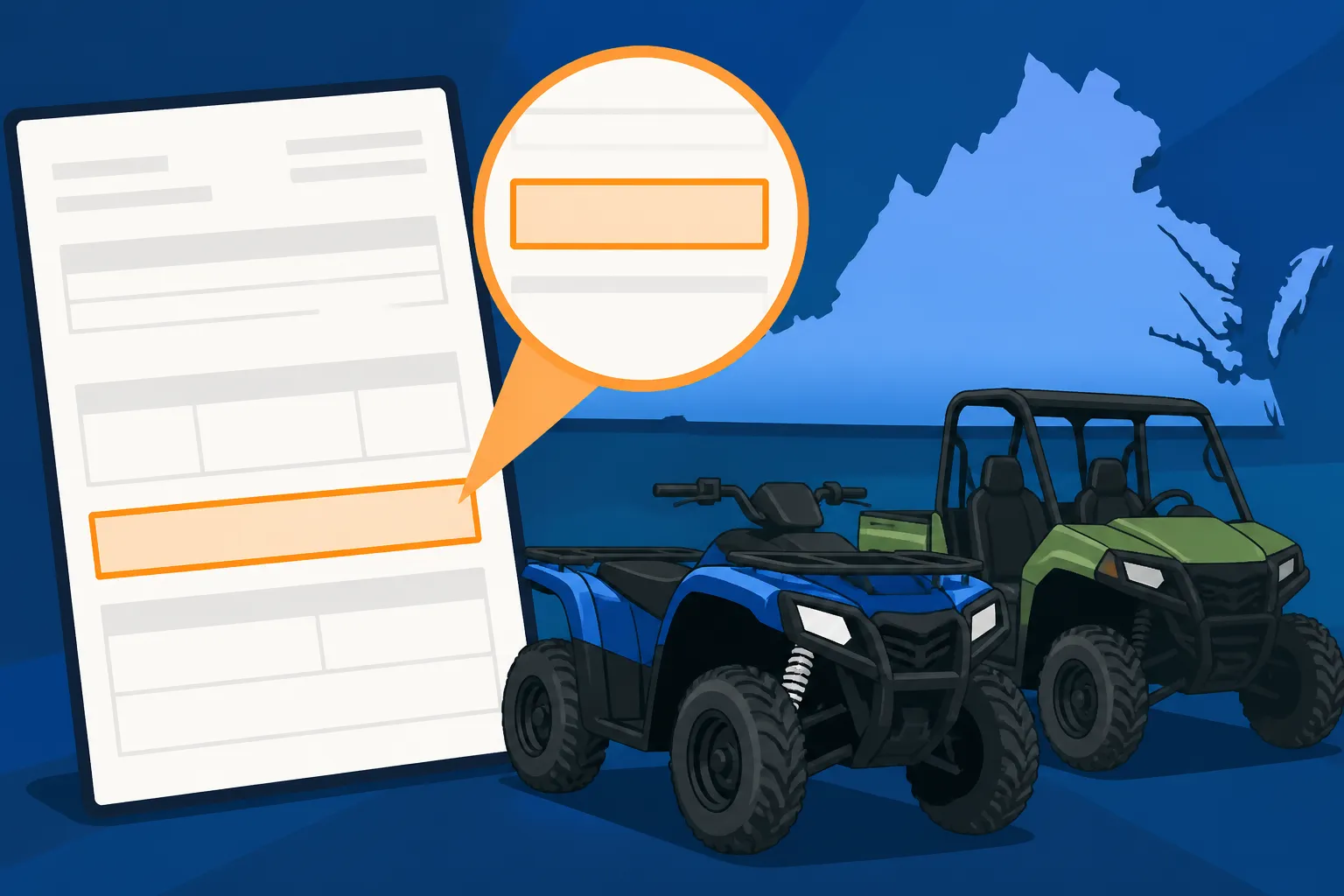
An MSO is packed with crucial data, all designed to identify your specific ATV or UTV and track its journey from the factory to your garage. Beyond the obvious VIN, make, model, and year, you'll find details about the engine size, the fuel type, and sometimes even the type of body (like an ATV or UTV classification). But what often goes unnoticed by buyers, yet is absolutely critical for the Virginia DMV, is the section pertaining to the selling dealer. This includes the dealer's name, address, and, most importantly, their official dealer license number.
This license number isn't just a random string of digits; it's the Virginia DMV's way of verifying that the entity selling you the machine is a legitimate, licensed dealer authorized to conduct such sales in the Commonwealth. It creates an auditable trail, ensuring accountability and preventing fraudulent transactions. Always double-check this information when you receive your MSO, as any discrepancies or omissions can bring your titling process to a screeching halt. This data forms the bedrock of [Virginia Dealer Paperwork at Delivery] and your subsequent titling application.
Why the Dealer License Number Matters on an MSO
It might seem like a small detail among all the other numbers and dates on your MSO, but the dealer's license number holds significant weight in Virginia. It’s not just for administrative record-keeping; it’s a crucial component that directly impacts whether you can successfully title your new ATV or UTV. Without a valid, correctly recorded dealer license number on the MSO, your titling application can be rejected, leading to frustrating delays and extra trips to the DMV.
Validating the Dealer's Legality
The dealer license number acts as a crucial identifier for the Virginia DMV, confirming that the dealership you bought your machine from is a legitimate, state-authorized business. Every motor vehicle dealer, including those selling ATVs and UTVs, must hold a valid license issued by the Commonwealth of Virginia. This license ensures that the dealer meets certain operational and ethical standards. When this number is present on your MSO, it signals to the DMV that the initial transfer of the new machine from the manufacturer to the dealer, and then to you, followed proper legal channels.
It's a safeguard against buying from an unlicensed or fraudulent seller who might not be able to provide the necessary documentation. Imagine purchasing a new machine only to find out the dealer wasn't properly licensed, and now your MSO is essentially worthless for titling purposes. This number validates the entire transaction chain, giving you peace of mind that your purchase is recognized by the state.
Virginia DMV Requirements
The Virginia DMV explicitly requires the selling dealer's license number to be present and accurate on the MSO when you apply for a new title. This isn't just a suggestion; it's a mandatory field that needs to be filled out correctly. The DMV uses this number to cross-reference the dealership's records and ensure all information aligns. It's part of their due diligence to maintain accurate vehicle ownership records and prevent any irregularities.
When you present your MSO for titling, a DMV clerk will be looking for this specific detail. If it’s missing, illegible, or appears incorrect, they will likely instruct you to go back to the dealer to have it rectified. This can be a huge inconvenience, especially if you live far from the dealership or if the dealer is slow to respond. Understanding this requirement upfront means you can inspect your MSO carefully before you even leave the dealership, catching any potential issues early. This requirement is especially critical for [Virginia Titles Machines Bought New Since 2006], as that was the cutoff for mandatory ATV titling.
Avoiding Titling Delays
As you can probably guess, an incomplete or incorrect dealer license number on your MSO is a surefire way to introduce delays into your titling process. You've just shelled out a good chunk of change for your new ATV or UTV, and the last thing you want is to be stuck without a legal title, unable to enjoy your machine fully. If the DMV rejects your application due to a missing or erroneous dealer license number, you'll have to reach out to the dealership, explain the situation, and wait for them to provide a corrected MSO or a letter of clarification. This back-and-forth can take days, if not weeks, depending on the dealer's efficiency.
Furthermore, these delays can impact other aspects, like securing financing or even insurance coverage, as many lenders and insurers prefer to see a clear title. By being proactive and verifying the dealer license number on your MSO at the time of purchase, you can prevent these frustrating holdups and ensure a smooth, swift titling experience. It’s a simple check that can save you a world of trouble and get you out on the trails faster.
The Titling Process with a Dealer-Issued MSO
Once you’ve got your new ATV or UTV, and that all-important MSO in hand (with the dealer license number correctly noted!), the next step is to actually get it titled in your name with the Virginia DMV. While your dealer might handle some of the initial paperwork, understanding your responsibilities in the process is key to avoiding missteps. This journey involves several crucial documents and decisions, from who submits what to how you handle the financial obligations.
Your Role vs. Dealer's Role
When you buy a new ATV or UTV, the dealership will typically prepare most of the initial paperwork. This usually includes completing the MSO, drawing up the bill of sale, and calculating any applicable sales tax. Some dealerships offer to handle the entire titling process for you, submitting all the documents directly to the DMV on your behalf. This can be a convenient service, but always clarify what fees they charge for it and ensure you get copies of everything.
If the dealer doesn't offer this service, or if you prefer to handle it yourself (to save a few bucks or just ensure it's done right), then your role is to take the completed MSO, the bill of sale, your identification, and proof of Virginia residency to the DMV. You'll then fill out the Virginia title application (Form VSA 17A) yourself and submit it. Make sure you get all original documents from the dealer, as copies might not be accepted for titling a new machine. It's crucial to understand these distinctions, especially when it comes to [Virginia Dealer Fees to Expect] for their services.
Required Documents Beyond the MSO
While the MSO is undoubtedly the star of the show for a new machine, it's not the only document you'll need for titling in Virginia. The DMV requires a comprehensive package to establish your identity, residency, and the legality of the sale. Here’s a rundown of what else you’ll typically need:
- Bill of Sale: This document, provided by the dealer, details the purchase price, buyer and seller information, and a description of the ATV or UTV. It’s essential for calculating [Virginia Sales Tax at Titling].
- Proof of Identity: A valid driver's license or state-issued ID is a must. The name on your ID must match the name on your purchase documents.
- Proof of Virginia Residency: The DMV will need to confirm you're a Virginia resident. This could be your Virginia driver's license, a utility bill, or a lease agreement showing your current Virginia address. This is why [Virginia Proof of Address at Titling] is critical.
- Virginia Title Application (Form VSA 17A): You'll need to complete this form, accurately filling in all the details of your machine and personal information.
- Payment for Fees and Taxes: This includes the titling fee (currently a modest $15 for ATVs) and the applicable Virginia sales and use tax. Remember, [What a Virginia ATV Title Costs] is only part of the overall financial picture.
Always double-check the current requirements on the Virginia DMV website or give them a call before heading in, as requirements can sometimes change.
Submitting Your Application
Once you have all your documents neatly organized, you have a couple of options for submitting your title application to the Virginia DMV. The most common and often quickest method is to visit a DMV Customer Service Center in person. Going in person allows you to get immediate feedback from a clerk if anything is missing or incorrect, potentially resolving issues on the spot. You can also get your new title processed and printed right there, assuming all goes smoothly. This personal interaction can save you the anxiety of waiting.
Alternatively, you can choose to mail your application. This might be a preferred option if you live far from a DMV office or have limited availability. However, mailing means you'll relinquish your original documents for a period, and any errors or missing information will result in your application being mailed back to you, causing significant delays. If you choose this route, always make copies of everything for your records and consider sending it via certified mail for tracking purposes. [Mailing an ATV Title Application to the DMV] can be convenient, but [Titling an ATV in Person at a DMV Office] often provides a faster resolution.
What Happens If Your MSO is Incomplete or Missing
Life happens, and sometimes, despite everyone's best intentions, paperwork can go awry. You might discover an error on your MSO, or even worse, find that it’s missing entirely. These situations, while frustrating, are not necessarily roadblocks to titling your ATV or UTV, but they do require prompt and careful action. Knowing how to navigate these challenges can save you a lot of stress and get you back on track with the DMV.
When the Dealer Makes a Mistake
It's an unfortunate reality that sometimes, human error creeps into the paperwork. You might get home, excitedly looking over your new MSO, only to spot a misspelled name, an incorrect VIN digit, or that glaring omission: the dealer license number. When this happens, your first and most direct course of action is to contact the selling dealership immediately. Explain the error clearly and politely, providing them with all the details.
The dealer is responsible for issuing a corrected MSO or providing a letter on their official letterhead, signed by an authorized representative, explaining and correcting the error. This document should explicitly state the original MSO details, the correction being made, and why. The DMV will typically accept such a letter, but it must come from the original dealer. Avoid trying to alter the MSO yourself, as this can lead to even bigger problems and accusations of fraud. Dealers usually have a process for this, as they want satisfied customers and to maintain their good standing with the state.
Lost MSOs and How to Replace Them
Okay, so what if the MSO isn't just incorrect, but completely lost? Maybe it got misplaced during a move, or accidentally shredded with junk mail (we’ve all been there!). This is a more significant hurdle, but not insurmountable. Since the MSO is issued by the manufacturer to the dealer, you generally can't go directly to the manufacturer to get a replacement yourself. Your primary point of contact will again be the original selling dealership.
The dealer will need to contact the manufacturer to request a duplicate MSO. Be prepared for this to take some time, as it involves communication between the dealer and the manufacturer, and then the re-issuance of an official document. There might also be a fee involved for the duplicate MSO. It's crucial to keep clear records of your purchase – the original bill of sale, for instance – to help the dealer trace your transaction. This process underscores why safeguarding all your purchase documents, especially the MSO, is so important from day one. You definitely don’t want to be in a situation where you have [Virginia Machines With No Paperwork].
Titling Challenges Without a Proper MSO
Attempting to title a new ATV or UTV in Virginia without a valid, complete MSO is essentially asking for a denial from the DMV. As mentioned, the MSO is the foundation for establishing ownership of a new machine. Without it, the DMV lacks the verifiable chain of custody from the manufacturer, and they cannot legally issue a title in your name. They need that document to prove the machine's origin and that it hasn't been titled before.
If you find yourself in a situation where you cannot get a proper MSO from the dealer or manufacturer (perhaps the dealership went out of business, or the manufacturer no longer exists for that specific model), you could face significant challenges. In some rare cases, you might need to pursue alternative methods to prove ownership, such as obtaining a court order or using a notarized affidavit (like [Virginia Notarized Affidavits in Lieu of Title]) if the DMV allows it for a new machine in such an extreme circumstance, which is highly unlikely. These are complex and lengthy processes, highlighting why it’s always best to resolve MSO issues directly with the dealer as quickly as possible after purchase.
Protecting Yourself During a New ATV/UTV Purchase
Buying a new ATV or UTV should be an exciting experience, not one fraught with anxiety about paperwork. While the onus is often on the buyer to ensure everything is correct, there are proactive steps you can take to protect your investment and ensure a smooth titling process. Being informed and diligent from the outset can save you immense time, money, and frustration down the trail.
Verifying Dealer Credentials
Before you even sign on the dotted line or hand over any money, it's a smart move to verify the credentials of the dealership you're buying from. A reputable dealer will be transparent about their licensing. You can often ask to see their Virginia dealer license, or in many cases, you can check the Virginia Department of Motor Vehicles (DMV) website for a licensee lookup. Ensuring the dealer is properly licensed in Virginia confirms they are authorized to sell new vehicles and understand the documentation requirements.
This isn't about distrusting every dealer, but rather about exercising due diligence. Unfortunately, there are always a few bad apples out there, and a quick check can prevent you from falling victim to an unlicensed operation that might not be able to provide legitimate paperwork. A legitimate dealer will have their license prominently displayed, and their dealer license number will be clearly listed on the MSO and other purchase documents. This simple step can prevent major headaches later on if you discover that the MSO they issued isn't valid for titling in Virginia.
Reviewing Your Paperwork Carefully
This is perhaps the most critical step you can take. When the dealer hands you the MSO and the bill of sale, do not just blindly sign and stash them away. Take a few minutes, right there in the dealership, to thoroughly review every single piece of paper. This isn't just for the big details like the purchase price and your name; it's for those seemingly small but vital pieces of information, like the dealer license number on the MSO.
Here's a quick checklist of what to scrutinize:
- Your Name and Address: Ensure they are spelled correctly and match your government-issued ID.
- Vehicle Information: Verify the VIN, make, model, year, and engine size on the MSO against the physical machine and the bill of sale.
- Dealer Information: Confirm the dealer's name, address, and crucially, their Virginia dealer license number are all present and correct on the MSO.
- Purchase Price: Make sure the price on the bill of sale matches what you agreed upon.
- Signatures: Ensure all necessary parties (you and the dealer's representative) have signed where required.
Catching an error before you leave the dealership is infinitely easier than trying to correct it weeks later. Don't feel rushed or intimidated; this is your legal document, and you have every right to ensure its accuracy.
Using Legal Documents for Added Security
While a reputable dealer will provide standard MSOs and bills of sale, some buyers prefer an added layer of protection, especially during a significant purchase. Using additional legal documents, even for a new machine from a dealer, can provide clarity and peace of mind. For example, some buyers might use a more detailed purchase agreement template, potentially found through services like LawDepot, to explicitly outline all terms, conditions, and representations made during the sale. While the MSO and dealer's bill of sale are the primary legal documents for titling, a comprehensive purchase agreement can offer additional recourse if disputes arise regarding the condition of the machine or specific promises made by the salesperson.
Furthermore, if there are any unique stipulations or promises made by the dealer (e.g., specific accessories to be installed, delivery dates, or service packages), getting these in writing on a formalized agreement, perhaps using a template from LawDepot, can protect you. While not directly part of the titling process itself, securing a clear and detailed record of the entire transaction can be invaluable. It ensures that both you and the dealer are on the same page regarding the sale, beyond just the basic information required for the DMV.
Navigating ATV and UTV Sales Tax in Virginia
Bringing home a new ATV or UTV in Virginia isn't just about the purchase price and the titling fee; you'll also need to account for sales tax. This is often an area where buyers get a little confused, especially since the tax rate for off-road vehicles like ATVs and UTVs differs from that of regular street-legal cars and trucks. Understanding these tax implications upfront will help you budget accurately and avoid any unwelcome surprises when you go to title your machine.
Virginia's Retail Sales Tax Rate for ATVs and UTVs
In Virginia, ATVs and UTVs are generally subject to the state's retail sales and use tax rate, rather than the lower motor vehicle sales and use tax rate. This is a crucial distinction. While motor vehicles typically fall under a specific rate (which tends to be around 4.15% of the sales price or $75, whichever is greater), ATVs and UTVs are treated more like general merchandise. This means they are taxed at the general state sales tax rate, which can vary slightly by region.
For most of Virginia, this rate is 5.3%. However, certain regions, such as Northern Virginia and Hampton Roads, have slightly higher rates due to additional regional taxes. For example, in Northern Virginia, the combined state and regional rate might be 6%, and around the Historic Triangle area (Williamsburg, James City County, and York County), it could be as high as 7%. It’s important to know the specific rate for the county where you reside, as this is typically where the machine will be "garaged" and where your sales tax will be assessed. This is an important part of [Virginia ATV Sales Tax Rate].
How Sales Tax is Calculated on Your Purchase
The sales tax for your new ATV or UTV in Virginia is calculated based on the gross sales price of the machine. This means the agreed-upon price before any trade-in allowances are factored in. So, if you purchase an ATV for $10,000, and your local sales tax rate is 5.3%, you would owe $530 in sales tax.
It's also worth noting that if you trade in an old machine towards the purchase of a new one, the sales tax is generally still calculated on the full purchase price of the new machine, not on the difference after the trade-in. This differs from how sales tax is sometimes applied to car trades. Make sure to clarify this with your dealer so there are no surprises. The dealer is responsible for collecting this sales tax from you at the time of purchase and remitting it to the state. This collection is typically documented on your bill of sale.
Dealer vs. Private Sale Tax Implications
The sales tax rules also differ significantly depending on whether you purchase your ATV or UTV from a licensed dealer or through a private sale.
-
Dealer Purchase: As discussed, when you buy from a licensed dealer in Virginia, they are required to collect the applicable sales tax from you at the time of purchase. This will be added to your total bill. The dealer will then remit these funds to the state on your behalf. This is generally a straightforward process, and it simplifies your obligations, as you don't have to worry about calculating or sending the tax yourself.
-
Private Sale: If you purchase a used ATV or UTV from a private individual in Virginia, you are generally exempt from paying Virginia sales tax. This is often referred to as a "casual sale" exemption. The state recognizes that private individuals are not in the business of selling vehicles and therefore are not required to collect sales tax. However, it's crucial to understand that this exemption applies to the sales tax specifically. You will still need to pay the $15 titling fee when you submit your application to the DMV, even for a used machine bought privately if you choose to title it. Always confirm the current regulations with the DMV for any private sale, especially if you're crossing state lines. [Virginia Sales Tax on a Private ATV Sale] is an important distinction for buyers.
| Document/Item | Purpose | Required for New? | Required for Used? | Details/Notes |
|---|---|---|---|---|
| MSO | Proof of origin, identifies new machine | Yes | No | Contains dealer license number. Surrendered to DMV. |
| Old Title | Proof of previous ownership, for transfer | No | Yes | Signed by seller. |
| Bill of Sale | Proof of purchase price, buyer/seller details | Yes | Yes | Needed for sales tax calculation (dealer) or proof of transaction (private). |
| DMV Form VSA 17A | Virginia Title Application | Yes | Yes | Fill out accurately. |
| Proof of Identity | Valid ID (DL/State ID) | Yes | Yes | Name must match application. |
| Proof of Residency | Virginia address verification | Yes | Yes | Utility bill, lease, etc., for [Virginia Proof of Address at Titling]. |
| Sales Tax | State retail sales tax on purchase price | Yes (dealer) | No (private sale) | Collected by dealer; buyer pays directly to DMV for out-of-state private sale. |
| Titling Fee | State fee for issuing title | Yes | Yes | Current fee is $15. |
| Lien Release | If applicable, shows loan is paid off | No | Yes (if prior lien) | If previous owner had a loan, proof it was satisfied. |
This table helps illustrate the specific documents and fees you'll encounter based on whether your machine is brand new or previously owned.
Disclaimer
This article is for general informational purposes only and does not constitute professional advice. Laws, prices and regulations vary by location and change over time. Consult a qualified professional for guidance on your specific situation.