Virginia Title Fee of $15
Navigating the world of ATV and UTV ownership in Virginia can feel like trying to ride a trail blindfolded sometimes. There's a lot of confusion, especially when it comes to the nitty-gritty of paperwork and fees. One common point of misunderstanding revolves around the Virginia ATV title fee. This guide is here to unravel the mystery of that consistent $15 charge, explaining when it applies, what it covers, and what other costs you might encounter, so you can title your machine with confidence.
Understanding the Virginia ATV Title Fee
Let's cut right to it: in Virginia, the fee for an ATV or UTV title is a straightforward $15. It's not a percentage of your machine's value, it doesn't change based on engine size, and it's not an annual registration fee. It's a one-time charge each time a title is issued or transferred. This consistent, flat rate is a bit of a relief in a world where other vehicle fees can feel like a labyrinth of percentages and calculations. But what exactly does that $15 cover?
The Flat Rate for Everyone
Unlike cars and trucks, which might have a sliding scale for title fees based on weight or other factors, ATVs and UTVs in Virginia enjoy a simple, fixed cost for their title. Whether you're titling a brand-new, high-performance side-by-side or an older, well-loved youth quad, the fee remains the same. This uniformity is a deliberate choice by the state, simplifying the process for both the Department of Motor Vehicles (DMV) and for you, the owner. It means you don't have to worry about complex appraisals or arguments over your machine's market value just to get the proper paperwork in your hand.
What the Fee Pays For
That $15 might seem like a small sum, but it directly covers the administrative costs associated with processing your title application. Think of it as paying for the DMV's time and resources to verify your ownership, update their records, and physically print and mail that official document. This fee ensures that the state can maintain an accurate database of ATV and UTV ownership, which is crucial for proving who legally owns a machine. Without this system, buying and selling off-road vehicles would be far more complicated, and disputes over ownership would be much harder to resolve. It's also part of the state's effort to create a paper trail, even for vehicles that aren't registered for road use. [What You Get for the $15 ATV Title Fee] delves deeper into the significance of this document.
When the $15 Title Fee Applies
The $15 title fee isn't just something you pay once and forget about forever. It applies in several specific scenarios related to the ownership lifecycle of your ATV or UTV. Understanding these situations can save you from unexpected costs or delays when you're ready to hit the trails or sell your machine.
Titling a New Machine
When you purchase a brand-new ATV or UTV from a dealership in Virginia, titling is generally required. This is the primary scenario where most first-time owners encounter the $15 fee. The dealer will often handle the paperwork for you, submitting your application and the fee to the DMV. They act as your agent in this process, ensuring that the initial title is issued in your name. You'll typically pay this as part of your "out-the-door" price. The state wants a clear record of the first owner of a new machine, especially for those over 50cc. [Virginia Title Requirements for a New Machine] explains the documents you'll need for this initial titling process.
Titling a Used Machine (When Optional Becomes Necessary)
Here's where it can get a little tricky for used machines. In Virginia, titling a used ATV or UTV is often described as optional, especially if it was bought new before July 1, 2006, or if it was never titled by a previous owner. However, this "optional" status can be misleading. While you might not be legally forced to get a title for an older used machine, there are strong practical reasons why you should, and why lenders or insurers might insist on it. For instance, if you're financing a used ATV, your lender will almost certainly require a title in their name (with you as the owner) to protect their interest. Similarly, obtaining comprehensive insurance coverage can be difficult without proof of clear ownership via a title. When you decide to title a used machine, whether it's optional for you or a requirement from a third party, that $15 fee will apply. [Why Titling a Used Quad Is Optional in Virginia] explores this topic in more detail.
Transferring an Existing Title
The $15 title fee also comes into play every time an ATV or UTV with an existing Virginia title changes hands. If you're buying a titled machine from a private seller, you'll pay this fee when you apply to have the title transferred into your name. The previous owner will sign over their title, and you'll present that, along with a bill of sale and your application, to the DMV. Conversely, if you're selling a machine you've titled, the buyer will be responsible for paying this fee to transfer it to themselves. This ensures the continuous chain of ownership is properly recorded by the state. This transfer process is crucial for establishing clear legal ownership. [Virginia Titles After a Private Sale] provides a comprehensive guide to navigating this specific transaction.
Avoiding Surprises: Other Potential Costs Beyond $15
While the $15 title fee for ATVs and UTVs in Virginia is fixed, it's vital to understand that it's often not the only cost you'll encounter when acquiring a machine. There are several other financial considerations that can significantly impact your total "out-the-door" expense, whether you're buying new from a dealer or used from a private party.
Sales Tax Considerations
Perhaps the most significant additional cost you'll face is Virginia's sales and use tax. Unlike the title fee, which is a flat rate, sales tax is calculated as a percentage of your ATV or UTV's purchase price. This means the more expensive your machine, the higher your sales tax bill will be. This tax applies whether you buy from a dealer or a private seller, and it's generally collected by the DMV when you title the machine. If you're buying a used machine from a private seller for a very low price, the DMV might even have a "book value" minimum they'll tax, regardless of what you actually paid. It's crucial to factor this into your budget, as it can be hundreds, or even thousands, of dollars depending on your machine. [Virginia Sales Tax at Titling] breaks down these rates and how they apply to your purchase.
Dealer Processing Fees
When you purchase a new ATV or UTV from a dealership, you're likely to encounter a "dealer processing fee," also sometimes called a "doc fee." These fees are separate from the state's title fee and are charged by the dealership for handling all the necessary paperwork, submitting your title application, and preparing the vehicle for delivery. While these fees are legitimate, their amounts can vary widely between dealerships. Virginia law requires dealers to disclose these fees clearly, often by posting them in the showroom. It's always a good idea to ask about all potential fees, including processing and freight charges, when negotiating the price of a new machine, so you understand the full cost before you sign any agreements. [Virginia Dealer Processing Fee Disclosure] offers more insights into what to expect from these charges.
Notary Fees
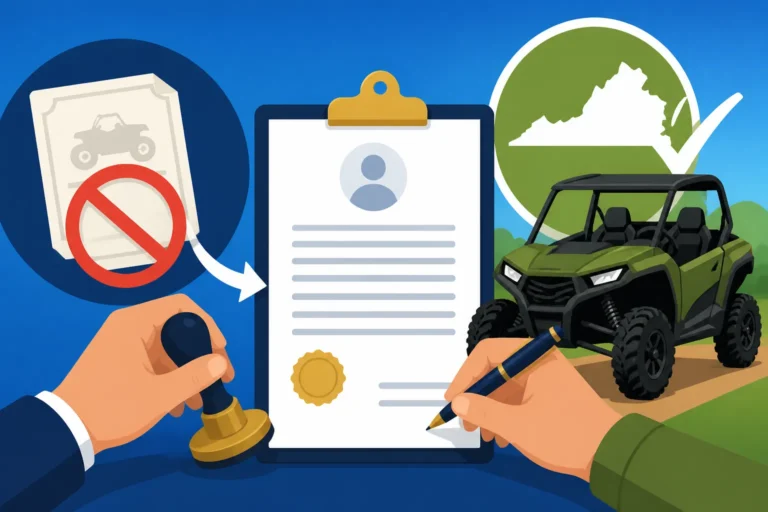
In certain situations, particularly when dealing with lost titles or proving ownership for older machines, you might need to have documents notarized. A common example is using the [The Notarized Affidavit That Replaces a Missing ATV Title] (Form VSA 12M) when you don't have the original title for a machine you're trying to title. Notaries charge a small fee for their services, typically a few dollars per signature. While this isn't a huge expense, it's an additional cost to factor in if your titling process isn't straightforward. Services like LawDepot can assist you in preparing official documents like bills of sale or affidavits, though you'd still need to find a local notary to get them officially stamped. Having all your ducks in a row with proper documentation, potentially aided by tools from LawDepot, can smooth out the process.
The Titling Process: How to Pay and What to Bring
Once you understand the $15 title fee and other potential costs, the next step is actually navigating the titling process itself. While it might seem daunting, the Virginia DMV offers several pathways to get your ATV or UTV titled correctly. Being prepared with the right documents and knowing your options can make the experience much smoother.
In-Person vs. Mail Applications
For most individuals, the most common way to title an ATV or UTV is by visiting a Virginia DMV Customer Service Center in person. This allows you to hand over your documents, pay the fees, and get immediate feedback on your application. If there's an issue with your paperwork, a DMV clerk can often guide you on how to correct it on the spot, preventing delays. However, if an in-person visit isn't convenient, you can also mail your application and supporting documents to the DMV's title work center. This option requires meticulous attention to detail to ensure all forms are correctly filled out and all necessary documents are included, as any error could lead to your application being returned, prolonging the process. [Titling an ATV in Person at a DMV Office] offers practical tips for a successful branch visit.
Required Documents
Regardless of how you submit your application, having all the correct documentation is paramount. For a new machine, you'll typically need the Manufacturer's Statement of Origin (MSO), proof of purchase (bill of sale), and a completed application for title. For a used machine, you'll need the previous owner's signed-over title, a bill of sale (which is always a good idea for private sales, and LawDepot can help you draft a professional one), and a completed application. You'll also need to provide proof of your Virginia address. Without these crucial papers, the DMV simply cannot process your request. A checklist can be incredibly helpful here to ensure nothing is overlooked. [What to Bring to the DMV to Title a Quad] provides a detailed list of what you should gather before heading to the DMV.
Payment Methods Accepted
When it comes to paying the $15 title fee and any applicable sales tax, the Virginia DMV accepts a variety of payment methods. At a Customer Service Center, you can typically pay with cash, check, money order, or most major credit or debit cards. This flexibility makes it convenient for most people. If you're mailing your application, you'll usually need to include a check or money order made out to the Virginia DMV for the exact amount. Always double-check the current accepted payment methods on the DMV's official website or by calling ahead, especially for mail-in applications, to avoid your payment being rejected. [Virginia Title Payment Methods] offers more specifics on how you can settle your fees.
Why Some Machines Don't Need a Title (and Thus No $15 Fee)
While many ATVs and UTVs in Virginia require titling, there are specific situations and types of machines that are exempt from this requirement. Understanding these exemptions is crucial, as they mean you won't need to pay the $15 title fee, nor go through the titling process at all for these particular machines.
The Under 50cc Rule
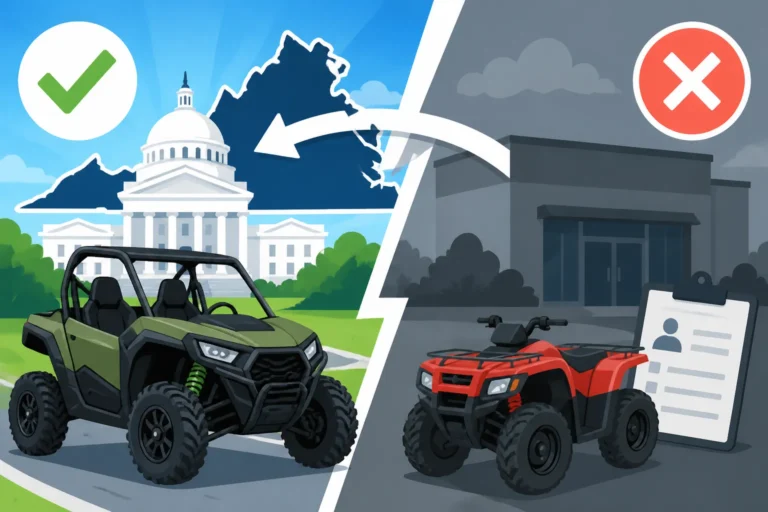
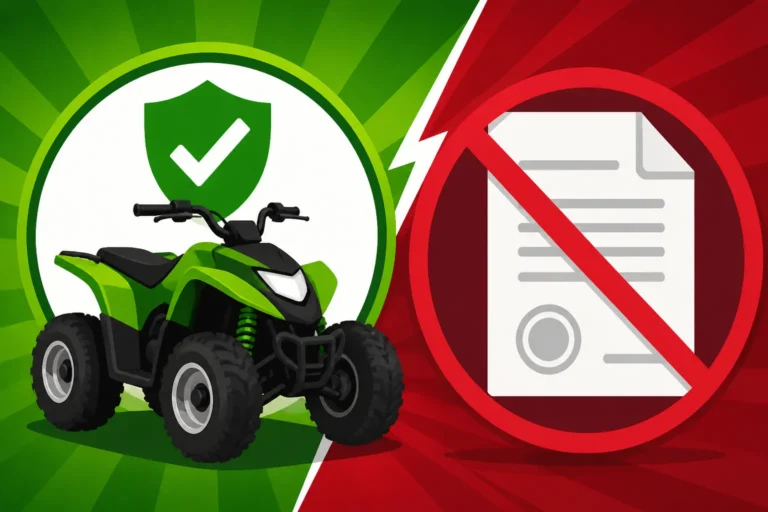
One of the most common exemptions relates to engine size. In Virginia, ATVs with an engine displacement of less than 50 cubic centimeters (cc) are generally not required to be titled. These are typically smaller, youth-oriented machines. The reasoning here is often tied to their intended use; these machines are less likely to be involved in the kinds of transactions or incidents that necessitate state tracking. So, if your child's first quad is a 49cc model, you won't need to worry about getting a title for it, and therefore, you won't pay the $15 fee. This simplifies things for families introducing younger riders to the sport. [ATVs Under 50cc Do Not Need a Title] provides further clarification on this rule.
Pre-2006 Cutoff Machines
Another significant exemption revolves around the date of purchase. Virginia enacted its ATV titling law on July 1, 2006. This means that if an ATV was purchased new before this date, it was not subject to the titling requirement at that time. Consequently, many older machines, especially those bought new before July 2006, may never have received a Virginia title. If you acquire such a machine, and it has never been titled by a previous owner, you might not be required to title it yourself. This can often be the case with machines that have stayed within a family or a small group of friends for many years. However, as discussed earlier, even for these machines, electing to title it voluntarily offers benefits for proving ownership and for potential financing. [A Machine Bought New Before the 2006 Cutoff] gives context to this historical cutoff.
Specific Entity Exemptions
Beyond engine size and purchase date, there are also specific organizational exemptions from ATV titling requirements. For example, all-terrain vehicles owned by volunteer rescue squads, volunteer fire departments, or other emergency services organizations are often exempt from titling. These machines are used for critical public service and are typically part of a municipal or non-profit fleet, which operates under different regulatory frameworks. These exemptions acknowledge their vital role in community safety and streamline the process for these essential services. If you're involved with such an organization, it's worth checking the specific guidelines to see if your machines qualify for this exemption. [Virginia Rescue Squad Title Exemptions] details this particular carve-out in the law.
What Your $15 Title Buys: The Virginia ATV Title Document
You've paid your $15, you've submitted your paperwork, and a few weeks later, a crisp, official document arrives in your mailbox. This isn't just a piece of paper; it's your Virginia ATV or UTV title, a crucial document that serves multiple important functions even though your machine isn't registered for road use. It's the tangible proof of your legal ownership.
The Information on Your Title
Your Virginia ATV or UTV title contains a wealth of specific information about your machine and its owner. It will clearly display the make, model, year, and most importantly, the Vehicle Identification Number (VIN) of your off-road vehicle. This VIN is unique to your machine and is critical for identification. The title will also list your name and address as the legal owner. If there's a lien against the machine (meaning you financed it and a bank or credit union holds an interest), that information will also be prominently displayed on the title, protecting the lender's claim until the loan is paid off. This comprehensive data makes the title a definitive record of your machine's identity and its legal owner. You'll find a detailed breakdown in [What You Get for the $15 ATV Title Fee].
Proof of Ownership and Beyond
The most fundamental purpose of your title is to serve as indisputable proof of ownership. In Virginia, unlike cars and trucks, ATVs and UTVs are titled but not registered for general road use. This means you won't receive license plates or yearly registration stickers for your off-road vehicle. Yet, the title remains incredibly important. It's the document you'll need if you ever sell the machine, if it's stolen, or if you need to prove ownership for insurance purposes. It helps to differentiate your machine from others and establishes your legal right to it. Even though there's no yearly renewal or plates, the title is the cornerstone of responsible ATV ownership in the Commonwealth. [Virginia Titles ATVs but Does Not Register Them] clarifies this important distinction.
Securing Your Investment
Possessing a clear title is essential for securing your investment in your ATV or UTV. If your machine is ever stolen, having a title provides law enforcement with concrete proof of your ownership, making it easier to track and recover. It's also vital for insurance claims. Most insurance companies will require a valid title to process claims for theft, damage, or liability, as it verifies that you are the rightful policyholder for that specific vehicle. When you eventually decide to sell your machine, a clean title makes the process far simpler and more trustworthy for potential buyers, often fetching a better price than an untitled machine. It gives both you and future owners peace of mind, knowing the machine's legal history is clear and documented. If you're building a paper trail, remember that tools like LawDepot can help you generate formal bills of sale for both buying and selling, further enhancing the security of your transactions.
Virginia ATV Title Fee Comparison Table
To summarize the key aspects of the Virginia ATV title fee and related considerations, here's a helpful table.
| Feature | Virginia ATV/UTV Title Fee | Virginia Sales Tax | Dealer Processing Fee | Notary Fee (if needed) |
|---|---|---|---|---|
| Amount | $15 (flat rate) | Percentage of purchase price (varies by region) | Varies by dealer (set by dealer, disclosed by law) | ~$2-10 per signature (set by notary) |
| When Applied | Each time a title is issued or transferred | At time of titling, based on purchase price | At time of purchase from a dealership | When specific forms require notarization |
| Purpose | Covers administrative costs for title processing & record | State revenue (general fund) | Dealer's cost for paperwork, vehicle prep, and submission | Verifies identity and signature for legal documents |
| Required For | Most ATVs/UTVs > 50cc bought new after 2006, or titled machines | Most ATV/UTV purchases (new or used) | New ATV/UTV purchases from a dealer | Specific affidavits (e.g., VSA 12M for lost title) |
| Payment To | Virginia DMV | Virginia DMV | Dealership | Notary Public |
| Key Point | Fixed fee, not annual. Establishes legal ownership. | Significant cost, check current rates and exemptions. | Can be negotiated, ensure full disclosure. | Minor cost, but essential for certain scenarios. |
Disclaimer
This article is for general informational purposes only and does not constitute professional advice. Laws, prices and regulations vary by location and change over time. Consult a qualified professional for guidance on your specific situation.