Campfire Bans During an Appalachian Dry Spell
A dry spell can turn a planned campfire into a safety risk or a rule violation, even when a campground has fire rings. For Virginia ATV and UTV trips, the tricky part is that trail permits, campground rules and temporary fire restrictions may come from different authorities. Check each one before you leave, and have a no-flame plan in case conditions change.
Why a dry spell can change the rules
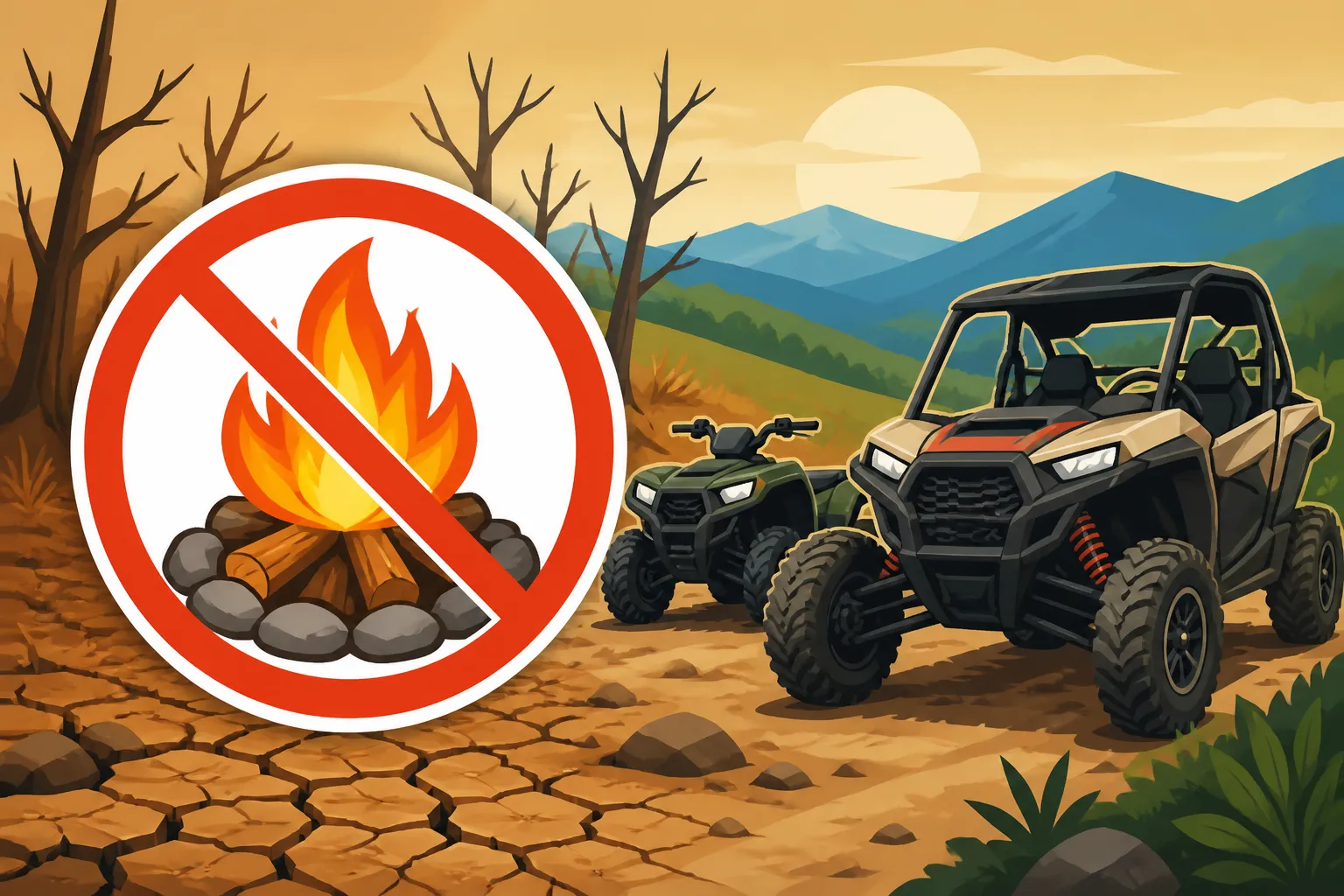
An established fire ring does not guarantee that a campfire is allowed today. During dry, windy weather, a land manager or local authority may restrict fires to reduce the chance that a spark or ember starts a wildfire. Restrictions can be temporary and may change as weather and conditions change.
Rules also depend on where you are. A trip might include a trail system, a campground, a forest road and private land, each with its own operator or land manager. A trail permit covers the uses stated in its terms; it does not automatically authorize a campfire. Check Virginia Fire Restrictions in Dry Months as well as the current rules for the specific place where you plan to camp.
Read the restriction itself rather than relying on a general description such as “fire ban.” The wording matters. An order might prohibit wood fires but allow certain cooking equipment, or it might prohibit all open flames. Another campground may have its own stricter policy. Never assume a gas stove, charcoal grill or portable fire pit is permitted just because it is not a wood campfire.
| What you find | What to do |
|---|---|
| No fire restriction is posted | Follow the campground’s ordinary rules and use only an approved location. Recheck before lighting a fire. |
| Wood fires are prohibited | Do not use firewood, a fire ring or a portable wood-burning pit. Check separately whether cooking devices are allowed. |
| All open flames are prohibited | Do not use a flame-based stove, grill or fire pit unless the order clearly makes an exception. Choose food that needs no cooking. |
| The rules are unclear or conflict | Ask the campground operator or land manager before using any flame. If you cannot get a clear answer, skip it. |
A ban may apply across a recreation area, or only in certain places or for certain activities. The campground’s website or entrance sign may not be the only source of current information. Check with the land manager or operator responsible for the exact site, and look for updates on the day you travel.
For public land, identify who manages the specific campground and trail area, then check that manager’s current notices. For private parks, check the park’s own rules and contact its staff if the wording is unclear. Virginia Private Park Camping Rules can help you understand why a private campground’s policies may differ from those at a public site.
How to check restrictions before an ATV or UTV trip
Make fire checks part of trip planning, not something to handle after setting up camp. Dry conditions can develop quickly, and a restriction may be issued after you book a site or buy a permit. Confirm the rules close to departure and again when you arrive.
- Pin down each place you will use. Write down the trail system, campground, overnight parking area and any other place where you might cook or stay. A nearby campground can be under a different authority from the trails.
- Find the responsible operator or land manager. Use its current notices, signs or direct contact information. A map or trail app can help locate a place, but it may not show temporary fire restrictions.
- Read the exact wording and date. Check what counts as a fire, where the restriction applies and whether cooking equipment is treated differently. Look for the time period or conditions that end the restriction.
- Check again before using a flame. If conditions are windy or unusually dry, ask staff even if you saw no notice earlier. Follow a newer or stricter direction.
- Make a backup plan. Pack food that can be eaten without heating, or use only equipment the current rules clearly permit.
Permit rules and fire rules are separate. For example, Virginia National Forest OHV Permits explains the permit side of riding on national forest land, but a permit does not override a temporary fire order. Similarly, a Spearhead permit does not mean every campground or land parcel on your route shares one fire policy. Virginia Trail Closures and Seasons is useful for checking a different but related planning issue: access can change even when a trip was previously possible.
When you cannot determine whether a device is allowed, do not try to interpret silence as permission. Ask the operator. If no one can confirm the rule, choose a no-flame option. This is especially important when a trip crosses from public to private land or between separate recreation areas.
Cooking and camping safely during a fire restriction
The safest alternative may be food that does not need to be cooked. Sandwiches, shelf-stable meals, fruit and other ready-to-eat options simplify camp setup and avoid questions about whether a stove is permitted. This approach is useful when restrictions are broad, the forecast is changing or you are unsure where you will spend the night.
If a cooking device is allowed, follow the restriction and the device instructions exactly. A stove that is permitted in one campground may be prohibited in another. Use it only in the approved area, keep it away from dry grass and other burnable material, and never leave it operating unattended. Do not use cooking equipment inside a tent, vehicle or enclosed shelter unless the manufacturer specifically says it is safe for that use; fuel-burning equipment can create a carbon monoxide hazard.
A few practical steps make a no-flame or low-risk camp easier:
- Pack meals and snacks that do not depend on a campfire.
- Carry drinking water and a way to keep food at a safe temperature.
- Keep fuel containers secured and separated from heat sources.
- Clear loose gear from designated cooking areas, without disturbing vegetation or ground.
- Follow campground instructions for disposing of food waste and packaging.
If fires are allowed, use only the designated fire location and the materials the operator permits. Keep water or another approved way to extinguish the fire immediately at hand. Do not build a larger fire to compensate for a weak one, and do not leave the site while it is still burning. Before leaving, make sure the fire is completely out and cool to the touch; a fire that looks extinguished can still hide hot embers.
Do not bring your own firewood unless the campground allows it. Some places restrict outside wood to reduce the spread of pests, and others may prohibit firewood during dry conditions. Ask the operator what is allowed instead of collecting wood from the surrounding area. Fallen branches are not automatically safe or legal to burn.
A portable fire pit is not a workaround for a ban. It still creates heat, sparks or embers, and the restriction may cover fires regardless of whether they are above the ground. The same caution applies to charcoal and other flame-producing equipment. Check the wording before packing gear or lighting anything.
You can carry basic fire-response equipment as a precaution, but it does not make a prohibited fire legal or safe. If you choose to carry a portable extinguisher, keep it accessible and understand how to use it. You can compare suitable equipment at retailers such as Amazon, but follow the product instructions and do not rely on an extinguisher as a substitute for obeying a ban or calling for help.
What to do if a fire starts
If flames escape a fire ring or a small fire begins in dry vegetation, prioritize people’s safety. Alert others nearby, move away from smoke and flames, and call emergency services if the fire is spreading or cannot be controlled immediately. Give the dispatcher your location as precisely as possible, including a campground name, trailhead, road or nearby landmark. Do not ride toward the fire to get a closer look.
Do not attempt to fight a growing wildfire. Wind can change direction, and smoke can reduce visibility quickly. Keep people and machines clear of emergency access routes. Follow instructions from responders and campground staff, and leave the area if directed.
If you are still planning a trip, check for trail and campground closures as well as fire rules. Dry conditions can lead to restrictions beyond campfires, and a route that was open when you made plans may not be open when you arrive. Virginia Trail Conditions Before You Haul can help with the broader habit of checking access before towing a machine to a trailhead. For overnight plans, Virginia OHV Camping With Trail Access offers related information about finding camping that fits a riding trip.
A fire restriction is also a reason to adjust the trip rather than improvise. Move to an approved campground if the original site is closed, bring meals that do not require cooking, or shorten the trip. If the rules change while you are there, follow the new direction even if your camp is already set up. The inconvenience of changing plans is small compared with the risk of starting a wildfire.
Before heading home, pack out trash and make sure your campsite is left as the operator requires. A fire ban does not replace ordinary campsite rules, and leaving a clean site helps protect the area for other visitors. For more on responsible departure from a riding area, see Leaving a Coalfield Trailhead Tidy.
Disclaimer
This article is for general informational purposes only and does not constitute professional advice. Laws, prices and regulations vary by location and change over time. Consult a qualified professional for guidance on your specific situation.