Virginia Forest Equipment Requirements
Virginia National Forest trails have equipment rules that are easy to miss when you are focused on permits, maps, and the drive to the trailhead. A machine that runs well on private land may still fail a forest check. Here’s what to inspect before riding, what the sound and tire rules mean, and how to avoid a wasted trip.
The core equipment requirements
For Virginia National Forest OHV routes such as Peters Mill Run, plan to arrive with a machine that has working brakes, a functioning muffler, and a spark arrester. Metal-studded tires are not allowed, and machines must meet the applicable sound limit. These are separate checks: a quiet machine still needs a spark arrester, and compliant tires do not make up for faulty brakes.
| Item | What to check before you leave | Why it matters |
|---|---|---|
| Brakes | Test the brakes and controls; confirm the machine stops reliably | A machine with defective brakes is not ready for a trail |
| Muffler and noise | Check for damage, leaks, loose fittings, or modifications that increase exhaust noise | Forest land has a sound limit, with checks discussed at 99 decibels measured at 20 feet |
| Spark arrester | Confirm the exhaust system has a proper spark arrester installed and in working order | It helps reduce the risk of sparks starting a fire |
| Tires | Inspect the tread and confirm tires do not have metal studs | Studded tires are prohibited on the federal trail |
| Lights | Check that installed lights work, especially if the machine’s equipment or trail use calls for them | A working light can help with visibility, but it does not replace other required equipment |
| Permit and operator documents | Carry the appropriate forest permit and any required operator identification | Equipment compliance does not replace access and operator requirements |
A spark arrester is not the same thing as a muffler. The muffler reduces exhaust noise; the arrester is designed to stop hot particles from escaping the exhaust. Some exhaust systems include both functions, but do not assume that a quiet aftermarket muffler automatically includes an approved arrester. Check the part specifications and the machine’s documentation. For more on this specific item, see Why Your Quad Needs a Spark Arrester at Peters Mill Run.
Brakes need to work as a system, not just feel acceptable while the machine is sitting in the driveway. Test the controls, inspect for leaks or damaged lines, and make sure the machine can stop consistently. If a brake lever or pedal feels unusually soft, sticks, or fails to return normally, repair the problem before heading to the forest.
The muffler and exhaust system deserve a close look, particularly if the machine has been modified. A cracked muffler, missing component, loose connection, or altered exhaust can make a machine louder and may create a safety concern. A machine that sounds normal to its owner can still exceed a measured limit, so avoid relying on a quick comparison with another vehicle.
The general equipment requirements are not a full list of every condition that could affect access. Forest routes can have route-specific restrictions, closures, or operating requirements. Check the current information for your intended route before you haul. For access details, see Virginia National Forest OHV Permits and Virginia Forest Equipment Requirements.
Spark arrester checks
A spark arrester must be in place and functional, rather than simply listed on a receipt or included with a part that is no longer installed. If you have replaced the stock exhaust, inspect the replacement system’s documentation and installation. Make sure the arrester has not been removed, damaged, or clogged with carbon.
If you are shopping for a replacement online, including through Amazon, match the part to the exact make, model, year, and exhaust setup. A product description that uses the phrase “spark arrestor” is not enough by itself to establish that the part is correct for your machine or accepted for the route. Keep the product documentation, but treat the machine’s actual installed equipment as the thing that will matter at inspection.
Do not try to solve an exhaust problem by making a quick, improvised change at the trailhead. A loose insert, poorly fitted screen, or altered exhaust can create another problem instead of bringing the machine into compliance. If you are unsure what the system contains, ask a qualified service shop or the manufacturer’s parts department before riding.
Sound limits and tire restrictions
A forest noise limit is about measured sound, not a rider’s impression of whether a quad is “too loud.” The limit associated with forest OHV riding is 99 decibels at 20 feet. Measurement conditions matter, so a phone app or a sound comparison in a garage should not be treated as an official test. See Passing a 99-Decibel Sound Check on Forest Land and Virginia Forest Noise Limits for more detail.
A machine can become louder over time even if the owner has not intentionally changed it. Exhaust packing can wear, joints can loosen, and damage can create leaks. Modifications intended to improve performance may also increase noise. Before a trip, inspect the exhaust for obvious damage and confirm that components are secure. If the machine has recently been modified or has become noticeably louder, verify it before driving to the trail.
If you are considering a sound check, ask the relevant forest office or trail contact about the current testing method and where checks may take place. Do not assume a reading from a different distance or setup is directly comparable to the stated limit. A rider who discovers a problem at the gate may have no practical way to fix it there.
Metal-studded tires are a separate concern. Inspect every tire, including spare tires, and look for metal studs or similar metal traction devices. Ordinary aggressive tread is not the same as a studded tire, but do not rely on appearance alone if the tires have been modified. More on this rule is covered in No Studded Tires on a Federal Trail.
Trail conditions also affect tire choice. Loose rock, mud, and wet leaves can make traction unpredictable, but that does not make a prohibited tire legal. Choose an appropriate non-studded tire, check its condition, and avoid riding beyond the machine’s or rider’s ability. When conditions are poor, delaying the trip may be safer than trying to compensate with an unsuitable setup.
A practical pre-trip inspection
A short inspection at home is more useful than discovering a defect after a long haul. Work through the machine while it is clean enough to see the components, and repeat a quick check after loading it. If you borrow or rent a machine, do not assume another person has completed the inspection.
- Check the brakes. Operate the controls and look for damage, leaks, or an unusual feel. Test the brakes carefully in a safe, open area before entering a trail.
- Inspect the exhaust. Look for missing or loose parts, cracks, leaks, and signs that the system has been modified. Confirm that the spark arrester is installed and appropriate for the setup.
- Listen for changes. Start the machine outside and note whether it is substantially louder than usual. A sudden change can point to a loose joint, damaged muffler, or other issue.
- Inspect the tires. Check for metal studs, damage, low pressure, or a tire that is not suitable for the route. Include any spare tires you plan to carry.
- Check installed lights and controls. Make sure installed lights work and that the machine’s key controls operate as intended. Do not treat functioning lights as a substitute for any other equipment requirement.
- Confirm route access. Verify that the route is open and that your machine type is allowed. Check any size or width limits that apply to the route you plan to use.
- Confirm permit and operator requirements. Have the right permit and identification ready. Equipment checks do not replace permit or driver-license rules.
A quick pre-trip routine can catch problems, but it cannot certify a machine’s sound level or determine whether an unfamiliar exhaust part meets the relevant standard. If you have doubts about a component, resolve them before leaving. For a broader checklist before a long drive, see Virginia Trail Conditions Before You Haul.
The operator’s documents matter too. Peters Mill Run has a valid driver’s license requirement, in addition to the machine and access rules. Review Peters Mill Run Requires a Valid Driver’s License before planning a ride there. Permits and identification are separate from equipment compliance; carrying one does not waive the other.
Route restrictions deserve particular attention if you use a side-by-side or another wider machine. Taskers Gap has a width limit, and equipment that meets the general forest rules may still be too wide for that route. Check the system and trail segment, not just the forest-wide information.
What to do if your machine may not comply
If you discover a missing arrester, damaged muffler, brake issue, or prohibited tire before departure, postpone the ride until the problem is corrected. Do not assume that a trail staff member will let you continue because the defect seems minor or because you have already paid for a permit. Permit rules and machine requirements are different questions.
When a repair or replacement is needed, identify the exact machine and exhaust configuration first. Ask the manufacturer or a qualified mechanic whether the selected part includes the required spark-arresting function and is suitable for your setup. After installation, check for secure fittings and proper operation. Keep receipts or product information as a useful record, but do not treat paperwork as proof that a faulty or incorrectly installed part is acceptable.
If a staff member or ranger raises a compliance concern, stay calm and ask what specifically needs attention. A sound concern, for example, may call for a measurement rather than a discussion based only on how the machine sounds. If the machine cannot be made compliant on site, be prepared to leave the route and address the issue elsewhere.
Rules and access conditions can change, and a requirement on one trail should not be assumed to apply identically to every riding area. Before loading, check current forest information for your route, including seasonal closures and equipment restrictions. Virginia Forest Season Closures can help you plan around access changes, while Virginia Forest Permit Cost covers the separate question of permit expenses.
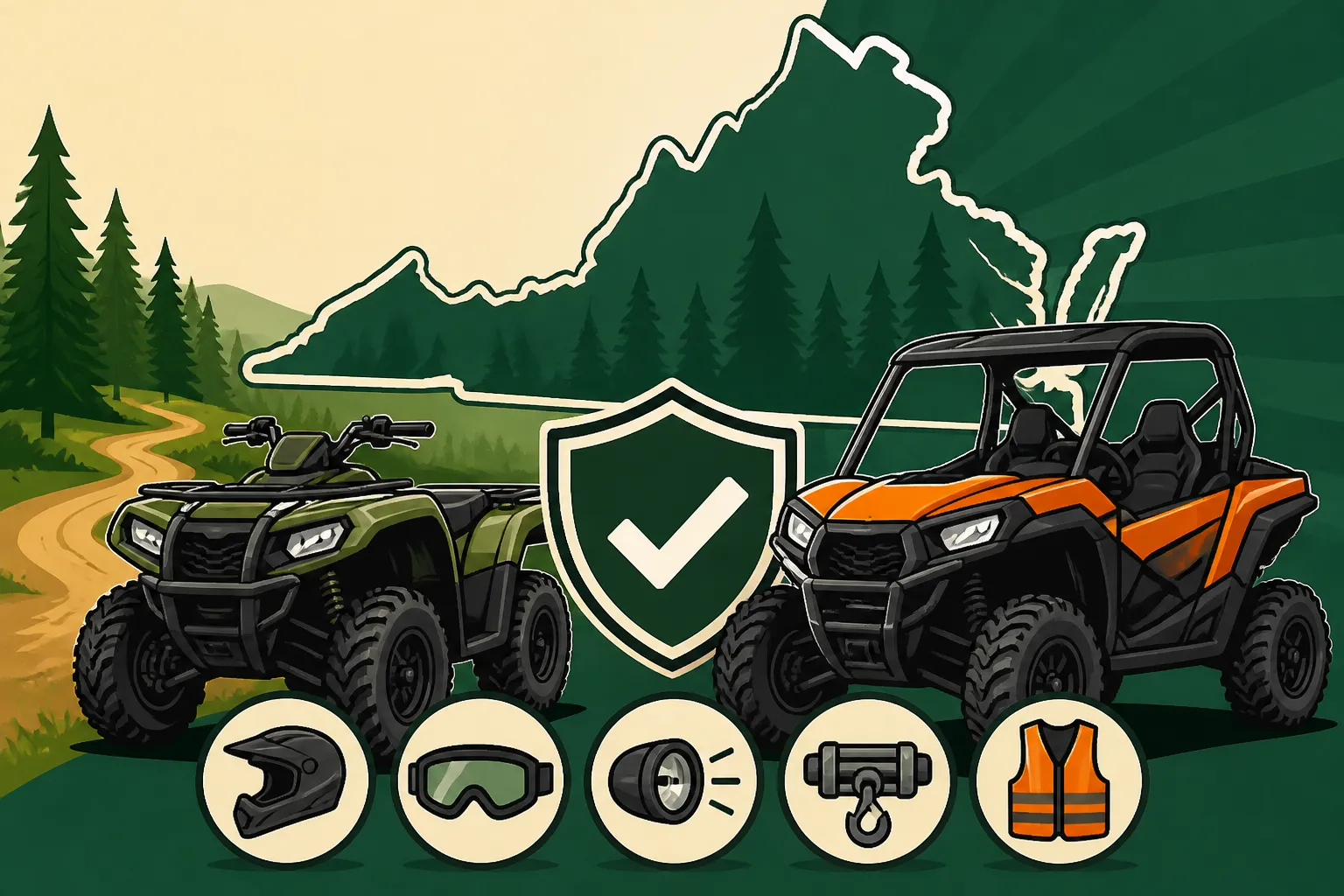
The safest approach is to treat the machine inspection as part of trip planning, not as a last-minute gate check. Working brakes, a suitable exhaust with a functional spark arrester, non-studded tires, and a machine that meets the sound rule give you a better chance of avoiding a preventable turn-around. Confirm route-specific requirements as well, especially if you are riding a wide machine or visiting an area you have not used before.
Disclaimer
This article is for general informational purposes only and does not constitute professional advice. Laws, prices and regulations vary by location and change over time. Consult a qualified professional for guidance on your specific situation.