Leaving a Coalfield Trailhead Tidy
A tidy trailhead makes a coalfield ride better for everyone: less chance of blocking a truck, leaving trash for the next group, or taking mud and fuel residue home in runoff. The challenge is that a trailhead can be busy, muddy and short on facilities. A little planning—and a clear end-of-ride routine—helps you leave it ready for the next rider.
Set up your trailhead stop before you unload
Good cleanup starts before the first tire rolls. Coalfield trailheads can have limited space, and once machines are unloaded, it is easy to spread gear across a parking area or block another trailer. Look over the site when you arrive. Use the designated parking and staging area, follow posted directions, and leave room for other vehicles to maneuver.
If you are meeting friends, agree on a parking plan before everyone arrives. Decide who will unload first, where machines will wait, and where people can safely stand while trailers are being moved. Keep access roads, gates, signs and emergency routes clear. A convenient spot for your group may be someone else’s only way in or out.
Check current site information before driving into the mountains. Parking arrangements, access and trail conditions can change, particularly after storms or maintenance. If a trail system or land manager publishes rules, read them before you leave home. A map app such as onX Offroad can help you understand where you are and plan an approach, but it does not replace posted signs or official closure information. For more on planning a stop, see Virginia Trailheads With Trailer Parking and Virginia Trail Conditions Before You Haul.
Bring a small cleanup kit rather than hoping the trailhead has what you need. Useful items include:
- Sturdy trash bags, including one that can hold wet or muddy items
- A separate bag or container for recyclables, if the site provides recycling
- Gloves for handling litter or dirty gear
- Paper towels or reusable cloths
- A sealable container for food scraps and small waste
- A basic first-aid kit and a flashlight
- A secure container for any fuel or fluids you transport
- A tarp or washable mat for muddy gear
Do not count on a public bin being available, empty or suitable for your waste. If bins are full, take your rubbish with you rather than stacking it beside them. A bag that stays closed and secured in the truck or trailer is more reliable than loose wrappers in an open cargo area.
Before unloading, check the ground for puddles, soft shoulders and drainage channels. Park on durable, designated surfaces rather than grass, a trail edge or a place that could turn to mud under repeated tire movement. Avoid driving through a puddle just to rinse tires or make room. Aside from creating ruts, that can spread sediment and make a small messy area worse.
Pack out what you bring, including the small stuff
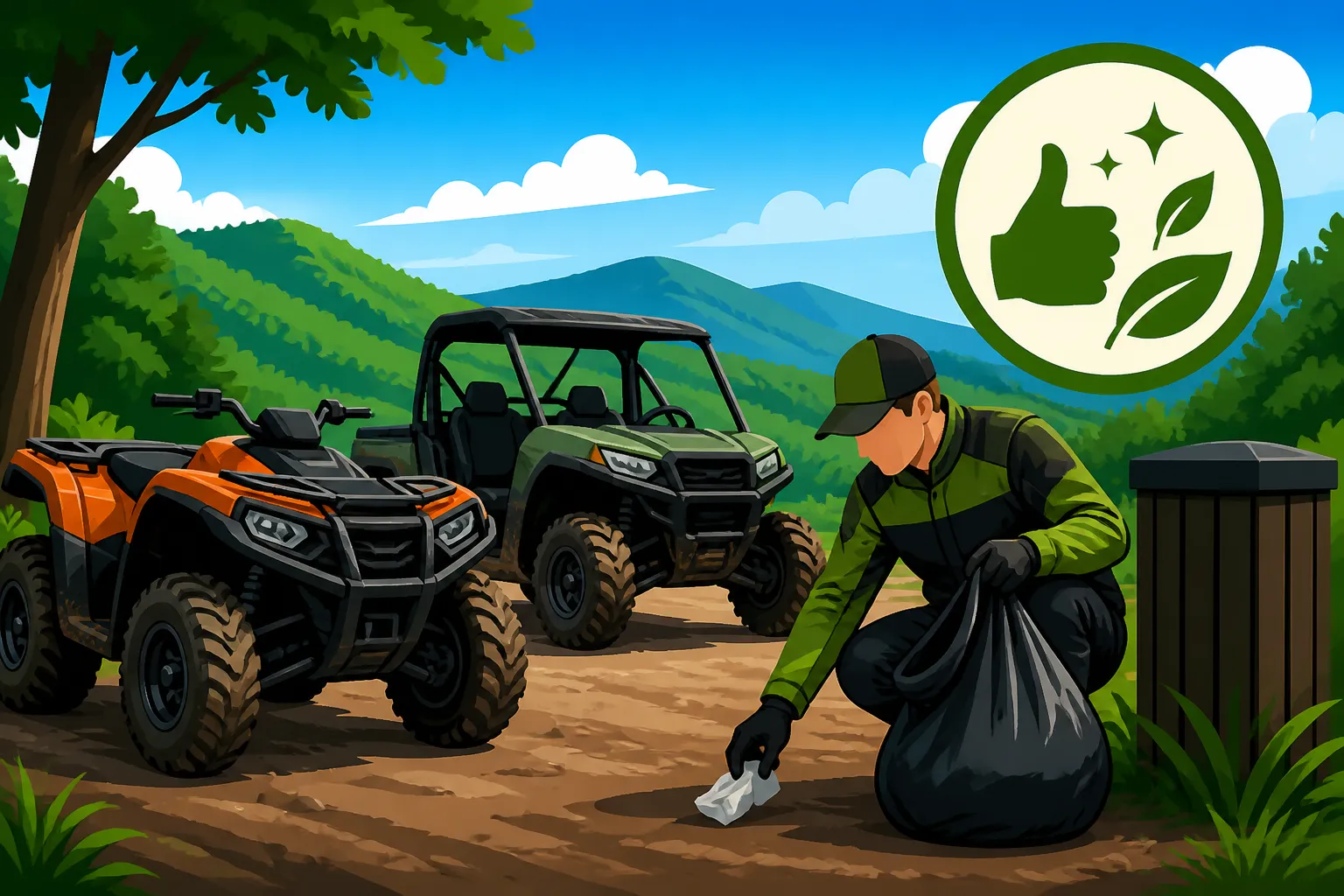
The obvious litter is easy to spot. It is the little stuff that tends to escape: food wrappers, drink tabs, tie-down packaging, zip ties, broken plastic and bits of tape. Pick up what your group brought in, and scan the ground around the parking spot before leaving. A quick walk around the truck and trailer often catches more than a glance from the driver’s seat.
Keep food and drink contained during the ride and at the staging area. Wind can carry a napkin or snack wrapper farther than you expect, and scraps can attract animals. Put food waste in a closed container or bag; do not throw it into brush or leave it beside a bin. Even biodegradable leftovers do not belong on a trailhead edge. They can become litter, attract wildlife, or take much longer to break down than people assume.
If you see trash that was not yours, use judgment. Picking up a clean bottle or wrapper is a simple way to help. Avoid handling sharp objects, medical waste, unknown chemicals, or anything that could injure you. Alert the site operator or land manager instead, and note the location clearly. A dropped item on the trail may be better reported with a nearby sign, trail marker or map location than described as “somewhere past the muddy hill.” An offline map from onX Offroad can help you record a location when phone reception is unreliable, but include a visible landmark as well.
Manage human waste responsibly. Use the facilities provided when available. If facilities are unavailable, follow the land manager’s instructions for that location and plan ahead rather than leaving tissue, wipes or other waste behind. “Flushable” wipes do not belong on the ground, in a storm drain or in a portable toilet unless the facility specifically allows them. Secure personal waste for proper disposal where required.
Carry out used wipes, cigarette ends and vape cartridges, too. Cigarette filters do not disappear quickly, and a smoldering butt can be a fire risk in dry vegetation. Do not burn trash in a campfire or toss anything into a fire ring unless the site’s rules expressly allow it and the material is appropriate. For broader etiquette, Virginia Trail Etiquette Locals Expect is a useful companion.
Keep fluids and mud out of the drainage
A machine can arrive with mud, grease or a small fluid leak. Do not use the parking area as a wash bay unless the site specifically provides and permits one. Washing a machine in a turnout or near a ditch can send sediment, oil and cleaning products toward a drain or creek. Even plain muddy runoff can carry soil into waterways.
If you notice a leak, stop and address it before moving the machine farther. Use absorbent material to contain a small spill if it is safe to do so, then bag the used material and dispose of it according to local guidance. For a larger spill or an unknown substance, keep people away and contact the site operator or appropriate emergency service. Do not rinse it toward the road or cover it with loose soil and leave.
Mud removal is usually best done at a suitable wash facility after the ride. If you need to knock off loose debris before loading, do it only where allowed and keep wash water away from drains, streams and neighboring property. Do not scrape mud onto the trailhead surface for someone else to deal with. A tarp under dirty gear can keep the trailer cleaner and reduce the chance that small debris falls into the parking area.
Leave the parking area safe and easy to use
A tidy trailhead is not only a clean one. It should remain safe for people, vehicles and emergency access. Before you load, check that no strap, tool, helmet or loose piece of gear has been left where tires or feet will catch it. Keep children and pets out of vehicle lanes while trailers are backing. Use a spotter when needed, and agree on clear hand signals before a driver moves.
Do not stage machines on a trail entrance, in front of a gate, or across a route that another user may need. Avoid idling for long periods beside other groups, and keep exhaust and noise in mind when people are unloading nearby. If your group is large, have riders wait in a designated area rather than forming a crowd around the ramp. A little coordination prevents the end of a ride from turning into a traffic jam.
If the site has toilets, picnic tables, signs or other facilities, leave them usable. Put equipment back where it belongs, close gates as directed, and do not move barriers or signs to create a shortcut. Do not assume a gate is abandoned just because it is open, or that an unmarked turnout is available for parking. Follow the posted arrangement and ask the operator if something is unclear.
Trail systems may have changing closures and seasonal restrictions. Check before you ride and again when conditions are uncertain. Never move a closure sign or ride around a barrier because a route looks passable. A blocked section may be closed for erosion, repairs, wildlife, weather or private-land access. For planning, consult Virginia Trail Closures and Seasons and Virginia Spearhead Trail Permits. A navigation app can help with orientation, but a displayed route is not proof that the route is currently open. onX Offroad may be useful for saving a route or marking where you parked; still give official notices and on-site signs priority.
If you find damage, such as a broken sign, a newly washed-out entrance or an unsafe parking edge, report it rather than trying to repair it yourself. Take a photo from a safe place and note the location. If you use onX Offroad to mark the spot, include enough description for someone without the app to find it. Clear reports can help the operator decide what needs attention without creating confusion about whether the issue is on a trail, access road or parking area.
Use a simple departure routine
A short, repeatable checklist is easier to follow when everyone is tired and ready to get home. Make one person responsible for the final walk-through, even if the whole group helps. Before pulling out:
- Check the parking footprint. Look under the truck, around the trailer, and beside the ramp for wrappers, straps, tools and dropped gear.
- Secure all waste. Close trash bags and put them somewhere they cannot blow out on the drive. Take waste with you if bins are missing or full.
- Check the ground for spills. Look for fuel, oil, coolant or other fluids. Contain a small spill if safe, and report anything larger or uncertain.
- Clear the driving path. Move people, ramps, chocks and loose equipment before vehicles start moving.
- Confirm the site is as you found it. Follow directions for gates, facilities and shared equipment; do not leave signs or barriers altered.
- Do one last scan from outside the cab. Check the trailer load, straps and parking area before driving away.
For a group ride, make the routine part of the plan. Tell riders where trash goes and who is responsible for checking the staging area. If several machines share a trailer or support vehicle, set aside a spot for muddy gear before the ride begins. At the end, have riders hand over waste instead of leaving a bag beside the truck for someone else to notice later.
If the lot is already messy when you arrive, do not assume you should clean up everything or enter an unsafe area. Pick up simple, safe litter if you choose, and report hazards or significant dumping to the site operator. A photo and a clear location are more useful than a vague complaint. Avoid posting identifying details about other visitors or starting an argument at the trailhead; keep the focus on the condition and what needs attention.
The best test is simple: could the next group park, unload and begin their ride without dealing with your group’s trash, loose gear or avoidable mess? That standard works whether you are riding for an hour or spending the whole day in the coalfields. It also helps protect the trail access that makes the trip possible. For more planning ideas, see Virginia Group Ride Planning and Virginia Trail Etiquette Locals Expect.
Disclaimer
This article is for general informational purposes only and does not constitute professional advice. Laws, prices and regulations vary by location and change over time. Consult a qualified professional for guidance on your specific situation.