Riding Out of Bluefield
If you’re staying in Bluefield and hoping to ride straight from town to an Appalachian trail, the first challenge is sorting out where legal trail access actually begins. This guide explains how to plan a ride near Bluefield, choose a suitable trail system, prepare your machine and permits, and avoid the frustrating mistake of hauling out before you know the trailhead rules.
Choosing a trail system near Bluefield
Start with the trailhead, not the town name
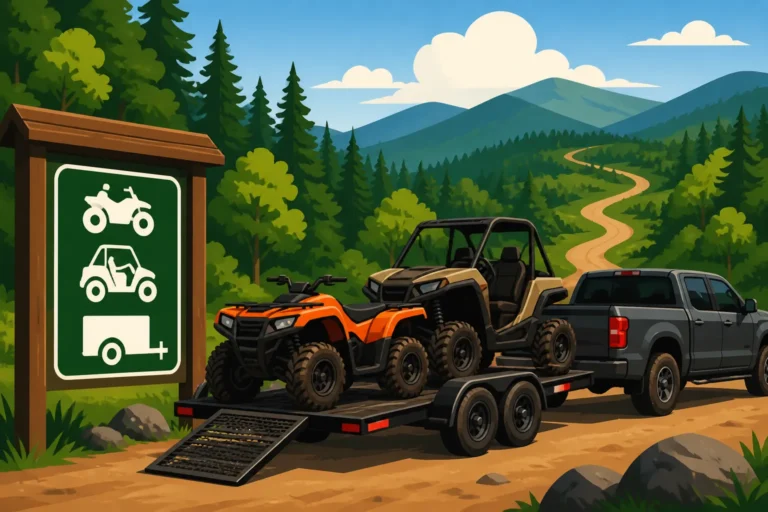
Bluefield sits near Virginia’s coalfield riding country, but “riding out of Bluefield” doesn’t necessarily mean you can unload downtown or follow local roads directly to an off-road trail. Plan to haul your ATV or UTV to a designated access point, then ride within the trail system’s marked boundaries. Public roads are not automatically legal connectors, and a route shown on a map does not, by itself, establish that ATVs may use it.
The Original Pocahontas system is a natural place to investigate when you’re based around Bluefield. Pocahontas and Boissevain are nearby reference points for exploring this part of the Spearhead Trails network. The system offers an Appalachian setting, but the distance from your lodging to a trailhead, the route you may legally ride, and the available parking are separate planning questions. Check the trail operator’s current access information before loading up.
For a wider overview of the area’s riding communities and trail systems, see Virginia Coalfield Trail Towns. If you’re comparing nearby systems, remember that they aren’t necessarily joined by trails you can ride between. A short drive between two trail areas may still require you to load the machine onto a trailer and travel by road.
Compare systems based on your group and machine
The best trail for your trip depends on more than how close it looks on a map. Think about who is riding, what kind of machine you have, whether everyone is comfortable with mountain terrain, and how much time you want to spend on the trail. A route that is enjoyable for an experienced rider on a compact ATV may feel stressful for a family group or someone driving a wider side-by-side.
Before choosing a trail, check whether the system allows your machine’s size and type. Some trails have width restrictions, and some systems or routes may have different rules for ATVs, UTVs, Jeeps, or registered four-wheel-drive vehicles. Don’t rely on a general label such as “off-road trail.” If you have a side-by-side, review Virginia Trails That Allow Side-by-Sides and confirm any route-specific limits before you go.
| Planning question | Why it matters near Bluefield | What to check |
|---|---|---|
| Where is the approved access point? | Being close to a trail town doesn’t mean a trail starts there | Official trailhead details and directions |
| Is your machine allowed? | Width and vehicle-type rules can vary by route | System rules and trail signs |
| Do you need a permit? | Access requirements can differ between trail networks | Permit type, validity, and where it applies |
| Is parking suitable for your trailer? | Tight lots or limited space can complicate unloading | Parking layout, access, and any restrictions |
| Are trails open and suitable today? | Weather or maintenance can affect access | Current closures and trail conditions |
Getting permits, parking, and navigation sorted out
Confirm the permit before you leave home
Permit mix-ups are an easy way to turn a planned ride into a frustrating morning. A permit for one trail network may not cover another, and rules for local residents, visitors, adults, and younger riders may differ. Make sure you know which system you intend to ride, where your permit is valid, and whether each rider needs a separate permit. Start with Virginia Spearhead Trail Permits and check the operator’s official instructions for the specific system you plan to use.
Don’t leave permit research until you reach the trailhead. Mobile reception can be unreliable in mountain areas, and a digital permit or confirmation may be harder to retrieve when you’re already parked. Save or download what you need in advance, and make sure the rider’s identification details match any permit requirements. The same preparation helps if someone in your group is purchasing a permit on behalf of a minor.
If you’re planning several trips, compare the available permit formats and their validity periods before buying. A longer-duration option may make sense for repeated visits, while a short visit may call for a different choice. For a closer look at the annual option, read Virginia’s Annual Spearhead Trail Permit. Check the current operator information before purchasing, especially if your plans might change, because permit terms and refund rules can affect your decision.
Treat parking and navigation as part of the ride plan
Ask where you can legally park and unload, whether the space suits your trailer, and whether you can leave a tow vehicle there while riding. A narrow approach or crowded lot can be a real headache when you’re maneuvering a long trailer. If you’re travelling with a group, agree in advance on where to meet and how to handle unloading so you don’t block other visitors.
Keep navigation simple and build in a backup. Download an official map or save relevant route information before leaving an area with dependable service. An app such as onX Offroad can help you review terrain and organize your own navigation, but it should be a supplement to the trail operator’s rules and current route information. Don’t treat a line displayed on a map as permission to ride a road, cross private property, or enter a closed section.
It’s worth checking Virginia Trailheads With Trailer Parking when comparing launch points. Confirm that the information applies to your intended trailhead, and don’t assume a nearby business, public lot, or roadside pull-off is approved for unloading. For practical directions and updates, look to the trail operator and local visitor information rather than relying on an old social media post or a map pin with no access details.
Preparing for mountain riding around Bluefield
Match the route to the least experienced rider
A group ride tends to go better when the route suits the least experienced rider, not just the most confident one. Mountain trails can include uneven surfaces, steep grades, loose rock, mud, water, and tight turns. A rider who is comfortable on flat ground may need more time and space to handle those conditions. If you’re riding with children or first-time visitors, discuss the route, the pace, and what the group will do if someone wants to turn back.
Choose a manageable first outing rather than trying to cover as much mileage as possible. Set a turnaround point, agree on a regrouping plan, and make sure nobody feels pressured to follow a line that’s beyond their comfort level. For side-by-sides, confirm that every rider understands the vehicle’s seatbelt and passenger rules. For ATVs, carry only passengers where the machine is designed to carry them.
Before heading out, check the rules for trail access, rider ages, helmets, and operating hours. Rules can depend on the location and the type of machine, so don’t assume a familiar practice is permitted everywhere. Virginia Trail Rules for Riders Under 18 is a useful starting point when younger riders are part of the group; also confirm the trail system’s own requirements.
Pack for delays, changing weather, and limited signal
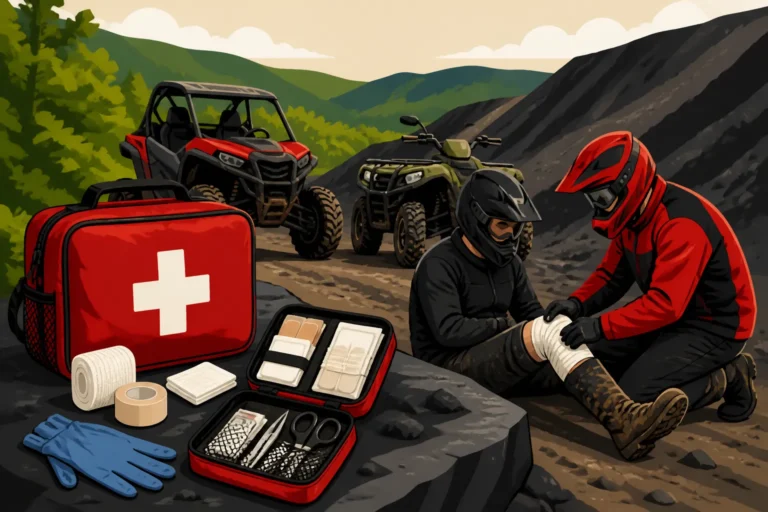
Mountain weather can shift, and the conditions at the trailhead may not match what you encounter farther along. Bring layers, rain protection, water, snacks, and a basic first-aid kit. Add gloves and eye protection, and consider how the group will stay warm or dry if a ride takes longer than expected. A simple plan to finish before dark is especially helpful when the trails are unfamiliar.
Prepare for the possibility that you won’t have a reliable phone signal. Tell someone who isn’t riding where you plan to go and when you expect to return. Keep a paper map or an offline route reference available, and make sure everyone knows the group’s meeting point if riders become separated. A navigation app such as onX Offroad may help you keep track of a planned route, but it’s sensible to have an independent backup and to follow posted signs.
Your machine should be ready for the terrain, too. Check tires, brakes, steering, lights, fuel, and any straps or storage you rely on before towing. Secure loose gear so it can’t shift on a climb or fall onto the trail. If you’re unfamiliar with Appalachian trail surfaces, avoid making your first ride a test of the machine’s limits. A careful inspection at home is far easier than dealing with a preventable problem after unloading.
Riding responsibly and avoiding common planning mistakes
Stay on authorized routes and respect local access
Do not use a public road as a shortcut between town, lodging, and a trail system unless you have confirmed that the route is legally open to your machine. The fact that a road is unpaved, lightly travelled, or used by another rider doesn’t make it an authorized ATV route. The rules for road access can be particularly easy to misunderstand around rural trail communities, where private roads, utility corridors, and public roads may look similar.
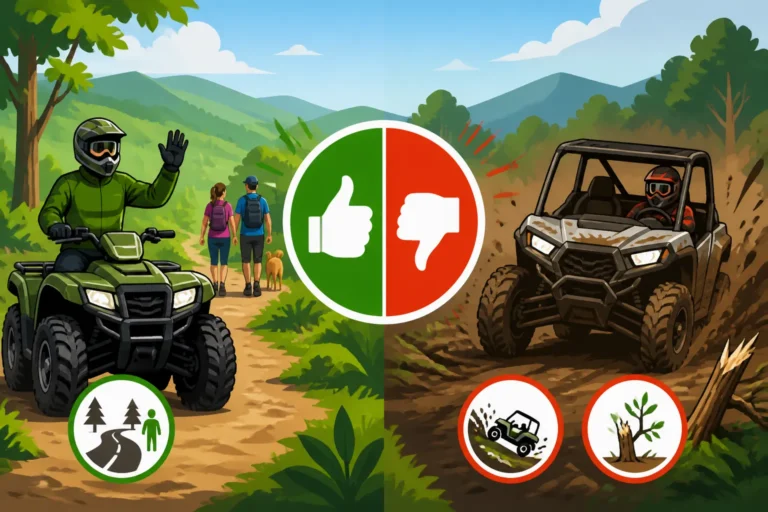
Stay on marked trails and follow closures, signs, and any directions from trail staff. Riding around a barrier can damage the route, create safety problems, and put future access at risk. Give other riders room, reduce dust where appropriate, and avoid spinning tires or stopping in a spot where a blind turn makes you hard to see. For more on the habits that help keep shared trails pleasant, see Virginia Trail Etiquette Locals Expect.
Also remember that the trail network and surrounding land may involve different owners or managers. Permission to ride one trail does not give you permission to enter adjoining private land. If your plans involve hunting property, a lease, or a local access agreement, confirm the permission and boundaries directly with the landowner or manager.
Check conditions again before towing
A trail that suited your group on a dry day may feel very different after heavy rain. Mud, runoff, fallen branches, and slick rock can affect both traction and stopping distance. Before you leave Bluefield, check for current closures or notices and be willing to change plans if conditions aren’t suitable. Virginia Trail Conditions Before You Haul can help you think through the checks to make before committing to the drive.
Avoid assuming that an old route description, a recent-looking online review, or another rider’s advice reflects today’s access rules. If something is unclear, contact the trail operator or a local visitor-information office and ask specific questions: Is the trailhead open? Can your machine use the routes you intend to ride? Is the parking area suitable for a trailer? Are there closures or permit requirements you need to know about?
Finally, leave time for the return trip and for loading safely. Muddy machines, tired riders, and a crowded parking area can make the end of the day feel rushed. Clean up after your group, secure your machine and equipment, and avoid blocking the trailhead while you pack. A little planning from Bluefield can make the difference between a smooth day in the coalfields and a long drive spent sorting out access problems.
Disclaimer
This article is for general informational purposes only and does not constitute professional advice. Laws, prices and regulations vary by location and change over time. Consult a qualified professional for guidance on your specific situation.