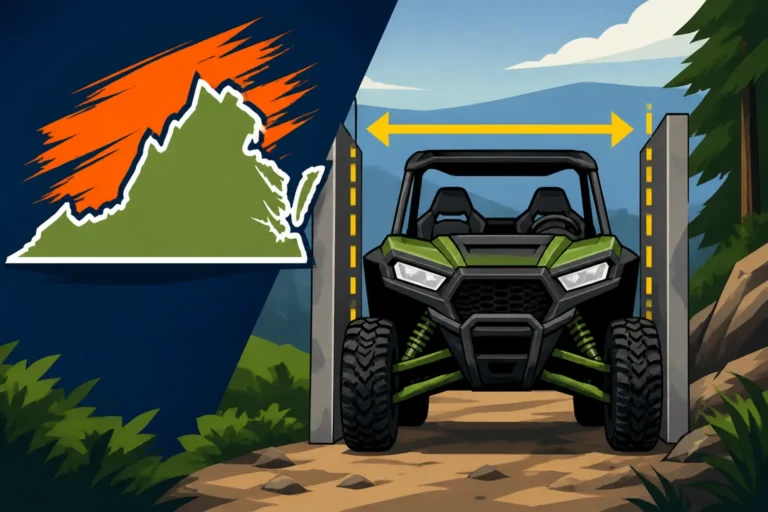
99 Decibels at 20 Feet
A loud exhaust can turn a long-planned ride into a frustrating stop at a forest trailhead. On Virginia National Forest routes, the 99-decibel limit measured at 20 feet is a sound requirement riders should prepare for—not a number to guess at with a phone app. This guide explains what the limit means, how to reduce exhaust noise, and what to check before hauling your machine.
What the 99-decibel limit means
It is a sound limit for particular riding areas
The 99-decibel-at-20-feet figure is associated with riding on certain National Forest OHV routes in Virginia. It is not a single noise rule that automatically applies to every private riding park, county road, or trail system in the state. Rules depend on who manages the land and which route you plan to ride, so confirm the requirements for your specific destination before setting out.
That distinction matters if your trip includes more than one riding area. A machine that meets a forest trail’s sound requirement may still be subject to different equipment checks or park rules elsewhere. Likewise, a rule you saw posted at a private park should not be assumed to govern a National Forest trail.
The Virginia Forest Noise Limits are a useful place to start when sorting out forest-specific rules. Also check Virginia Forest Equipment Requirements and the relevant trail information for the route you plan to use. For example, Peters Mill Run has its own access and equipment considerations, so riders heading there should review Peters Mill Run OHV Trails in Virginia rather than relying on a general assumption about Virginia trails.
Decibels and distance make a difference
A decibel reading is a measurement of sound level, and the stated distance is part of the requirement. “At 20 feet” is not an incidental detail: a reading taken right beside an exhaust outlet cannot be compared directly with one taken at the specified distance. Sound also changes with the surroundings. A hard surface, nearby trees, other machines, wind, and background noise can all affect what a meter detects.
For that reason, a casual phone reading is not a dependable pass-or-fail test. A phone app may be helpful for noticing that one machine is much louder than another, but the phone’s microphone, settings, and surroundings are not the same as a proper sound meter and an official check. Treat an at-home reading as a rough troubleshooting clue, not proof that your machine complies.
If you want a detailed look at the measurement context, read Passing a 99-Decibel Sound Check on Forest Land. The practical takeaway is simple: do not wait until you are at the trailhead to find out whether an unusually loud exhaust could be a problem.
How to get your ATV or UTV ready
Check the exhaust system before the trip
A machine can become noticeably louder because of wear or damage, even if you have not deliberately modified it. Look for a loose exhaust joint, a damaged muffler, missing fasteners, cracks, or signs that exhaust is escaping before it reaches the outlet. If you hear a new ticking, popping, or sharp hiss around the exhaust, investigate instead of assuming it is normal engine noise.
Muffler packing can also deteriorate over time, depending on the exhaust design. A muffler that has become less effective may sound harsher or louder than it used to. If you have an aftermarket exhaust, check whether it includes the required sound-control components and whether those parts are still installed and in good condition. Follow the manufacturer’s instructions or ask a qualified service shop to inspect a system you are unsure about.
Small fixes can prevent a disappointing drive home. Before loading up, make sure the exhaust is secure, the muffler is intact, and all intended baffles or inserts are fitted. Do not remove sound-control parts to make the machine run differently or to change its tone. If you cannot tell whether a part is missing or damaged, have the system checked before riding.
Make a sensible sound check at home
A home check is most useful as a way to spot a problem early. Start with a quiet, open area away from walls, vehicles, and other reflective surfaces. Use a sound meter if you have access to one, and follow the meter’s instructions. Keep the test consistent each time so you can compare readings after a repair or muffler change.
Do not treat a phone app’s number as an official result. A phone can help you notice that the exhaust has become louder since last season, but microphone quality and app settings vary. A reading that appears comfortably below the limit on a phone is not a guarantee that an official test will produce the same result.
If you are comparing two machines, test them in similar conditions and from the same distance. Listen as well as measure: a rattling heat shield, exhaust leak, or loose component may be obvious even when a rough reading seems inconclusive. If a machine sounds unusually loud, fix the cause rather than trying to find a testing setup that produces a more reassuring number.
| What to check | Why it matters | Practical next step |
|---|---|---|
| Muffler and exhaust outlet | Damage or missing parts can increase noise | Inspect for cracks, looseness, and missing components |
| Exhaust joints and fasteners | Leaks and rattles can make the machine louder | Tighten or repair according to the machine’s service guidance |
| Muffler packing or insert | Worn or absent sound-control material may affect noise | Check the exhaust manufacturer’s instructions |
| Phone sound-meter app | A phone reading is only an informal clue | Do not use it as proof of compliance |
| Trail-specific rules | Requirements can vary by land manager and route | Confirm the rules for the exact riding area |
Plan around the trailhead check
Verify the route and requirements before hauling
Trail rules and access conditions can change, and a long drive makes a last-minute surprise especially aggravating. Before leaving, confirm that the route is open and check its noise, equipment, permit, and operating requirements. Start with Virginia National Forest OHV Permits and Virginia Trail Conditions Before You Haul, then review the rules for the particular trail system.
A navigation app can help with route planning, but it should not replace the land manager’s current information. onX Offroad can be useful for exploring mapped routes and getting oriented before a trip; compare what you see in the app with the official trail information before relying on it for access or closures. This is especially worthwhile when a route network has multiple trailheads, connecting roads, or boundaries between managed areas.
If you are heading to Peters Mill Run, plan for the specific forest requirements rather than treating it like a general-purpose trail. Sound is only one part of being ready: Why Your Quad Needs a Spark Arrester at Peters Mill Run covers another equipment consideration that riders should check before loading the trailer. Make a short checklist for each riding area, because one permit or equipment assumption may not carry over to another network.
Give yourself time to solve a problem
Arriving just before a planned group ride creates pressure to ignore warning signs or scramble for a repair. If your machine has recently developed a louder exhaust, plan to inspect it several days before departure. That gives you time to replace a damaged part, check the muffler, or contact a repair shop without deciding between a rushed fix and missing the ride.
If an official check raises a concern, stay calm and ask what part of the setup needs attention. A loose component or obvious exhaust leak may have a straightforward explanation, while a modified system may need a more substantial repair. Do not argue based only on a phone app reading; it does not establish that the machine meets a land manager’s test procedure.
Having a backup plan can also save the day. If a machine cannot ride, the group may be able to adjust who rides, choose another legal activity, or reschedule rather than risk breaking a trail rule. For future trips, note which machine, exhaust setup, and maintenance work were involved. A basic record makes it easier to catch a noise change before the next haul.
Common mistakes riders can avoid
Confusing a statewide rule with a site requirement
One common mistake is hearing “99 decibels” and assuming it applies everywhere—or assuming it applies nowhere unless a sign is posted at the entrance. Neither assumption is a safe way to plan. Confirm the requirements with the agency or operator responsible for the exact riding area, especially when your trip crosses between different systems.
Another mistake is relying on what a friend’s machine passed previously. Exhaust condition, modifications, meter setup, and test circumstances can differ. A successful check on one machine does not establish that another machine, even of the same model, will produce the same result.
A third mistake is treating a quiet sound at idle as proof that the machine will be acceptable in use. Mechanical condition and the prescribed test method matter. Take care of obvious exhaust problems and check the land manager’s instructions instead of assuming that a quick idle test tells the whole story.
Making last-minute changes that create new problems
Trying to quiet a machine the night before a trip can lead to rushed, unsafe work. Avoid improvised plugs, makeshift exhaust modifications, or repairs that interfere with normal operation. Use parts suited to the exhaust system, and follow the machine or component manufacturer’s guidance. If you are not confident in the repair, get help before riding.
It is also easy to overlook noise after routine maintenance. A clamp may not be fully secure, a shield may be vibrating, or a part may have been left off during reassembly. Take a few minutes to inspect the machine after service, then listen for changes during a safe, controlled test close to home.
Finally, do not let a mapping tool stand in for a rules check. onX Offroad can help you understand where a route appears to go and plan your approach, but verify access, closures, permits, and sound requirements with the responsible land manager. That quick confirmation is far less frustrating than discovering a problem after you have already driven to the trailhead.
Disclaimer
This article is for general informational purposes only and does not constitute professional advice. Laws, prices and regulations vary by location and change over time. Consult a qualified professional for guidance on your specific situation.